📅 Last updated: 27.09.2026
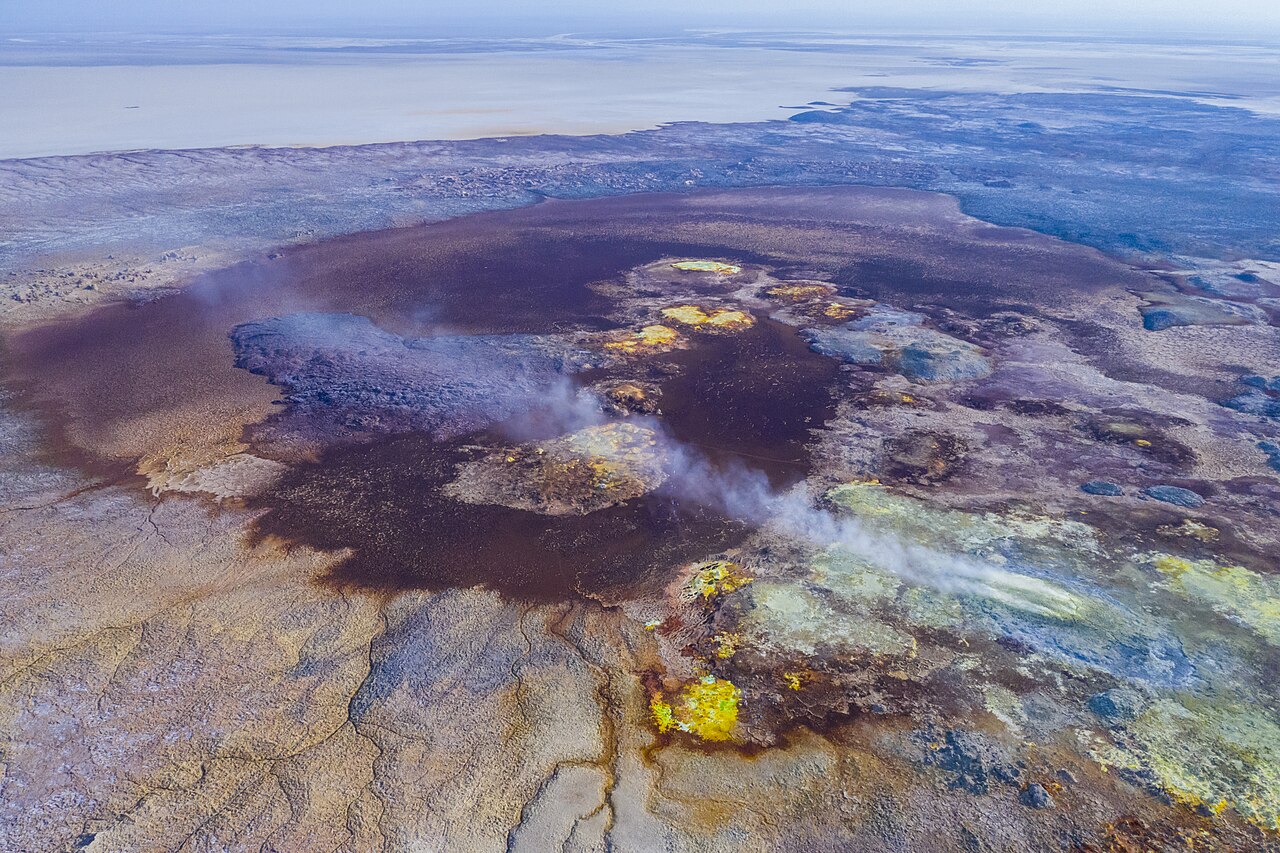
The Danakil Depression is not merely hot; it is a geological wound in the Earth’s crust where the planet’s molten interior bleeds through, creating a landscape so alien it has served as a stand-in for Mars and Venus in scientific research. Stretching across northeastern Ethiopia near the Eritrean border, this vast salt-flat basin sits more than 100 meters below sea level and endures some of the highest average temperatures ever recorded on the planet. Yet within this seemingly inhospitable terrain lies a story of human resilience, ancient trade routes, and extraordinary geology that continues to captivate scientists, travelers, and the Afar people who call it home.
- Where Is the Danakil Depression and Why Does It Exist?
- Dallol: The Rainbow Volcano of the Danakil Depression
- Erta Ale: The Gateway to the Danakil Depression's Fiery Heart
- A Land of Extremes: Climate, Culture, and Survival
- Scientific Importance and Global Relevance
- How to Visit the Danakil Depression Responsibly
- A Place Like No Other
Where Is the Danakil Depression and Why Does It Exist?
The Danakil Depression occupies the northern portion of the Afar Triangle, a geological triple junction where three tectonic plates—the Arabian, Nubian, and Somali—are slowly pulling apart from one another. This divergence, occurring at a rate of roughly 1 to 2 centimeters per year, is literally tearing the African continent apart. In millions of years, geologists predict, the Red Sea will flood this region, creating a new ocean.
For now, the result is a depression that plunges to approximately 125 meters below sea level at its lowest point near Lake Asale. The basin spans roughly 200 kilometers north to south and 50 kilometers east to west, encompassing salt flats, volcanic craters, sulfur springs, and ancient lake beds. The Awash River, which originates in the Ethiopian highlands, disappears into the desert here, never reaching the sea.
The depression sits within the Afar Region of Ethiopia, one of the country’s nine regional states. The regional capital, Semera, serves as the primary gateway for expeditions into the Danakil. The nearest significant town is Hamadela, a dusty settlement that functions as a staging point for salt caravans and tourist convoys alike.
A Geological Time Bomb
What makes the Danakil Depression so extraordinary is that it offers scientists a rare window into the process of continental rifting—the same process that created the Atlantic Ocean some 200 million years ago. Researchers from institutions including the University of Addis Ababa, Oxford University, and the University of California have studied the region extensively, using it as an analog for understanding how continents break apart.
In 2005, a series of earthquakes and volcanic eruptions near the town of Dabbahu opened a 60-kilometer fissure in just eight days, an event that stunned the geological community. It was the fastest observed rifting event in recorded history, and it confirmed that the Afar region is one of the most tectonically active places on Earth.
Dallol: The Rainbow Volcano of the Danakil Depression
At the heart of the Danakil Depression lies Dallol, a volcanic crater that holds the record for the highest average annual temperature of any inhabited place on Earth. Between 1960 and 1966, the nearby settlement of Dallol recorded an average temperature of 34.4°C (94°F)—the highest ever measured for a populated location. Even in winter, daytime temperatures routinely exceed 40°C (104°F).
But it is not the heat alone that draws visitors. Dallol’s hydrothermal field is a psychedelic landscape of neon yellow, acid green, and burnt orange pools, created by sulfur, iron oxide, and salt deposits. The colors shift with the light and the season, making every photograph look almost unreal. The pools are also extremely acidic, with pH levels sometimes dropping below 1, comparable to battery acid.
Despite these extreme conditions, scientists have discovered extremophile microorganisms living in Dallol’s hypersaline, acidic pools. In 2019, a team of researchers published findings suggesting that these microbes may represent the limits of habitability on Earth—and by extension, inform the search for life on other planets. NASA has funded studies in the Danakil Depression precisely because its conditions resemble those of ancient Mars and the clouds of Venus.
The Salt Caravans of Lake Asale
Just north of Dallol lies Lake Asale, a vast salt flat where generations of Afar people have mined salt using methods largely unchanged for centuries. The Afar, a predominantly pastoralist ethnic group numbering around 1.5 million people across Ethiopia, Eritrea, and Djibouti, have long controlled the salt trade routes that stretch from the Ethiopian highlands to the Red Sea coast.
Traditionally, miners cut salt into rectangular slabs called amole, each weighing around 4 to 5 kilograms. These slabs were once transported by camel caravans—sometimes numbering in the thousands—to markets in Mekelle, the capital of the Tigray Region, and beyond. Today, mechanized trucks have largely replaced camels for long-distance transport, but the manual extraction of salt continues. A single amole might sell for less than a dollar at the source, yet the labor involved is punishing: miners work in temperatures exceeding 45°C (113°F), often with minimal protection from the sun.
“We have mined salt here for as long as our grandfathers can remember. The heat is our life and our burden. Without it, we would have nothing.”
— An Afar salt miner, speaking to researchers in 2018
The salt trade remains a critical source of income for Afar communities, though it is increasingly supplemented by tourism. Since the early 2000s, organized tours from Mekelle and, more recently, from Semera have brought thousands of visitors annually to the Danakil. This influx has created new economic opportunities but also raised concerns about environmental degradation and cultural commodification.
Erta Ale: The Gateway to the Danakil Depression’s Fiery Heart
No visit to the Danakil Depression is complete without a trek to Erta Ale, one of the few volcanoes on Earth with a persistent lava lake. Standing at 613 meters above sea level, Erta Ale—whose name means “smoking mountain” in the Afar language—has been erupting continuously since at least 1967, though local oral histories suggest activity stretching back much further.
The hike to the summit typically begins in the late afternoon from the village of Dodom, a grueling three-hour trek across black lava fields that retain heat long after sunset. As you approach the caldera, the glow of the lava lake becomes visible, casting an orange-red light against the night sky. The sight is primal, almost hypnotic—a reminder that beneath our feet, the planet is still very much alive.
Erta Ale has two lava lakes, though their activity fluctuates. In January 2017, a significant eruption caused the lava lake to overflow, forcing evacuations of nearby settlements and temporarily closing the site to tourists. Such eruptions are a reminder of the volcano’s unpredictability. The Ethiopian government, working with local Afar authorities, now requires all visitors to be accompanied by armed guards—a measure introduced not because of volcanic risk, but due to occasional tensions with neighboring Eritrea and the presence of banditry in the remote border regions.
Safety and Access
Reaching the Danakil Depression is not a casual undertaking. The journey typically begins in Addis Ababa, Ethiopia’s capital, followed by a domestic flight or long drive to Mekelle or Semera. From there, convoys of 4×4 vehicles travel for hours across trackless desert, often navigating by GPS and local knowledge. There are no paved roads, no hotels, and no reliable communications infrastructure. Travelers must bring their own water, food, and fuel.
Most tour operators recommend the cooler months from November to February, when daytime temperatures “only” reach 35–40°C (95–104°F). Even then, the heat is relentless. In the summer months, temperatures can soar past 50°C (122°F), making travel dangerous and inadvisable.
A Land of Extremes: Climate, Culture, and Survival
The Danakil Depression is often described as one of the most inhospitable places on Earth, yet it has been continuously inhabited for thousands of years. The Afar people have developed sophisticated strategies for surviving in this environment, from building portable dome-shaped shelters called ari to timing their movements around the coolest parts of the day.
Their traditional diet reflects the scarcity of resources: milk and meat from camels and goats, supplemented by imported grains and, in recent decades, processed foods from regional markets. Water is obtained from rare springs and wells, some of which are highly saline and require careful management.
Despite these challenges, Afar culture is rich and distinctive. The Afar language, part of the Cushitic branch of the Afro-Asiatic family, is spoken by millions across the Horn of Africa. Afar society is traditionally organized into clans, with a strong emphasis on hospitality, poetry, and oral history. In recent years, Afar activists and leaders have played an increasingly prominent role in Ethiopian politics, advocating for greater regional autonomy and development.
Key Facts About the Danakil Depression
| Feature | Detail |
|---|---|
| Lowest point | Approximately 125 meters below sea level near Lake Asale |
| Highest recorded average temperature | 34.4°C (94°F) at Dallol, 1960–1966 |
| Primary ethnic group | Afar people (predominantly pastoralists and salt miners) |
| Key geological features | Erta Ale volcano, Dallol hydrothermal field, Lake Asale salt flats |
| Best time to visit | November to February (cooler months) |
| Nearest gateway towns | Semera and Mekelle |
Scientific Importance and Global Relevance
The Danakil Depression is more than a tourist destination or a geological curiosity. It is a natural laboratory that helps scientists understand some of the most fundamental questions about our planet—and beyond.
Researchers studying the region have made significant contributions to fields as diverse as microbiology, volcanology, and planetary science. The discovery of extremophiles in Dallol’s pools has expanded our understanding of the conditions under which life can exist. The study of the Afar Triple Junction has refined models of plate tectonics. And the region’s similarity to ancient Martian environments has informed NASA’s exploration strategies for the Red Planet.
In 2016, a team led by researchers from the University of Bologna and the University of London published a study in the journal Astrobiology examining the limits of life in Dallol’s hydrothermal systems. Their findings suggested that while the pools themselves are largely sterile, the surrounding salt crusts harbor microbial communities that could serve as analogs for potential life on Mars.
Meanwhile, Ethiopian scientists and institutions are increasingly involved in this research. Addis Ababa University’s Institute of Geophysics, Space Science and Astronomy has partnered with international teams on multiple projects, and the Ethiopian government has expressed interest in developing the Danakil as a hub for geotourism and scientific research.
Environmental Challenges
The Danakil Depression faces several environmental pressures. Climate change is exacerbating already extreme temperatures, and some climate models predict that parts of the region could become uninhabitable for humans within the next century. The salt trade, while traditional, is also under pressure from cheaper imported salt and changing market dynamics.
Tourism, meanwhile, presents a double-edged sword. It brings much-needed income to local communities but also generates waste, strains water resources, and can disrupt fragile ecosystems. Several tour operators have begun implementing “leave no trace” policies, but enforcement remains inconsistent.
- Climate change: Rising temperatures threaten habitability and traditional livelihoods.
- Tourism impact: Increased visitor numbers strain infrastructure and local resources.
- Economic shifts: Traditional salt trade faces competition from industrial salt production.
- Political tensions: Border disputes and regional instability occasionally affect access.
How to Visit the Danakil Depression Responsibly
For those determined to experience the Danakil Depression firsthand, responsible travel is essential. The region is not a theme park; it is a living landscape with real communities, real dangers, and real environmental sensitivities.
First, choose a reputable tour operator. Companies such as Ethio Tours, Danakil Depression Tours, and several Addis Ababa-based agencies have years of experience and employ local Afar guides. These guides not only navigate the terrain but also provide cultural context and ensure that tourism benefits local communities.
Second, respect the environment. Pack out everything you bring in, including plastic bottles and wrappers. Avoid touching the hydrothermal pools at Dallol—they are not only acidic but also fragile. And never remove salt or minerals from Lake Asale; the salt flats are a living cultural landscape, not a souvenir shop.
Third, prepare for extreme conditions. Bring more water than you think you need, high-SPF sunscreen, a wide-brimmed hat, and loose, light-colored clothing. Be aware of the symptoms of heat exhaustion and dehydration, and do not hesitate to turn back if you feel unwell. The Danakil is not a place to push your limits.
Finally, engage with local communities respectfully. Ask before taking photographs. Buy salt or crafts directly from miners and artisans. And listen more than you speak—the Afar people have survived in this environment for millennia, and their knowledge is invaluable.
A Place Like No Other
The Danakil Depression is not an easy place to love. It is hot, harsh, and unrelenting. But it is also one of the most extraordinary places on Earth—a place where the planet’s inner workings are laid bare, where human resilience is tested and proven, and where the boundaries between science, culture, and adventure blur.
For Ethiopians, the Danakil is a source of national pride, a reminder that their country is home to some of the most unique landscapes and cultures in the world. For the Afar people, it is simply home—a place of struggle and survival, but also of dignity and belonging. For the rest of us, it is a reminder that even in the most extreme environments, life finds a way.
As the sun sets over Lake Asale, casting long shadows across the salt flats, the heat finally begins to subside. The camels rest. The miners return to their camps. And the Danakil Depression, silent and ancient, waits for another day.