📅 Last updated: 15.09.2026
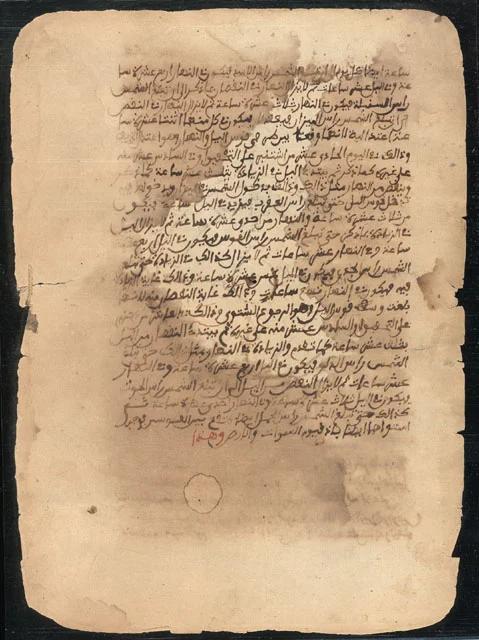
The Timbuktu manuscripts are among the most extraordinary written treasures ever produced in Africa — hundreds of thousands of hand-copied texts on astronomy, medicine, law, poetry, and mathematics, preserved for centuries in the mud-brick libraries of a city at the edge of the Sahara. Long before European scholars imagined Africa had no written history, the scribes of Timbuktu were filling page after page with careful Arabic script, illuminating the intellectual life of the Mali and Songhai empires. Today, these fragile pages tell a story of scholarship, trade, survival, and quiet heroism that reshapes how the world understands Africa’s past — and its future.
- A City Where Gold Met Ideas
- The Three Great Mosques and the Culture of the Book
- How Many Manuscripts? The Scale of the Collections
- What the Timbuktu Manuscripts Actually Contain
- Key Dates in the Story of the Timbuktu Manuscripts
- Danger, Evacuation, and the Rescue of 2012–2013
- Preservation in the Digital Age
- Why the Timbuktu Manuscripts Matter Today
- Challenges Ahead: Funding, Security, and Access
- A Library of Gold, Still Being Read
A City Where Gold Met Ideas
Timbuktu sits in what is now northern Mali, about 20 kilometres north of the Niger River’s great bend, where the desert sand meets the floodplain. It was founded around 1100 CE by Tuareg pastoralists as a seasonal camp, but its position made it inevitable: a meeting point between the salt mines of Taghaza to the north, the goldfields of Bambuk and Galam to the south, and the caravan routes that stitched North Africa to the Sahel.
By the 13th and 14th centuries, Timbuktu had become a hub of the Mali Empire, which under rulers such as Sundiata Keita and later Mansa Musa controlled a vast stretch of West Africa. Mansa Musa’s famous pilgrimage to Mecca in 1324 — a journey so lavish that chroniclers claimed his spending depressed the price of gold in Cairo for years — announced Mali’s wealth to the wider Islamic world. That wealth did not stay in treasuries. It flowed into scholarship, architecture, and books.
The Moroccan traveller and scholar Ibn Battuta visited the region in 1352–1353 and recorded his impressions of Mali’s customs and governance. He was, by his own account, not always impressed by the court etiquette, but he noted the importance of learning and the respect shown to scholars. Timbuktu was becoming not merely a market town but a university city without walls, its “campus” spread across courtyards, mosques, and private homes.
The city’s golden age peaked under the Songhai Empire, especially during the reign of Askia Mohammad I (r. 1493–1528). Askia Mohammad, a devout Muslim and capable administrator, reorganised the empire, standardised weights and measures, and encouraged scholarship. He appointed judges, patronised mosques, and drew jurists and theologians from across the Islamic world. Timbuktu’s reputation as a centre of learning reached its zenith in this period.
The Three Great Mosques and the Culture of the Book
Three mud-and-timber mosques anchor Timbuktu’s scholarly identity: Djinguereber, Sankore, and Sidi Yahya. Djinguereber, built in 1327 under Mansa Musa with the guidance of the Andalusian architect Abu Ishaq al-Sahili, is the city’s oldest surviving mosque. Sankore, in the city’s north-east quarter, became synonymous with higher learning — so much so that historians later spoke of the “University of Sankore,” though it was less a single institution than a network of teachers and students clustered around the mosque. Sidi Yahya, completed around 1440, served as a centre for religious instruction.
Around these mosques grew a culture in which books were currency. Scholars copied texts by hand, sometimes adding their own marginal notes and commentaries. Calligraphers were respected craftsmen. A student might spend months transcribing a single legal treatise. Books were bought, sold, inherited, and donated as waqf — charitable endowments that helped libraries persist across generations.
The subjects were astonishingly broad:
- Astronomy and mathematics — treatises on the movements of the stars, calendars, and the calculation of prayer times.
- Medicine — herbal remedies, anatomy, and treatments for diseases such as malaria and digestive ailments.
- Law — Maliki jurisprudence, contracts, marriage and inheritance law, and fatwas on everyday disputes.
- Theology and Sufism — commentaries on the Qur’an and works by mystics.
- History and geography — chronicles such as the Tarikh al-Sudan and the Tarikh al-Fattash, which remain key sources for West African history.
- Poetry, grammar, and rhetoric — the linguistic arts that underpinned scholarship.
- Commerce and correspondence — letters, contracts, and records of trade across the Sahara.
This was not an isolated or purely religious canon. The manuscripts show a lively engagement with the wider Islamic world, from Andalusia to Egypt to the Hijaz, while also addressing local concerns — the Niger River’s floods, Saharan caravan schedules, and the politics of neighbouring kingdoms.
How Many Manuscripts? The Scale of the Collections
Estimates vary, but scholars generally agree that Timbuktu and its surrounding region hold — or held — several hundred thousand manuscripts. Some collections were family libraries passed down for generations; others belonged to mosques, madrasas, and private scholars. The Ahmed Baba Institute, formally established with UNESCO and Malian government support in the 1970s and named after the 16th-century scholar Ahmad Baba al-Timbukti, became the most prominent repository, though it was never the only one.
Ahmad Baba himself is a useful figure to pause on. Born in 1556 in the Timbuktu area, he became a renowned jurist and author, writing on law, theology, and the enslavement of Muslims — a topic that made him a thorn in the side of Moroccan authorities after their invasion. Exiled to Marrakesh in 1591 following the Moroccan conquest of Songhai, he continued to teach and write, and his reputation endured. His life captures both the intellectual reach of Timbuktu and the political turbulence that eventually disrupted it.
That disruption came in 1591, when a Moroccan army equipped with firearms defeated the Songhai forces at the Battle of Tondibi. Timbuktu’s political power waned. Trade routes shifted. Many scholars were exiled or dispersed. Yet the books remained — hidden in private homes, copied and recopied, protected by families who understood their value even when the city’s political star had fallen.
What the Timbuktu Manuscripts Actually Contain
To read the Timbuktu manuscripts is to dismantle the myth that Africa’s past was purely oral. They are not merely religious texts, though those are plentiful. They include:
- Astronomical tables that track the sun, moon, and planets for practical scheduling.
- Medical recipes listing plants, dosages, and treatments, some of which are now being studied by pharmacologists.
- Legal opinions on trade, marriage, and property that reveal the social fabric of a cosmopolitan trading city.
- Poems and songs in Arabic and in African languages written in Arabic script — including early examples of what scholars call Ajami, the use of Arabic letters to write languages such as Fulfulde, Songhay, and Tamasheq.
- Maps and geographical notes reflecting knowledge of the Sahara, the Niger, and beyond.
Ajami deserves special emphasis. It shows that literacy in West Africa was not confined to Arabic-speaking elites. People wrote their own languages using Arabic script, producing a written record of local speech, law, and literature. This complicates any simple narrative of “oral Africa” versus “literate elsewhere.”
“The manuscripts are a testimony that Africa had a written tradition, and that Timbuktu was a centre of learning. They are part of the world’s heritage, not just Mali’s.”
That sentiment — expressed in various forms by Malian librarians, UNESCO officials, and scholars over the years — captures why these documents matter far beyond their immediate contents. They are evidence.
Key Dates in the Story of the Timbuktu Manuscripts
| Date | Event | Significance |
|---|---|---|
| c. 1100 CE | Founding of Timbuktu as a Tuareg camp | Establishes the settlement that becomes a trade and scholarly hub. |
| 1324–1327 | Mansa Musa’s pilgrimage and construction of Djinguereber Mosque | Mali’s wealth and Islamic patronage attract scholars and architects. |
| 1493–1528 | Reign of Askia Mohammad I | Songhai patronage brings Timbuktu’s scholarly culture to its peak. |
| 1591 | Battle of Tondibi; Moroccan conquest | Political decline begins; scholars disperse, but libraries endure. |
| 1970s onward | Ahmed Baba Institute and preservation efforts | Modern institutional collecting, cataloguing, and conservation begin. |
| 2012–2013 | Armed occupation of northern Mali; manuscript evacuation | Librarians and families smuggle texts to safety in Bamako and beyond. |
Danger, Evacuation, and the Rescue of 2012–2013
In 2012, armed groups linked to Al-Qaeda in the Islamic Maghreb and Ansar Dine seized northern Mali, including Timbuktu. They imposed a harsh interpretation of Islamic law, destroyed shrines, and threatened libraries. The world watched with alarm as reports emerged of manuscripts being burned.
What happened next is one of the great cultural rescue stories of the 21st century. Librarians, archivists, and ordinary families — often at great personal risk — moved manuscripts out of the city. Some were hidden in homes. Others were packed into metal trunks, loaded onto donkey carts, motorcycles, and boats, and transported south to Bamako. The operation was improvised, decentralised, and dangerous. Estimates of how many manuscripts were saved vary, but the consensus is that the vast majority — perhaps 95 percent or more of the Ahmed Baba Institute’s holdings and many private collections — were evacuated or hidden before the occupiers could destroy them.
Dr. Abdel Kader Haidara, a Timbuktu librarian and manuscript collector, became the public face of the rescue. He had spent decades assembling family collections into a single archive and had worked with UNESCO and foreign foundations on preservation. When the crisis came, he and a network of colleagues coordinated the smuggling. Their work was later chronicled in books and documentaries, and it earned Haidara and his team international recognition.
Not everything survived. Some manuscripts were burned, and some were lost in transit or damaged by humidity and rough handling. But the scale of the loss was far smaller than the worst fears. The rescue demonstrated that cultural heritage is not passive — it is defended by people who understand what it means.
Preservation in the Digital Age
The evacuation created a new challenge: how to care for hundreds of thousands of fragile documents in exile. In Bamako and other safe locations, conservators faced heat, dust, and limited resources. International partners — including UNESCO, the Ford Foundation, the Prince Claus Fund, and various universities — helped fund storage, training, and digitisation.
Digitisation has become central. Projects such as the Timbuktu Manuscripts Project, coordinated by the University of Cape Town and other institutions, have photographed and catalogued thousands of texts. High-resolution images allow scholars anywhere in the world to study pages that might otherwise be too delicate to handle. They also create a backup in case physical copies are lost.
But digitisation is not a complete solution. It requires stable electricity, trained staff, metadata standards, and long-term funding. It also raises questions about ownership and access: who controls the digital files, and who profits from them? Malian scholars and institutions have argued — rightly — that digitisation must not become a form of extraction, where foreign universities hold the data and Malian libraries hold only the originals.
There is also the matter of conservation science. Manuscript paper made from rag or imported European stock, inks containing iron gall or soot, and leather bindings all degrade differently. Conservators in Bamako and Timbuktu have received training in cleaning, repair, and climate-controlled storage, but resources remain scarce. The work is painstaking and slow — and it is happening.
Why the Timbuktu Manuscripts Matter Today
The Timbuktu manuscripts matter for several reasons that extend well beyond antiquarianism.
First, they correct the historical record. For centuries, European and colonial narratives portrayed Africa as a continent without written history, a place of oral tradition only. The manuscripts — along with the libraries of Chinguetti in Mauritania, the archives of Harar in Ethiopia, and the Ajami writings of Senegambia — show that this was never true. Africa had cities, universities, jurists, astronomers, and poets who wrote things down.
Second, they are a source of contemporary identity. For young Malians and for the African diaspora, the manuscripts are proof of intellectual inheritance. They connect present-day struggles for education and cultural recognition to a deep, sophisticated past. When a student in Bamako or Dakar or London reads about Ahmad Baba or the scholars of Sankore, the past becomes usable.
Third, they are a model of heritage protection. The 2012–2013 rescue showed what communities can do when they value their own history. It also exposed the limits of international intervention: outside powers can help, but the first responders were local librarians, families, and couriers.
Fourth, they are a scholarly goldmine. Historians, linguists, pharmacologists, and climate scientists are all finding uses for the texts. Medical recipes may point to useful compounds. Astronomical records may help reconstruct historical climate patterns. Legal documents reveal how diverse communities negotiated coexistence.
Challenges Ahead: Funding, Security, and Access
The manuscripts face real threats. Northern Mali remains volatile. Climate change is intensifying heat and desertification, which stress both buildings and documents. Poverty limits what local institutions can do. And the global market for antiquities creates incentives for theft and illegal export.
There are also subtler challenges. Cataloguing is incomplete; many private collections remain unknown to scholars. Language barriers mean that Ajami texts are under-studied compared to Arabic ones. And the digital divide means that Malian researchers sometimes have less access to digitised copies than scholars in Europe or North America.
Efforts to address these issues include:
- Training programmes for Malian conservators and archivists, often in partnership with universities abroad.
- Community libraries that keep family collections in situ while providing conservation support.
- Open-access digitisation that prioritises Malian institutions and researchers.
- Legal protections and customs cooperation to prevent trafficking.
- Public engagement — exhibitions, school programmes, and media — that keeps the manuscripts in the public imagination.
None of this is easy, and none of it is finished. But the trajectory is toward greater awareness and better stewardship.
A Library of Gold, Still Being Read
The phrase “libraries of gold” is sometimes used loosely, but in Timbuktu’s case it is apt in more than one sense. The city’s wealth came from gold, and its scholars wrote about gold — its trade, its measurement, its role in law and commerce. But the real gold was the knowledge itself: the accumulated learning of generations, copied by hand, carried across deserts, hidden in walls, and rescued under threat.
The Timbuktu manuscripts are not relics. They are living documents, still being catalogued, translated, and debated. They belong to Mali, to Africa, and to the world. And they carry a simple, powerful message: that the history of ideas is not the property of any one continent, and that the pursuit of knowledge has always been global.
To stand in a Timbuktu courtyard today — or to scroll through a digitised page online — is to touch a chain of transmission that stretches back nearly a millennium. The scribes who dipped their pens in ink could not have imagined the internet, but they would recognise the impulse: to write things down, to preserve them, and to pass them on. That impulse is the real treasure, and it is still very much alive.