📅 Last updated: 04.09.2026
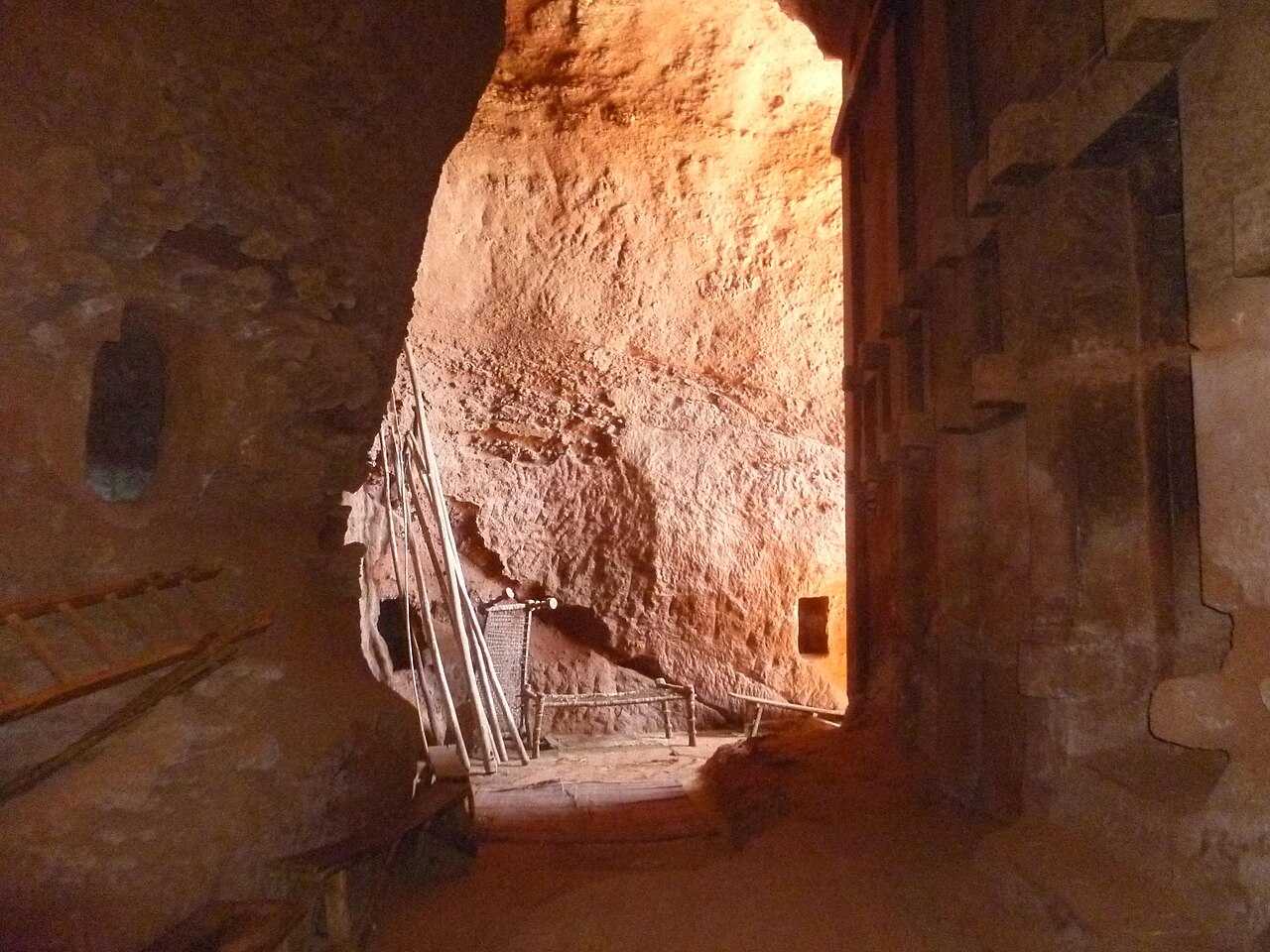
Lalibela’s rock-hewn churches are not merely a collection of ancient buildings; they are the heartbeat of Ethiopian Orthodox Christianity, a pilgrimage destination that has drawn the faithful for over 800 years, and a testament to the profound architectural and spiritual ambition of a medieval African kingdom. Carved not from the ground up, but meticulously hewn from the top down into the volcanic bedrock of the northern Ethiopian highlands, this network of monolithic and semi-monolithic churches is a place where geology, faith, and human endurance converge to create what is widely considered the Eighth Wonder of the World. To walk through the narrow trenches that separate these sanctuaries is to step into a living biblical landscape, a place where the Old and New Testaments are not just read but physically manifested in stone, and where the chants of priests echo against walls that have witnessed centuries of prayer, pilgrimage, and profound cultural continuity.
- The Visionary King and the New Jerusalem
- Architectural Marvels: A City Carved from the Living Rock
- The Enduring Faith: Pilgrimage and Living Rituals
- Preserving the Sacred for the Future
- Practical Guide for the Modern Pilgrim
- Beyond the Stone: Lalibela in a Modern African Context
- A Testament to Human Devotion and African Heritage
The Visionary King and the New Jerusalem
The story of the Lalibela churches Ethiopia is inextricably linked to one of the most fascinating figures in African history: King Gebre Mesqel Lalibela. Born in the town of Roha (which would later be renamed in his honor) in the latter half of the 12th century, Lalibela belonged to the Zagwe dynasty, which had established its capital in this remote and rugged region of Lasta after the decline of the Aksumite Empire. According to Ethiopian tradition and the hagiography known as the Gadla Lalibela, the future king’s life was marked by divine intervention from the very beginning. It is said that at his birth, a swarm of bees surrounded him, which his mother interpreted as a sign that he would one day become king. The name Lalibela itself is believed to mean “the bees recognize his sovereignty” in the ancient Ge’ez language.
Exiled in his youth by a hostile uncle, Lalibela sought refuge in Jerusalem, a city that held immense spiritual significance for him. However, his journey was cut short by a divine vision in which God instructed him to return to Ethiopia and build a “New Jerusalem” in his homeland, a sanctuary that would be accessible to his people without the perilous journey to the Holy Land. This was a period of immense geopolitical turmoil, with the Crusades raging in the Middle East and Christian access to Jerusalem becoming increasingly dangerous and restricted. The vision Lalibela received was not one of simple mimicry but of spiritual creation: he was to carve a symbolic representation of the Holy Land—complete with a River Jordan, a Church of Golgotha, and a Church of the Saviour—directly into the mountains of Lasta.
Upon ascending the throne around 1187 AD—the very year Saladin captured Jerusalem—Lalibela set about his divine mission with remarkable fervor. He is credited with commissioning the construction of 11 churches, each a unique architectural masterpiece, over a period of roughly 24 years. The sheer scale of this undertaking is staggering. It is estimated that over 100,000 cubic meters of rock were excavated to create the churches, their courtyards, and the intricate network of trenches connecting them. Tradition holds that Lalibela was aided by angels who worked alongside the human masons by night, and that the king himself was guided by God, with some stories claiming he was shown how to carve the stone by divine architects. These legends, while beautiful, often obscure the reality of an incredibly sophisticated and organized labor force of skilled masons, quarrymen, and artists, which the Zagwe kingdom was able to mobilize. The task was not just to hollow out caves but to sculpt entire buildings—complete with doors, windows, columns, and intricate decorative reliefs—from a single, living piece of bedrock. The result was a celestial city on earth, a physical manifestation of the heavenly Jerusalem that has served as a focal point of Ethiopian Christianity for centuries.
Architectural Marvels: A City Carved from the Living Rock
The 11 churches of Lalibela are not arranged haphazardly; they are thoughtfully organized into distinct clusters that reflect their liturgical and symbolic functions. The site is traditionally divided into two primary groups, separated by the artificial channel of the Yordanos (River Jordan), which is filled with water during the rainy season for the Timkat (Epiphany) celebrations. The northern group, which some scholars believe to be the older of the two, is considered the more spiritually significant, while the southeastern group is home to the most famous and aesthetically celebrated of all the churches. A fourth, isolated church, stands apart from these main groupings, adding a layer of mystery to the overall site.
The Northern Group: The Heart of the Liturgical Year
The northern cluster is anchored by the largest and most complex of the Lalibela churches, the majestic Bete Medhane Alem, which translates to “House of the Redeemer of the World.” This monumental structure is believed to be the largest monolithic church in the world, a staggering 33.5 meters long, 23.5 meters wide, and over 11 meters high. Its interior is a dense forest of 72 monolithic pillars, which support the immense flat roof. The exterior, with its rows of false windows, is designed to echo the basilicas of ancient Aksum, creating a powerful link to Ethiopia’s glorious Christian past. Bete Medhane Alem is the site of the most important ceremonies, including a major pilgrimage on Christmas Day, when tens of thousands of worshippers in white shawls gather in its vast courtyard.
To the north of Bete Medhane Alem lies the cruciform church of Bete Maryam, which is believed by many to be the oldest of the churches and is a favorite of pilgrims. Its interior is uniquely adorned with beautiful, faded frescoes depicting biblical scenes and saints, as well as intricate carvings of the Cross of Lalibela and other symbolic motifs. It is in this church that the Lalibela Cross, a highly venerated processional cross, is kept, and where the most sacred ceremonies, such as the celebration of Lalibela’s own feast day, are held. Directly to the west of Bete Maryam is the church of Bete Golgotha, a semi-monolithic church that is not entirely free-standing. It contains a replica of the tomb of Christ and is home to a unique panel depicting the Entombment of Christ. This church is particularly sacred as it is believed to hold the tomb of King Lalibela himself, a simple grave marked in the floor of a small chapel adjacent to the main sanctuary. Access to Bete Golgotha is often restricted, but its presence adds a powerful sense of history and sanctity to the northern group.
The final church in this cluster, Bete Mikael, is connected to Bete Golgotha and is often considered a single complex. It features a series of beautifully carved arches and columns, and its walls are adorned with some of the most well-preserved frescoes in Lalibela, depicting St. George slaying the dragon, as well as various saints and apostles. Beneath Bete Golgotha and Bete Mikael lies a network of subterranean tunnels and chambers, some of which are believed to be ancient tombs, adding another layer of depth to the site’s mysterious history.
The Southeastern Group: A Walk Through the Holy Land
Across the artificial riverbed, the southeastern group offers a different, yet equally profound, experience. Here, the churches are more intimately scaled, and the visitor is forced to navigate through narrow, dark trenches, creating a powerful sense of discovery. The most famous and iconic of all the Lalibela churches is found in this group: Bete Giyorgis, the House of St. George. This church is carved in the form of a perfect Greek cross, measuring roughly 12 meters on each side, and is hewn entirely from a single block of grey volcanic rock. It is reached by descending a deep, rectangular pit, and its flat roof is adorned with a series of carved relief crosses, making it one of the most photographed and recognized religious monuments in the world. The legend associated with Bete Giyorgis is that St. George, the patron saint of Ethiopia, was displeased that no church had been dedicated to him. To appease him, King Lalibela promised to build the most beautiful church of all in his honor, and the result is this architectural jewel.
Nearby, the church of Bete Amanuel is a stunning example of the Aksumite architectural style, with its alternating horizontal bands of dark and light stone and its distinctive “monkey-head” protruding beams. It is believed to have served as the royal chapel or even the palace of King Lalibela before being consecrated as a church. Its intricate exterior and well-proportioned interior make it one of the most exquisite examples of the builders’ skill. Another church in this group, Bete Abba Libanos, is a semi-monolithic structure carved against a cliff face, its interior space supported by a series of columns. It is connected to Bete Amanuel by a tunnel, and its exterior is relatively plain, but the church is home to a beautiful, painted wooden iconostasis and is adorned with colorful, though faded, wall paintings.
The final church in the southeastern cluster, Bete Lehem, is often considered a chapel connected to the larger Bete Maryam complex, though it is physically located in the southeast. It is a small, semi-monolithic church, and its name, meaning “House of Bread,” is a direct reference to Bethlehem. It is believed to have been used for the preparation of the Eucharist, and its walls are decorated with a frieze of painted geometric patterns and crosses. Separated from these two main groups by a 700-meter path is the church of Bete Gabriel-Rufael, which is perched on a high, sheer cliff face. It is reached by a narrow causeway and a small bridge, and its exact function remains a subject of debate among historians. It may have served as a royal residence or a defensive outpost, but its orientation and architectural features suggest it was also used for religious purposes. Its remote and precarious position contributes to the site’s sense of awe and its separation from the main liturgical centers.
The Enduring Faith: Pilgrimage and Living Rituals
To describe the Lalibela churches Ethiopia as a mere historical or archaeological site would be to miss their most vital and defining characteristic: they are a living, breathing center of faith. For centuries, they have been the destination of an arduous pilgrimage for Ethiopian Orthodox Christians from all over the country. The journey is often undertaken on foot, sometimes taking weeks or even months, as the faithful traverse the rugged highlands to reach this sacred city. Their arrival is a powerful spectacle, often marked by the continuous chanting of hymns and the rhythmic beating of prayer sticks as they circle the churches.
The church is not merely a place of Sunday worship; it is the axis of the community’s spiritual and social life. The year is punctuated by a rich and demanding liturgical calendar, with major festivals drawing massive crowds to Lalibela. The most significant of these is Genna, the Ethiopian Orthodox Christmas, celebrated on January 7th. On this day, the vast courtyard of Bete Medhane Alem becomes a sea of white as tens of thousands of pilgrims, many dressed in traditional white cotton shawls (netela), gather to attend the midnight and early morning services. The atmosphere is one of intense joy and devotion, with the air filled with the scent of frankincense and myrrh and the powerful, sonorous chanting of the priests and deacons.
Another major celebration is Timkat, the Epiphany, which takes place in January as well. This festival commemorates the baptism of Jesus in the River Jordan. In Lalibela, the celebration is uniquely tied to the landscape itself. The procession begins with the priests carrying the tabots (replicas of the Ark of the Covenant) to the artificial channel of the Yordanos, which is blessed and then filled with water. The water is then used for a ceremony of blessing and re-dedication, creating a powerful and literal reenactment of the biblical event. The most intimate and powerful festival, however, is the feast of Saint Lalibela himself, which is celebrated on June 6th. This is a time when the local clergy and community commemorate their founding king, and it is believed that his spiritual presence is especially strong within the church that bears his name.
The air is not just filled with incense; it is filled with the memory of a thousand years of prayer. The stone walls are not merely carved by human hands; they are polished by the touch of millions of faithful who have come to seek solace, healing, and connection with the divine. This is not a museum; it is a soul.
The daily life within the churches is equally rich. The debtera (a learned lay clergy) and priests maintain a constant presence, offering prayers, blessings, and performing the intricate chants and dances that are central to the Ethiopian Orthodox liturgy. Many of the priests are descendants of families who have served these churches for generations, holding the title of Nebura’ed, a role that historically held significant political and religious authority. For the local community in the town of Lalibela, the churches are not a separate entity but the very core of their identity. The rhythms of their day, their agricultural calendar, and their most significant life events—baptisms, marriages, and funerals—are all intimately connected to the sacred site that towers over them. This continuity of practice, from the 12th century to the 21st, is perhaps the most remarkable aspect of the site, making it a unique and irreplaceable treasure for all of humanity.
Preserving the Sacred for the Future
While the Lalibela churches Ethiopia have endured for over eight centuries, they now face a new and complex set of challenges that threaten their long-term survival. The very forces that make the site so extraordinary—its location, its composition, and its living community—also render it vulnerable. The rock-hewn churches are susceptible to damage from seismic activity, weathering, and water infiltration. The region is prone to earthquakes, and any significant tremor could cause catastrophic cracking or collapse. Over time, the constant expansion and contraction of the rock due to temperature changes, coupled with the impact of heavy rainfall, can lead to erosion and structural instability. The problem of water damage is particularly acute, as the churches are often located in pits that can flood, and the porous nature of the volcanic tuff stone makes them vulnerable to the growth of damaging salts and moss.
In response to these threats, a series of international preservation efforts have been undertaken. The most notable of these was the project led by the Getty Conservation Institute in partnership with the Ethiopian government’s Authority for Research and Conservation of Cultural Heritage (ARCCH). This multi-year project, which began in the early 2000s, focused on developing a comprehensive conservation plan for the entire site. It involved detailed scientific analysis of the stone, monitoring of structural movements, and the design of protective drainage systems and shelters. The project’s ethos was one of “minimal intervention,” aiming to preserve the authentic fabric of the churches while mitigating the most significant risks. This collaborative model, which brought together international expertise and local knowledge, is considered a benchmark for conservation projects on the continent.
Beyond the physical threats, the site also faces the challenge of managing the immense pressure of tourism. Lalibela is a UNESCO World Heritage Site, and it is one of the primary destinations on the “Historic Route” of Ethiopian tourism. The influx of visitors, while economically vital for the local community, can contribute to wear and tear on the ancient stone. The narrow trenches and walkways are subject to constant foot traffic, and the increased humidity from large numbers of people inside the churches can accelerate the deterioration of the delicate wall paintings. Balancing the need for accessibility and the economic benefits of tourism with the imperative to protect the site for future generations is a delicate and ongoing challenge. The local community, particularly the priests and clergy, are active stakeholders in this process. Their deep spiritual connection to the site gives them a unique perspective on what it means to “preserve” it, ensuring that any conservation effort is not just about maintaining the physical structure but also about safeguarding the living traditions and sacred practices that give the site its soul. The future of Lalibela will depend on this delicate balance between safeguarding the stone and sustaining the spirit.
Practical Guide for the Modern Pilgrim
Reaching this remarkable site is an adventure in itself. The most common way to access Lalibela is by flying into the Lalibela Airport (LLI), which is served by Ethiopian Airlines with daily flights from Addis Ababa. The flight itself is a breathtaking experience, soaring over the dramatic gorges and plateaus of the Ethiopian highlands. For the more adventurous traveler, an overland journey by bus from Bahir Dar or Gondar is possible, but it is a long and arduous trip that can take over a day, though it offers an unparalleled glimpse into the rural life of the region. Once in the town of Lalibela, the churches are within walking distance of most hotels, though the altitude (around 2,500 meters) can make the initial excursions tiring. A local guide is not only recommended but essential, as they provide invaluable context, historical insight, and can navigate the complex network of trenches and tunnels that connect the churches.
When planning a visit, it is important to be mindful of local customs and religious sensitivities. The churches are active places of worship, and visitors are expected to dress modestly, covering shoulders and knees. It is customary to remove your shoes before entering the inner sanctum of the churches. Photography is generally allowed in the courtyards but is often restricted inside the churches, particularly during services. As a sign of respect, it is best to ask permission before taking photographs of the clergy or worshippers. The best time to visit is during the dry season, from October to March, when the weather is pleasant and the skies are clear. To experience the site in its full spiritual glory, plan your visit to coincide with one of the major religious festivals, such as Genna (Christmas) or Timkat (Epiphany). However, be prepared for massive crowds and book accommodations well in advance. For a more serene experience, consider visiting during the shoulder months of September or April, when the crowds are smaller but the weather is still favorable.
| Festival | Approximate Date (Gregorian) | Significance | Key Location in Lalibela |
|---|---|---|---|
| Genna (Ethiopian Christmas) | January 7 | Celebrates the birth of Christ | Courtyard of Bete Medhane Alem |
| Timkat (Epiphany) | January 19 | Commemorates the baptism of Jesus | Procession to the Yordanos (River Jordan) channel |
| Feast of St. George | April 23 | Honors the patron saint of Ethiopia and of Bete Giyorgis | Bete Giyorgis |
| Feast of St. Lalibela | June 6 | Commemorates the life and legacy of King Lalibela | Bete Golgotha and surrounding complex |
| Meskel (Finding of the True Cross) | September 27 | Celebrates the discovery of the cross on which Jesus was crucified | Large bonfire ceremony in a nearby field |
While in Lalibela, take the time to explore the town itself and its surroundings. The local market, held on Saturdays, is a vibrant hub of activity, where farmers from the surrounding villages come to trade goods, livestock, and traditional crafts. You can find beautiful handwoven textiles, pottery, and religious artwork here. The town is also a center for traditional Ethiopian cuisine; be sure to sample local dishes such as injera (a sourdough flatbread) with various wat (stews), and drink strong, sweet Ethiopian coffee, which is a central part of the social fabric. Just a short walk from the main church complex is the monastery of Ashetan Maryam, which offers stunning panoramic views of the surrounding mountains and is home to a collection of ancient manuscripts. For the physically fit, a hike to the top of the nearby Mount Abuna Yosef provides an unforgettable experience, with its dramatic scenery and the possibility of spotting the endemic and endangered Walia ibex, a wild mountain goat. A visit to Lalibela is not a simple sightseeing trip; it is a journey into the heart of Ethiopia’s spiritual and cultural heritage, an experience that will resonate long after you have left its sacred grounds.
Beyond the Stone: Lalibela in a Modern African Context
The narrative of the Lalibela churches Ethiopia is often framed in the context of medieval history, but it is just as relevant to the story of modern Africa. Lalibela is not a relic frozen in time; it is a dynamic and integral part of contemporary Ethiopia. The town is a living community, home to over 17,000 people, and the churches are woven into the fabric of their daily lives. The site is a major economic engine for the region, providing employment and income through tourism, hospitality, and the sale of religious and cultural artifacts. Local guides, hoteliers, and artisans all depend on the steady flow of national and international visitors, making the preservation of the site not just a cultural imperative but also an economic necessity for the community.
Furthermore, Lalibela serves as a powerful symbol of African ingenuity, faith, and resilience for the entire continent and its diaspora. It challenges the persistent, outdated narratives that often portray pre-colonial Africa as a place without complex civilizations or monumental architectural achievements. The sheer scale and sophistication of the rock-hewn churches stand as undeniable proof of a highly organized, technologically advanced, and deeply spiritual African kingdom. For many in the African diaspora, Lalibela is a source of immense pride and a tangible connection to a glorious and sophisticated African past that was deliberately obscured by colonial histories. It is a physical manifestation of a powerful and enduring African Christianity, which predates the arrival of European colonizers by centuries.
The site also offers a unique perspective on the relationship between religion, identity, and nationhood. The vision of King Lalibela to create a “New Jerusalem” was not just a religious act but a political one, designed to establish Ethiopia as the true inheritor of the biblical Holy Land and to unify his kingdom under a powerful national faith. This sense of a unique, divinely ordained identity continues to resonate in Ethiopia today. The annual pilgrimages to Lalibela, which draw believers from every corner of this diverse nation of over 110 million people, serve as a powerful unifying ritual, reinforcing a shared cultural and religious identity that has persisted for over a millennium. In this sense, Lalibela is more than a historical site; it is a living embodiment of the Ethiopian spirit, a place where the past and present converge to shape a national consciousness that is both deeply rooted and forward-looking. It is a proud monument of a civilization that has never been broken, and a testament to the enduring power of faith to inspire humanity’s greatest creative achievements.
A Testament to Human Devotion and African Heritage
As the sun sets over the Lasta mountains, casting long shadows across the ancient stone, the Lalibela churches Ethiopia reveal yet another layer of their profound power. The golden light illuminates the intricate carvings and the smooth, polished surfaces of the walls, worn by the touch of countless hands over centuries. The echoes of chanting from a distant service drift through the cool evening air, a haunting reminder that this is not a dormant monument but a living, breathing sanctuary. To stand before Bete Giyorgis, a perfect cross carved from the heart of the earth, is to feel a profound sense of connection—not only to the medieval king who envisioned it and the masons who carved it, but to the millions of pilgrims who have come before, seeking the same spiritual solace and connection to the divine.
Lalibela is a triumph of human will and faith, a place where the impossible was made real. It is a testament to the power of a single, powerful vision to mobilize a kingdom and create a wonder that would outlast empires. It is a crucial piece of the world’s heritage, an African marvel that deserves to be celebrated not as an anomaly, but as a shining example of the continent’s profound and enduring contribution to human civilization. In its stones, we read a story of devotion, of architectural audacity, and of an unbroken cultural continuity that is all too rare in our modern world. It is a place that does not merely preserve the past; it invites us to participate in a living tradition, to walk the same paths as kings and saints, and to witness the enduring power of a faith that has truly moved mountains. A visit to Lalibela is more than a journey through history; it is a pilgrimage to the very soul of Ethiopia.