📅 Last updated: 30.08.2026
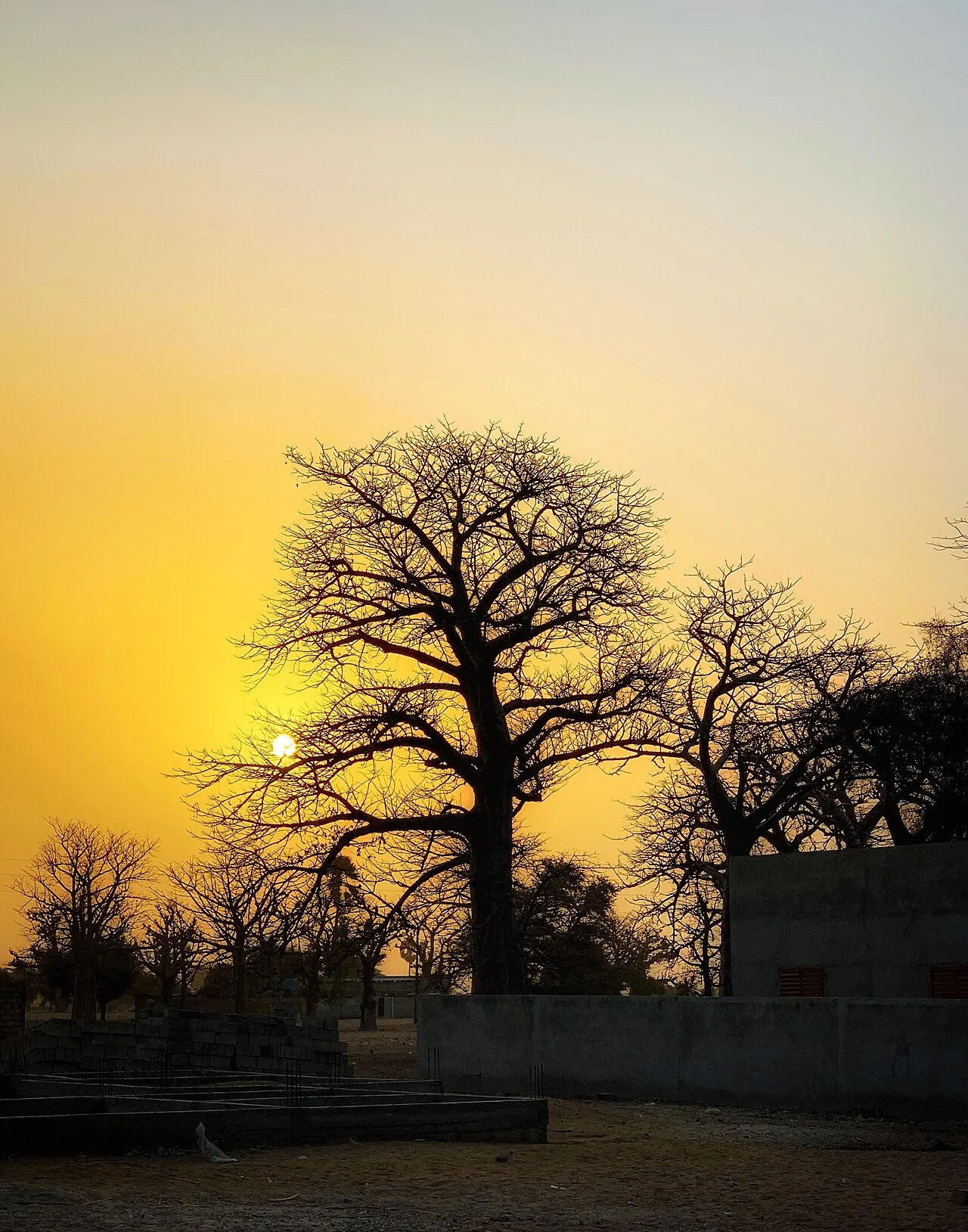
The baobab tree Africa calls its own is a botanical paradox — a tree that looks upside-down, lives for millennia, and bears fruit that tastes like cream of tartar dusted with sunshine. Known scientifically as Adansonia, this ancient giant has anchored the continent’s landscapes, mythologies, and economies for tens of thousands of years. Yet for all its fame, the baobab remains a quiet enigma: a species that refuses to behave like a normal tree, storing water in its fibrous trunk, flowering only at night, and surviving droughts that would fell an oak in a season. To understand the baobab is to understand Africa’s own resilience — its deep roots, its capacity to endure, and its slow, patient generosity.
- The Anatomy of an Ancient Giant: What Makes the Baobab Tick
- The Baobab Tree Africa Has Known for 2,500 Years: A Living Archive
- A Tree Under Pressure: Climate Change and the Fight for Survival
- The Baobab’s Economic Renaissance: From Wild Harvest to Global Superfood
- The Baobab in the Modern Imagination: Art, Science, and Activism
- What the Baobab Teaches Us: Roots, Patience, and Reciprocity
The Anatomy of an Ancient Giant: What Makes the Baobab Tick
Standing before a mature baobab is like meeting a living mountain. The trunk can swell to over 25 meters in circumference — the largest recorded specimen, the Sunland Baobab in Limpopo Province, South Africa, measured 33.4 meters around before it split in 2017. The tree’s silhouette is unmistakable: a thick, bottle-like trunk tapering into stubby, root-like branches that earned it the nickname “the upside-down tree” among the San people of the Kalahari, whose folklore claims the gods threw the baobab from the heavens in a fit of pique.
But the baobab’s oddity is pure engineering genius. Its spongy, fibrous wood acts as a giant water reservoir — a single mature tree can hold up to 120,000 liters of water, which it draws upon during the punishing dry season. This is why elephants, with their remarkable memory for resources, will tear into baobab bark during droughts, chewing the moist pulp for hydration. The tree’s bark grows back, but the scars remain — visible testimony to the co-evolution of Africa’s mega-fauna and its most generous plant.
The Nine Species: A Continental Family
The baobab genus Adansonia comprises nine species, with six native to Madagascar, one to mainland Africa, one to Australia, and one — Adansonia digitata — being the iconic baobab tree Africa shares with the world. The African species is the most widespread, found across the Sahel from Senegal to Sudan, down through East Africa to the Limpopo River, and west to Namibia and Angola. Its Malagasy cousins are more threatened: Adansonia grandidieri, the towering “baobab of Grandidier” lining the Avenue of the Baobabs near Morondava, is classified as endangered, with only a few hundred mature individuals remaining. The Australian species, Adansonia gregorii, diverged from its African relatives roughly 12 million years ago, a reminder that the baobab’s story is also one of continental drift and deep time.
The Baobab Tree Africa Has Known for 2,500 Years: A Living Archive
Dating a baobab is notoriously difficult — the trunk’s rings are not annually reliable, and the tree’s hollow center often rots away, leaving a void that ancient peoples used as shelter, storage, and even a pub. The Sunland Baobab, before its collapse, contained a wine cellar and a bar. Carbon-14 dating has revealed that the oldest African baobabs are astonishingly ancient: the Panke baobab in Zimbabwe lived for an estimated 2,459 years before it died in 2011, and the Dorslandboom in Namibia was around 1,500 years old when it toppled in 2020. Scientists from the University of Pretoria, led by Adrian Patrut, have documented the slow demise of many of these giants, attributing their deaths to climate change and the rising frequency of extreme drought.
For millennia, the baobab has been a living archive of human history. The Tswana people of Botswana used the hollow trunks as burial sites, while the Dogon of Mali believe the baobab is the first tree of creation, whose roots connect the earthly world to the ancestral realm. In northern Ghana, the baobab serves as a community courthouse — elders sit beneath its shade to settle disputes, a practice documented as far back as the 19th century by British colonial administrators. The tree is not merely a plant; it is a social institution, a calendar, a water source, and a pharmacy all at once.
What the Baobab Gives: A Nutritional Powerhouse
The baobab’s fruit, often called “monkey bread” or buyu in Swahili, is a velvety, kidney-shaped pod containing a dry, powdery pulp rich in vitamin C — six times more than an orange by weight. It also delivers high levels of calcium, potassium, magnesium, and antioxidants. The leaves are edible, cooked like spinach in West African soups, while the seeds are pressed for oil used in cosmetics and cooking. Every part of the tree serves a purpose:
- The fruit pulp — mixed with water to make a refreshing drink called bouye in Senegal or kuka in northern Nigeria; also used as a natural thickening agent and preservative.
- The leaves — dried, ground into powder, and added to stews; rich in iron and essential for preventing anemia in rural diets.
- The seeds — roasted and eaten as a snack, or cold-pressed for oil with high levels of linoleic acid, prized in skincare.
- The bark — stripped and woven into rope, baskets, and fishing nets; a practice documented among the Zulu and Shona peoples.
- The trunk’s inner lining — used in traditional medicine to treat fevers, dysentery, and inflammation.
Modern science is catching up with traditional knowledge. In 2008, the European Union approved baobab fruit pulp as a novel food ingredient, opening the door for its use in smoothies, energy bars, and supplements. By 2023, the global baobab market was valued at over $7 billion, with the majority sourced from smallholder farmers in Ghana, Zimbabwe, and Madagascar. This is not a story of exploitation but of partnership — companies like Treekind and Baobab Foods work directly with cooperatives, paying fair-trade premiums that fund schools and wells in rural communities.
A Tree Under Pressure: Climate Change and the Fight for Survival
For all its resilience, the baobab tree Africa has nurtured for thousands of years is facing an unprecedented threat. The same drought-adapted physiology that allows it to survive arid conditions is being pushed beyond its limits by climate change. Studies published in Nature Plants (2018) revealed that nine of the 13 oldest baobabs on the continent had died or partially collapsed in the preceding decade, a rate far exceeding natural mortality. The cause: rising temperatures and declining rainfall across southern Africa, which stress the trees’ water storage capacity and make them vulnerable to fungal infections.
The consequences ripple outward. In Madagascar, the iconic Adansonia grandidieri faces habitat fragmentation as forests are cleared for charcoal and agriculture. In the Sahel, overgrazing and firewood collection prevent young baobabs from establishing — the trees are slow-growing, taking 15 to 20 years to reach just a few meters in height, and they cannot outpace the pressure of human land use. Conservationists are now racing to establish gene banks and seed orchards, but the baobab’s long generation time makes conventional breeding programs painfully slow.
The Baobab in Culture and Storytelling
Despite these threats, the baobab’s cultural significance remains undimmed. Across the continent, it appears in proverbs, songs, and contemporary art. The Senegalese musician Youssou N’Dour titled a 2002 album Baobab, invoking the tree as a symbol of rootedness and memory. In South Africa, the baobab features prominently in the work of painter Esther Mahlangu, whose Ndebele patterns often incorporate its distinctive shape. The tree also crosses religious boundaries — in some Islamic communities of West Africa, baobab leaves are used in prayers for rain, while in Christian Ethiopia, the tree is associated with the legend of the Queen of Sheba.
The baobab’s hollow trunks have also become pilgrimage sites. The Glencoe Baobab in Limpopo, South Africa, is believed to be over 1,800 years old and was used as a stable by early European settlers. More recently, the Big Tree in Kasane, Botswana, serves as a stop for tourists on the Chobe River, who learn from local guides how the tree provided shade for the famous explorer David Livingstone in the 1850s. These stories are not just nostalgia — they anchor the tree in a living, evolving narrative that includes contemporary Africa’s urban youth, who are rediscovering the baobab as a symbol of environmental stewardship.
The Baobab’s Economic Renaissance: From Wild Harvest to Global Superfood
The world’s hunger for natural, nutrient-dense foods has transformed the baobab from a subsistence crop into a commercial commodity. In Ghana, the Baobab Association of Ghana (BAG) was founded in 2015 to organize over 2,000 women harvesters, who collect fruit from wild trees and sell it to exporters. The model is replicating across the continent:
- Zimbabwe: The Baobab Collection project, backed by the UN Development Programme, supports 1,500 smallholders in the Masvingo province, providing training in sustainable harvesting and quality control.
- Kenya: The Kamba people of the Kitui region have formed cooperatives that supply baobab powder to European markets, earning incomes that fund children’s school fees.
- Madagascar: The Baobab Express initiative, launched in 2020, connects rural collectors in the Menabe region with international buyers, while allocating 10% of profits to reforestation of degraded lands.
This economic shift is not without challenges. Harvesting practices must be regulated to avoid damaging trees — the fruit pods are best collected after they fall naturally, but some harvesters climb and shake branches, causing stress. Certification schemes like the FairWild standard are emerging to ensure ethical collection, and they are gaining traction among European and North American importers who prioritize traceability. The result is a delicate balance: the baobab’s commercial value is its best protection, but only if the market rewards sustainable practices.
A Table of Baobab Species: A Quick Reference
| Species | Location | Max Height | Conservation Status |
|---|---|---|---|
| Adansonia digitata | Mainland Africa | 25 m | Least Concern (but declining locally) |
| Adansonia grandidieri | Western Madagascar | 30 m | Endangered |
| Adansonia rubrostipa | Southern Madagascar | 8 m | Near Threatened |
| Adansonia gregorii | Northwestern Australia | 10 m | Least Concern |
What the table does not show is the genetic diversity hidden within each species. Recent genomic studies by researchers at Kew Gardens and the University of Antananarivo have identified distinct lineages of A. digitata across the Sahel, suggesting that local populations have adapted to microclimates over thousands of years. This diversity is a reservoir of resilience — but it is also fragile, as habitat loss erodes the very genetic variation that could help the species survive a warming planet.
The Baobab in the Modern Imagination: Art, Science, and Activism
The baobab’s influence extends far beyond the savanna. In literature, it appears in Antoine de Saint-Exupéry’s The Little Prince (1943), where it is depicted as a weed that must be uprooted before it overwhelms the prince’s tiny planet — a metaphor, some scholars argue, for the dangers of unchecked growth. In African literature, the tree occupies a more reverent position. The Nigerian novelist Chimamanda Ngozi Adichie opens her novel Purple Hibiscus with a reference to a baobab in her grandfather’s compound, using it as a symbol of continuity amid political upheaval.
Science, too, continues to uncover the baobab’s secrets. In 2021, a team from the University of Lisbon published a study showing that baobab fruit pulp contains prebiotic fibers that promote gut health, reinforcing its role as a functional food. Researchers are also investigating the baobab’s potential as a carbon sink — its massive biomass and longevity make it a candidate for reforestation projects, though its slow growth limits its immediate impact. The tree’s genome, sequenced in 2020, revealed that it has undergone repeated whole-genome duplication events, which may explain its remarkable adaptability.
Community-Led Conservation: A Model for the Future
The most promising conservation efforts are those that put local communities at the center. In the Venda region of South Africa, the Baobab Guardians program, launched in 2006, trains young people to monitor and protect endangered baobab populations, using GPS mapping and data collection. In Burkina Faso, the Association pour la Sauvegarde du Baobab has established tree nurseries that distribute seedlings to farmers, who plant them along field boundaries to improve soil fertility and provide fodder for livestock. These initiatives are not charity — they are livelihoods, and they are working. A 2022 report by the African Baobab Alliance estimated that community-managed baobab areas have increased by 18% across four countries in the past decade.
The challenge is scale. The baobab’s range spans 32 African countries, and coordinated action is difficult. But there is reason for hope. The African Union’s Great Green Wall initiative, which aims to restore 100 million hectares of degraded land across the Sahel, includes baobab as a priority species. Pilot projects in Niger and Senegal have shown that integrating baobabs into agroforestry systems can increase crop yields by up to 40%, thanks to the tree’s ability to improve soil moisture and provide shade.
What the Baobab Teaches Us: Roots, Patience, and Reciprocity
The baobab tree Africa has carried through the centuries offers a profound lesson in reciprocity. It gives water, food, medicine, and shelter without exhausting itself — a model of sustainability that humans would do well to emulate. Its lifespan forces us to think in geological time, beyond quarterly reports and election cycles. When we plant a baobab, we are making a promise to generations we will never meet, a gesture of faith that the future is worth preparing for.
The tree also reminds us that Africa’s natural heritage is not a relic to be preserved in amber but a living, breathing resource that can support modern economies and ancient traditions simultaneously. The women who harvest baobab fruit in Ghana, the scientists who sequence its genome in Lisbon, the artists who paint its silhouette in Johannesburg — they are all part of a continuum that stretches back to the first humans who sheltered beneath its branches. The baobab does not ask for our protection; it asks for our partnership. And in that partnership lies the possibility of a more resilient, more equitable world — one where the tree of life continues to stand, as it has for millennia, at the center of Africa’s story.