📅 Last updated: 05.10.2026
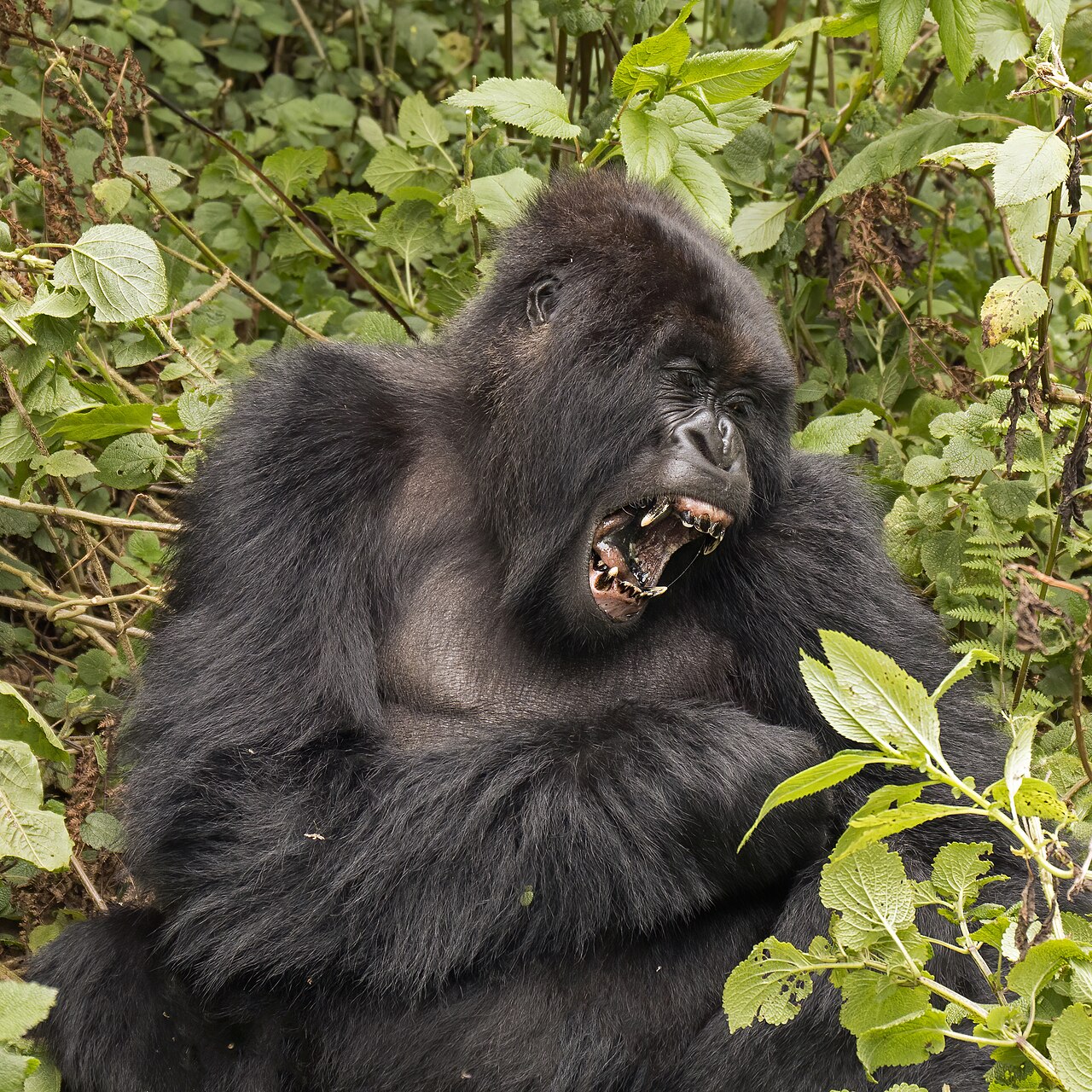
Seeing mountain gorillas Rwanda is one of the most profound wildlife encounters left on Earth — and unlike almost any other, it comes with a guarantee. Fewer than 1,100 mountain gorillas survive worldwide, all of them confined to two isolated forest blocks in the Virunga Massif and Uganda’s Bwindi Impenetrable National Park, and Rwanda’s Volcanoes National Park protects a share of that fragile population. Here, in a dense bamboo and hagenia forest draped across the slopes of dormant volcanoes, you can spend a strictly limited hour in the presence of a habituated gorilla family — and the money you pay helps keep the species alive.
- Why Rwanda Became the Capital of Mountain Gorillas Rwanda Tourism
- Understanding the Gorilla Permit: Cost, Rules, and How to Book
- Where Exactly Do You Trek? Inside Volcanoes National Park
- A Step-by-Step Look at the Trek Itself
- Mountain Gorillas Rwanda Trekking: Key Facts at a Glance
- When to Go: Seasons, Weather, and Wildlife
- Where to Stay: Lodges and Bases Near the Park
- How to Behave Around Gorillas — and Why It Matters
- Beyond the Gorillas: What Else to Do in Rwanda
- The Conservation Stakes: Why Every Permit Counts
- Practical Tips for a Smooth Trek
- Final Thoughts: An Encounter That Changes You
This guide covers everything: how permits work, what a trek actually feels like, where to stay, when to go, how to behave around a 200-kilogram silverback, and why conservationists consider Rwanda’s model both a triumph and a cautionary tale.
Why Rwanda Became the Capital of Mountain Gorillas Rwanda Tourism
The story begins with a rescue mission. In the late 1960s, American primatologist Dian Fossey set up the Karisoke Research Center high in the Virunga volcanoes, between Rwanda and what is now the Democratic Republic of the Congo. When she arrived, the mountain gorilla population was in freefall — poachers, cattle grazing, and habitat loss had pushed the species toward what many scientists assumed was inevitable extinction. Fossey’s fieldwork, her fierce anti-poaching patrols, and her 1983 book Gorillas in the Mist (later a 1988 film starring Sigourney Weaver) changed how the world saw these animals.
Fossey was murdered at Karisoke in December 1985, a case that remains officially unsolved. But the infrastructure she built endured. Rwanda’s government, recognizing that a living gorilla was worth far more than a dead one, formalized gorilla tourism in the late 1970s and 1980s. The logic was simple and radical: make the forest pay for itself, and give local communities a reason to protect it.
Today the strategy is the backbone of Rwandan conservation. Volcanoes National Park — roughly 160 square kilometers in the country’s northwest, part of the larger 450-square-kilometer Virunga Massif that Rwanda shares with Uganda and the DRC — is the anchor. Revenue from permits funds rangers, veterinary teams, and community projects. The result: the mountain gorilla population has been slowly, painstakingly rising. The 2018 census counted 1,063 individuals across the Virunga Massif and Bwindi, up from around 620 in 1989 — one of the very few great ape populations on the planet that is growing rather than shrinking.
Understanding the Gorilla Permit: Cost, Rules, and How to Book
Everything about a gorilla trek in Rwanda revolves around the permit. You cannot enter the forest with the gorillas without one, and permits are capped by strict daily limits to protect the animals.
What it costs
Rwanda’s gorilla permit costs US$1,500 per person for foreign non-residents. That is the highest in the region — Uganda charges $800 and the DRC around $400 — but Rwanda’s premium buys a well-organized experience, shorter and better-maintained trails, and the option to combine the trek with luxury lodges and the rest of the country’s attractions. Citizens of Rwanda and East African Community partner states pay a heavily discounted rate, and foreign residents in Rwanda pay a middle tier.
The golden rules
- One hour only. Once you reach the gorilla family, you have exactly 60 minutes with them. No exceptions, no extensions.
- Seven meters. You must stay at least seven meters from the gorillas at all times — this protects them from human-borne disease.
- Eight people per group. A maximum of eight visitors joins each habituated gorilla family per day.
- No flash, no drones, no food. Photography is allowed (no flash), but eating, drinking, and smoking near the gorillas is forbidden.
- Age 15 and up. Children under 15 cannot trek.
- If you’re sick, stay behind. Gorillas share roughly 98 percent of our DNA and are highly susceptible to human respiratory illnesses. A cold can kill a gorilla.
Book through the Rwanda Development Board (RDB) or a licensed tour operator, ideally three to six months ahead for peak season (June–September and December–February). Permits sell out, and the high-season window is genuinely tight.
Where Exactly Do You Trek? Inside Volcanoes National Park
All treks start at the park headquarters in Kinigi, a small town at the foot of the Virunga volcanoes, about a two-hour drive from Kigali. By 7 a.m., trekkers gather for a briefing where rangers assign visitors to gorilla families based on fitness and preference. Then you drive — often on rough roads — to a trailhead and begin walking.
Rwanda has around a dozen habituated gorilla families, each named and monitored daily. Some are easier to reach; others require hours of climbing through nettles, bamboo, and mud. The families include well-known groups like the Amahoro (“peace”) family, the Susa group (once the largest known, now split), and the Agashya family. Trackers go out at dawn to locate each family from the previous day’s nesting site, so you’re never wandering blindly — though the hike can still stretch from 45 minutes to several hours depending on where the gorillas slept.
Porters — local men and women who carry bags and help push and pull trekkers up steep slopes — are available for around $10–$20, and hiring one is both practical and a direct boost to the local economy. Many are former poachers or their children; the tourism economy has given them a different livelihood.
A Step-by-Step Look at the Trek Itself
Understanding the rhythm of the day helps you prepare mentally and physically.
- 5:00–6:00 a.m.: Leave your lodge and drive to Kinigi headquarters.
- 7:00 a.m.: Registration, coffee, and a briefing from park staff, often including a cultural performance by a local dance troupe.
- 7:30–8:00 a.m.: Assignment to families; drive to the trailhead.
- 8:00 a.m.–noon: The hike. Expect anything from a gentle 45-minute walk to a four-hour climb at altitude (2,500–3,000 meters).
- The encounter: One hour with the gorillas. You’ll likely see infants tumbling, juveniles wrestling, and the silverback — the dominant male — calmly feeding or watching over his family.
- Return: Hike back, receive your certificate, and head to your lodge.
“The hour passes like ten minutes. You forget the mud, the altitude, the burning calves. All you can hear is your own breathing and the sound of a gorilla chewing bamboo.” — a sentiment nearly every trekker shares.
Mountain Gorillas Rwanda Trekking: Key Facts at a Glance
Here’s a quick reference for planning. Note that the permit price is the single biggest variable in your budget.
| Detail | Information |
|---|---|
| Location | Volcanoes National Park, Kinigi, northwest Rwanda |
| Permit cost (foreign non-resident) | US$1,500 per person |
| Time with gorillas | 1 hour, maximum 8 visitors per family |
| Minimum age | 15 years |
| Best months | June–September (dry), December–February (short dry) |
| Wild population (2018 census) | 1,063 across Virunga Massif and Bwindi |
When to Go: Seasons, Weather, and Wildlife
Rwanda sits just south of the equator, so temperatures are mild year-round at altitude — expect 10–20°C (50–68°F) in the forest, with cold mornings and rain at almost any time. The two dry seasons are the most popular:
- June to September: The long dry season. Trails are firmer, views clearer, and conditions best for photography. This is peak season, so book early.
- December to February: The short dry season. Fewer crowds than mid-year, still good conditions.
- March to May and October to November: The rainy seasons. Muddy, slippery, and tougher — but lush, green, cheaper, and often quieter.
Whatever the season, pack for rain. The Virungas can turn a sunny morning into a downpour within an hour.
Where to Stay: Lodges and Bases Near the Park
Most trekkers stay in or around Kinigi or the nearby town of Musanze (formerly Ruhengeri), both within a short drive of park headquarters. Options span the full range:
- Luxury: Bisate Lodge, Singita Kwitonda Lodge, and One&Only Gorilla’s Nest — high-end properties that channel conservation fees back into the park and community.
- Mid-range: Mountain Gorilla View Lodge, Le Bambou Gorilla Lodge, and Five Volcanoes Boutique Hotel.
- Budget: Kinigi Guest House and various community-run guesthouses in Musanze.
Staying close to the park means a shorter, less stressful morning — worth every extra dollar when your alarm goes off at 4:30 a.m.
How to Behave Around Gorillas — and Why It Matters
The rules aren’t bureaucratic fussiness; they’re the reason the population is recovering. Mountain gorillas have no natural predators besides humans, and they are vulnerable to our diseases. A single infected visitor could wipe out a family.
- Keep your voice low and movements slow.
- If a gorilla approaches, stay still and let it pass — do not run.
- Never make direct, prolonged eye contact with a silverback; it can read as a challenge.
- Leave everything where you found it — no feeding, no touching, no litter.
- If you feel unwell, cancel. The park will not refund you, but the gorillas will thank you.
Beyond the Gorillas: What Else to Do in Rwanda
Rwanda rewards a longer stay. Many trekkers add:
- Golden monkey trekking in Volcanoes National Park — a lively, faster-paced alternative.
- Nyungwe Forest National Park in the southwest, home to chimpanzees, colobus monkeys, and a famous canopy walkway.
- Akagera National Park in the east, where the Big Five have been reintroduced — including lions in 2015 and rhinos in 2017.
- Lake Kivu, one of Africa’s Great Lakes, for beaches, kayaking, and coffee tours around Gisenyi and Kibuye.
- Kigali, a clean, safe, fast-modernizing capital with the moving Kigali Genocide Memorial, excellent coffee, and a growing art scene.
Rwanda itself is a story of reinvention. Three decades after the 1994 genocide against the Tutsi, the country has become one of Africa’s most organized destinations — and gorilla tourism is a central pillar of that identity.
The Conservation Stakes: Why Every Permit Counts
The mountain gorilla remains listed as Endangered by the IUCN, but its trajectory is genuinely hopeful — and rare. The 2018 census confirming more than 1,000 individuals was celebrated as a hard-won milestone. Behind it: daily ranger patrols, veterinary interventions by the Gorilla Doctors (who treat injured or snared gorillas), anti-poaching units, and community revenue-sharing programs that funnel a percentage of park income into schools, water projects, and farming cooperatives.
But the pressures haven’t vanished. The Virunga Massif is surrounded by one of the most densely populated rural regions in Africa, where smallholder farmers need land. Climate change is shifting rainfall patterns and altering the bamboo the gorillas depend on. And political instability in the eastern DRC across the border can spill into the ecosystem. Rwanda’s model works precisely because it makes protection economically rational for the people living beside the forest — a lesson conservationists now study worldwide.
Practical Tips for a Smooth Trek
- Fitness matters. The altitude and terrain can be demanding; a basic level of fitness helps enormously.
- Wear long sleeves and trousers to protect against stinging nettles, and sturdy, broken-in hiking boots.
- Bring gardening gloves — you’ll thank yourself when grabbing bamboo and nettles.
- Carry a rain jacket, water, and a light snack (eaten before you reach the gorillas).
- Hire a porter. It supports local families and makes the climb far easier.
- Camera settings: low light in the forest means a fast lens or high ISO; no flash.
- Allow buffer days. Flights and treks can be delayed; don’t schedule your gorilla day the morning before an international departure.
Final Thoughts: An Encounter That Changes You
There is nothing quite like the moment a silverback turns his head and looks at you — unhurried, unafraid, entirely aware. In that hour, the mountain gorillas Rwanda protects stop being a statistic and become a family: a mother nursing, a juvenile showing off, an old male keeping watch. The $1,500 permit is steep, and the hike can be brutal, but the money and the effort are precisely what keep these animals alive. Go respectfully, go prepared, and go knowing that your visit is part of the reason the mountain gorilla is still here — and, against long odds, slowly coming back.