📅 Last updated: 29.09.2026
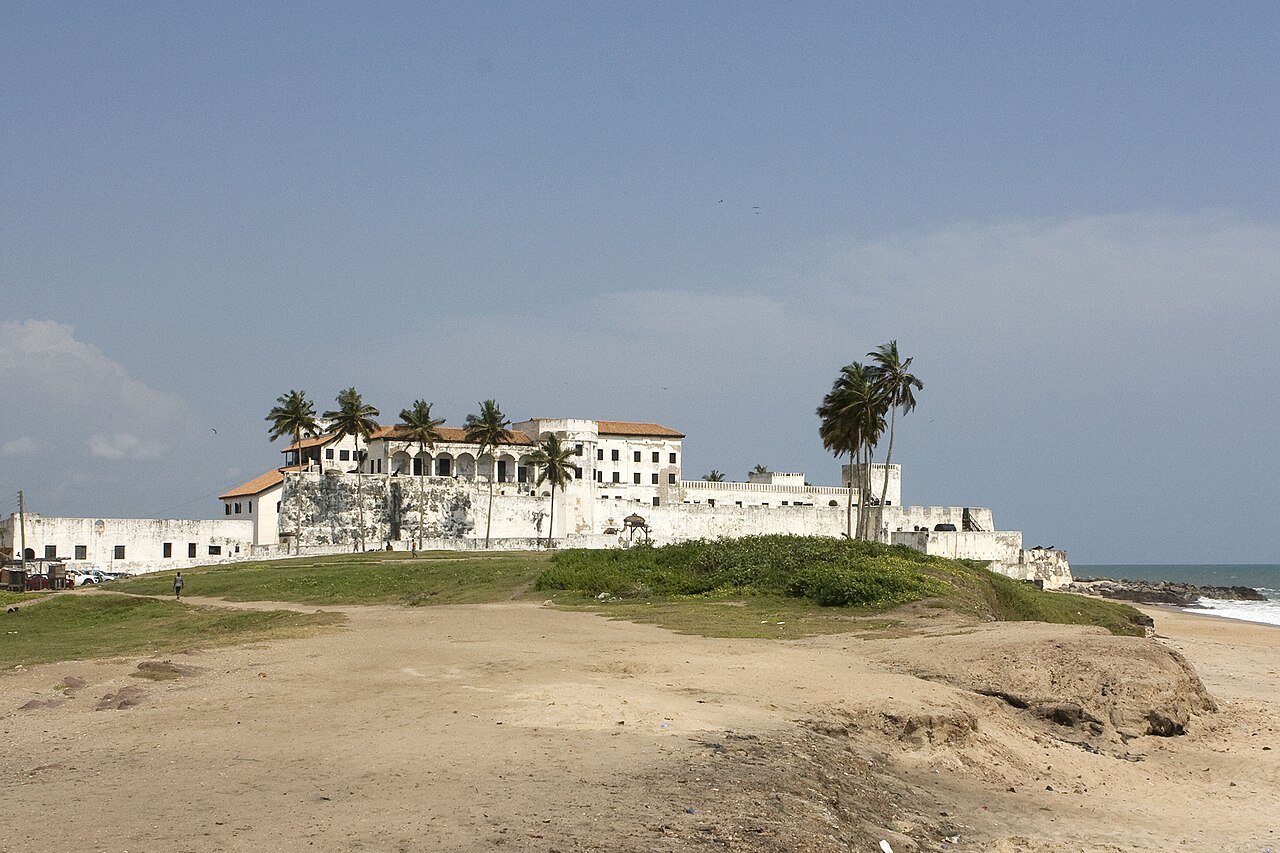
Elmina Castle stands on the Ghanaian coast like a whitewashed witness to one of the most consequential and painful chapters in human history. Built by the Portuguese in 1482 as a trading post for gold and later transformed by the Dutch and British into a holding facility for enslaved Africans, it is the oldest surviving European building in sub-Saharan Africa. Today, it is a UNESCO World Heritage Site, a museum, and a place of pilgrimage for the African diaspora seeking to reconnect with ancestors whose lives were shattered within its walls.
- From Gold Trade to Slave Trade: The Origins of Elmina Castle
- The Architecture of Control: Inside Elmina Castle
- Elmina Castle and the Transatlantic Slave Trade: The Numbers and the People
- Key Dates in the History of Elmina Castle
- Elmina Castle Today: Memory, Tourism, and Return
- The Broader Context: Elmina and the Ghanaian Slave Trade Network
- Controversies and Conversations: How Should We Remember Elmina?
- Elmina Castle as a Place of Pilgrimage and Healing
- Practical Information for Visitors
- Conclusion: What Elmina Castle Teaches Us
To understand Elmina Castle is to understand the machinery of the transatlantic slave trade — not as an abstraction, but as a concrete system with names, dates, ledgers, and human beings. This article explores the castle’s origins, its architecture of control, the people who passed through it, and the complicated legacy it carries into modern Ghana.
From Gold Trade to Slave Trade: The Origins of Elmina Castle
When the Portuguese navigator Diogo de Azambuja arrived on the Gold Coast in January 1482, he came with a fleet of ships, prefabricated building materials, and a royal mandate from King João II. The local Fante people, led by a chief whom Portuguese chroniclers recorded as Caramansa, initially resisted the construction. Azambuja negotiated, offered gifts, and ultimately secured permission to build a fortified trading post on a rocky peninsula overlooking the Atlantic.
The Portuguese named the settlement São Jorge da Mina — St. George of the Mine — a reference to the rich gold deposits of the interior that they hoped to tap. The castle became the administrative headquarters of Portuguese activities in West Africa, and for nearly a century it was the most important European outpost south of the Sahara. Gold flowed out; copper, brass, cloth, and horses flowed in. The trade enriched both Portuguese merchants and the coastal African elites who controlled access to the interior mines.
The Portuguese monopoly ended in 1637, when the Dutch West India Company captured the castle after a bloody siege. The Dutch renamed it simply Elmina, from the Portuguese a mina (“the mine”), and held it for the next 235 years. Under Dutch control, the castle’s function gradually shifted. As gold supplies dwindled and demand for enslaved labor exploded in the Americas, Elmina became a major hub for the transatlantic slave trade.
The British seized the castle in 1872, ending nearly four centuries of European rivalry over the site. By then, the transatlantic slave trade had been formally abolished by Britain (1807) and the Netherlands (1814), but the castle continued to serve as a colonial administrative center and later as a prison. Ghana gained independence in 1957, and Elmina Castle was restored and opened to the public in 1992.
The Architecture of Control: Inside Elmina Castle
Walking through Elmina Castle today, visitors are struck by the contrast between its serene exterior and the horror of its history. The castle is a sprawling complex of courtyards, chapels, officers’ quarters, storerooms, and dungeons. Its design reflects both its commercial purpose and its role as a fortress.
The Courtyards and Chapel
The upper courtyard, with its whitewashed walls and views of the Atlantic, was the domain of European officers. Here, they ate, slept, prayed, and plotted. The Portuguese chapel, later converted into a Dutch Reformed church, still stands. It is a short walk from the chapel to the female dungeon, a proximity that visitors often find deeply disturbing — the contrast between worship and brutality compressed into a few meters.
The Dungeons
The dungeons occupy the castle’s lower levels, carved into the rock and ventilated only by narrow slits. Enslaved Africans were held here in conditions of extreme overcrowding, with little food, water, or sanitation. The male dungeon could hold as many as 200 people at a time; the female dungeon held about 150. Many died from disease, starvation, or suffocation before they ever saw a ship.
A particularly chilling feature is the “Door of No Return” — a narrow opening in the castle wall through which enslaved people were led directly onto waiting ships. For most, it was the last time they would ever touch African soil.
The Governor’s Quarters
The governor’s residence, on the upper floor, was the most comfortable part of the castle. It included a balcony overlooking the courtyard, from which the governor could watch the enslaved people below. Some accounts describe governors selecting women from the courtyard for sexual exploitation — a reminder that the castle was not only a site of economic exploitation but also of gendered violence.
Elmina Castle and the Transatlantic Slave Trade: The Numbers and the People
Historians estimate that between 12 and 15 million Africans were forcibly transported across the Atlantic between the 16th and 19th centuries. Of those, roughly 2 million are believed to have passed through the forts and castles of the Gold Coast, including Elmina. The castle itself was one node in a vast network that stretched from Senegambia to Angola.
The trade was not simply a European enterprise. African elites — including the Fante, Asante, and Ewe — played active roles as intermediaries, capturing and selling prisoners of war, debtors, and criminals to European buyers. This is a painful but essential part of the story: the transatlantic slave trade was a collaborative system, albeit one in which Europeans held the ultimate economic and military power.
The conditions on the Middle Passage were catastrophic. Mortality rates on slave ships averaged 15-20 percent, and could exceed 30 percent on particularly brutal voyages. Those who survived the crossing were sold in the Americas — in Brazil, the Caribbean, and the British colonies of North America — where they and their descendants were subjected to generations of enslavement.
“The door of no return is not just a physical door. It is a symbol of the rupture that slavery created — a rupture that continues to shape the lives of millions of people of African descent today.”
— Kwame Dawes, Ghanaian-Jamaican poet and scholar
Key Dates in the History of Elmina Castle
| Year | Event |
|---|---|
| 1482 | Portuguese build São Jorge da Mina under Diogo de Azambuja |
| 1637 | Dutch West India Company captures the castle from Portugal |
| 1660s–1800s | Castle becomes a major hub for the transatlantic slave trade |
| 1872 | Britain takes control of Elmina Castle from the Netherlands |
| 1957 | Ghana gains independence; castle becomes a national monument |
| 1992 | Elmina Castle restored and opened to the public as a museum |
Elmina Castle Today: Memory, Tourism, and Return
In 1972, UNESCO designated Elmina Castle a World Heritage Site, recognizing its significance as a monument to the transatlantic slave trade. Since then, the castle has become one of Ghana’s most visited tourist attractions, drawing tens of thousands of visitors each year — including many African Americans, Afro-Caribbeans, and Afro-Latinos on pilgrimage to trace their ancestral roots.
The experience of visiting Elmina is often emotionally overwhelming. Guided tours lead visitors through the dungeons, the chapel, and the Door of No Return. Many visitors leave flowers, prayers, or tears. For some, the visit is a homecoming; for others, it is a confrontation with a history that is both personal and global.
The “Year of Return” and Beyond
In 2019, Ghana’s government launched the “Year of Return” initiative, marking 400 years since the first recorded arrival of enslaved Africans in Jamestown, Virginia. The campaign invited people of African descent around the world to visit Ghana, and Elmina Castle was at the center of the commemoration. The initiative was a major success, drawing celebrities, politicians, and ordinary travelers. It also sparked a broader conversation about reparations, heritage tourism, and the responsibilities of African nations toward the diaspora.
Today, Elmina Castle is more than a museum. It is a site of memory, a place of mourning, and a symbol of resilience. The town of Elmina itself — with its bustling fishing harbor, colorful canoes, and vibrant markets — is a reminder that life continues, and that Ghana’s future is as important as its past.
The Broader Context: Elmina and the Ghanaian Slave Trade Network
Elmina Castle was not the only slave trade fort on the Ghanaian coast. Cape Coast Castle, about 13 kilometers to the east, was equally significant and is also a UNESCO World Heritage Site. Together with smaller forts at Anomabu, Dixcove, and Keta, they formed a network that funneled enslaved people from the interior to the coast.
The Asante Empire, which dominated much of present-day Ghana from the late 17th to the late 19th century, was deeply involved in the slave trade. Asante armies captured prisoners of war and sold them to European buyers in exchange for firearms, textiles, and metal goods. The trade enriched the Asante elite but also destabilized the region, fueling cycles of warfare and displacement.
It is important to note that slavery existed in Africa before the arrival of Europeans. Domestic slavery, debt bondage, and the enslavement of war captives were practiced in many African societies. However, the transatlantic slave trade was different in scale, racial ideology, and brutality. It created a global system of racialized chattel slavery that would shape the modern world in profound ways.
Controversies and Conversations: How Should We Remember Elmina?
The management of Elmina Castle has not been without controversy. Critics have pointed to the commercialization of the site — the gift shops, the entrance fees, the sometimes rushed tours — as trivializing a place of immense suffering. Others have raised concerns about the treatment of African diaspora visitors, who sometimes feel that their pain is being commodified.
There have also been debates about the role of African elites in the slave trade. Some Ghanaian scholars and activists argue that acknowledging African complicity is essential to a full understanding of history. Others worry that such acknowledgment plays into racist narratives that blame Africans for their own suffering. The conversation is ongoing, and it is a necessary one.
In recent years, there have been calls for reparations — not only from European nations and institutions but also from African governments and traditional authorities. The debate is complex, but it reflects a growing global awareness that the legacy of slavery is not confined to the past.
Elmina Castle as a Place of Pilgrimage and Healing
For many people of African descent, visiting Elmina Castle is a spiritual experience. It is a chance to stand where their ancestors stood, to mourn, and to reclaim a sense of connection to the continent. Some visitors participate in traditional libation ceremonies, pouring water or alcohol on the ground to honor the dead. Others simply sit in silence.
The castle has also become a site for artistic and cultural expression. Ghanaian and diaspora artists have used it as a backdrop for films, photographs, and performances. In 2019, the African-American artist Kehinde Wiley unveiled a monumental sculpture, Power Figure (Nkisi Nkondi), near the castle, exploring themes of power, memory, and the African diaspora.
For Ghanaians, Elmina Castle is a source of both pride and pain. It is a reminder of the resilience of their ancestors and a warning about the dangers of greed, dehumanization, and complicity. It is also a symbol of Ghana’s commitment to preserving its heritage and sharing it with the world.
Practical Information for Visitors
If you are planning to visit Elmina Castle, here are some practical tips:
- Location: Elmina is about 3 hours by road from Accra, Ghana’s capital, and about 20 minutes from Cape Coast.
- Opening hours: The castle is generally open daily from 9:00 AM to 5:00 PM. Guided tours are available and highly recommended.
- Entrance fees: Fees vary for Ghanaians, African diaspora visitors, and other international tourists. Check the official website or local tourism office for current rates.
- What to bring: Comfortable shoes, water, and a respectful demeanor. Photography is allowed in most areas, but some spaces — particularly the dungeons — may have restrictions.
- Nearby attractions: Cape Coast Castle, Kakum National Park, and the Elmina fish market are all worth a visit.
It is also worth noting that Elmina is a living town, not just a historical site. The local Fante community has its own rich culture, including the Bakatue Festival, which celebrates the opening of the fishing season. Visitors are encouraged to engage respectfully with local people and businesses.
Conclusion: What Elmina Castle Teaches Us
Elmina Castle is a place of contradictions. It is beautiful and horrifying, serene and traumatic, a monument to human cruelty and a testament to human resilience. It reminds us that history is not something that happened long ago and far away — it is something that continues to shape our world, our identities, and our relationships with one another.
For Africans and the diaspora, Elmina Castle is a call to remember. It is a call to honor the millions who suffered and died, to acknowledge the complicity of those who profited, and to work toward a future in which such dehumanization is impossible. It is also a call to celebrate — to celebrate the survival of African cultures, the strength of African communities, and the ongoing project of building a continent that is free, prosperous, and just.
When you stand at the Door of No Return and look out at the Atlantic, you are standing at the intersection of past and present. The waves that carried enslaved people away are the same waves that now bring visitors back. And in that return — in the act of remembering, mourning, and reclaiming — there is a kind of healing that no historian can fully capture.