📅 Last updated: 05.07.2026
Across the lush, rolling hills of what is now northern Angola and the western Democratic Republic of the Congo, a civilization once flourished whose power, artistry, and political sophistication rivaled any in pre-colonial Africa. The Kongo Kingdom, a centralized state that emerged around 1390 CE, was not a minor chiefdom but a complex, sprawling empire that commanded the Atlantic coast, influenced the development of the transatlantic world, and left a legacy that is only now being fully understood. Its story is one of brilliant diplomacy, catastrophic disruption, and a resilience that still echoes in the cultural DNA of millions of people today.
- The Foundations of the Kongo Kingdom: A Divine Mandate
- The Golden Age: Afonso I and the Christian Kingdom
- The Kongo Kingdom After the Fall: Resilience in the Interior
- Key Dates in the Kongo Kingdom's Trajectory
- Art, Belief, and the Legacy of the Kongo World
- Modern Echoes: The Kongo Kingdom in Contemporary Africa
- The Kongo Kingdom: A Forgotten Empire, A Living Legacy
The Foundations of the Kongo Kingdom: A Divine Mandate
The genesis of the Kongo Kingdom is a tale woven from both myth and meticulous oral tradition. According to the most widely accepted narrative, the kingdom was forged by a charismatic conqueror and spiritual leader named Ntinu Nimi a Lukeni, or Lukeni lua Nimi, who crossed the mighty Congo River from the north. Around 1390, he subjugated the local inhabitants of the Mpemba Kasi region, establishing his capital at Mbanza Kongo (now the city of São Salvador in Angola). This act was not merely a military conquest; it was a spiritual unification, as Lukeni claimed divine authority, linking the kingship to the supreme god, Nzambi a Mpungu.
The kingdom’s structure was a marvel of pre-modern statecraft. It was not a monolithic empire but a highly organized federation of provinces, each administered by a mani (governor) appointed by the king, or Manikongo. This system ensured both central control and local flexibility. The king was considered a sacred figure, the spiritual and political pivot of the realm. His power, however, was checked by a council of elders and powerful provincial rulers, creating a delicate balance of authority that prevented absolute tyranny and fostered a sophisticated political culture.
The kingdom’s economy was robust and diverse. It was not built on a single resource. The fertile lands produced abundant crops like yams, millet, sorghum, and palm oil. The forests and rivers provided game and fish. But the true engine of the Kongo economy was its mastery of trade. The kingdom controlled key resources that were highly sought after both regionally and, later, internationally:
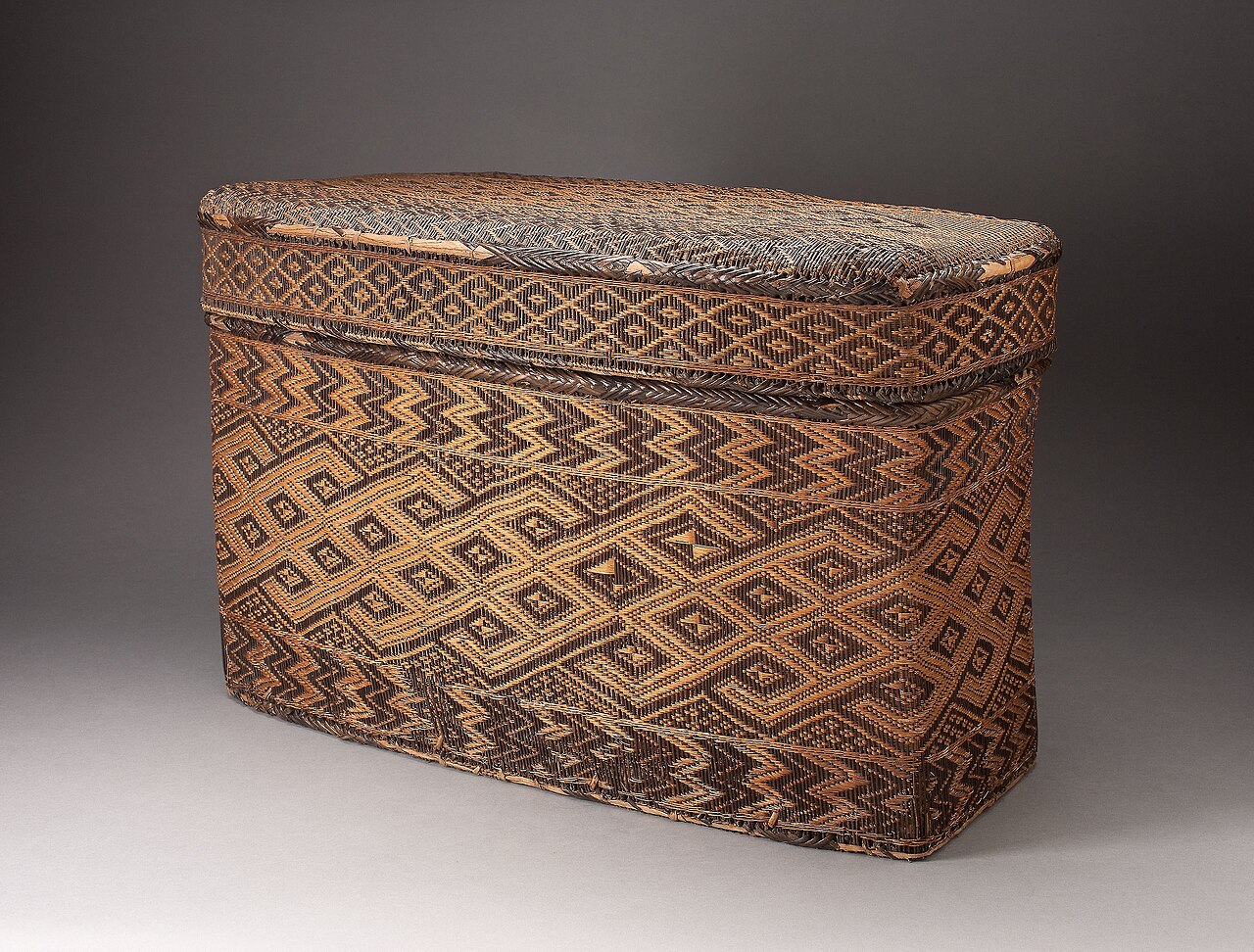
- Nkuku (Raffia Cloth): A finely woven textile made from palm fibers, which served as a form of currency and a prestige good across Central Africa. Its production was a sophisticated industry.
- Nzimbu Shells: Small, valuable shells harvested from the island of Luanda, which became the primary currency for the transatlantic slave trade for centuries.
- Ivory and Copper: These were traded for luxury goods and, critically, for iron and salt, resources the kingdom lacked in abundance.
- Slaves: While the Kongo Kingdom did participate in a regional system of servitude and debt bondage, it was initially a controlled, internal institution. The catastrophic export-driven slave trade was a later, devastating development.
The Golden Age: Afonso I and the Christian Kingdom
The arrival of the Portuguese explorer Diogo Cão in 1483 marked a profound turning point. The encounter was initially one of mutual curiosity and strategic interest. The Kongo king, Nzinga a Nkuwu (ruled 1470-1495), saw the Portuguese as powerful, technologically advanced allies. He was baptized in 1491, taking the name João I, but the conversion was superficial. The real transformation came under his son, Mvemba a Nzinga, who took the name Afonso I (ruled 1506-1543).
Afonso I is arguably the most remarkable African ruler of the 16th century. He was not a passive recipient of European influence. He was a brilliant diplomat, a devout Christian, and a shrewd pragmatist who sought to use the Portuguese alliance to modernize and strengthen his kingdom. He learned Portuguese, studied the Bible, and even sent his own son, Henrique, to study in Europe, who later became the first black bishop of the Catholic Church. Afonso’s vision was to create a Christian, literate, and technologically advanced Kongo that could stand as an equal partner with Portugal.
His capital, Mbanza Kongo, was renamed São Salvador and quickly became a unique African metropolis. It boasted stone buildings, a royal palace, churches, and a school where the Kongo nobility learned to read and write. A contemporary Portuguese report described it as a city of perhaps 50,000 people, with streets laid out in a grid. The Kongo elite adopted European dress, titles, and court rituals, but they did so on their own terms, integrating them into existing Kongo concepts of power and prestige. This was not simple imitation; it was a strategic adaptation.
However, the alliance was built on a fundamental tension. The Portuguese were primarily interested in trade, and the most profitable commodity was slaves. Afonso I wanted technology, military aid, and missionaries. He grew increasingly alarmed as the demand for slaves from his kingdom exploded. In a series of famous letters written to King Manuel I of Portugal, Afonso I pleaded for restraint, warning that his country was being depopulated and that the slave trade was corrupting his own officials. In one heartbreaking letter from 1526, he wrote:
“Each day the traders are kidnapping our people—children of this country, sons of our nobles and vassals, even people of our own family… The great havoc and damage caused by this is such that our kingdom is becoming depopulated. … It is our will that in these kingdoms there should not be any trade in slaves nor any market for them.”
His pleas were largely ignored. The slave trade, once a controlled state enterprise, began to burgeon into an uncontrollable, corrosive force that would eventually destroy the kingdom from within. Afonso I died in 1543, a tragic figure—a visionary king who saw the future but was unable to stop the forces he had helped to unleash.
The Fracturing of Power: Civil Wars and the Jaga Invasions
The century after Afonso I’s death was a period of gradual decline. The Portuguese presence, while still influential, became less of a partnership and more of a parasitic relationship. The kingdom was plagued by succession disputes. The sacred kingship, once a source of unity, became a prize to be fought over. The Portuguese, eager to maintain access to slaves, often played different factions against each other, deliberately weakening the central authority.
The most devastating blow came in 1568 with the invasion of the Jaga, a mysterious, warlike group of people (likely fleeing the expansion of the Lunda Empire to the east). They swept through the kingdom with terrifying speed, sacking São Salvador and forcing the Manikongo, Álvaro I, to flee to an island in the Congo River. The Jaga were described as ruthless cannibals by European sources (though this is likely exaggerated propaganda), but their impact was undeniable. The Kongo Kingdom, once the undisputed power of the coast, was reduced to a rump state.
Álvaro I, desperate, appealed to Portugal for help. King Sebastian of Portugal sent a military expedition under Francisco de Gouveia, which, in a brutal campaign, drove the Jaga out. But the price was high. In return for Portuguese military aid, Álvaro I agreed to make Portugal his protectorate, to allow a permanent Portuguese military governor to reside in the capital, and to grant Portugal a monopoly on the slave trade. The Kongo Kingdom was now a vassal state in all but name.
The Kongo Kingdom After the Fall: Resilience in the Interior
Despite the loss of its sovereignty and the devastation of the slave trade, the Kongo Kingdom did not simply vanish. It adapted. The capital was rebuilt, and the kingdom continued to function, albeit with diminished power. The 17th century saw a series of strong, independent-minded kings who tried to reassert their authority. One of the most notable was Garcia II (ruled 1641-1661), who successfully resisted Portuguese attempts to control the appointment of the Manikongo and even allied with the Dutch to harass Portuguese shipping.
The kingdom’s real power, however, shifted away from the coast and into the interior. The provinces of Soyo and Mbamba became semi-independent powerhouses. The Dukes of Soyo, in particular, grew rich and powerful, controlling the trade routes to the coast and often acting as kingmakers. For a time, Soyo became a major military power, defeating Portuguese armies in the field and maintaining its independence. This period shows the Kongo Kingdom not as a static entity that died, but as a dynamic, fragmented system that survived by decentralizing.
The final, catastrophic blow came at the Battle of Mbwila (or Ambuila) in 1665. The Manikongo, António I, a proud and defiant ruler, refused to continue paying tribute to Portugal and raised a massive army to challenge their control. The battle was a disaster for Kongo. King António I was killed in the fighting, his crown was taken to Lisbon as a trophy, and the Kongo army was annihilated. The kingdom never recovered its military or political unity. The capital of São Salvador was abandoned and reclaimed by the forest for nearly a century.
This period is often mistakenly described as the “end” of the Kongo Kingdom. In reality, it entered a long twilight. The title of Manikongo continued to be claimed by various lineages. The kingdom became a loose confederation of competing chiefdoms, all claiming descent from the old royal line. The Portuguese, focused on the rising slave ports of Luanda and Benguela, largely ignored the decaying interior state. The Kongo Kingdom had become a ghost of its former self, but its cultural and spiritual legacy was far from dead.
Key Dates in the Kongo Kingdom’s Trajectory
| Date | Event | Significance |
|---|---|---|
| c. 1390 | Founding by Lukeni lua Nimi | Unification of provinces; establishment of Mbanza Kongo as capital. |
| 1483 | First contact with Portuguese (Diogo Cão) | Beginning of a transformative, and ultimately destructive, alliance. |
| 1506-1543 | Reign of Afonso I | Golden age of Christianization, literacy, and diplomacy; also the rise of the slave trade. |
| 1568 | Jaga Invasion | Kingdom sacked; becomes a Portuguese protectorate; loss of sovereignty. |
| 1665 | Battle of Mbwila | King António I killed; military collapse; capital abandoned; end of centralized power. |
| c. 1718 | António III re-establishes capital | Kingdom continues as a rump state; title of Manikongo persists into the 20th century. |
Art, Belief, and the Legacy of the Kongo World
To understand the enduring significance of the Kongo Kingdom, one must look beyond politics and warfare. The Kongo people created a profound and influential spiritual and artistic worldview. Central to this was the concept of the Kalunga, the line separating the world of the living from the world of the dead. This line was not a barrier but a porous boundary. The ancestors were believed to be active participants in the lives of their descendants, and maintaining good relations with them was essential for health, prosperity, and social harmony.
This belief system found its most powerful expression in Kongo art. The famous nkisi nkondi (power figures) are among the most iconic objects in African art. These are carved wooden figures, often human or animal, that are studded with nails, blades, and other metal objects. Each nail represented a specific oath, a legal judgment, or a promise. The nkisi was not a “fetish” or a “god”; it was a container for a powerful spirit, activated by a ritual specialist (nganga), used to enforce contracts, hunt down wrongdoers, or protect a community. They were instruments of law and social control, a physical manifestation of a spiritual contract.
Another remarkable artistic legacy is the Kongo cosmogram (dikenga). This is a simple but profound symbol: a cross within a circle. It represents the four moments of the sun (dawn, noon, sunset, midnight) and the cyclical journey of the soul between the world of the living and the world of the dead. This symbol has had a breathtaking influence. It was carried across the Atlantic by enslaved Kongo people, and it is widely believed to have been a direct precursor to the Bakongo cosmogram found in many African diaspora religions, including Vodun in Haiti and Candomblé in Brazil. The Kongo cross is a hidden thread linking Central Africa to the Americas.
Today, the cultural legacy of the Kongo Kingdom is alive and vibrant. The Kikongo language, once the administrative tongue of an empire, is spoken by millions in Angola, the DRC, and the Republic of Congo. The traditions of chieftaincy, the rituals of ancestor veneration, and the rhythms of Kongo music are woven into the fabric of modern life. In Mbanza Kongo (São Salvador), the historic capital is now a UNESCO World Heritage Site, a testament to the city’s global significance. The descendants of the Manikongo still hold ceremonial titles, a living link to a past that refuses to be forgotten.
Modern Echoes: The Kongo Kingdom in Contemporary Africa
Far from being a mere historical footnote, the legacy of the Kongo Kingdom is actively invoked in modern Central Africa. In the Democratic Republic of the Congo, the kingdom’s memory is a powerful symbol of pre-colonial unity and sovereignty. Political and cultural movements have periodically sought to revive the institution of the Manikongo as a unifying, non-political figurehead for the Kongo people, who are a major ethnic group in the country.
In Angola, the history of the Kongo Kingdom is a central part of national identity, though a complex one. The official narrative often celebrates the kingdom’s resistance to Portuguese colonialism, but it also grapples with the kingdom’s own role in the early slave trade. The current traditional king of the Kongo, King Pedro IX (officially recognized by the Angolan government in 2001), resides in Mbanza Kongo and is a respected cultural figure who presides over ceremonies and advocates for the preservation of Kongo heritage. This is not a reenactment; it is a living tradition adapting to the 21st century.
Furthermore, the history of the Kongo Kingdom offers crucial lessons for understanding the long arc of African-European interaction. It was not a simple story of victimhood. The Kongo Kingdom was an active, sophisticated player that negotiated, resisted, adapted, and ultimately survived, even as it was tragically consumed by the very forces it had sought to master. It challenges the one-dimensional narrative of a continent “discovered” by Europeans and reveals a dynamic Africa that was making its own history, often with tragic consequences.
The Kongo Kingdom: A Forgotten Empire, A Living Legacy
The Kongo Kingdom is far more than a forgotten empire. It is a mirror reflecting the complexities, triumphs, and tragedies of the African experience. It was a state built on sophisticated political theory, a center of artistic genius, and a kingdom that engaged with the emerging global world on its own terms. Its destruction was not the result of inherent weakness, but of the corrosive, inhuman logic of the transatlantic slave trade, a system that fed on the very structures it helped to destroy. Yet, the kingdom did not die. Its spirit persists in the language, the art, the spiritual practices, and the enduring cultural identity of millions of people. To know the Kongo Kingdom is to understand a crucial piece of not just African history, but of world history. It is a story that deserves to be told, remembered, and celebrated, not as a relic of a lost past, but as a vibrant, living foundation for a dynamic present.