📅 Last updated: 05.07.2026
The kora’s strings vibrate under the calloused thumbs of a master, and a hush falls over the crowd. This is not merely a performance; it is a sacred act of transmission, the living heartbeat of the griot tradition West Africa has nurtured for centuries. These hereditary historians, poets, musicians, and advisors are the custodians of memory, weaving the epic tales of empires, the genealogies of noble families, and the subtle wisdom of generations into a tapestry that remains vibrant and essential today.
- Who Are the Griots? More Than Just Musicians
- The Griot Tradition West Africa: The Backbone of Empires
- Beyond the Stereotype: Griots in the Modern World
- Women in the Griot Tradition: The Power of the Voice
- The Griot's Code: Ethics and Responsibility
- Challenges and Continuity: The Future of the Griot
- How to Experience the Griot Tradition Today
- The Living Archive: A Final Reflection
Who Are the Griots? More Than Just Musicians
To call a griot simply a musician is like calling the ocean a puddle. They are, in the truest sense, a human library. Known as jeli among the Mandinka peoples of Mali, Senegal, and The Gambia, and gawlo among the Fula, griots are a hereditary caste whose primary function is to preserve and transmit oral history. For societies that did not develop widespread written scripts until the colonial era, the griot was the living archive, the living newspaper, and the living constitution.
Their role is multifaceted, spanning:
- Genealogists: They can recite the lineage of a family back dozens of generations, often with astonishing accuracy, including marriages, births, and significant deeds.
- Historians: They are the repositories of the great epics, such as the Epic of Sundiata, which tells the story of the founder of the Mali Empire in the 13th century.
- Diplomats and Counselors: Historically, griots served as advisors to kings and chiefs. Their sharp tongues and deep knowledge of protocol made them invaluable negotiators. To insult a griot was to invite public ridicule; to praise one was to secure a legacy of honor.
- Praise-Singers and Social Commentators: They perform at weddings, naming ceremonies, and funerals, offering blessings and recounting the virtues of the hosts. Yet, they also hold a mirror to society, using satire and proverbs to critique corruption or injustice.
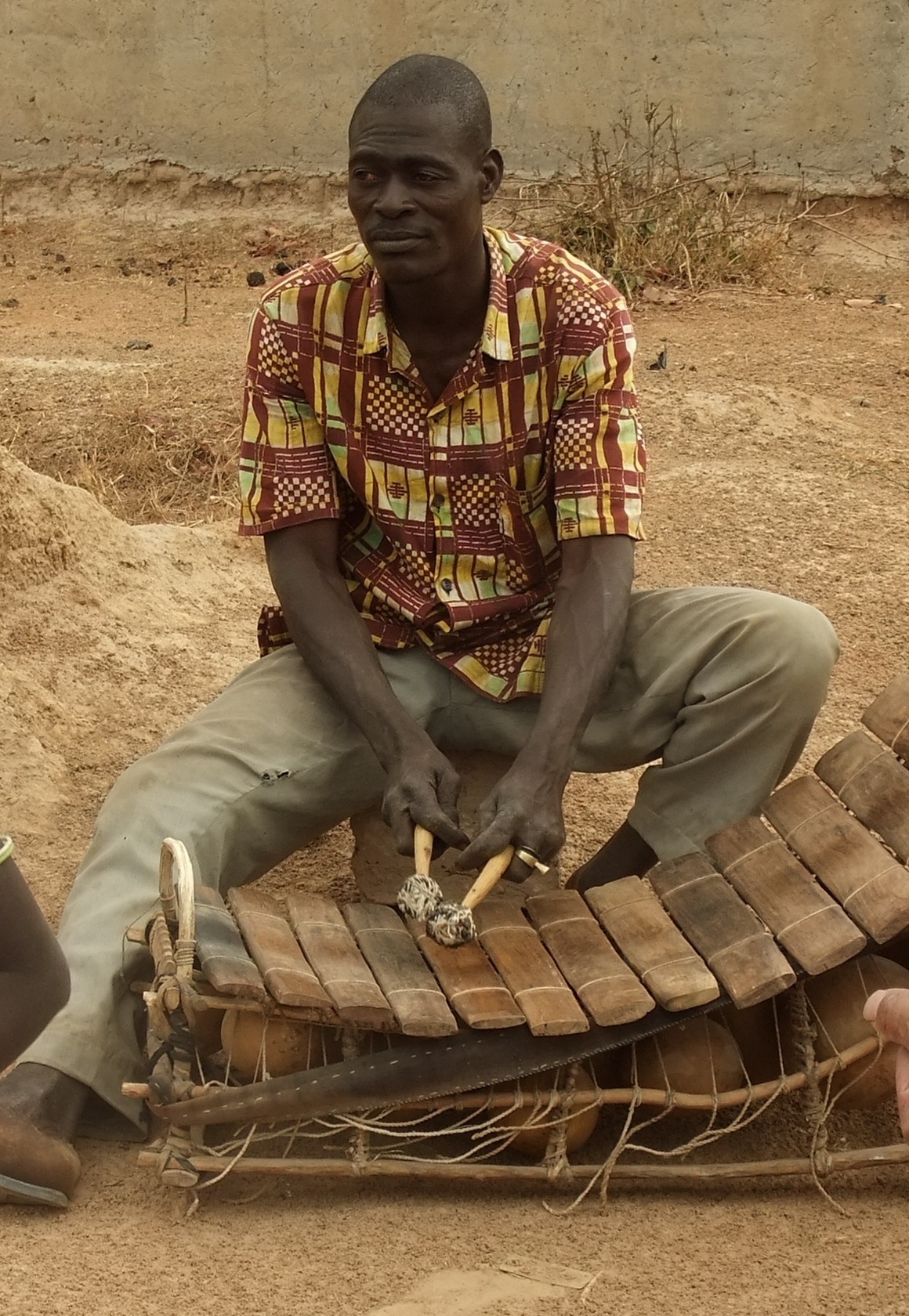
- Musicians and Poets: Their art is inseparable from their instruments. The 21-stringed kora (a harp-lute), the balafon (a wooden xylophone), and the ngoni (a small lute) are their tools for storytelling, each note and rhythm carrying emotional weight.
The training is rigorous. A young griot, often from the age of seven or eight, begins a lifelong apprenticeship, memorizing hundreds of hours of music, poetry, and history. It is not a career one chooses; it is a destiny inherited. The weight of this responsibility is immense, as the griot is believed to be the vessel through which the ancestors speak.
The Griot Tradition West Africa: The Backbone of Empires
The historical significance of the griot tradition West Africa cannot be overstated. In the great Sahelian empires of Ghana, Mali, and Songhai, griots were indispensable to the state apparatus. The 14th-century traveller Ibn Battuta, visiting the court of the Mali Empire’s Mansa Suleyman, described the elaborate ceremonies where griots would recite the king’s genealogy and praise his ancestors, creating a powerful link between the ruler’s divine mandate and the people’s collective memory.
The most famous epic, the Epic of Sundiata, is the foundational story of the Mali Empire. Preserved and performed by generations of griots, it tells of Sundiata Keita, the “Lion King,” a disabled prince who overcame immense adversity to defeat the sorcerer-king Soumaoro Kanté and unite the Mandinka people. This epic is not just a story; it is a moral compass, a political charter, and a source of profound cultural identity for millions. Every performance is different, as the griot adapts the core narrative to the audience and the occasion, adding new proverbs or emphasizing specific moral lessons.
Griots were also the glue that held complex social and political alliances together. When two rival chiefs needed to negotiate, a griot from a neutral family would often act as the intermediary, using poetry and flattery to create a space for dialogue. Their power lay in their words—words that could make a king or break a reputation. This delicate balance of praise and criticism is a cornerstone of the tradition, a form of social accountability that predates modern journalism.
The Instruments of Memory
The kora is perhaps the most iconic griot instrument. Its construction is a metaphor for the tradition itself: a large calabash gourd, covered in cowhide, with a long hardwood neck. The 21 strings, traditionally made from twisted antelope hide (now often nylon), are plucked with the thumbs and forefingers. The sound is a cascade of bright, intricate notes that can mimic the flow of speech. Master players like the late Toumani Diabaté of Mali elevated the kora to global concert halls, proving its versatility while honoring its roots. Another key instrument is the balafon, a gourd-resonated xylophone whose origins are traced to the Sosso Empire of the 13th century. Its percussive, melodic voice often accompanies the recitation of war epics and hunting songs.
Beyond the Stereotype: Griots in the Modern World
One of the most persistent stereotypes is that the griot tradition is a relic of the past, frozen in a pre-colonial amber. Nothing could be further from the truth. The griot tradition West Africa has proven remarkably adaptive, finding new life in contemporary music, politics, and media. Today’s griots are not just performing in village squares; they are in recording studios, on international stages, and on social media.
The most visible evolution is in popular music. Mbalax, the vibrant dance music of Senegal, is deeply rooted in the rhythms and praise-singing of griot culture. The legendary Youssou N’Dour, though not from a griot family himself, incorporated griot vocal techniques and themes into his global hits. In Mali, the Wassoulou music genre, popularized by the late Oumou Sangaré, draws heavily on the griot tradition of social commentary, albeit from a woman’s perspective. These artists are modern griots, using their platforms to discuss issues like women’s rights, poverty, and political corruption, exactly as their ancestors did.
Furthermore, many contemporary griots have adapted their role to the digital age. A new generation uses YouTube, podcasts, and streaming services to disseminate genealogies and epics. A young jeli in Bamako might record a 30-minute praise song for a client’s wedding and upload it to WhatsApp. This democratization of the tradition is both a survival strategy and a transformation. It allows the core function—the preservation and celebration of identity—to continue in a fragmented, globalized world.
| Era | Primary Role of the Griot | Key Medium | Example |
|---|---|---|---|
| 13th – 19th Century (Pre-Colonial) | Court historian, genealogist, diplomat, praise-singer for kings and warriors | Oral recitation, kora, balafon, ngoni | The griots of the Keita dynasty preserving the Epic of Sundiata |
| Late 19th – Mid 20th Century (Colonial Era) | Cultural resistance, community historian, ritual specialist; role suppressed by colonial authorities | Village ceremonies, secret gatherings, adaptation of local instruments | Griots in French Soudan (Mali) using satire to critique colonial rule |
| 1960s – 1990s (Independence & Early Globalization) | National cultural icon, educator, bridge between tradition and modernity | Radio, national orchestras, early recording studios, international festivals | Malian griot Bazoumana Sissoko becoming a national radio star |
| 2000s – Present (Digital & Global Era) | Global performer, social media influencer, cultural entrepreneur, fusion artist | Streaming platforms, YouTube, international collaborations, film scores | Kora player Sona Jobarteh (The Gambia) performing globally and teaching online |
Women in the Griot Tradition: The Power of the Voice
While the most famous griots are often men, women have always been central to the tradition, though their roles were distinct. In Mandinka society, female griots, or jelimusow, are masters of song and dance, often specializing in praise-singing at weddings and naming ceremonies. Their power is immense, as their words can bring blessings and great social status to a family. Historically, they were also the keepers of the most intimate family histories, the stories of women, children, and the domestic sphere that male griots often omitted from their grand epics.
Today, female griots are breaking new ground. Sona Jobarteh is a revolutionary figure. Coming from a venerable griot family in The Gambia, she is the first woman to become a professional kora player—an instrument traditionally reserved for men. Her music is a powerful statement of reclamation and modernity. She sings in English, Mandinka, and other languages, tackling issues of African identity, gender equality, and the environment. Her work proves that the griot tradition is not a cage but a foundation for innovation. Another towering figure is the late Kandia Kouyaté of Mali, known as the “Nightingale of the Mandinka.” Her powerful voice and fierce intelligence made her a cultural icon, and she was unafraid to use her position to speak truth to power, even when it was dangerous.
The Griot’s Code: Ethics and Responsibility
Being a griot is not merely a skill; it is a moral calling. There is a deep, unwritten code of ethics that governs their practice. A griot’s primary duty is to the truth—or, more accurately, to the honorable truth. They are not objective historians in the Western academic sense. Their role is to shape memory in a way that reinforces social harmony, family honor, and cultural values. A griot will never publicly recite a lineage that includes a shameful act, like cowardice in battle or a betrayal. Those stories are whispered, or kept for private contexts.
This ethical framework also includes a strict code of professional conduct. A griot must be generous, humble in service of their art, and fiercely loyal to their patrons. To misuse one’s power—for example, to publicly shame someone without cause—is a grave transgression that can lead to a loss of status and even a curse upon the family. The relationship between a griot and their patron is a sacred contract: the patron provides material support, and the griot provides eternal remembrance. This is why, even today, wealthy families and politicians will pay substantial sums for a griot to compose and perform a song that will ensure their name is remembered for generations.
“The griot is the memory of the people. When a griot dies, it is as if a whole library has burned down.” — Traditional Mandinka saying
Challenges and Continuity: The Future of the Griot
The griot tradition faces significant pressures in the 21st century. The rise of literacy, mass media, and formal education has, in some ways, diminished the monopoly griots once held over historical memory. Young people are more likely to learn history from a textbook or a Wikipedia page than from a village elder’s recitation. Furthermore, the economic model of patronage has shifted. The wealthy families and local chiefs who once supported griots are now often replaced by NGOs, government cultural ministries, or international festivals, which can impose different expectations on the artists.
There is also an internal tension between preservation and innovation. Purists argue that the tradition must be kept exactly as it was, with strict adherence to ancient forms and languages. Others, like Sona Jobarteh and the Malian duo Amadou & Mariam (whose music includes griot elements), argue that the tradition must evolve or die. They see no contradiction in a griot using auto-tune, collaborating with a rock band, or performing a kora version of a pop song. The essence, they argue, is not the instrument or the venue, but the function: to tell the story of the people, to praise, to critique, and to connect.
The COVID-19 pandemic brought these challenges into sharp relief. With weddings and public ceremonies cancelled, many griots lost their primary source of income. Yet, it also spurred incredible innovation, with many taking their performances online and using social media to reach a wider audience. This adaptation shows the resilience at the heart of the tradition.
How to Experience the Griot Tradition Today
For those inspired to engage with this living tradition, there are many accessible entry points:
- Listen to the Masters: Start with the recordings of Toumani Diabaté (Mali), particularly his album Kaira. Then explore Sona Jobarteh’s Fasiya (The Gambia), Kandia Kouyaté’s deeply powerful voice, and the modern fusion of Ba Cissoko (Guinea), who electrifies the kora.
- Read the Epics: The Epic of Sundiata is a must-read. The version translated by D.T. Niane is the most widely available and gives a sense of the poetic structure. The Epic of Askia Mohammed from the Songhai Empire is another powerful text.
- Attend a Festival: The Festival au Désert (held in Mali until security concerns forced its relocation) was a global showcase for Tuareg and griot music. The Kora International Festival in The Gambia is a dedicated celebration of the instrument. Local festivals across Senegal, Mali, and Guinea often feature griot performances.
- Travel with Respect: If you travel to West Africa, approach griot performances with respect. If you are at a wedding or ceremony, understand that the griot’s praise is a form of blessing. If a griot approaches you for a “donation” after a public performance, it is traditional to give something small, even a nominal amount, to acknowledge their art. It is not a tourist hustle; it is a continuation of the patronage system.
- Support Living Artists: Purchase music directly from artists via Bandcamp or other platforms. Many griots now have Patreon pages or YouTube channels. Your support directly helps sustain a tradition that is thousands of years old.
The Living Archive: A Final Reflection
The griot tradition West Africa has preserved is not a dusty artifact in a museum. It is a vibrant, contested, and ever-evolving conversation between the past and the present. When a young griot in Dakar picks up a kora and sings about the challenges of migration, they are doing exactly what their ancestors did: using the power of music and poetry to make sense of the world, to honor those who came before, and to guide those who will come after. The tradition survives not because it is rigid, but because it is profoundly human. It reminds us that history is not just dates and facts; it is the story of who we are, told and retold, sung and danced, from one heart to another. In a world of fleeting digital content and disposable information, the griot stands as a powerful testament to the enduring value of memory, relationship, and the spoken word.