📅 Last updated: 05.07.2026
The Threads of History: An Introduction to Kente
The deep, resonant story of Kente cloth history begins not in a museum, but in the humid, bustling weaving villages of the Ashanti Region of Ghana, where the rhythmic clack of wooden looms has echoed for over four centuries. This is not merely fabric; it is a woven language, a visual scripture of royalty, philosophy, and societal values. To understand Kente is to understand a core pillar of Ghanaian identity—a tradition born from spider webs and royal ambition, now a global symbol of African heritage and resilience.
- The Threads of History: An Introduction to Kente
- The Mythic Origins: From Spider to Royalty
- A Visual Lexicon: Decoding the Patterns and Colors
- The Weavers of Bonwire: A Living Legacy
- Kente's Journey: From Royal Courts to Global Icon
- Kente in the 21st Century: Innovation, Adaptation, and Ethical Challenges
- A Deeper Look: Kente Cloth History and the Role of Women
- Where to See and Buy Authentic Kente
- The Enduring Thread: Why Kente Matters
Kente is more than a textile; it is a chronicle. Each warp and weft carries the weight of generations, encoding proverbs, historical events, and the very essence of Akan cosmology. While its vibrant strips are now celebrated worldwide, from academic graduation ceremonies to high-fashion runways, its soul remains tethered to the sacred stools of Ashanti kings and the skilled hands of master weavers in towns like Bonwire, whose ancestors first transformed a spider’s delicate architecture into a royal mandate.
The Mythic Origins: From Spider to Royalty
The most cherished origin story of Kente is not a dusty historical footnote but a living parable taught to every Ghanaian child. It begins in the 17th century, in the village of Bonwire, near the burgeoning Ashanti Empire’s capital, Kumasi. Two brothers, Krugu and Wata, were hunting one day when they came upon a remarkable sight: a spider, known in Twi as Ananse, weaving a web of breathtaking complexity and beauty. Mesmerized, they studied the creature’s meticulous back-and-forth motion, its creation of a sturdy, interlocking structure from a single, continuous thread.
Inspired, the brothers returned to their village and replicated the spider’s technique using raffia palm fibers. They wove a strip of cloth that was unlike anything seen before—strong, intricate, and beautiful. They presented their creation to the Asantehene (the King of the Ashanti), Osei Tutu I (r. c. 1690–1717), the architect of the Ashanti Confederacy. Recognizing the cloth’s profound beauty and its symbolic potential—the spider’s web representing wisdom, creativity, and the interconnectedness of the kingdom—the King adopted it as a royal cloth. He decreed that only the king and his closest advisors, the Omanhene (paramount chiefs), could wear it. The name “Kente” itself is derived from the Fante word “kenten,” meaning “basket,” because the woven pattern reminded early observers of a basket’s weave.
From Raffia to Silk: A Revolution in Luxury
Originally woven from raffia and local cotton, Kente underwent a dramatic transformation in the 18th century with the arrival of European traders along the Gold Coast. The Ashanti, who controlled vast gold mines and a powerful army, were not passive recipients of colonial trade; they were shrewd negotiators. They traded gold and slaves for a variety of goods, including luxurious silk fabrics from Asia and Europe, known in the local context as silk.
The Ashanti weavers, with their genius for adaptation, painstakingly unravelled these imported silks to obtain the precious threads. They then re-spun and re-dyed the silk to create Kente of unprecedented brilliance and status. The introduction of silk allowed for finer, more durable threads and, crucially, a much wider and more vibrant color palette. This shift from natural fibers to silk marked the birth of the most prestigious form of Kente, known as Kente Nwin (woven from silk). The cloth ceased to be a local curiosity and became the ultimate symbol of Ashanti power, wealth, and artistic sophistication.
A Visual Lexicon: Decoding the Patterns and Colors
To read Kente is to read a book without words. Every geometric pattern, known as a mmaban (meaning “patches” or “patterns”), holds a specific name and a deep philosophical meaning, often drawn from Akan proverbs, historical events, or concepts of human nature. The weaver is not just an artisan; he is a philosopher and a historian. The act of choosing a pattern is a deliberate act of communication.
Here is a small sampling of the most famous patterns and their meanings:
- Adweneasa (“My skill is exhausted”): This is the most prestigious and complex Kente pattern, featuring intricate, hand-woven designs that fill the entire strip. It represents the pinnacle of human creativity and the idea that one’s skill has been fully realized. It is traditionally reserved for the Asantehene.
- Eban (“Fence”): This pattern features a repeated, stylized fence design. It symbolizes safety, security, love, and the sanctity of the home. It is a common choice for weddings and family celebrations.
- Obaakofoo Mamp (“One person does not rule the nation”): This pattern, with its repeating, interlocking symbols, speaks to the Akan value of democracy and community. It reminds the wearer and the observer that leadership requires the support and participation of the people.
- Fathia Fata Nkrumah (“Fathia is worthy of Nkrumah”): A modern and politically significant pattern, created to celebrate the marriage of Ghana’s first president, Kwame Nkrumah, to the Egyptian Fathia Rizk. It symbolizes the union of two independent African nations and the pan-African dream.
- Nsaa (“A type of blanket”): This pattern is associated with the Ashanti belief in the importance of a good reputation. It symbolizes excellence, genuineness, and moral integrity. A proverb states, “It is only a person who has not seen the Nsaa who says the Nsaa is ugly.”
The Language of Color
Beyond the patterns, the colors themselves are a rich vocabulary. The selection of a color palette is as significant as the pattern chosen. The same pattern can convey a completely different message when woven in different colors.
- Gold (Sika): Royalty, wealth, high status, spiritual purity, and the glory of God. The most sacred color.
- Blue (Ahaban): Peace, harmony, love, and the sky. It is often used in cloths for ceremonies and diplomacy.
- Green (Ahaban mono): Growth, renewal, the harvest, and the lush vegetation of Ghana.
- Black (Tuntum): Maturity, spiritual energy, the ancestors, and deep knowledge. Often used in cloths for funerals or for elders.
- Red (Kɔkɔɔ): Political passion, bloodshed, sacrifice, and mourning. Historically worn in times of war or during the funeral rites of a king.
- White (Fitaa): Joy, purity, victory, and the spiritual realm. Worn for festivals and celebrations.
- Yellow (Akoko nnu): Fertility, preciousness, and the yolk of an egg. Associated with the female principle and new life.
The Weavers of Bonwire: A Living Legacy
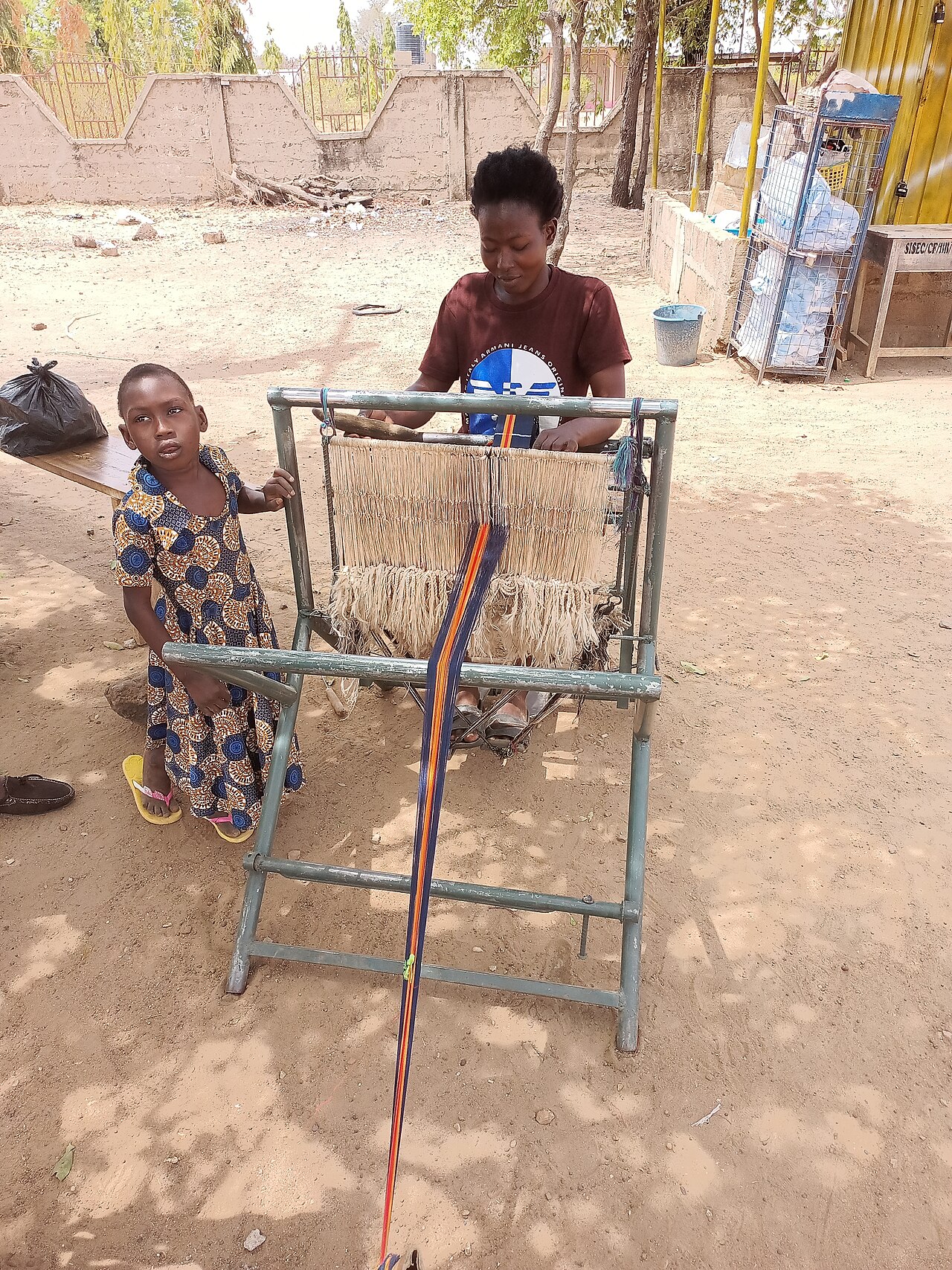
The heart of the Kente tradition beats strongest in the villages of Bonwire, Adawomase, and Ntonso, located within a short drive from Kumasi. Bonwire, in particular, is the undisputed spiritual and commercial capital of Kente weaving. To visit Bonwire is to step into a living museum where the craft is not a performance for tourists, but the daily rhythm of life. The village is a symphony of sound: the rhythmic, percussive beat of the weavers’ wooden shuttles (nwabaa) being thrown across the warp, the gentle thud of the beater (dabaa) compressing the weft, and the quiet concentration of men (and a growing number of women) working their looms.
The weaving process is painstakingly slow. A single strip of Kente is typically 4-5 inches wide and can take a master weaver anywhere from a day to a week to complete, depending on the complexity of the pattern. A full cloth for a man’s toga-like ntoma (the traditional gown) requires 12 to 24 of these strips sewn together side-by-side. The work is done on a horizontal, heddle loom that is often set up under a shaded canopy in the family compound. The knowledge is passed down through generations, from father to son, with boys often learning the basics by age 10. The weavers work in family groups, with the master weaver calling out the pattern to his apprentices, who then select the correct colored thread from a vast array of bobbins.
The Role of the Asantehene
The tradition remains intimately tied to the Ashanti monarchy. The current Asantehene, Otumfuo Osei Tutu II (enthroned in 1999), is the 16th king of the Ashanti Kingdom and the ultimate patron of Kente. He possesses a vast personal collection of Kente, each cloth with its own history and meaning. He wears specific patterns for specific occasions, from the Adweneasa for the most sacred state ceremonies to simpler, more somber patterns for funerals. The royal weavers of Bonwire are tasked with creating his cloths, and the best patterns are often presented to him as gifts from chiefs and subjects. The Asantehene’s endorsement ensures the tradition’s status and economic viability.
Kente’s Journey: From Royal Courts to Global Icon
For centuries, Kente remained a closely guarded symbol of Ashanti power, rarely seen outside the kingdom’s borders. Its global journey began in earnest in the 20th century, driven by two powerful forces: the Pan-African movement and the Civil Rights struggle in the United States.
The pivotal moment came in 1957, when Ghana became the first sub-Saharan African country to gain independence from colonial rule. The nation’s first president, Kwame Nkrumah, was a visionary pan-Africanist who understood the power of cultural symbols. He famously chose to wear Kente, particularly the Fathia Fata Nkrumah pattern, at major state functions and international conferences. When he addressed the United Nations General Assembly, his Kente-clad figure was a powerful visual statement—a declaration that Africa was not a primitive continent but a sophisticated civilization with its own deep-rooted traditions of art and governance. This single act catapulted Kente onto the world stage.
In the 1960s and 1970s, Kente was adopted by the African American community as a powerful symbol of heritage, pride, and resistance. It became a staple of Kwanzaa celebrations, worn by leaders like Malcolm X and later Jesse Jackson. It was incorporated into the robes of Black clergy and became a common sight at historically Black colleges and universities (HBCUs) for graduation ceremonies, where it remains a deeply meaningful tradition today. This adoption was not cultural appropriation, but a conscious reclamation of a shared African identity.
Kente in the 21st Century: Innovation, Adaptation, and Ethical Challenges
Today, Kente is a global brand. It is no longer confined to the ntoma of an Ashanti chief. It appears on sneakers, handbags, ties, face masks, and in the collections of high-fashion houses from New York to Paris. This global popularity has brought both opportunity and peril.
On one hand, it has created a massive market for Ghanaian weavers, providing income and a powerful incentive to keep the tradition alive. Young weavers are now experimenting with new colors, patterns, and applications, creating “contemporary Kente” that appeals to a global audience. They are using digital tools to design patterns and sell their work online. The craft is no longer static; it is a living, evolving art form.
On the other hand, the demand has led to a flood of cheap, machine-made imitations, often produced in China and sold as “Kente” for a fraction of the price. This threatens the livelihoods of the master weavers of Bonwire, whose hand-woven cloth can cost hundreds or even thousands of dollars. The challenge for the 21st-century Kente industry is to balance tradition with modernization, protecting the intellectual property and cultural integrity of the craft while making it accessible to a wider market.
| Era | Key Development | Impact on Kente |
|---|---|---|
| c. 17th Century | Origin myth in Bonwire; adoption by Asantehene Osei Tutu I. | Established Kente as a royal and sacred cloth of the Ashanti Empire. |
| 18th Century | Introduction of silk from European trade; unravelling and reweaving. | Transformed Kente into a luxurious, high-status textile with vibrant colors. |
| 1874 | Sack of Kumasi by British forces; looting of royal regalia. | Kente pieces entered European museums; knowledge of patterns was partially disrupted. |
| 1957 | Ghanaian independence; Kwame Nkrumah wears Kente internationally. | Catapulted Kente onto the global stage as a symbol of Pan-Africanism and independence. |
| 1960s-70s | Adoption by the US Civil Rights and Black Power movements. | Became a potent symbol of African diaspora identity, pride, and resistance. |
| 21st Century | Globalization; machine-made imitations; fashion industry adoption. | Thrives as a global brand but faces threats from counterfeiting and loss of artisanal value. |
A Deeper Look: Kente Cloth History and the Role of Women
While the weaving of Kente has been a male-dominated profession for centuries, the kente cloth history is incomplete without acknowledging the crucial, often invisible, role of women. In traditional Ashanti society, men are the weavers, but women are the spinners, dyers, and thread-makers.
Historically, women were responsible for processing the raw cotton, spinning it into thread, and dyeing it using natural plant-based pigments. They gathered leaves, roots, and bark to create the vibrant yellows, blues, and reds. The most sacred color, gold, was achieved using a dye from the bark of the kuntunkuni tree. This work was essential, labor-intensive, and highly skilled. Without the women’s mastery of color and thread, the weavers’ art would be impossible.
Today, that dynamic is shifting. More women are taking up the loom itself, breaking a long-standing gender barrier. Cooperatives in villages like Adawomase are training young women as weavers, creating new economic opportunities and challenging traditional roles. This evolution is a testament to the living, adaptive nature of the tradition. The kente cloth history is not just a chronicle of kings and weavers; it is also a story of the quiet, powerful contributions of women, whose work forms the very foundation of the craft.
Preserving the Intellectual Property of a Kingdom
One of the most pressing issues in the modern era is the protection of Kente as an intellectual property of the Ashanti Kingdom and the Ghanaian people. The patterns, names, and weaving techniques are not simply “traditional” in a vague sense; they are the unique cultural heritage of a specific group of people. The mass production of cheap imitations in other countries is not just an economic problem—it is a form of cultural theft.
Efforts are underway to create a Geographical Indication (GI) for Kente, similar to how Champagne is protected by law in France or Roquefort cheese in France. A GI would legally restrict the use of the name “Kente” to cloth that is woven in the traditional villages of the Ashanti Region, using specific techniques and materials. This would give consumers a guarantee of authenticity and help protect the livelihoods of master weavers. The Ghanaian government and the Asante Traditional Council are actively pursuing this, recognizing that the preservation of kente cloth history requires legal and economic tools as much as cultural education.
Where to See and Buy Authentic Kente
For the traveler or diaspora visitor, experiencing Kente in its homeland is a transformative experience. It is far more meaningful than buying a mass-produced scarf from a street vendor.
The best place to start is the Manhyia Palace Museum in Kumasi, the official residence of the Asantehene. The museum houses a stunning collection of historic Kente cloths, including those worn by past kings. It offers a profound context for understanding the cloth’s royal significance. From there, a short drive will take you to the weaving villages:
- Bonwire: The most famous and commercialized village. You can visit family weaving compounds, watch the process from start to finish, and purchase directly from the weavers. Bargaining is expected, but be respectful of the immense skill involved in the work.
- Adawomase: A smaller, more intimate village that is home to the Adawomase Kente Weavers Association. They offer excellent guided tours and a more authentic, less pressured buying experience. They are particularly known for their commitment to preserving traditional patterns.
- Ntonso: This village is famous for its Adinkra cloth (a different, stamp-printed textile), but many weavers here also produce Kente. It offers a chance to see both crafts side-by-side.
When buying, ask about the meaning of the pattern and the colors. A good weaver will be delighted to explain the story behind his cloth. Look for tight, even weaving and the subtle irregularities that are the hallmark of hand-made work. Be wary of cloth that is perfectly uniform—it is likely machine-made. A hand-woven strip will have slight variations in tension that give it a unique, organic character. The price will reflect the complexity of the pattern, the quality of the thread (silk is most expensive), and the number of strips in the finished cloth.
The Enduring Thread: Why Kente Matters
The story of Kente is the story of Africa itself—a narrative of profound creativity, resilience, and adaptation. It is a tradition born from the observation of nature, refined by royal patronage, transformed by global trade, and ultimately reclaimed as a symbol of pan-African unity and Black pride. It is not a relic of the past but a vibrant, evolving art form that continues to speak to the world.
Wearing a piece of authentic Kente is to wrap yourself in a philosophy. It is to carry the wisdom of the Ananse spider, the power of the Asantehene, the skill of the Bonwire weaver, and the dream of Kwame Nkrumah. As the global conversation about cultural heritage, intellectual property, and authenticity intensifies, Kente stands as a powerful example of how a tradition can be both fiercely protected and generously shared. It is a reminder that the most valuable things in the world are not those that can be mass-produced, but those that are woven, with patience and purpose, by human hands, thread by thread, generation by generation. The legacy of Kente is not just in the past; it is being woven, right now, in the villages of Ghana, for the world to see and honor.