📅 Last updated: 05.07.2026
The ochre dust of the hill crunches underfoot, a sound that seems to whisper secrets of a time when this very soil was soaked with the tears of the stolen. To stand on the Hill of the Jackals, or Mamelles as it is known locally in modern, vibrant Dakar, is to confront the most haunting chapter of the Senegal slave trade, a history that is both a wound and a foundation of the modern world. Here, on this windswept promontory overlooking the Atlantic, the echoes of the past are not just historical abstractions; they are a tangible, visceral presence that challenges every visitor to remember.
- Gorée: The Door of No Return and the Reality of the Senegal Slave Trade
- Beyond the Coast: The Inland Kingdoms and the Senegal Slave Trade
- The Human Cargo: The Middle Passage from Senegal
- Resistance and Resilience: The Spirit of the Captives
- The Abolition and Its Aftermath in Senegal
- Modern Senegal: Confronting the Past, Building the Future
- Traveling the Coast: A Journey of Remembrance and Discovery
- Conclusion: The Echoes That Shape a Nation
This is not a story of victimhood alone, but one of profound resilience, complex politics, and the birth of the African diaspora. From the fortified slave houses on the island of Gorée to the inland kingdoms that traded captives for European goods, the story of the Senegal slave trade is a microcosm of a global tragedy that reshaped continents. To understand it is to understand the deep, interwoven roots of modern Senegal, a nation that has turned the worst of its history into a powerful lesson for humanity.
Gorée: The Door of No Return and the Reality of the Senegal Slave Trade
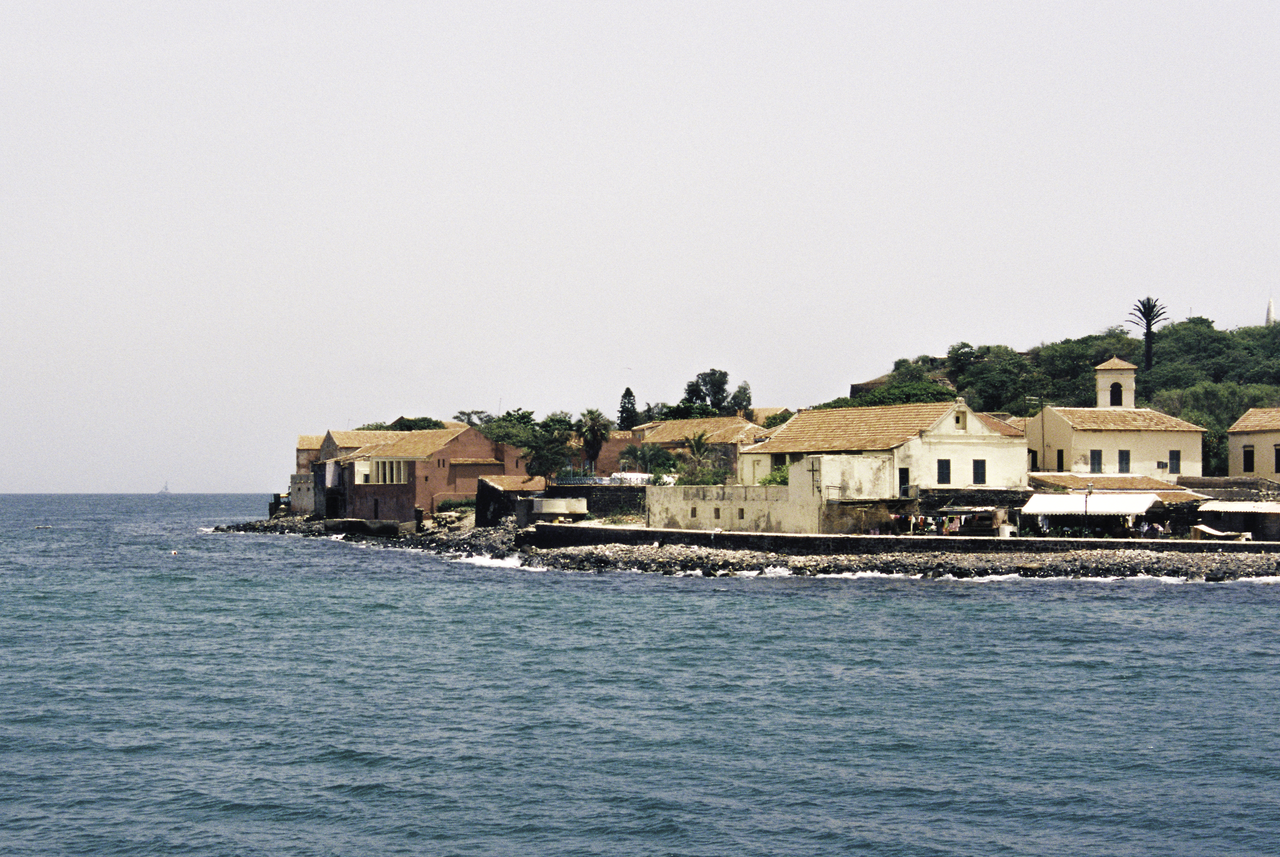
No site is more synonymous with the Senegal slave trade than the island of Gorée, a 45-hectare sliver of land just two kilometres off the coast of Dakar. Its name, derived from the Dutch Goede Reede (“Good Roadstead”), belies its grim purpose. For over three centuries, from the 15th to the 19th, Gorée was a strategic hub for European slave traders — first the Portuguese, then the Dutch, English, and finally the French.
The island’s most famous structure, the House of Slaves (Maison des Esclaves), is not the largest or most “productive” slave fort on the West African coast, but it has become the most powerful symbol of the trade. Its “Door of No Return” — a small, arched opening facing the ocean — is a place of pilgrimage for descendants of the diaspora, including figures like Nelson Mandela, Pope John Paul II, and Barack Obama. The tour of the house is a sobering experience. You walk through cramped, airless cells that held men, women, and children, categorized by age and physical condition. The air is thick with the weight of memory.
It is crucial, however, to understand the nuance. Historians like Joseph Ndiaye, the former curator who dedicated his life to Gorée, argued that the island was more a point of transit and psychological trauma than the largest departure point. Recent scholarship suggests that while Gorée’s symbolic power is immense, the sheer volume of captives who passed through its shores was smaller than from other forts in Ghana or the Bight of Benin. This does not diminish its horror; it refines our understanding. As Dr. Ibrahima Thiaw, a Senegalese archaeologist, notes, “Gorée is a place of memory, not a statistical archive. It represents the system, the ideology, the dehumanization.”
The Architecture of Cruelty
The House of Slaves is a two-storey building with a courtyard. The ground floor was the holding area. A narrow corridor separates the cells. On one side were the men’s cells, capable of holding 15 to 20 people in a space of barely 2.6 square metres. On the other side were the women and children. The “weighing room” and the “punishment cell” are stark reminders of the commodification of human life. The tour guides, many descendants of the island’s original inhabitants, speak with a quiet, practiced gravity that transforms the visit from a tourist attraction into a ritual of remembrance.
Gorée was not just a prison; it was a bustling colonial town. The elegant, pastel-coloured houses with their wrought-iron balconies that now house art galleries and cafes were once the homes of European merchants and wealthy Signares — Afro-European women of significant power and influence. These women, often the wives or companions of French traders, managed households, owned property, and even participated in the trade themselves. This complexity is often lost in simplified narratives. The island was a place of brutal commerce and, simultaneously, a unique creole society.
Beyond the Coast: The Inland Kingdoms and the Senegal Slave Trade
To focus only on the coastal forts is to miss the engine of the trade. The Senegal slave trade was not simply a story of Europeans capturing Africans. It was a system driven by African political and economic dynamics. The Senegambia region was home to powerful kingdoms — the Wolof, the Serer, the Tukulor, and the Mandinka states of Kaabu and Futa Toro. These kingdoms were not passive victims; they were active, often ruthless, participants.
Warfare was endemic. Kings and warlords launched campaigns specifically to capture prisoners of war, who were then sold to European traders on the coast for firearms, textiles, alcohol, and manufactured goods. This created a vicious cycle: guns bought slaves, and slaves bought more guns. The introduction of European firearms dramatically escalated the scale and brutality of local conflicts. The once-balanced political landscape of the region was destabilized, with states that controlled the slave routes gaining enormous power.
The Role of the Jihad States
In the 18th and 19th centuries, the Islamic theocratic state of Futa Toro (in the Senegal River Valley) became a major player. Under leaders like Abdul Qadir, the state engaged in both religious expansion and the capture of “non-believers” for sale. This presented a complex moral paradox: a state founded on Islamic principles participating in the transatlantic slave trade. It is a reminder that the trade was not a simple racial binary but a complex web of economic, political, and religious motives. The grid (captives) became a primary currency of the region.
Further south, the Kaabu Empire, a Mandinka state in what is now Guinea-Bissau and southern Senegal, was a formidable military power that raided for slaves for centuries. Its fall in the 19th century, during the Kansala war, was a cataclysmic event where the defenders, facing defeat, detonated their gunpowder stores, killing themselves and their attackers in a final act of defiance. This story, sung by griots to this day, illustrates the desperate resistance that accompanied the tragedy.
| Kingdom/Empire | Primary Role in the Trade | Key Period of Influence | Fate |
|---|---|---|---|
| Wolof Kingdoms (e.g., Jolof, Cayor, Baol) | Major suppliers of captives from internal wars and raids; controlled coastal trade routes. | 15th – 19th Century | Gradually weakened by internal strife and French colonial conquest; abolished slavery in the late 19th century. |
| Futa Toro (Tukulor) | Islamic theocratic state; captured “pagan” slaves in the Senegal River Valley; also sold war captives. | 18th – 19th Century | Resisted French colonization fiercely; slavery and the trade were formally abolished under French pressure, but social hierarchies persisted. |
| Kaabu Empire | Militarized Mandinka state; a major raiding power in the Casamance region; known for its cavalry. | 16th – 19th Century | Collapsed in 1867 at the Battle of Kansala, where defenders self-destructed to avoid capture. |
| Serer Kingdoms (e.g., Sine, Saloum) | Participated in the trade but were often targeted by larger Wolof and Muslim states; maintained complex social structures. | 15th – 19th Century | Resisted French rule; their traditional religious and social structures were deeply impacted by the slave trade. |
The Human Cargo: The Middle Passage from Senegal
Once purchased and branded, the captives were loaded onto ships. The journey from the Senegalese coast to the Americas — the infamous Middle Passage — was a living hell. The conditions were deliberately designed to maximize profit at the expense of human life. Men were chained in the hold, often in a spoon-like position, with barely enough room to turn. Women and children were kept in separate quarters, frequently subjected to sexual violence by the crew.
Disease was rampant. Dysentery, smallpox, and ophthalmia swept through the tightly packed holds. The mortality rate was staggering. Historians estimate that between 10% and 20% of captives died during the voyage. For the Senegal slave trade, the destination was often the French Caribbean colonies: Saint-Domingue (Haiti), Martinique, and Guadeloupe, where they were forced to work on sugar, coffee, and indigo plantations. A significant number were also taken to Louisiana, where they formed the basis of the Creole culture of the American South. The Senegambian captives were particularly prized for their knowledge of rice cultivation, a skill that transformed the economy of the Carolinas and Georgia.
The psychological trauma of the Middle Passage is impossible to quantify. Families were torn apart. Languages, names, and identities were stripped away. Yet, even in this horror, resistance was constant. Shipboard revolts were common. Captives would break their chains, attack the crew, and sometimes seize the ship. While most failed, they forced slave traders to take extreme precautions, including the use of nets and constant, brutal surveillance. The fight for freedom began the moment the chains were locked.
Resistance and Resilience: The Spirit of the Captives
The story of the Senegal slave trade is incomplete without a deep exploration of resistance. It was not a narrative of passive suffering. From the shores of Senegal to the plantations of the New World, the enslaved fought back in every way imaginable.
- Armed Revolt: The most dramatic form of resistance was physical rebellion. In 1724, a major revolt on the island of Gorée itself saw captives attack their captors before being crushed by French troops. On the slave ships, revolts were frequent, though rarely successful.
- Cultural Preservation: The Wolof, Serer, and Mandinka captives carried their languages, music, and spiritual practices with them. The tama (talking drum), the kora (harp-lute), and the rhythms of Senegambian dance became the bedrock of countless African-American music traditions, from the blues to jazz to samba. The griot tradition, the oral historian and praise-singer, found new life in the New World as the storyteller of the community.
- Maroon Communities: In the forests and mountains of the Caribbean and the Americas, escaped slaves formed independent communities known as maroons. These communities often replicated the social and political structures of their Senegambian homelands. They were a constant source of fear for the plantation owners and a symbol of unbroken freedom.
- Religious Syncretism: The enslaved did not simply adopt Christianity; they transformed it. They blended Catholic saints with African deities (orishas or loas). In Haiti, this gave birth to Vodou. In Brazil, Candomblé. In Cuba, Santería. These faiths were acts of cultural defiance, preserving the spiritual DNA of Senegal and the wider region.
One of the most powerful examples of this resilience is the story of Boukman, a Vodou priest and a leader of the Haitian Revolution. While his exact origins are debated, many historians believe he was brought from the Senegambian region. His famous prayer at the Bois Caïman ceremony in 1791, which launched the revolution, was a call to arms that echoed the spirit of resistance forged on the Hill of the Jackals and the fields of Gorée. The Haitian Revolution, the only successful slave revolt in history, is a direct, defiant consequence of the trade that began on these shores.
The Abolition and Its Aftermath in Senegal
The transatlantic Senegal slave trade was officially abolished by France in 1794, reinstated by Napoleon in 1802, and finally abolished for good in 1848. The British had already outlawed the trade in 1807 and used their naval power to patrol the West African coast, intercepting slave ships. This did not end slavery in Senegal overnight. It simply shifted the dynamics.
The French, now in control of the Senegalese coast, began a policy of “legitimate commerce.” Instead of slaves, they traded for peanuts (arachides), gum arabic, and palm oil. The internal slave trade continued, with captives being used within Senegal for agriculture and domestic labour. The French colonial administration was often complicit, turning a blind eye to local slavery to maintain the support of African chiefs. It was not until the early 20th century that slavery was fully suppressed in the interior, and even then, its social and economic legacies remained.
The transition was brutal for the inland kingdoms. The abolition of the slave trade removed their primary source of revenue and military power. The French used this instability to expand their colonial empire, conquering the Wolof kingdoms of Cayor and Jolof in the 1880s and 1890s. The construction of the Dakar-Niger railway in the early 20th century was a direct attempt to link the peanut-growing interior to the coast, replacing the old slave routes with a modern infrastructure of exploitation.
Modern Senegal: Confronting the Past, Building the Future
Today, Senegal is a vibrant, democratic nation of over 17 million people, a beacon of stability in West Africa. It has not forgotten its history. The government has invested heavily in preserving the memory of the slave trade. Gorée Island is a UNESCO World Heritage site, visited by hundreds of thousands of people each year. The House of Slaves is a museum, a school, and a sacred space.
But the reckoning with the past is ongoing. There are debates about how to tell the story, who gets to tell it, and what the legacy of the trade means for modern Senegal. Some argue that the focus on Gorée and the transatlantic trade obscures the role of African collaborators. Others argue that it is essential to acknowledge the role of African elites in the trade to fully understand the tragedy. As the Senegalese historian Mamadou Diouf has written, “The history of the slave trade is not a history of victims and villains alone. It is a history of choices, compromises, and complex moral landscapes.”
The Hill of the Jackals itself is a powerful symbol of this duality. The name comes from the jackals that once roamed the area, but today the hills are home to the African Renaissance Monument, a 49-metre-tall bronze statue of a man, woman, and child pointing to the sky. Unveiled in 2010, the monument is controversial — some see it as a magnificent symbol of a new, confident Africa rising from the ashes of its past. Others see it as a costly, gaudy tribute to a political regime. Regardless of one’s opinion, the statue’s placement on the hill overlooking the Atlantic is a powerful act of reclamation. It says: We are no longer the cargo. We are the architects of our own destiny.
Traveling the Coast: A Journey of Remembrance and Discovery
For the traveler, tracing the history of the Senegal slave trade is a profound journey. It is not a dark tourism experience but a pilgrimage of understanding.
What to See and Do
- Gorée Island: Spend a full day here. Take the ferry from Dakar. Visit the House of Slaves and the IFAN Historical Museum. Walk the quiet, car-free streets. Sit on a terrace overlooking the ocean and reflect. The silence here is louder than any lecture.
- Saint-Louis: The former capital of French West Africa, this beautiful island city was a major slave trading post. The old French colonial architecture is stunning, but beneath it lies a history of commerce in human beings. Visit the Faidherbe Bridge and the old trading houses along the river.
- The Sahel Region (Thiès, Diourbel): Travel inland to the heart of the old Wolof kingdoms. Visit the ruins of the old royal capitals. Talk to local historians and griots who still sing the epics of the kings and the wars that fed the trade. The landscape itself tells a story of power and loss.
- The Casamance: In the south, the region of the former Kaabu Empire, the legacy of the slave trade is woven into the fabric of the Diola and Mandinka communities. The region is lush, green, and culturally distinct from northern Senegal. The resilience of its people is palpable.
Practical Advice for the Conscious Traveler
- Hire a local guide. They will provide context and nuance that a guidebook cannot. They are the living memory of the land.
- Be respectful. The House of Slaves is a place of mourning. Dress modestly. Speak softly. Listen more than you talk.
- Read before you go. Books like The Slave Trade by Hugh Thomas, The Atlantic Slave Trade by Herbert S. Klein, and The Black Atlantic by Paul Gilroy provide essential background.
- Engage with contemporary Senegal. The country is not a museum. It is a modern, dynamic nation of artists, musicians, entrepreneurs, and scholars. Visit the market in Dakar, listen to mbalax music, eat thieboudienne (the national fish and rice dish), and talk to young Senegalese people about their hopes for the future.
Conclusion: The Echoes That Shape a Nation
The Hill of the Jackals stands as a silent witness to one of humanity’s greatest crimes. The story of the Senegal slave trade is not a footnote in history; it is a foundational chapter of the modern world. It is a story of unimaginable suffering, but also of unparalleled resilience, cultural genius, and an unbroken will to be free. From the griots who preserved the memory of lost kingdoms to the musicians of today’s Dakar who sample the rhythms of the diaspora, the connection is alive and unbroken.
Senegal does not hide from this history. It confronts it, teaches it, and uses it as a foundation for a future built on dignity, justice, and Pan-African solidarity. To walk the streets of Gorée, to listen to the wind on the Hill of the Jackals, is to feel the weight of history and the lightness of hope. The door of no return has become a window into a shared, complex, and deeply human story. It is a story that belongs to all of us — African, diaspora, and global citizen alike. And it is a story that demands to be told, again and again, until the echoes of the chains are finally drowned out by the songs of a free people.