📅 Last updated: 25.09.2026
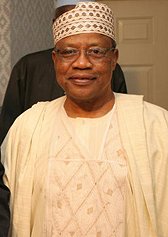
Ibrahim Babangida is one of the most consequential and controversial figures in modern Nigerian history — a career soldier who seized power in a palace coup, ruled Africa’s most populous nation for eight years, and left behind an economy reshaped, a political class remade, and a democratic transition he ultimately annulled. To understand Nigeria today, you have to understand him. This is the story of the man Nigerians know simply as IBB: the self-styled “evil genius” of Nigerian politics, the general who could charm a room and outmanoeuvre a rival in the same afternoon.
- Early Life and the Making of a Soldier
- The 1985 Coup: How Ibrahim Babangida Took Power
- Economic Reform: The Structural Adjustment Programme
- Political Engineering and the Road to a Third Republic
- Key Dates in the Babangida Era
- Foreign Policy and Regional Leadership
- Legacy: The Man Who Shaped Modern Nigeria
- Why Ibrahim Babangida Still Matters
- A Complex Inheritance
From the dusty barracks of Minna to the marble corridors of Dodan Barracks in Lagos, Babangida’s journey traces the arc of post-colonial Nigeria itself — its promise, its coups, its oil wealth, and its long struggle to build a stable democracy.
Early Life and the Making of a Soldier
Ibrahim Badamasi Babangida was born on 17 August 1941 in Minna, the capital of what is now Niger State, in Nigeria’s Middle Belt. He was raised in a Nupe family, part of a proud ethnic group whose historic kingdom, Bida, had flourished for centuries as a centre of craft and Islamic scholarship in the Niger River valley. His father was a trader; his mother, a woman of sharp wit whom he credited with shaping his political instincts.
Babangida was educated at the Provincial Secondary School in Bida, an institution that produced a striking number of Nigeria’s future leaders. He joined the Nigerian Army in 1962, one of a cohort of young men recruited as Nigeria prepared for independence-era nationhood. He trained at the Indian Military Academy in Dehradun and later at the Royal Armoured Corps in the United Kingdom — a classic Cold War-era path for ambitious officers from newly independent African states.
His early career was forged in fire. As a young officer, he fought on the federal side during the Nigerian Civil War (1967–1970), the brutal conflict over the secession of Biafra. The war killed an estimated one to three million people, mostly from starvation and disease, and it left deep scars that still shape Nigerian politics. Babangida emerged from it as a decorated officer and, crucially, as a man with a network.
Rising Through the Ranks
Through the 1970s, Babangida accumulated the credentials that would later define him: command posts, staff college training, and — most importantly — participation in the coups that became a grim rhythm of Nigerian life. He was involved in the July 1966 counter-coup that brought Yakubu Gowon to power. He took part in the 1975 coup that removed Gowon and installed Murtala Mohammed, and in the 1976 events that followed Mohammed’s assassination, which elevated Olusegun Obasanjo. By the early 1980s, Babangida was a major general and a central figure in the military establishment.
When Major General Muhammadu Buhari seized power on 31 December 1983, ending Nigeria’s short-lived Second Republic, Babangida was a senior member of the new regime. But the relationship was uneasy. Buhari’s austere rule — marked by the “War Against Indiscipline,” mass detentions, and a rigid economic posture — alienated much of the population and, fatally, much of the officer corps.
The 1985 Coup: How Ibrahim Babangida Took Power
On 27 August 1985, in a carefully planned palace coup, Babangida overthrew Buhari while the latter was attending a meeting in Lagos. The operation was swift and largely bloodless by Nigerian standards — though the regime that followed was anything but gentle. Babangida presented himself as a reformer, a “military president” who would correct Buhari’s excesses, restore civil liberties, and eventually hand power back to civilians.
He immediately released political detainees, including the flamboyant businessman and politician Moshood Abiola’s allies, and promised a return to democratic rule. Nigerians, weary of Buhari’s heavy hand, were cautiously hopeful. That hope would be tested again and again.
Babangida governed through a structure he called the Armed Forces Ruling Council (AFRC), a body of senior officers that functioned as the supreme decision-making organ. Beneath it sat the National Council of States and a civilian advisory apparatus. In practice, power flowed from one man. Babangida was a master of consultation, co-optation, and — when necessary — coercion. He cultivated an image of openness while quietly controlling the levers of state.
The “Evil Genius” Reputation
Babangida earned his nickname, “Maradona” — after the Argentine footballer Diego Maradona, whose dazzling dribbling left defenders grasping at air — for his political footwork. He could promise one thing to one constituency and another to a rival, then pivot at the last moment. Critics saw manipulation; admirers saw strategic brilliance. Either way, he was rarely outmanoeuvred.
“I am not a politician. I am a soldier. But I have learned that politics is a game of numbers and timing.” — a sentiment widely attributed to Babangida’s political style, if not his exact words.
Economic Reform: The Structural Adjustment Programme
Babangida inherited an economy in crisis. Nigeria’s oil-dependent economy had been battered by the collapse of global oil prices in the mid-1980s, leaving the country with crushing external debt, soaring inflation, and a manufacturing sector starved of imported inputs. In 1986, under pressure from the International Monetary Fund and the World Bank, Babangida adopted the Structural Adjustment Programme (SAP) — a package of market-oriented reforms that would define his economic legacy.
SAP involved:
- The devaluation of the naira, which fell dramatically against the US dollar, making imports far more expensive.
- The removal of subsidies on petroleum products and agricultural inputs.
- The privatisation and commercialisation of state-owned enterprises.
- The liberalisation of trade and the reduction of tariffs.
- Deregulation of the financial sector, including the licensing of new banks.
The results were mixed and hotly debated. SAP helped stabilise the balance of payments and attracted foreign investment, and it created a new class of indigenous entrepreneurs and bankers. But it also deepened poverty for millions of ordinary Nigerians. The removal of fuel subsidies triggered protests; devaluation made food and medicine unaffordable; and the promised “trickle-down” never materialised for the poor. Babangida’s government responded to unrest with force, and the period is remembered for both economic liberalisation and political repression.
Some economists credit SAP with laying the groundwork for the more market-friendly Nigeria of the 1990s and 2000s. Others argue it entrenched a system where the state serves elites while ordinary citizens bear the cost — a critique that still resonates today.
The Failed IMF Loan and the “Homegrown” Alternative
Notably, Babangida refused a full IMF loan package, instead unveiling what he called a “homegrown” adjustment programme. It was a canny political move: it allowed him to claim independence from foreign lenders while still implementing many of the reforms they wanted. Whether it was a genuine alternative or a clever rebranding remains a matter of debate among Nigerian economists.
Political Engineering and the Road to a Third Republic
Babangida’s most elaborate project was his attempt to design a new political order. Convinced that Nigeria’s “old breed” politicians — the men who had run the First and Second Republics — were corrupt and divisive, he banned them from politics and created two state-sponsored parties: the Social Democratic Party (SDP) and the National Republican Convention (NRC).
He also created new states, redrew local government boundaries, and introduced a “transition programme” with a timetable for handing over to civilian rule. The programme was repeatedly extended — a pattern that fuelled suspicion that Babangida never intended to leave.
The centrepiece was the presidential election of 12 June 1993. It was, by most accounts, the freest and fairest election in Nigeria’s history to that point. Moshood Abiola, a Yoruba Muslim businessman and philanthropist, ran on the SDP ticket against Bashir Tofa of the NRC. Abiola won decisively, carrying states across regional and religious lines — a rare feat in Nigerian politics.
The Annulment That Changed Everything
On 23 June 1993, Babangida’s government annulled the election. No credible explanation was ever given. The decision triggered a wave of protests, especially in the southwest, and plunged Nigeria into its deepest political crisis since the civil war. Abiola declared himself president; he was arrested and later died in detention in 1998 under the regime of Babangida’s successor, Sani Abacha.
The annulment destroyed whatever legitimacy Babangida’s transition had. It also cemented his reputation as a man who could not let go of power. In August 1993, facing mounting pressure, he “stepped aside” and installed an interim government led by Ernest Shonekan — a civilian businessman. The interim government lasted barely three months before General Sani Abacha seized power in November 1993.
Key Dates in the Babangida Era
| Date | Event | Significance |
|---|---|---|
| 27 August 1985 | Babangida overthrows Buhari | Begins eight-year military presidency |
| 1986 | Structural Adjustment Programme launched | Reshapes Nigeria’s economy; devalues the naira |
| 1987–1990 | Failed coups and political bans | Consolidates power; bans “old breed” politicians |
| 12 June 1993 | Presidential election won by Abiola | Widely seen as Nigeria’s fairest election |
| 23 June 1993 | Election annulled | Triggers national crisis; ends transition |
| 26 August 1993 | Babangida “steps aside” | Interim government installed; Abacha takes over in November |
Foreign Policy and Regional Leadership
Babangida was an active player on the African stage. Nigeria under his rule was a leading force in the Economic Community of West African States (ECOWAS), and Nigerian troops played a major role in the peacekeeping mission in Liberia during the brutal civil war there in the early 1990s. The intervention, known as ECOMOG, was controversial — critics called it a Nigerian imperial project — but it also demonstrated Nigeria’s capacity to act as a regional stabiliser.
Babangida cultivated ties with both the West and the non-aligned world, and he hosted a number of high-profile international events. He was, by the standards of Nigerian military rulers, a cosmopolitan figure: well-read, articulate, and comfortable in the company of foreign leaders. He also maintained a close relationship with the United States, even as his domestic record drew criticism.
His foreign policy was pragmatic rather than ideological. He supported the anti-apartheid struggle in South Africa rhetorically and materially, and Nigeria under his watch was a vocal advocate for African independence and development. At the same time, he was not above using foreign policy to distract from domestic troubles.
The Liberia Intervention
When civil war erupted in Liberia in 1989–1990, Babangida pushed for an ECOWAS intervention force. Nigerian troops formed the backbone of ECOMOG, and their presence helped prevent the total collapse of the Liberian state. The mission was costly in lives and money, and it drew Nigeria deeper into West African security affairs — a role it continues to play today.
Legacy: The Man Who Shaped Modern Nigeria
Ibrahim Babangida left office in August 1993, but he never left politics. In the decades since, he has remained a behind-the-scenes force, hosting politicians at his hilltop mansion in Minna, offering counsel, and occasionally issuing statements that shape national debate. He has run for president himself — most notably in 2011, when he sought the Peoples Democratic Party nomination — and has remained a kingmaker in northern Nigerian politics.
His legacy is contested. Supporters point to:
- His economic reforms, which opened Nigeria to global markets and created a more dynamic private sector.
- His creation of new states and local governments, which brought governance closer to some communities.
- His role in regional peacekeeping and his defence of Nigerian interests abroad.
- His charm, intellect, and ability to manage a complex, multi-ethnic nation for eight years without a major civil war.
Critics counter with:
- The annulment of the 12 June 1993 election, which he has never fully explained or apologised for.
- The human rights abuses of his regime, including detentions, press censorship, and the suppression of protests.
- The economic pain of SAP, which fell hardest on the poor.
- His role in perpetuating a culture of military intervention in politics.
What is undeniable is his impact. Babangida’s eight years reshaped Nigeria’s economy, its political class, and its place in the world. He is the bridge between the oil-boom optimism of the 1970s and the turbulent democracy of the 1990s and beyond.
IBB in His Own Words
Babangida has always been a man of memorable phrases. He once described himself as a “military president” who was “not a politician” — a line that masked a deeply political instinct. He has also spoken of the “evil genius” label with a mixture of amusement and resignation, acknowledging that his reputation for cunning was both a gift and a burden.
In a 2011 interview, he reflected on the annulment with characteristic ambiguity, saying he acted in the national interest — a claim that has never satisfied his critics. To this day, 12 June is celebrated in Nigeria as Democracy Day, a reminder of the election he cancelled and the democratic yearning it represented.
Why Ibrahim Babangida Still Matters
For younger Nigerians, Babangida can seem like a figure from a distant era — a general in a khaki uniform, a name in a history textbook. But his influence persists. The political structures he built, the economic policies he set in motion, and the democratic wounds he inflicted all continue to shape Nigeria’s trajectory.
He also represents something larger: the story of a generation of African military rulers who came to power promising order and reform, and who struggled to reconcile their ambitions with the demands of democracy. Like Mobutu Sese Seko in Zaire, like Siad Barre in Somalia, like his contemporaries across the continent, Babangida grappled with the tension between development and authoritarianism. Unlike some, he stepped aside — but only after the damage was done.
His life is a study in the uses and abuses of power, in the charm that can build a nation and the cunning that can undermine it. For anyone seeking to understand Nigeria — its resilience, its contradictions, its unfinished democratic project — the story of Ibrahim Babangida is essential reading.
A Complex Inheritance
Ibrahim Babangida remains one of the most fascinating and frustrating figures in African political history. He was a soldier who became a politician, a reformer who became a manipulator, a man who promised democracy and then denied it at the moment of its birth. He governed Nigeria with flair, intelligence, and a ruthless pragmatism that still divides opinion.
What he leaves behind is not a simple verdict but a question: can a nation built through military intervention ever fully escape the shadow of its generals? Nigeria’s answer, three decades after Babangida stepped aside, is still being written. And the man himself, now in his eighties, watches from Minna — a reminder that in Nigerian politics, the past is never truly past.