📅 Last updated: 05.07.2026
In the arid expanse of Mali’s Sahara, the very name of the Timbuktu manuscripts conjures a legacy as vast and resilient as the desert itself—a testament to an Africa that was not merely a recipient of global knowledge, but a vibrant crucible of scholarship, commerce, and faith for centuries. These fragile pages, numbering in the hundreds of thousands, are the physical embodiment of a golden age when Timbuktu was not a remote outpost of myth, but the intellectual heartbeat of the Sahel, a city where books were more valuable than any cargo of salt or gold.
- The City of 333 Saints: Beyond the Myth of a Lost Place
- The Manuscripts: A Universe in Ink and Leather
- How the Manuscripts Survived: A Story of Quiet Heroism
- Digitization, Decay, and the Modern Fight for the Timbuktu manuscripts
- Rewriting History: What the Manuscripts Teach Us About Africa
- The People Behind the Pages: A Living Tradition
- A Future for the Legacy: Return, Risk, and Renewal
- How to See and Support the Manuscripts Today
- The Eternal Ink of the Sahel
The City of 333 Saints: Beyond the Myth of a Lost Place
To understand the manuscripts, one must first strip away the layers of Western exoticism that have long shrouded Timbuktu. By the 16th century, under the mighty Songhai Empire, this city at the bend of the Niger River was a bustling metropolis of over 100,000 people. It was a melting pot of the Tuareg, Songhai, Fulani, and Arab peoples, where the rhythm of life was set not by caravans alone, but by the call to prayer from the Djinguereber, Sankore, and Sidi Yahya mosques.
These were not just places of worship; they were the core of Sankore University, a world-renowned center of learning. Scholars from Cairo, Fez, and Granada came to debate theology, law, medicine, astronomy, and mathematics. The city’s wealth was legendary, but its true currency was knowledge. A single family library could hold more volumes than the private collections of many European monarchs of the time. The manuscripts were the lifeblood of this society, copied by hand with meticulous care, each page a bridge between the Islamic world and the deep traditions of West Africa.
The Manuscripts: A Universe in Ink and Leather
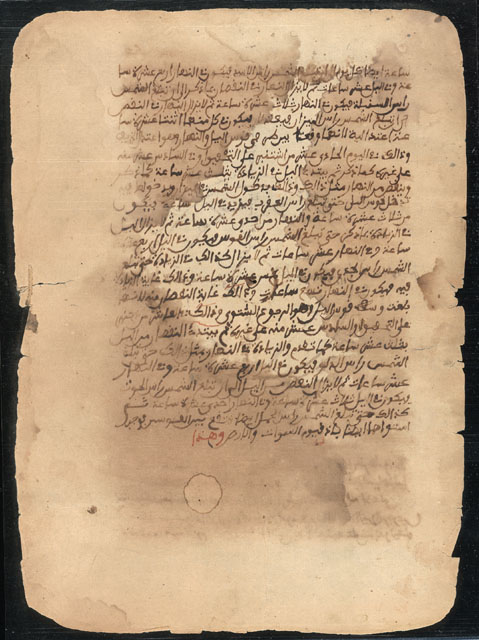
The Timbuktu manuscripts are not a single collection, but a vast, decentralized archive of private family libraries. They are a deliberate, unbroken conversation across generations. The physical diversity of the texts is as rich as their content.
- Materials: Most are written on locally produced harir (silk) or paper imported from Italy and the Middle East, mixed with plant fibers. The ink was often made from soot, gum arabic, and plant extracts, creating a deep, enduring black.
- Calligraphy: The dominant script is al-Sudani (or Sudanese), a bold, angular style distinct from the more fluid Maghrebi scripts of North Africa. It was a deliberate local adaptation.
- Subjects: The range is breathtaking. Beyond the expected Qur’ans and commentaries, there are treatises on medicine (including surgeries and herbal cures), astronomy (predicting solar eclipses with precision), mathematics (including complex geometric problems), poetry, history, and statecraft. There are even love letters, divorce decrees, and business contracts.
The Intellectual Giants of the Sahel
One cannot discuss the manuscripts without honoring the scholars who filled them. Ahmed Baba al-Timbukti (1556–1627) is perhaps the most famous. A prolific historian and jurist, he was taken captive by the Moroccan invasion of 1591 and exiled to Marrakesh. When a Moroccan scholar asked him about his library, Baba famously replied, “I have taken care to bring the most valuable books, which are the minds of men.” His own writings, including Kashf al-Asrar (The Unveiling of Secrets), are among the most prized manuscripts today.
Another towering figure was Muhammad al-Maghili, a 15th-century scholar from Algeria who wrote extensively on the governance of a multi-religious state, advising the Askia dynasty on law and justice. His works show a sophisticated engagement with the realities of a diverse empire, not a rigid dogmatism.
How the Manuscripts Survived: A Story of Quiet Heroism
The 20th and 21st centuries brought existential threats that no scholar of the 16th century could have imagined. From colonial neglect under French rule to the devastating Tuareg rebellions of the 1990s, the manuscripts were hidden, buried, and smuggled in a quiet, desperate act of cultural preservation. The most dramatic chapter came in 2012, when jihadist groups linked to Al-Qaeda in the Islamic Maghreb (AQIM) seized control of Timbuktu. They systematically destroyed Sufi shrines and declared the manuscripts to be heretical.
The world held its breath. But the response was not a military one—it was a librarian’s insurgency. Abdel Kader Haidara, a soft-spoken curator and descendant of a long line of manuscript collectors, organized a clandestine operation. With funding from the Prince Claus Fund and the German government, he and a team of volunteers spent months packing over 350,000 manuscripts into metal trunks. They were transported by car, donkey cart, and boat down the Niger River to the relative safety of Bamako, Mali’s capital. Many were hidden in the walls of private homes, under floorboards, and in secret pits in the desert. It was the largest and most successful rescue of cultural heritage in living memory, a story of courage that rivals any adventure novel.
Digitization, Decay, and the Modern Fight for the Timbuktu manuscripts
Today, the manuscripts face a new, quieter enemy: time and climate. The harsh Sahelian environment—with its extreme heat, dust, and humidity swings—is a constant threat to the paper and leather bindings. Many texts are brittle, faded, or infested with insects. The rescue from Timbuktu was a miracle, but it was only the first step.
The monumental task of preservation now falls to institutions like SAVAMA-DCI (the Association for the Safeguarding of the Manuscripts of Timbuktu), led by Haidara, and the Ahmed Baba Institute (named after the great scholar). Their work is a race against decay. Key preservation efforts include:
- Climate-controlled storage: New facilities in Bamako and Timbuktu (rebuilt after the 2012 destruction) are being fitted with dehumidifiers and temperature regulation systems.
- Conservation workshops: Local Malian conservators are being trained in modern paper repair techniques, using Japanese tissue paper and wheat starch paste to mend tears without damaging the original ink.
- Digitization: This is the most critical tool for access and survival. High-resolution scans are being made of every page, allowing scholars worldwide to study the texts without handling the fragile originals. The Hill Museum & Manuscript Library (HMML) in Minnesota has partnered with Malian institutions to create a digital archive accessible online.
| Threat | Impact on Manuscripts | Current Mitigation Strategy |
|---|---|---|
| Climate (heat, humidity, dust) | Brittle pages, ink fading, mold growth | Climate-controlled storage, dehumidifiers, acid-free boxes |
| Insect infestation | Paper eaten by silverfish, termites, bookworms | Freezing treatments, insecticide-free traps, regular inspections |
| Human conflict (2012 occupation) | Deliberate destruction, looting, fire | Clandestine evacuation to Bamako (completed), security protocols for return |
| Lack of trained conservators | Incorrect repairs causing irreversible damage | Training programs with international partners (e.g., British Library, HMML) |
| Limited public awareness | Low funding, risk of theft or sale | Public exhibitions, educational programs in Mali, global fundraising campaigns |
Rewriting History: What the Manuscripts Teach Us About Africa
The most profound impact of the Timbuktu manuscripts may be on the global understanding of African history. For too long, the continent was portrayed as a place without written records, a land of oral tradition alone. These manuscripts shatter that myth. They show that Africa had a rich, sophisticated literary tradition that was deeply connected to global currents of thought.
Consider a 16th-century manuscript on Islamic jurisprudence that debates the rights of women in divorce—a conversation that feels remarkably modern. Or a mathematical treatise that explains complex geometric proofs for calculating the direction of Mecca, demonstrating a mastery of algebra and trigonometry. These are not relics of a lost world; they are living documents of a civilization that valued reason, debate, and the written word. They prove that Timbuktu was not a place where knowledge was merely received, but where it was created and adapted to a local context.
The People Behind the Pages: A Living Tradition
The story does not end with digitization. The manuscripts are not museum pieces; they are part of a living heritage. In the courtyards of Timbuktu, families still gather to read from their ancestor’s library. The Fondo Kati family, descended from the 16th-century scholar Mahmud Kati, continues to guard their collection of over 3,000 manuscripts, passing the responsibility from father to son. Ismaël Diadié Haidara, a descendant of the same lineage, has become a global advocate for the manuscripts, speaking at UNESCO and the Library of Congress.
These families are not just custodians; they are the living link to the scholars who wrote the texts. They can recite the genealogy of each book, remembering who copied it, who owned it, and what it was used for. This oral tradition is as valuable as the ink on the page. The challenge is to ensure that this knowledge is not lost as the older generation passes on. Modern education in Mali now includes courses on manuscript conservation at the University of Bamako, training a new generation of young Malians to care for their heritage with both traditional respect and modern science.
A Future for the Legacy: Return, Risk, and Renewal
The ultimate goal is the safe return of the manuscripts to Timbuktu. This is not just a logistical or security issue—it is a matter of dignity and identity. The people of Timbuktu see the manuscripts as their soul. Plans are underway to build a new, secure library in the city, designed with passive cooling systems that require no electricity, using local mud-brick techniques that have proven their resilience for centuries. The Ahmed Baba Institute is already operating a new building, but the majority of the rescued manuscripts remain in Bamako, waiting for a guarantee of safety that may take years to materialize.
The risk of return is real. The political situation in northern Mali remains fragile, with sporadic attacks by armed groups. A single bomb or a fire could destroy in minutes what took centuries to create. Yet, the families are adamant: the manuscripts belong in Timbuktu. They are not just objects; they are the city’s breath. The international community, led by UNESCO and the Malian government, is working on a phased return, prioritizing the most stable collections and ensuring robust security protocols.
How to See and Support the Manuscripts Today
You do not need to travel to Mali to witness this legacy. Several digital platforms now offer access to high-resolution images of the manuscripts. The World Digital Library (a project of the Library of Congress) and the Hill Museum & Manuscript Library have extensive online collections. These are not just for academics; they are for anyone curious about the depth of African history. You can zoom in on the intricate geometric patterns of a 17th-century Qur’an or read the marginal notes of a scholar who lived 400 years ago.
If you wish to support the preservation, consider donating to organizations like SAVAMA-DCI or the Prince Claus Fund, which directly fund conservation work and training for Malian conservators. Avoid simply buying souvenirs; instead, buy books by Malian scholars like Ahmed Baba or attend lectures by experts like Abdel Kader Haidara. The most powerful act is to tell the story—to correct the narrative that Africa had no written history. The manuscripts are proof that it was never lost; it was simply waiting to be read.
The Eternal Ink of the Sahel
The Timbuktu manuscripts are more than a collection of old books. They are a defiant statement of resilience, a testament to the fact that knowledge, when cherished, can outlast empires, wars, and even the desert itself. They remind us that Africa’s story is not one of passive suffering, but of active creation, of intellectual rigor, and of a deep, abiding love for the written word. As the sun sets over the dunes of the Sahara, the ink on these pages does not fade. It glows, a quiet, eternal light from a city that was never lost—only waiting for the world to catch up.