📅 Last updated: 27.08.2026
Shona mbira music, the shimmering, interlocking sound of the mbira dzavadzimu — the “voice of the ancestors” — is not merely a genre from Zimbabwe’s past; it is a living, breathing spiritual technology that has survived colonialism, censorship, and globalization, and today pulses through the country’s modern cities, university halls, and international festival stages. To hear it is to step into a sonic world where the boundaries between the living and the departed, the human and the divine, and the ancient and the hyper-modern dissolve into a cascade of metallic notes. It is the sound of a people’s memory, but also their present and future.
- The Cosmic Mechanics of the Mbira Dzavadzimu
- Shona Mbira Music’s Deep Roots and Evolution
- From Rhodesia to the World Stage: The Revival
- The Modern Mbira at Home and in the Diaspora
- Key Figures and Modern Practitioners
- Instruments, Tuning, and the Art of Learning
- The Mbira’s Place in a Digital, Globalized Africa
- The Unbroken Thread: A Living Legacy
For the Shona people, who comprise the majority ethnic group in Zimbabwe and number over 15 million across the country and into Mozambique, the mbira is far more than an instrument. It is a sacred tool for communication, a keeper of history, and a source of profound personal and communal healing. This article dives deep into the heart of this ancient music, exploring its origins, its intricate mechanics, its near-erasure and subsequent revival, and its current renaissance as a global sound that remains fiercely rooted in the soils of the Zimbabwean highveld.
The Cosmic Mechanics of the Mbira Dzavadzimu
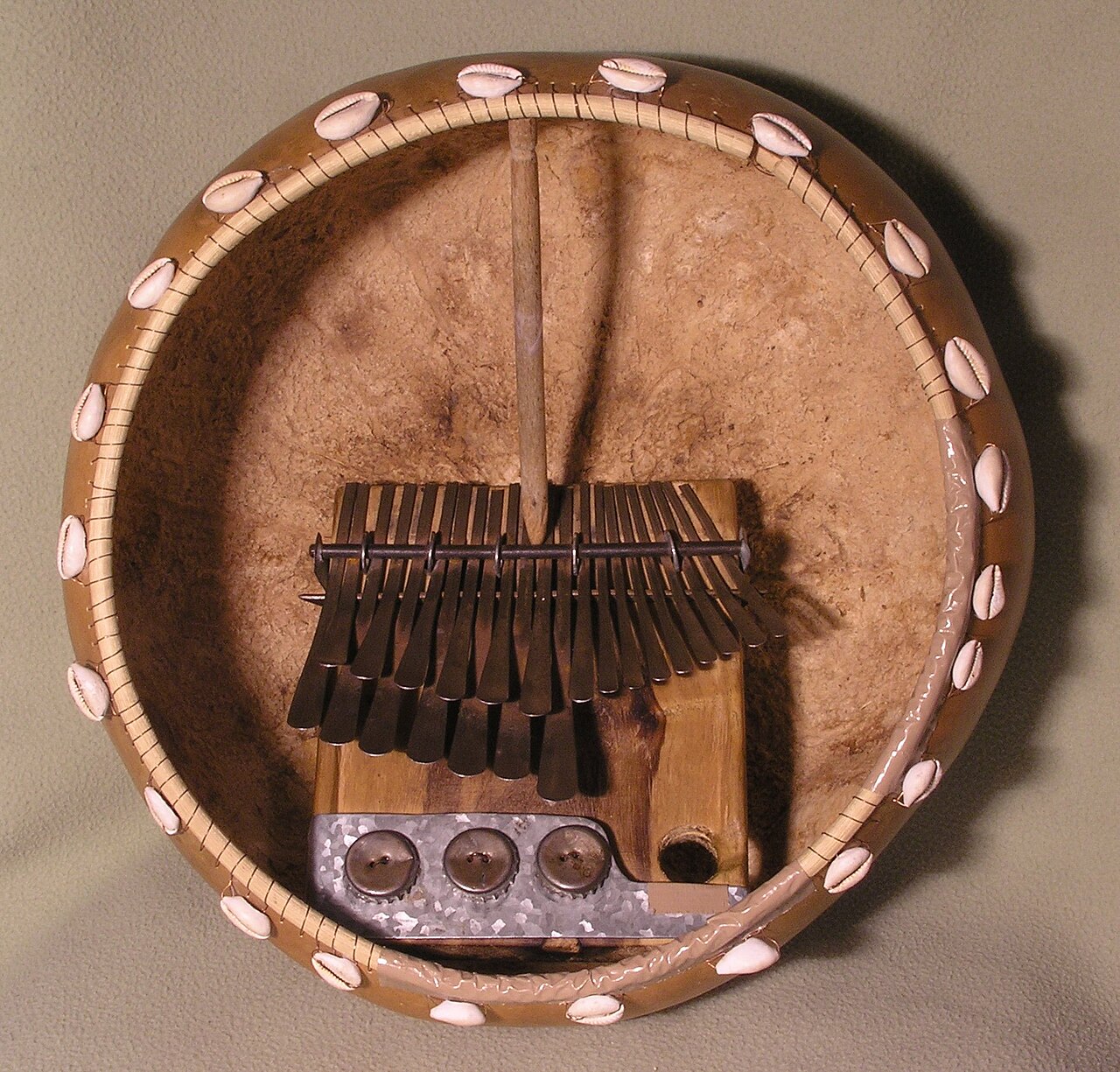
At first glance, the mbira appears deceptively simple: a wooden soundboard, often fitted inside a large calabash resonator (deze) decorated with seashells and bottle tops that buzz and rattle with every note, and a set of 22 to 28 metal keys — traditionally forged from rocker arm springs of old cars, now often from high-carbon steel — mounted on a metal plate over a bridge. But its simplicity is an illusion. The instrument is a masterpiece of acoustic engineering and musical philosophy.
The keys are divided into three distinct registers, each with a specific role. The lower left-hand keys play the kushaura, the main melodic phrase that initiates the cyclical pattern. The upper right-hand keys play the kutsinhira, a complementary, interlocking phrase that responds to and completes the kushaura. This division of labor is crucial: no single hand plays the full melody. The music is created in the space between the hands, in the interlocking of the two parts. A third player, often using a hosho (gourd rattle), provides the foundational pulse, while the left thumb of the main player often picks out a bass line known as the odoro.
The result is a polyrhythmic, multi-layered tapestry of sound that seems to spiral infinitely. Western listeners often describe it as hypnotic or trance-like, but for the Shona, this is not a mere effect; it is the very purpose. The interlocking patterns create a “staggered” rhythm that is believed to open a portal, a spiritual doorway through which ancestral spirits (vadzimu) can communicate with the living. The buzzing of the shells, far from being an unwanted distortion, is considered essential — it is the “voice of the spirits,” a sonic veil that adds a layer of ethereal texture, masking the physical origin of the notes and allowing the music to transcend the mundane.
The Ceremony: Bira and the Spirit World
The mbira’s primary traditional function is within the bira, an all-night ceremony held to honor ancestors, request guidance, or resolve family and community disputes. These ceremonies are not casual gatherings; they are deeply structured spiritual events. Led by a n’anga (traditional healer/diviner) and a host family, the bira begins at dusk. The musicians sit on a mat, the mbira placed in the deze for amplification, and they begin to play. The music is not a performance; it is a summoning.
As the night deepens, the continuous, cyclical nature of the music — often the same piece played for hours without break — induces a state of altered consciousness in participants, particularly in those who are “called” by the spirits. The svikiro (medium) may enter a trance state, their body becoming a vessel for a specific ancestor mhondoro (royal lion spirit). The music shifts, becoming faster and more intense, as the spirit communicates through the medium, offering advice, healing, or prophecies to the assembled family. It is a profound, collective experience of the sacred, where the music is not a soundtrack but the primary agent of transformation.
This is not a relic of a bygone era. In 2023, while researching in the rural areas of Masvingo Province, I attended a bira for a family seeking to resolve a land dispute. The mbira played from 8 PM until 4 AM. The medium, a respected elder woman in her 60s, entered a deep trance, and through her, the family’s great-grandfather spoke at length about boundaries and ancestral rights. The dispute was settled the following week, not in a courtroom, but around a fire, guided by the music and the words it carried. This is the mbira’s enduring power: it is a functional, practical tool for social and spiritual governance.
Shona Mbira Music’s Deep Roots and Evolution
The history of the mbira is as deep as the roots of the Shona people themselves. While exact dates are debated, oral tradition and archaeological evidence suggest that a form of the instrument has been played in the Zambezi Valley and the Zimbabwean plateau for over a thousand years. The famous golden cowrie shells and iron gongs found at the ancient city of Great Zimbabwe (built between the 11th and 15th centuries) hint at a rich musical culture, and it is widely believed that an early form of the mbira was part of the courtly and spiritual life of that powerful kingdom.
The instrument evolved over centuries, with distinct regional styles emerging. Among the most prominent are:
- Mbira Dzavadzimu: The most common and sacred form, associated with the Zezuru and Korekore peoples of central and northern Zimbabwe. It is the instrument of the bira ceremony, with 22-24 keys.
- Mbira Nyunga Nyunga: A smaller, higher-pitched instrument with 15 keys, historically associated with the Manyika people of the eastern highlands. It is often used for more secular and contemporary music, and is popular in schools.
- Njari: A larger instrument with a wider range, often used for storytelling and praise poetry, popular among the Karanga people of the south.
- Matepe: A distinct instrument with a deep, resonant bass and a unique tuning, played by the Korekore people in the Dande Valley, often in a more rhythmic, dance-oriented style.
For centuries, the mbira was the central musical voice of the Shona. It was played at all major life events — births, initiations, weddings, and funerals. It preserved history, encoded moral teachings in its lyrics, and provided a sonic identity for entire clans. It was, in every sense, the soul of the people.
The Colonial Assault and the Fading Song
The arrival of European colonizers in the late 19th century brought a cataclysmic disruption. The British South Africa Company’s occupation in 1890, followed by the establishment of the colony of Rhodesia in 1923, initiated a period of profound cultural suppression. Missionaries, who established schools and churches across the land, viewed the mbira as a tool of “paganism” and devil worship. Its music, with its deep connection to ancestor veneration, was seen as a direct threat to the Christianization of the African population.
In mission schools, playing the mbira was often forbidden. Children were beaten for even possessing one. The banjo and the guitar were introduced as “civilized” alternatives, and Western hymns replaced indigenous songs. This systematic cultural erasure had a devastating effect. By the 1950s, in many urban areas, the mbira had been pushed to the margins, seen as a backward artifact of a primitive past. It was a time of immense cultural loss, as the deep knowledge of tunings, songs, and ceremonial practices was at risk of being lost forever.
However, the music never fully died. It survived in the remote rural areas, where the reach of missionaries and colonial administrators was weaker. In the Dande Valley, in the far north, and in the mountainous regions of the east, the mbira continued to sound in secret. It was this clandestine survival that would provide the seeds for a remarkable revival.
From Rhodesia to the World Stage: The Revival
The 1960s and 1970s were a period of immense political and social upheaval in Rhodesia, as the black majority fought for independence. This struggle also sparked a cultural renaissance. A new generation of musicians, inspired by the Black Consciousness movement and the broader pan-Africanist wave, began to look back to their roots for identity and strength. The mbira, once a symbol of shame, became a potent symbol of resistance and pride.
The most iconic figure in this revival was Thomas Mapfumo. Born in 1945, Mapfumo started his career playing rock and roll covers in the 1960s. But as the liberation war intensified, he began to incorporate the mbira into his electric band, creating a revolutionary new sound that became known as chimurenga music — a name taken from the Shona word for “struggle.” Mapfumo’s music was a powerful fusion of traditional mbira melodies, played on electric guitars, and revolutionary lyrics that called for liberation. His songs, such as “Hokoyo!” and “Pamuromo Chete,” became anthems for the guerrilla fighters and the masses, broadcasting the spirit of the struggle from the city to the countryside.
Mapfumo’s genius was not just in the lyrics, but in the translation. He recreated the interlocking kushaura and kutsinhira patterns on guitars, bass, and drums, making the ancient sound relevant and electrifying for a modern audience. He proved that Shona mbira music was not a museum piece, but a living, adaptable force. His success opened the door for a wave of other artists, including the legendary Oliver Mtukudzi, who, while more guitar-focused, incorporated mbira elements and deep Shona philosophy into his music, and the group Black Spirits.
Kwanongoma and the New Generation
Alongside the popular music revolution, a quieter but equally important revival was taking place in educational institutions. The Kwanongoma College of African Music in Bulawayo, founded in 1960, was a pioneering institution that formalized the teaching of traditional instruments, including the mbira. It produced a generation of skilled players and teachers who took the instrument back into schools and communities. One of its most famous alumni, Ephat Mujuru, went on to become a master of the mbira and a cultural ambassador, performing worldwide and recording albums that showcased the instrument’s sacred depth.
By the time Zimbabwe gained independence in 1980, the mbira was firmly back in the national consciousness. It was no longer a symbol of shame, but a source of national pride. A new generation of musicians, born after independence, grew up hearing the mbira not just in ceremonies but on the radio and at concerts. They began to experiment, blending the ancient sound with jazz, reggae, and electronic music.
The Modern Mbira at Home and in the Diaspora
Today, Shona mbira music is experiencing a global renaissance, yet it remains deeply rooted in its homeland. In Zimbabwe, the mbira is ubiquitous. It is played at political rallies, hotel lobbies, and upscale restaurants in Harare. It is taught in schools and universities, and there are thriving mbira communities in every major city. The annual Mbira Festival in Harare, and the more intimate gatherings in the Eastern Highlands, attract enthusiasts from around the world.
One of the most exciting developments is the emergence of a new wave of young, innovative artists who are pushing the boundaries of the genre. Artists like Hope Masike, known as the “Princess of Mbira,” bring a contemporary, theatrical sensibility to the instrument, blending it with jazz, soul, and spoken word. Her music is unapologetically modern, yet it carries the unmistakable DNA of the ancient tradition. Similarly, the duo Malu (Malu Musara) uses the mbira in a minimalist, ambient context, creating soundscapes that are both meditative and avant-garde. These artists are not just preserving the tradition; they are evolving it, proving that the mbira can speak to the complexities of 21st-century life in Zimbabwe and beyond.
The diaspora has also become a powerful engine for the mbira’s global spread. Since the economic crises of the 2000s, hundreds of thousands of Zimbabweans have emigrated to the UK, USA, Canada, South Africa, and Australia. They took their music with them. In cities like London, New York, and Melbourne, mbira workshops and communities have flourished, often led by Zimbabwean masters like Musekiwa Chingodza and Jacob Mafuleni. These communities serve as vital cultural anchors for the diaspora, connecting them to their heritage, and also as bridges, introducing the music to new, non-African audiences.
This cross-cultural exchange has led to fascinating collaborations. Western jazz musicians, electronic producers, and classical composers have been deeply inspired by the mbira’s unique sonic palette and cyclical structures. It is not uncommon to hear the mbira in a modern jazz quartet in Berlin or woven into a techno track in London. While some purists might see this as dilution, it is more accurately a testament to the music’s profound adaptability and universal resonance.
Key Figures and Modern Practitioners
To understand the depth of the mbira world, it is essential to know its key players, past and present. They are not just musicians; they are custodians of a sacred tradition and innovators who have carried it into the future.
| Name | Era | Contribution |
|---|---|---|
| Hakurotwi Mude | Mid-20th Century | A legendary mbira master from the Dande Valley, known for his deep, powerful voice and profound spiritual connection. His recordings in the 1970s are considered sacred texts for many players. |
| Ephat Mujuru | 1960s-2000s | Pioneered the formal teaching of mbira at Kwanongoma College, performed at the 1980 Independence celebrations, and spent decades as a global ambassador, recording over a dozen albums. |
| Thomas Mapfumo | 1970s-Present | The “Lion of Zimbabwe,” created chimurenga music, fusing electric guitars with mbira patterns to become the soundtrack of the liberation struggle. He remains a powerful voice, now based in the USA. |
| Stella Chiweshe | 1970s-Present | The first female mbira player to achieve international fame. She broke gender barriers in the 1970s and has spent decades performing and teaching worldwide, often focusing on the instrument’s spiritual power. |
| Hope Masike | 2000s-Present | Known as the “Princess of Mbira,” she is a leading figure in the contemporary scene, blending the mbira with jazz, soul, and theatrical performance, and speaking for a new generation of Zimbabwean women. |
These figures, along with countless others, have ensured that the mbira is not a static artifact but a dynamic, evolving tradition. They represent a lineage of knowledge that has been passed down through generations, adapted to new circumstances, and shared with the world.
Instruments, Tuning, and the Art of Learning
For those new to the music, the intricacies of the mbira can be daunting. The instrument is not standardized. There are several distinct tunings, each associated with a particular region or family of players. The most common is the Dambatsoko tuning, but there are also tunings like Nhata, Dendera, and Mavembe, each with its own character and emotional color. The tuning is not fixed to a universal pitch like a Western piano; it is relative to the instrument and the maker. This means that two mbiras from different makers may not be in tune with each other, adding a layer of organic, non-standardized complexity to the music.
Learning to play the mbira is a profound undertaking. It is not simply a matter of learning notes; it is about internalizing a cyclical way of thinking. The kushaura and kutsinhira parts are not separate melodies; they are two halves of a single, unified thought. A student must learn to listen not to their own part, but to the space between the parts. The goal is to achieve kupandana — a state of interlocking harmony where the two parts become one, and the music seems to play itself.
Traditionally, learning was done by ear, through years of sitting alongside a master. This method is still highly valued. However, the modern era has brought new tools. Books, online tutorials, and video lessons have made the mbira more accessible than ever before. Organizations like the Mbira Centre in Harare, founded by Albert Chimedza, offer formal instruction and work to preserve and promote the instrument. Chimedza, a renowned master, has spent decades building a community of players and ensuring the mbira remains a central part of Zimbabwe’s cultural identity.
For the contemporary learner, whether in Zimbabwe or abroad, the journey is one of deep listening and patience. It is a practice that demands humility and rewards persistence. The mbira does not reveal its secrets quickly. But for those who commit, it offers a connection to a profound musical and spiritual lineage that is unlike anything else on earth.
The Mbira’s Place in a Digital, Globalized Africa
There is a prevailing narrative, often from the West, that globalization inevitably erodes traditional cultures. The story of the Shona mbira, however, tells a different, more nuanced tale. In the 21st century, the mbira is not just surviving; it is thriving in the digital space. Social media platforms like YouTube and Instagram are filled with mbira tutorials, performances, and discussions. Young Zimbabweans in Harare are sharing their music with peers in London, New York, and Tokyo. The internet has become a new kind of bira, a virtual space where the music can be shared and the community can connect.
This digital presence has also sparked a wave of innovation. Producers are using software to manipulate mbira samples, creating new electronic music that is unmistakably Zimbabwean in its core. Apps are being developed to help people learn the instrument. This is not the death of tradition; it is the evolution of tradition in a new medium. The mbira is proving to be as adaptable as the Shona people themselves, who have navigated colonialism, liberation, and economic hardship with resilience and creativity.
Furthermore, the mbira is increasingly recognized for its therapeutic benefits. In a world grappling with high rates of stress, anxiety, and depression, the mbira’s hypnotic, cyclical patterns are being studied for their calming and grounding effects. Some therapists in Zimbabwe and abroad are beginning to use mbira music in sound healing and meditation practices. While this is a modern application, it echoes the instrument’s ancient role in promoting mental and spiritual well-being within the community. The mbira is not just music; it is a tool for wellness.
The Unbroken Thread: A Living Legacy
The Shona mbira is a miracle of cultural endurance. It has survived the brutality of colonialism, the suppression of missionaries, and the pressures of modernity. It has been carried from the rural homestead to the urban stage to the global digital village. Yet, at its core, it remains what it has always been: the voice of the ancestors, a bridge between worlds, and a profound expression of the Shona soul.
To listen to Shona mbira music is to listen to a conversation that has been going on for centuries. It is a conversation between the living and the dead, between the individual and the community, between the past and the present. It is a music that asks you to slow down, to listen deeply, and to connect with something larger than yourself. In a fast-paced, often disconnected world, that is a rare and precious gift.
The mbira is not a relic. It is a vibrant, evolving voice that continues to speak to new generations. It is a testament to the power of music to carry memory, to heal wounds, and to assert identity. As long as there are Shona people, and as long as there are people who are moved by the shimmering, spiraling sound of its keys, the mbira will continue to play. It is the eternal heartbeat of Zimbabwe, and its song is far from over.