📅 Last updated: 27.10.2026
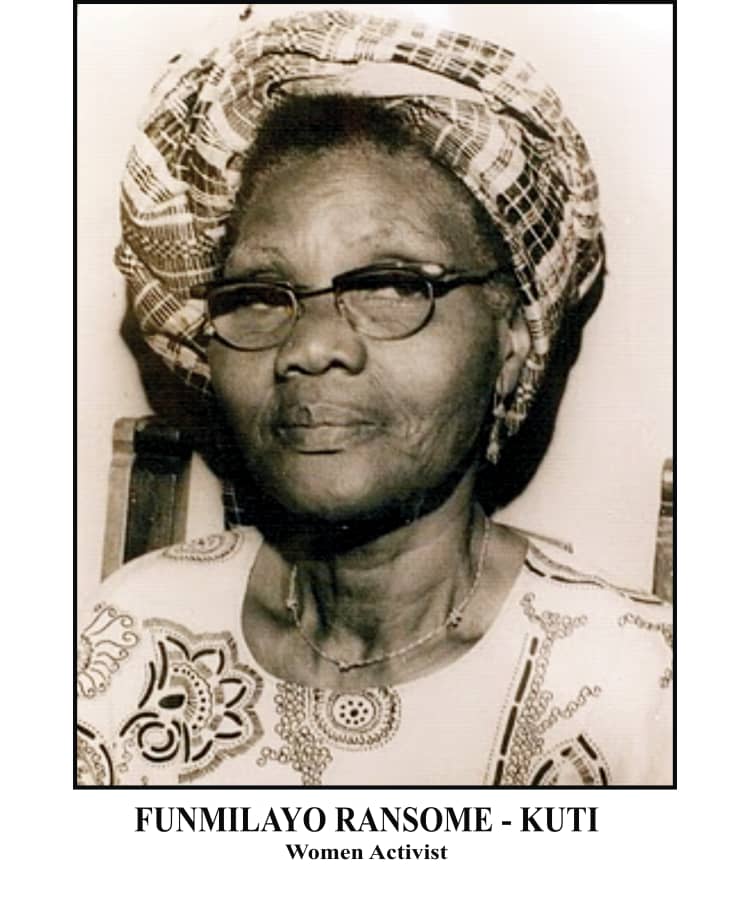
Funmilayo Ransome-Kuti was born in Abeokuta in 1900, became one of colonial Nigeria’s most formidable political organisers, and helped topple a king. She is the figure most often named when historians ask who built the mass movement for Nigerian women’s political rights. Long before independence in 1960, she was already in the streets, the newspapers, and the negotiating rooms, pressing for the vote, for fair markets, and for the dignity of women whom the colonial system had written out of public life.
Funmilayo Ransome-Kuti (1900–1978) was a Nigerian teacher, suffragist, and political organiser. As leader of the Abeokuta Women’s Union, she mobilised tens of thousands of women against the flat-rate taxation of market women and the abuses of the Alake of Abeokuta, forcing his temporary abdication in 1949. She later became a National Council of Nigeria and the Cameroons (NCNC) organiser, a delegate to international women’s conferences, and the first woman appointed to the Western House of Chiefs in 1959.
- Who was Funmilayo Ransome-Kuti, and why does she matter?
- From classroom to cause: how did Funmilayo Ransome-Kuti become an organiser?
- The tax revolt that shook Abeokuta
- Key milestones in the life of Funmilayo Ransome-Kuti
- Beyond Abeokuta: Funmilayo Ransome-Kuti on the national stage
- What did Funmilayo Ransome-Kuti's activism achieve?
- How should we remember Funmilayo Ransome-Kuti today?
- A lasting perspective on Funmilayo Ransome-Kuti
Who was Funmilayo Ransome-Kuti, and why does she matter?
Her name at birth was Frances Abigail Olufunmilayo Thomas, and she was born on 25 October 1900 in Abeokuta, in what was then the Protectorate of Southern Nigeria. Her father, Daniel Olumeyuwa Thomas, was a farmer and trader from a Saro family — descendants of liberated Yoruba recaptives who had resettled in Lagos from Sierra Leone. Her mother, Lucretia Phyllis Omoyeni Adeosun, was a dressmaker. The household was Christian, literate, and connected to the small Yoruba elite that had absorbed mission schooling while keeping one foot in Egba civic life.
That background shaped everything that followed. Ransome-Kuti attended the Abeokuta Grammar School, where her future husband, the Reverend Israel Oludotun Ransome-Kuti, was a teacher. She then studied in England, at Wincham Hall School in Cheshire, between 1919 and 1922. When she returned, she taught, and in 1925 she married Ransome-Kuti, who would become a leading figure in Nigerian education and trade unionism. The couple settled in Abeokuta, where she founded a school and, in the 1930s, began organising women’s clubs that later became the nucleus of her political machine.
Her significance is not merely symbolic. Ransome-Kuti built institutions, ran campaigns, and trained a generation of women in political action. She was also the mother of four children, one of whom — Fela Kuti — became Africa’s most famous musical dissident. Another, Bekolari “Beko” Ransome-Kuti, became Nigeria’s leading physician-activist and a persistent critic of military rule. The family’s political courage ran through generations, and it began with her.
From classroom to cause: how did Funmilayo Ransome-Kuti become an organiser?
The path was not a straight line from teaching to protest. It moved through the everyday grievances of women in Abeokuta: the cost of food, the control of markets, the behaviour of tax collectors, and the refusal of local authorities to treat women as citizens rather than as dependents.
The Abeokuta Women’s Union
In 1946, Ransome-Kuti helped transform the Abeokuta Ladies Club — a group of educated, mostly Christian women — into the Abeokuta Women’s Union (AWU). The change was deliberate. The AWU opened its membership to market women, artisans, and traders, including Muslim women who had been excluded from the elite club. This was a crucial move: it fused the literacy and connections of the educated elite with the mass base and economic muscle of the market. By the late 1940s, the AWU claimed tens of thousands of members, and its meetings could fill the squares of Abeokuta.
The union’s demands were concrete. It opposed the flat-rate taxation imposed on women, which fell hardest on the poorest traders. It protested the arbitrary powers of the Alake, the traditional ruler of Abeokuta, and the colonial administration that backed him. It also campaigned against price controls and the exploitation of women by colonial marketing boards. Ransome-Kuti’s method was relentless: petitions, deputations, press campaigns, and mass meetings that could not be ignored.
- Build a broad base: The AWU deliberately recruited market women, not just the educated elite, giving the movement economic leverage and street-level reach.
- Use the press: Ransome-Kuti wrote letters and articles that put women’s grievances into the public record and embarrassed the colonial administration.
- Escalate strategically: Petitions gave way to mass demonstrations, and demonstrations gave way to sustained civil disobedience when authorities refused to negotiate.
The tax revolt that shook Abeokuta
The confrontation that made Funmilayo Ransome-Kuti a national figure came between 1947 and 1949. Colonial policy in Abeokuta required women to pay a flat tax, a burden that was particularly harsh for market traders with small margins. The AWU argued that women had no representation in the councils that set the tax and no voice in how it was spent. When petitions to the Alake, Sir Ladapo Ademola, and to the British administration went unanswered, the women escalated.
In 1948 and 1949, thousands of women marched on the Alake’s palace. They held sit-ins, blocked roads, and refused to disperse. The colonial authorities responded with arrests and force, but the pressure did not break. The campaign drew national and international attention, and it exposed the contradiction at the heart of colonial rule: a system that claimed to be bringing civilisation while denying women basic political rights.
The Alake, Sir Ladapo Ademola, was forced to abdicate temporarily in 1949 and went into exile. The flat-rate tax on women was eventually abolished. It was a rare and decisive victory for a mass movement led by women in colonial Africa, and it demonstrated that organised women could bring down a powerful traditional and colonial alliance.
What did the victory actually change?
The tax repeal was the immediate gain, but the deeper change was political. The AWU had shown that women could organise independently, negotiate with power, and win. Ransome-Kuti’s reputation spread beyond Abeokuta, and she became a sought-after speaker and strategist. The campaign also fed into the broader nationalist movement, where women’s demands for representation became part of the argument for self-government.
Key milestones in the life of Funmilayo Ransome-Kuti
| Year | Event | Significance |
|---|---|---|
| 1900 | Born in Abeokuta as Frances Abigail Olufunmilayo Thomas | Born into a Saro family with strong links to mission education and Egba civic life |
| 1919–1922 | Studies at Wincham Hall School, Cheshire, England | One of the few Nigerian women of her generation to receive a British education |
| 1925 | Marries Reverend Israel Oludotun Ransome-Kuti | Partnership with a leading educator and trade unionist |
| 1946 | Helps found the Abeokuta Women’s Union | Opens the movement to market women and Muslim women, building a mass base |
| 1947–1949 | Leads the anti-tax campaign against the Alake | Forces the Alake’s temporary abdication and the abolition of the women’s flat tax |
| 1959 | Appointed to the Western House of Chiefs | First woman to sit in that chamber, a landmark in Nigerian political representation |
Beyond Abeokuta: Funmilayo Ransome-Kuti on the national stage
The Abeokuta campaign made Ransome-Kuti a national figure, and she used that platform to push for women’s suffrage and representation across Nigeria. She joined the National Council of Nigeria and the Cameroons (NCNC), the party led by Nnamdi Azikiwe, and became one of its most visible women organisers. Her work helped ensure that women’s suffrage was included in the constitutional debates of the 1950s, and she campaigned for women to register and vote when the opportunity came.
She was also a traveller and a bridge-builder. In the 1950s she attended international women’s conferences and met organisers from across Africa, Europe, and Asia. She corresponded with figures in the global women’s movement and brought their ideas back to Nigeria. In 1959, she was appointed to the Western House of Chiefs, becoming the first woman to sit in that chamber. It was a symbolic and practical breakthrough: a woman who had once been arrested for protesting now had a seat in a formal legislative body.
Her politics were not confined to gender. She was a nationalist who believed that independence would mean little without economic justice and without women’s full participation. She criticised the new Nigerian elite for reproducing colonial habits of exclusion, and she kept organising at the grassroots even as she moved in national circles.
What did Funmilayo Ransome-Kuti’s activism achieve?
The achievements are specific and verifiable. The flat-rate tax on women in Abeokuta was abolished. The Alake was forced to abdicate temporarily. Women’s suffrage became part of the constitutional conversation. A woman sat in the Western House of Chiefs for the first time. A generation of women learned how to organise, petition, march, and negotiate.
The longer-term impact is harder to measure but no less real. Ransome-Kuti helped establish the idea that Nigerian women were political actors in their own right, not auxiliaries to male nationalist leaders. Her methods — mass mobilisation, press campaigns, coalition-building across class and religion — became a template for later movements, from market women’s associations to contemporary feminist organising.
- Institutional legacy: The AWU model of recruiting across class and faith influenced later women’s organisations in Nigeria.
- Constitutional legacy: Her suffrage campaigning contributed to the inclusion of women’s voting rights in Nigeria’s pre-independence constitutional arrangements.
- Cultural legacy: Her family’s tradition of dissent, carried on by Fela and Beko, kept her political ideas in the public sphere for decades.
How should we remember Funmilayo Ransome-Kuti today?
Her later years were marked by continued activism and by the political turbulence of post-independence Nigeria. She remained a critic of military rule and a defender of civil liberties. In 1977, soldiers raided the Kalakuta Republic, the compound in Lagos associated with her son Fela. Ransome-Kuti was among those injured when she was thrown from a window during the raid. She died on 13 April 1978 from complications related to her injuries. She was 77.
The circumstances of her death are a grim reminder of the risks she accepted throughout her life. She had spent decades confronting powerful men — colonial administrators, traditional rulers, and later military officers — and she never retreated into private life. Her funeral drew thousands, and her name became a byword for courage in Nigerian public life.
Why her story still matters
Nigeria today has more women in public office than in Ransome-Kuti’s time, but representation remains far from equal. Women’s rights organisations still fight battles over taxation, market access, political inclusion, and violence. Ransome-Kuti’s campaigns show that change comes from organised pressure, not from waiting for elites to act. Her insistence on recruiting market women and Muslim women into a movement led by educated Christians was a practical lesson in coalition politics that remains relevant across the continent.
Her story also complicates easy narratives about African women’s history. She was not a passive figure waiting to be liberated. She was a strategist, a public intellectual, and a leader who built institutions and won concrete victories. Her life is part of the larger history of African women’s political thought, alongside figures such as Adelaide Casely-Hayford in Sierra Leone and Constance Cummings-John, and it deserves to be taught as such.
A lasting perspective on Funmilayo Ransome-Kuti
The most enduring lesson of Funmilayo Ransome-Kuti’s life is that political power can be confronted by people who are supposed to have none. She began with a school and a women’s club, and she ended with a seat in a legislative chamber and a place in the national memory. In between, she organised market women, faced down a king, and helped write women’s suffrage into Nigeria’s constitutional future. Her name is invoked whenever Nigerians talk about fearless women, and it should be. She earned it in the streets of Abeokuta, in the pages of the newspapers, and in the long, unglamorous work of building a movement that outlasted her.