📅 Last updated: 25.10.2026
Taarab music is the sound of Zanzibar at dusk: a slow-burning orchestral Swahili song form where violins, qanuns, cellos, and a chorus trade lines about love, loss, and the bittersweet business of being human. Born in the Stone Town courtyards and wedding halls of the 19th-century Swahili coast, shaped by Egyptian, Indian, and Arab currents, and later electrified by Congolese guitars and Tanzanian pop, it remains one of the Indian Ocean’s most sophisticated listening traditions. Today, from the terraces of Forodhani Gardens to diaspora weddings in Muscat, London, and Toronto, Taarab music carries a language of longing that has never needed translation.
Taarab music is a Swahili orchestral song tradition from Zanzibar and the East African coast, developed in the late 19th and early 20th centuries from Egyptian, Arab, Indian, and Swahili musical elements. It is typically performed at weddings and social gatherings by large ensembles, with lyrics in Swahili addressing love, jealousy, loss, and social commentary. Its best-known modern interpreters include Siti binti Saad, the group Culture Musical Club, and singer Bi Kidude.
- What Is Taarab Music? The Essentials of a Coastal Art Form
- Where Did Taarab Music Come From? Zanzibar as a Musical Crossroads
- How Did Taarab Music Evolve Through the 20th Century?
- Who Are the Key Figures and Ensembles in Taarab Music?
- What Instruments and Styles Define Taarab Music?
- Why Does Taarab Music Matter to Swahili Culture and the Diaspora?
- How Can You Listen to Taarab Music Today?
- What Is the Future of Taarab Music?
- Final Thoughts: The Enduring Pull of Taarab Music
What Is Taarab Music? The Essentials of a Coastal Art Form
The word taarab is generally traced to the Arabic tarab, meaning a state of emotional transport or musical ecstasy — the feeling of being moved by a performance. That etymology is a useful compass: Taarab is music built to move people, usually in intimate settings, usually at night, and usually with lyrics that say more than the surface suggests.
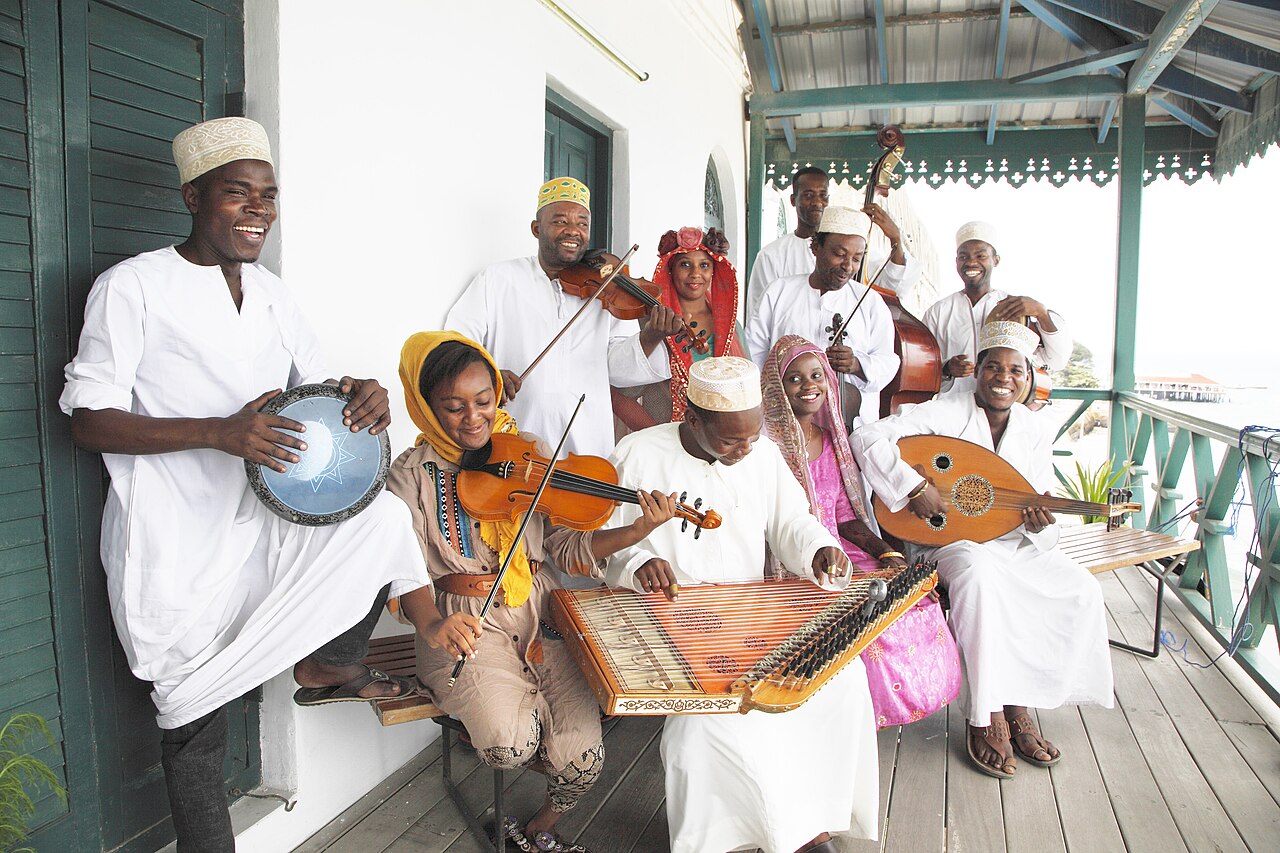
A Taarab performance is rarely a solo affair. It is ensemble music in the fullest sense — a string section, often a qanun (a Middle Eastern zither), oud, accordion, electric guitars, bass, drums, and a chorus of singers who answer the lead vocalist. The orchestra sits in formal rows; the audience listens closely, because the lyrics matter. A good Taarab singer is judged not only on voice but on diction, phrasing, and the ability to land a line that makes a wedding guest gasp or laugh in recognition.
The lyrics are in Swahili, and they are the heart of the genre. Taarab songs are famous for indirection: a song about a broken boat may be about a broken marriage; a complaint about a neighbor’s gate may be about a rival’s gossip. This coded quality — sometimes called mafumbo in Swahili poetic tradition — gives the music its conversational power at social events where everyone knows who is being sung about.
Where Did Taarab Music Come From? Zanzibar as a Musical Crossroads
Zanzibar’s Stone Town was, in the 19th century, one of the busiest ports on the Indian Ocean. Omani sultans ruled from the island; clove plantations drew labor from across the region; Indian merchants financed trade; and ships brought musicians, instruments, and records from Cairo, Bombay, and the Gulf. Taarab grew directly out of that confluence.
The Egyptian Connection and the First Orchestras
Most histories credit the Omani sultan Seyyid Barghash bin Said with inviting Egyptian musicians to Zanzibar in the 1870s and 1880s, exposing island audiences to the orchestral style of Cairo. Early Taarab ensembles imitated Egyptian and Arab models closely — long instrumental preludes, formal vocal lines, and a sound that was, by later standards, restrained. The genre’s first stars were often men of the court and the merchant class, performing for elite weddings and state occasions.
Siti binti Saad: The Voice That Changed Everything
The decisive figure in Taarab’s history is Siti binti Saad, born around 1880 in Fumba, a village on Zanzibar’s southwest coast. She was not of the elite; she worked with clay and later sold pottery and produce in Stone Town. When she began singing Taarab, she broke the genre open. Her Swahili was plain and powerful, her subject matter was the lives of ordinary people — abusive husbands, corrupt officials, the hardships of women — and her voice carried across the new medium of the gramophone.
Between 1928 and 1931, Siti binti Saad recorded hundreds of songs for Columbia Records in Bombay, becoming one of the first East African artists to reach an international market. She is often called the mother of Taarab, and the comparison to her still shapes how Tanzanians talk about singers today. Her grave in Zanzibar is a pilgrimage site for musicians.
How Did Taarab Music Evolve Through the 20th Century?
Taarab’s twentieth century is a story of constant, often contentious, modernization. Each generation of musicians absorbed new sounds while arguing about what counted as authentic.
| Era | Key Development | Notable Figures or Groups |
|---|---|---|
| 1870s–1900s | Egyptian and Arab court music introduced to Zanzibar; first formal ensembles | Sultan Barghash’s court musicians |
| 1920s–1930s | Gramophone recording era; Swahili lyrics take center stage | Siti binti Saad |
| 1950s–1960s | Golden age of clubs; orchestras formalize; rivalry between styles | Culture Musical Club (founded 1958), Egyptian-inspired ensembles |
| 1970s–1980s | Congolese guitars and Tanzanian dance bands reshape the sound | Mbaraka Mwinshehe, modern Taarab bandleaders |
| 1990s–present | Diaspora touring, recording studios, and revival projects | Bi Kidude, modern Zanzibari and Tanzanian ensembles |
The Club Era and the Great Rivalry
By the 1950s, Taarab had moved from private courtyards into public clubs. In Zanzibar, two institutions came to define the era: the Culture Musical Club, founded in 1958, and rival ensembles that leaned toward either the older Egyptian-influenced sound or a looser, more Swahili-rooted style. The rivalry was social as much as musical — class, neighborhood, and politics all played into which orchestra you supported. The clubs also became training grounds: young musicians learned notation, discipline, and stagecraft inside them.
Mbaraka Mwinshehe and the Guitar Revolution
In mainland Tanzania, the guitarist and bandleader Mbaraka Mwinshehe became a towering figure in the 1960s and 1970s, blending Taarab’s melodic sensibility with Congolese rumba guitars and a driving dance-band rhythm. His sound — and that of the bands around him — pulled Taarab toward the dance floor and influenced generations of East African musicians. Purists grumbled; audiences danced. That tension between tradition and reinvention has never really gone away.
Who Are the Key Figures and Ensembles in Taarab Music?
Taarab’s history is populated by institutions as much as individuals. Understanding the music means knowing the orchestras, the singers, and the social networks that sustained them.
- Siti binti Saad (c. 1880–1950): The genre’s foundational singer, whose plain-spoken Swahili lyrics and gramophone recordings made Taarab a mass form.
- Culture Musical Club: Founded in Zanzibar in 1958, still active and internationally touring, and widely regarded as a keeper of the classical Taarab repertoire.
- Bi Kidude (c. 1910s–2013): A Zanzibari singer and drummer of legendary charisma, associated with Taarab and the related msondo and unyago traditions, who toured internationally into her nineties.
- Mbaraka Mwinshehe (1944–1979): The Tanzanian guitarist and bandleader who brought Congolese guitar influence into Taarab-adjacent popular music.
- Modern ensembles: Contemporary Zanzibari and Tanzanian orchestras continue to perform at weddings and festivals, often with a mix of acoustic strings and electric instruments.
What Instruments and Styles Define Taarab Music?
A classical Taarab orchestra is a small chamber ensemble with orchestral ambitions. The core is strings — violins and cellos, sometimes violas — supported by qanun, oud, and accordion, with percussion from drums, tambourines, and hand claps. Modern bands add electric guitar, bass, and drum kit, and the balance shifts accordingly.
Classical Versus Modern Taarab
Listeners often divide the genre into two broad streams. Taarab ya zamani — old or classical Taarab — favors the acoustic orchestra, formal arrangements, and a slower, more declamatory vocal style. Taarab ya kisasa — modern Taarab — embraces electric instruments, faster tempos, and arrangements shaped by recording studios and dance-band conventions. Most working bands sit somewhere between the two, and the best ones move fluidly across the spectrum within a single set.
The Wedding as the Primary Stage
Taarab’s natural venue is the wedding. In Zanzibar and along the Tanzanian coast, a wedding may involve several nights of music, and the Taarab orchestra is central to the proceedings. The music serves social functions: it honors the couple, entertains guests, and allows for the coded commentary that makes the lyrics so potent. A singer who knows the families can tailor a song to the room — a skill that keeps live Taarab socially vital even in the age of streaming.
Why Does Taarab Music Matter to Swahili Culture and the Diaspora?
Taarab is more than entertainment; it is a repository of Swahili language, poetry, and social history. The lyrics preserve idioms, proverbs, and turns of phrase that are fading from everyday speech. The music documents how coastal communities talked about marriage, money, migration, and authority across more than a century.
For the diaspora, Taarab functions as a connective tissue. Zanzibari and Tanzanian communities in Oman, the United Arab Emirates, the United Kingdom, and North America hire Taarab bands for weddings and community events, and touring ensembles like Culture Musical Club have performed across Europe and Asia. Streaming has widened access further: recordings that once circulated on cassettes and CDs now reach listeners who may never have set foot in Stone Town.
The genre also carries a political dimension. Taarab lyrics have long been used to criticize power indirectly, and musicians have navigated censorship and patronage across the colonial, revolutionary, and multiparty eras of Zanzibar and Tanzania. That tradition of speaking truth through indirection is one reason the music still feels alive rather than archival.
How Can You Listen to Taarab Music Today?
Taarab rewards attentive listening, but it is not difficult to find. A practical starting path:
- Start with the classics: Seek out recordings of Siti binti Saad from the late 1920s and early 1930s to hear the genre’s foundational voice.
- Move to the orchestras: Culture Musical Club recordings from the 1970s onward show the classical ensemble at full strength.
- Explore modern bands: Contemporary Zanzibari and Tanzanian ensembles reveal how the music sounds with electric instruments and studio production.
- Go live if you can: Zanzibar’s Sauti za Busara festival and the annual Mwaka Kogwa and wedding seasons offer chances to hear Taarab in its natural setting.
What Is the Future of Taarab Music?
Taarab faces the same pressures as other heritage genres: aging audiences, the cost of maintaining large ensembles, and competition from faster, cheaper popular music. But it also has unusual advantages. Its institutional base — the clubs, the festivals, the wedding economy — remains intact. Its language, Swahili, is one of Africa’s most widely spoken and is growing. And its central subject, love and longing, does not date.
Younger musicians are experimenting with Taarab’s melodic vocabulary in hip-hop, R&B, and Afro-pop contexts, and archival projects are digitizing fragile early recordings. The risk is that Taarab becomes a museum piece; the opportunity is that it becomes a living reference point for a new generation of East African artists. Zanzibar’s musical institutions, from the Culture Musical Club to the festivals that fill Stone Town each year, suggest the latter is more likely.
Final Thoughts: The Enduring Pull of Taarab Music
Taarab music has survived because it does something few genres manage: it treats ordinary social life — a wedding, a quarrel, a farewell — as worthy of orchestral grandeur. The qanun and the violin section, the chorus and the coded lyric, all exist to make a human moment feel larger than itself. That is the meaning of tarab, and it is why a song recorded in Bombay in 1929 can still stop a room in Zanzibar, London, or Toronto today. Zanzibar’s Swahili music of love and longing is not a relic of the Indian Ocean’s past; it is a living argument that the coast’s most intimate conversations deserve the fullest possible sound.