📅 Last updated: 05.07.2026
- The Enigma of the Great Zimbabwe Ruins: A City Before Contact
- Decoding the Architecture of the Great Zimbabwe Ruins
- The Rise and Fall of a Civilization
- Beyond the Stones: The Living Culture of Zimbabwe
- Visiting the Great Zimbabwe Ruins Today
- The Legacy in a Modern Context
- The Great Zimbabwe Ruins: A Final Reflection
The air hums with a quiet power as you approach the Great Zimbabwe ruins, a sprawling complex of dry-stone walls that rise from the southern African savanna like a geological secret. This is not a place of whispers from a forgotten past, but a resounding statement of African ingenuity, a testament to a civilization that, between the 11th and 15th centuries, built a city of stone without mortar, creating a legacy that challenges every colonial narrative of a “dark continent.” Here, in the heart of modern-day Zimbabwe, the walls curve and soar, their intricate herringbone patterns a deliberate, elegant architecture of power and spirit, a stone legacy that refuses to be silent.
The Enigma of the Great Zimbabwe Ruins: A City Before Contact
For centuries, the Great Zimbabwe ruins were the subject of a profoundly racist historical debate. European explorers and settlers, arriving in the 19th century, simply could not conceive that sub-Saharan Africans had built such a sophisticated, monumental city. Theories, wildly inaccurate and stubbornly persistent, attributed the site to the Queen of Sheba, the Phoenicians, or even a lost tribe of Israelites. It was a convenient fiction that justified colonial dispossession: if the land’s great works were not of African origin, then its current inhabitants had no legitimate claim. This myth was only definitively shattered in the early 20th century by the meticulous work of archaeologists like Gertrude Caton-Thompson, who, after her 1929 expedition, declared with scientific certainty that the ruins were “unquestionably African in every detail.” The Great Zimbabwe ruins are, in fact, the largest ancient stone structure south of the Sahara, the capital of the Kingdom of Zimbabwe, a powerful Shona trading empire.
A Kingdom of Gold and Granite
The empire’s wealth was built on two pillars: cattle and gold. The surrounding landscape, the Zimbabwe Plateau, was rich in alluvial gold, which was traded through the Swahili port city of Sofala (in present-day Mozambique) to the Indian Ocean world. In exchange for gold and ivory, the rulers of Great Zimbabwe imported Chinese celadon porcelain, Persian ceramics, and glass beads from India. These artifacts, unearthed in the ruins, are not mere curiosities; they are receipts of global trade. The city was a nexus, not an isolated outpost. The stone walls themselves, however, were not for defense in the conventional sense. They were symbols of status and spiritual power, designed to control movement and to separate the elite from the commoners. The most famous of these structures, the Great Enclosure, with its 11-meter-high, 250-meter-circumference wall, is a masterpiece of architectural planning. It contains a mysterious conical tower, whose purpose remains debated—a granary symbolizing abundance? A phallic symbol of kingship? An altar for rainmaking rituals? The truth is likely a blend of all three.
Decoding the Architecture of the Great Zimbabwe Ruins
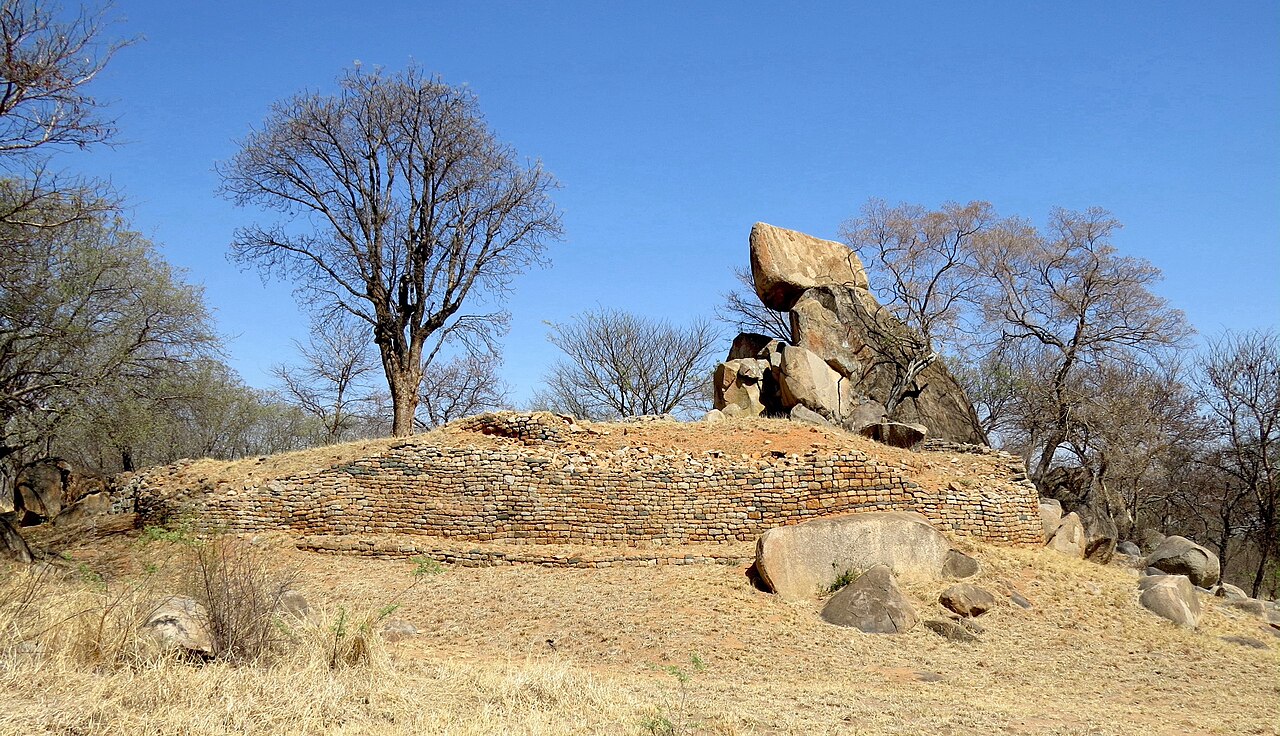
To walk through the Great Zimbabwe ruins is to walk through a living geology. The builders did not use mortar. Instead, they employed a sophisticated technique of selecting and shaping granite blocks, splitting them along natural fracture lines, and then carefully stacking them in courses that tilt slightly inward for stability. This is known as the dry-stone method, and it requires immense skill and an intuitive understanding of gravity and stress. The walls are not just functional; they are decorative. The most common pattern is the herringbone or chevron, a V-shaped design that runs along the tops of many walls, creating a visual rhythm that catches the light. Other sections feature a “coursed” pattern of even, horizontal lines, or a more irregular “random rubble” style.
- The Hill Complex: The oldest part of the site, perched on a steep granite outcrop. This was likely the royal residence and the main religious center. Its narrow, winding passages and strategic vantage points speak of a careful control of access and a clear view of the kingdom below.
- The Great Enclosure: The most iconic structure, a massive elliptical wall that encloses a series of smaller walls and the famous conical tower. Its purpose was likely ceremonial and residential for the queen and her court.
- The Valley Ruins: A collection of smaller walled enclosures and daga (mud-brick) house platforms that spread out from the Hill Complex. This was the living quarters for the city’s population, which at its peak is estimated to have been between 10,000 and 20,000 people.
The sheer volume of stone is staggering. An estimated 1.5 million granite blocks were quarried and moved to build the Great Enclosure alone. This was not slave labor; it was a highly organized state project, a form of tax or tribute paid in labor, a “national service” for the glory of the king and the gods. The sound of chisels on stone, the creak of wooden sledges, the rhythmic chants of workers—these were the sounds of a civilization at its zenith.
The Spiritual Landscape of Stone
The stone is not inert. In Shona cosmology, the ancestors are ever-present, and the land itself is sacred. The walls of Great Zimbabwe were not just barriers; they were conduits. The Hill Complex, in particular, is a place of deep spiritual significance. It is believed to have been the home of the mwari (the high god) and the spirits of the founding kings. The narrow, dark passages force a visitor to stoop and move slowly, inducing a state of humility and reverence. The stones, smoothed by centuries of wind and rain, hold the energy of countless prayers and rituals. Even today, the site is a living shrine. Traditional leaders and spirit mediums still conduct ceremonies here, asking for rain, for good harvests, and for the protection of the nation. The Great Zimbabwe ruins are not a dead museum piece; they are a pulsating heart of cultural identity.
The Rise and Fall of a Civilization
Why did such a powerful city decline? The answer is a complex interplay of environmental, economic, and political factors. For centuries, the city thrived. A
| Period (Approx.) | Phase | Key Developments |
|---|---|---|
| 11th – 13th Century | Early Growth | Small settlements on the hill. Beginnings of gold and ivory trade with the coast. The Hill Complex is constructed. |
| 13th – 15th Century | Classic Period (Peak) | Construction of the Great Enclosure and Valley Ruins. Population peaks. Control of the gold trade. Extensive international trade (Chinese porcelain, Persian glass). |
| Mid-15th Century | Decline | Over-farming and deforestation deplete local resources. The gold trade shifts north. Political power moves to the new Mutapa Empire. |
| 16th Century | Abandonment | The city is largely abandoned. It remains a sacred site and a source of stone for local communities, but its political and economic importance is gone. |
The environmental cost was significant. A city of 10,000 to 20,000 people required immense amounts of wood for cooking, smelting iron and copper, and building. Deforestation of the surrounding woodlands led to soil erosion and a decline in agricultural productivity. Simultaneously, the gold trade routes began to shift. The Portuguese, establishing a presence on the coast, disrupted the old Swahili networks, and new inland kingdoms, like the Mutapa Empire to the north, began to attract the trade. The political center of gravity moved away from the Zimbabwe Plateau. The city, once a thrumming heart, began to quieten. People left, not in a sudden catastrophe, but in a gradual, generational migration. The stones, however, remained.
Beyond the Stones: The Living Culture of Zimbabwe
To understand the Great Zimbabwe ruins, you must also understand the people who hold them sacred. The Shona people, who make up the majority of Zimbabwe’s population today, are the direct descendants of the city’s builders. The word “Zimbabwe” itself is derived from the Shona phrase dzimba dzamabwe, meaning “houses of stone.” The ruins are not a distant, alien artifact; they are a family heirloom. This connection is fiercely protected and celebrated.
“The ruins are our history, our identity. They are proof that we were not a people without a past. When I stand on the Hill Complex, I feel the presence of my ancestors. It is a feeling of pride that cannot be taken away.” — Dr. Tendai Muparutsa, a cultural historian from the University of Zimbabwe, speaking in 2023.
This pride is not a relic. It is actively expressed in modern Zimbabwean culture. The stone bird carvings, the famous “Zimbabwe Birds,” found only at the ruins, have become the national emblem, appearing on the national flag, the coat of arms, and the currency. The soapstone birds—seven of which were removed by European prospectors and only recently returned—are a symbol of sovereignty and endurance. They represent a spiritual connection between the king, the ancestors, and the heavens. The modern nation, born in a brutal liberation war, chose these ancient birds as its symbol, consciously linking its contemporary struggle for freedom to the pre-colonial glory of the Great Zimbabwe ruins. It is a powerful act of reclamation, a rewriting of history in stone and feather.
Visiting the Great Zimbabwe Ruins Today
A visit to the Great Zimbabwe ruins is a journey into the soul of a nation. The site is located near the modern town of Masvingo, about 300 kilometers south of Harare, the capital. It is a UNESCO World Heritage Site, and the Zimbabwean government, despite economic challenges, has invested in preserving the integrity of the ruins. The visitor center is modest but informative, offering a good orientation to the site’s history and significance.
- How to get there: Fly into Harare or Bulawayo, then drive or take a bus to Masvingo. The ruins are a short taxi ride from the town. The road is in reasonable condition, but allow extra time during the rainy season (November-March).
- What to see: Plan for a full day. Start with the Hill Complex for the best views and a sense of scale. Then descend to the Great Enclosure, walking the entire circumference of the wall. Finally, explore the Valley Ruins. A guided tour by a local expert is highly recommended; they will bring the stones to life with stories and context that no guidebook can capture.
- Practical tips: Wear sturdy walking shoes. The granite paths can be slippery. Carry plenty of water and sun protection, as shade is limited. Respect the site as a sacred place—do not climb on the walls or remove any stones. Photography is permitted, but drones require special permission.
The experience is deeply physical. You will feel the rough, warm granite under your fingertips. You will hear the wind whistle through the narrow passageways. You will see the vast, open sky that the builders framed with their walls. It is a place that demands a slow pace, a quiet mind, and an open heart. The Great Zimbabwe ruins are not just a tourist attraction; they are a pilgrimage site for anyone interested in the depth and sophistication of African civilization.
The Legacy in a Modern Context
The Great Zimbabwe ruins are more than a historical monument; they are a political and cultural symbol in a modern African nation struggling with economic hardship and political uncertainty. For many Zimbabweans, the ruins are a source of resilience. They serve as a tangible reminder that their ancestors built an empire that traded with China and Persia, that they developed a unique and beautiful architectural style without outside influence, and that they governed a complex, stratified society. In the face of a challenging present, this past offers a foundation of dignity.
The ruins also carry a cautionary tale. The environmental degradation that contributed to the city’s decline—deforestation, over-farming, resource depletion—is a story that resonates deeply in modern Africa, where climate change and unsustainable land use are pressing crises. The stones of Great Zimbabwe whisper not only of past glory but also of the fragility of human achievement. They remind us that no civilization, no matter how powerful, is immune to the consequences of its own actions. The wisdom of the ancestors, encoded in this stone legacy, is a wisdom for today.
The Great Zimbabwe Ruins: A Final Reflection
To stand within the walls of the Great Zimbabwe ruins is to feel the weight of history and the lift of possibility. The stones are not silent; they speak of trade routes, of royal power, of spiritual devotion, and of a people who, centuries ago, shaped granite into a statement of identity. This is Africa’s stone legacy, a testament to a past that was never “discovered” by outsiders but was always known, always lived, and always honored by its own people. The Great Zimbabwe ruins are a challenge to every simplistic narrative about Africa. They are a call to look deeper, to see the continent not as a place of poverty and conflict, but as a land of ancient empires, sophisticated art, and enduring wisdom. As the sun sets over the Hill Complex, casting long shadows across the herringbone walls, you understand: this is not a ruin. It is a foundation.
📚 Related Articles You Might Enjoy
- The Rock Art of Tassili n'Ajjer: Sahara's Ancient Masterpieces
- A Wild Safari Through the Thrilling Jungle of African Mythology
- The Aksum Obelisks: Ethiopia's Ancient Engineering Marvel
- The Rock-Hewn Churches of Lalibela: Ethiopia's Sacred Marvels