📅 Last updated: 05.07.2026
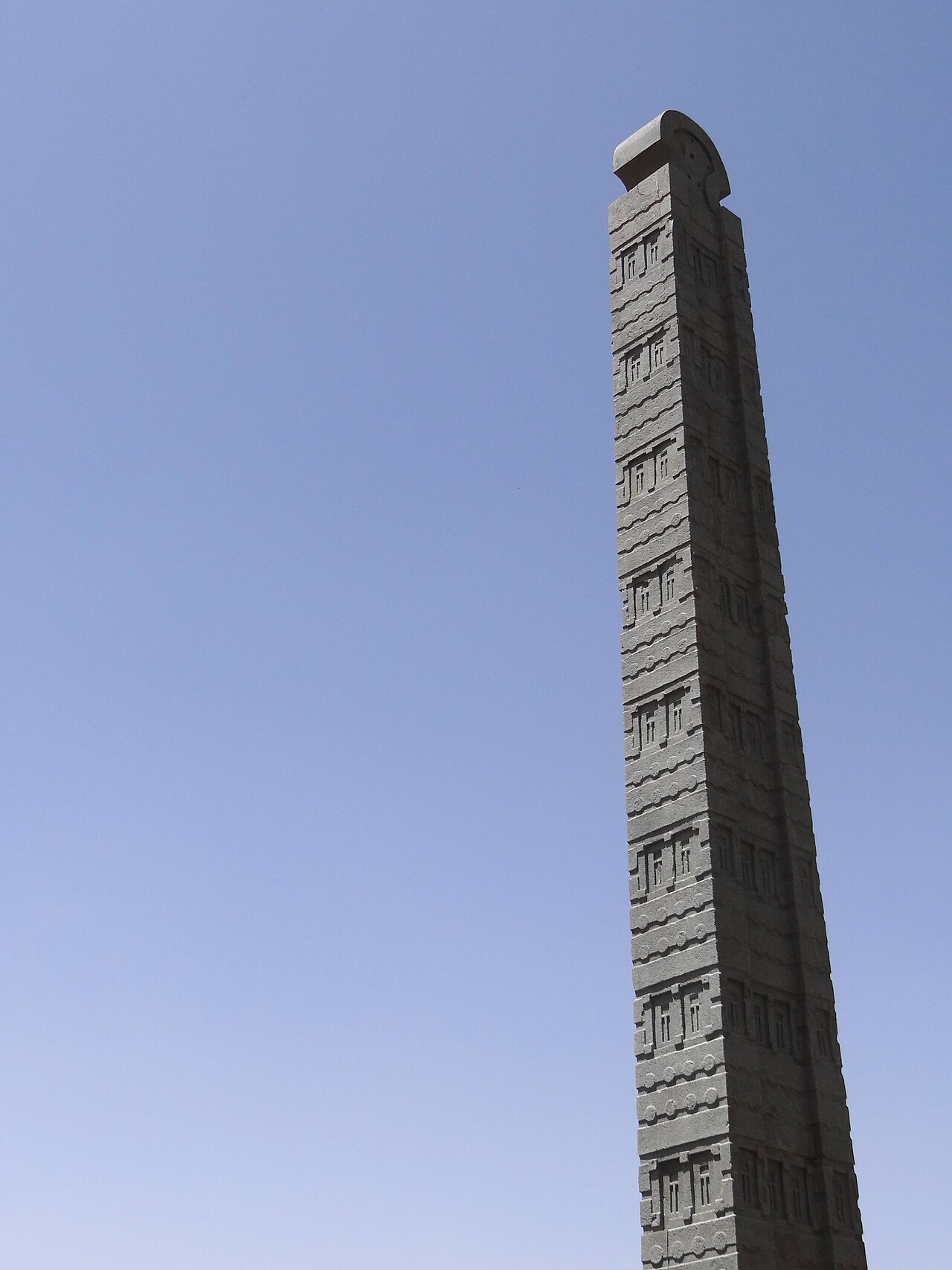
Standing in the dusty highlands of northern Ethiopia, the Aksum Obelisks rise against the sky like fingers of a forgotten god, monolithic testaments to an empire that once rivaled Persia, Rome, and China. These towering stelae, carved from single blocks of nepheline syenite, are not merely ancient gravestones; they are the silent chroniclers of a civilization that forged its own alphabet, minted its own currency, and claimed the Ark of the Covenant as its most sacred treasure. To walk among them is to walk through a gallery of stone, where each obelisk tells a story of power, faith, and an engineering prowess that continues to baffle modern experts.
- The Rise of a Kingdom: Why the Aksum Obelisks Were Built
- Engineering Feats: Quarrying and Raising the Aksum Obelisks
- The Fall and Rise: The Return of the Axum Obelisk
- Key Facts: A Timeline of the Aksum Obelisks
- Beyond the Stones: The Living Culture of Aksum
- Conservation Challenges: Protecting the Aksum Obelisks for the Future
- Comparisons and Context: The Aksum Obelisks in Global Perspective
- Visiting the Stele Park: A Practical Guide
- The Enduring Legacy: What the Aksum Obelisks Mean Today
The Rise of a Kingdom: Why the Aksum Obelisks Were Built
Long before the first obelisk was quarried, the Kingdom of Aksum had already established itself as a formidable trading empire by the 1st century CE. Situated at the crossroads of Africa, Arabia, and the Mediterranean, Aksum controlled the lucrative ivory, frankincense, and gold routes. The city of Aksum, its capital, became a wealthy metropolis, and its kings—known as negus—sought to immortalize their reigns through monumental architecture.
The obelisks, or hawilt in the local Ge’ez language, served a dual purpose. Primarily, they were funerary markers for Aksum’s elite, erected above underground burial chambers. But they were also symbols of royal prestige and divine authority. The largest of these stelae, the Great Stele (now fallen and fractured), once stood an estimated 33 meters tall, making it one of the largest single stones ever erected by any ancient civilization. Its sheer scale was a direct message: Aksum was not a peripheral kingdom; it was a heavyweight contender on the world stage.
The period of intense obelisk construction spanned roughly from the 3rd to the 4th centuries CE. This timing coincides with a period of immense wealth and territorial expansion under kings like Endubis, Ousanas, and Ezana. King Ezana, who converted to Christianity around 330 CE, famously inscribed his obelisks with trilingual texts in Ge’ez, Sabaean, and Greek, declaring his victories and his newfound faith. These inscriptions are not just royal propaganda; they are linguistic Rosetta Stones that have allowed scholars to decode the history of the Horn of Africa.
Engineering Feats: Quarrying and Raising the Aksum Obelisks
How did a pre-industrial society move and erect stones weighing hundreds of tons? This is the question that haunts engineers and archaeologists alike. The answer lies in a combination of meticulous planning, communal labor, and an intimate understanding of local geology.
The Quarry at Wuchate Golo
Just a few kilometers south of the main stele field lies the ancient quarry of Wuchate Golo. Here, visitors can still see partially carved obelisks abandoned mid-process, offering a freeze-frame of Aksumite technology. The stone, a hard yet workable volcanic rock called nepheline syenite, was extracted using a method of fire-setting and water-quenching. Workers would heat the rock face with a large fire, then douse it with cold water. The rapid thermal shock caused the stone to fracture along predictable lines. Iron wedges, imported from the Middle East, were then hammered into the cracks to separate the block.
The carvings themselves—intricate false doors, window frames, and beam ends—were executed before the stone was moved. This was a deliberate strategy: it was far easier to carve a horizontal block than a vertical one. The obelisks were shaped to resemble multi-storied buildings, complete with detailed representations of Aksumite architecture: recessed windows, wooden crossbeams, and even door handles. These were not abstract shapes; they were stone replicas of the royal palaces and elite homes of the time.
The Transport and Erection
Moving a 50-ton stone from the quarry to the stele field, a distance of about four kilometers, required a combination of log rollers, wooden sledges, and sheer manpower. Thousands of laborers, likely organized under a system of conscripted royal service, would have pulled the stone over a prepared track of smoothed earth and wooden planks. The route, which crosses gently sloping terrain, suggests a careful survey of the land to avoid steep inclines.
The most critical moment was the raising of the obelisk. Recent archaeological experiments suggest that the Aksumites used a massive earthen ramp, built at a shallow angle leading to the prepared socket. The stone was dragged to the top of the ramp, then carefully tipped into the socket using a system of ropes, counterweights, and levers. The precision required was extraordinary: the base of the obelisk had to fit perfectly into a carved stone foundation block, often with a tenon-and-mortise joint. One miscalculation, and the monument would shatter. That so many still stand—and stood for centuries—is a testament to the skill of Aksumite engineers.
The Fall and Rise: The Return of the Axum Obelisk
The story of the Aksum Obelisks is not just one of ancient glory; it is also a modern saga of colonialism, loss, and repatriation. In 1937, the Italian fascist regime of Benito Mussolini, seeking to erase Ethiopian sovereignty and build a “New Roman Empire,” looted the second-largest standing obelisk. This 24-meter, 160-ton monument was dismantled into five pieces, shipped to Rome, and re-erected in the Piazza di Porta Capena, in front of the Ministry of Africa (now the headquarters of the United Nations Food and Agriculture Organization).
For decades, the obelisk stood in Rome as a trophy of conquest. Ethiopia repeatedly demanded its return, but geopolitical tensions and logistical challenges delayed its repatriation. It was not until 2003, after years of negotiations, that Italy agreed to return the monument. The operation was one of the most complex archaeological repatriations in history.
The return involved three massive Antonov cargo flights, careful packing in custom-built steel crates, and a restoration project that cost over $4 million. The obelisk arrived in Aksum in 2005, but the re-erection was no simple task. The original foundation had been damaged, and the monument had to be reassembled like a giant jigsaw puzzle. It was finally re-consecrated in a ceremony in September 2008, attended by Ethiopian Orthodox priests, government officials, and thousands of jubilant locals. The event was not just a restoration; it was a powerful act of cultural healing. Today, the obelisk stands once more in its original location, a symbol of resilience and the enduring connection between a people and their heritage.
Key Facts: A Timeline of the Aksum Obelisks
To appreciate the depth of this history, consider the following chronological milestones. This table summarizes the critical periods and events that shaped the obelisks’ past and present.
| Period/Year | Key Event | Significance |
|---|---|---|
| 1st Century CE | Periplus of the Erythraean Sea mentions Aksum | Earliest written record of the kingdom; confirms its trading power |
| 3rd-4th Century CE | Peak obelisk construction (Stele Park) | King Ezana’s reign; conversion to Christianity; largest stelae erected |
| 1937 | Italian occupation; obelisk looted to Rome | Symbol of colonial violence and cultural theft |
| 2003-2005 | Repatriation negotiations and transport | Complex logistical operation; first major repatriation of its kind |
| 2008 | Re-erection in Aksum | Cultural and spiritual restoration; symbol of national pride |
| 2020 | UNESCO World Heritage Site status reaffirmed | Ongoing conservation efforts; global recognition of significance |
Beyond the Stones: The Living Culture of Aksum
Visiting Aksum today is to step into a living museum. The obelisks are not isolated relics; they are surrounded by a vibrant community that continues ancient traditions. The modern town of Aksum, with a population of around 70,000, is a bustling hub of Orthodox Christian faith and Ethiopian identity.
- The Church of St. Mary of Zion: According to Ethiopian tradition, this church houses the original Ark of the Covenant. While the Ark is hidden from public view, the church itself is a pilgrimage site. The festival of Timkat (Epiphany) draws thousands of worshippers who process through the stele field, linking the ancient stones to living faith.
- The Local Economy: The obelisks are a major tourist draw, but they also support a local economy of guides, souvenir sellers, and traditional weavers. Many guides are young Ethiopians, fluent in multiple languages, who share detailed historical knowledge with visitors.
- Modern Aksumite Cuisine: Restaurants near the stele field serve traditional dishes like tibs (spiced meat) and injera (sourdough flatbread), often accompanied by honey wine (tej). The food is a direct link to the agricultural practices of the ancient kingdom, which cultivated teff, barley, and sorghum.
The obelisks also serve as a backdrop for contemporary life. Children play football in their shadows; couples take wedding photographs against their ancient surfaces. This integration of the monumental into the everyday is distinctly African—a refusal to see heritage as something locked in a museum, but rather as a living, breathing part of community identity.
Conservation Challenges: Protecting the Aksum Obelisks for the Future
Despite their durability, the obelisks face serious threats. The most immediate is environmental. The region is prone to seismic activity; a significant earthquake in the 10th century CE toppled the Great Stele, and smaller tremors continue to cause concern. Lichen growth, wind erosion, and temperature fluctuations also degrade the stone surface over time.
Human activity poses an even greater challenge. The town of Aksum is expanding, and uncontrolled construction near the stele field threatens the archaeological integrity of the site. In 2019, UNESCO raised concerns about new buildings encroaching on the buffer zone. There is also the issue of tourism management. While visitors are essential for the local economy, foot traffic and touching can accelerate wear. The site lacks adequate visitor centers, signage, and protective barriers in some areas.
Efforts are underway to address these issues. The Ethiopian Heritage Authority, in partnership with UNESCO and the World Monuments Fund, has implemented a conservation plan that includes:
- Regular monitoring of structural stability using laser scanning and photogrammetry.
- Development of a management plan to control urban expansion.
- Training of local conservation specialists in stone preservation techniques.
- Installation of discreet barriers to prevent direct contact with the most vulnerable stelae.
The challenge is balancing preservation with accessibility. The obelisks belong to the world, but they are first and foremost Ethiopian. Any conservation strategy must respect local traditions and the spiritual significance of the site.
Comparisons and Context: The Aksum Obelisks in Global Perspective
The Aksum Obelisks are often compared to the Egyptian obelisks of Luxor or the stelae of the Maya world. While these comparisons are useful, they can obscure the unique character of the Aksumite tradition. Unlike Egyptian obelisks, which were often single tapering shafts dedicated to the sun god Ra, Aksumite stelae are explicitly architectural. They depict buildings, complete with floors, windows, and doors. This is not a monument to a god; it is a monument to a house—the eternal house of the king.
Furthermore, the scale is remarkable. The largest Aksumite obelisk, if still standing, would have been taller than the Luxor Obelisk in Paris (23 meters) and the Lateran Obelisk in Rome (32 meters). Only the unfinished obelisk at Aswan (42 meters) exceeds it. But unlike the Egyptian obelisks, which were often moved and re-erected by Roman emperors, the Aksumite stelae remain largely in their original context. This makes the Stele Park one of the most intact ancient monumental landscapes in the world.
Another point of distinction is the function. While many ancient cultures erected stelae for commemoration, the Aksumite examples are directly linked to elaborate underground burial complexes. These tombs, some of which are open to visitors, contain multiple chambers, stone sarcophagi, and intricate drainage systems. The obelisks above ground were the visible markers of these subterranean palaces of the dead. This connection between the visible and the hidden, the earthly and the spiritual, is a defining feature of Aksumite culture.
Visiting the Stele Park: A Practical Guide
For those planning a pilgrimage to see the obelisks firsthand, a visit to the Northern Stelae Park is the essential experience. This is the main archaeological site, containing the largest collection of stelae, including the Great Stele (fallen), the Obelisk of Axum (re-erected), and the King Ezana’s Stele (still standing).
- Getting There: Aksum is accessible by daily flights from Addis Ababa (about 1.5 hours) or by road from Mekelle (about 3 hours). The roads are generally good, but travelers should allow extra time for checkpoints and mountain driving.
- Best Time to Visit: The dry season, from October to March, offers the most pleasant weather. The skies are clear, and the light is ideal for photography. Avoid the rainy season (June to September) when some roads may become impassable.
- What to Bring: Sun protection is essential—the high altitude (2,130 meters) means strong UV rays. Comfortable walking shoes are a must, as the site involves uneven ground. Hiring a local guide is highly recommended; they provide context and stories that transform the stones into a narrative.
- Nearby Sites: Combine your visit with the Archaeological Museum (which houses smaller artifacts and inscriptions), the Tombs of the Kings (underground burial chambers), and the Queen of Sheba’s Palace (a partially excavated ruin that local tradition associates with the biblical queen).
Entrance fees are modest, and the site is generally safe. However, visitors should be respectful of the sacred nature of the space. The obelisks are not just tourist attractions; they are revered by the local Orthodox Christian community as part of their spiritual heritage.
The Enduring Legacy: What the Aksum Obelisks Mean Today
The Aksum Obelisks are more than ancient stones. They are a symbol of African achievement, a testament to the continent’s capacity for innovation, organization, and artistic expression. In a world that often marginalizes African history, the obelisks stand as an undeniable rebuttal. They remind us that the Horn of Africa was once a center of global power, a place where ideas, goods, and cultures converged.
For the Ethiopian diaspora, particularly those in the United States, Europe, and the Middle East, the obelisks are a touchstone of identity. They represent a connection to a homeland that many have never seen, but which lives in stories, songs, and prayers. The repatriation of the obelisk from Rome was a moment of collective joy, a victory for cultural justice that resonated far beyond Ethiopia’s borders.
As the sun sets over the Stele Park, casting long shadows across the granite faces, one feels a profound sense of continuity. The same sun that illuminated King Ezana’s coronation now shines on schoolchildren learning their lessons in the shade of his monument. The wind that whistles through the carved windows is the same wind that carried the prayers of Aksumite priests centuries ago. The obelisks endure. They have survived empires, wars, earthquakes, and theft. They will, with care, survive for generations to come. And they will continue to speak—not in a language we have fully deciphered, but in a tone we can all understand: the voice of a people who built for eternity.