📅 Last updated: 01.10.2026
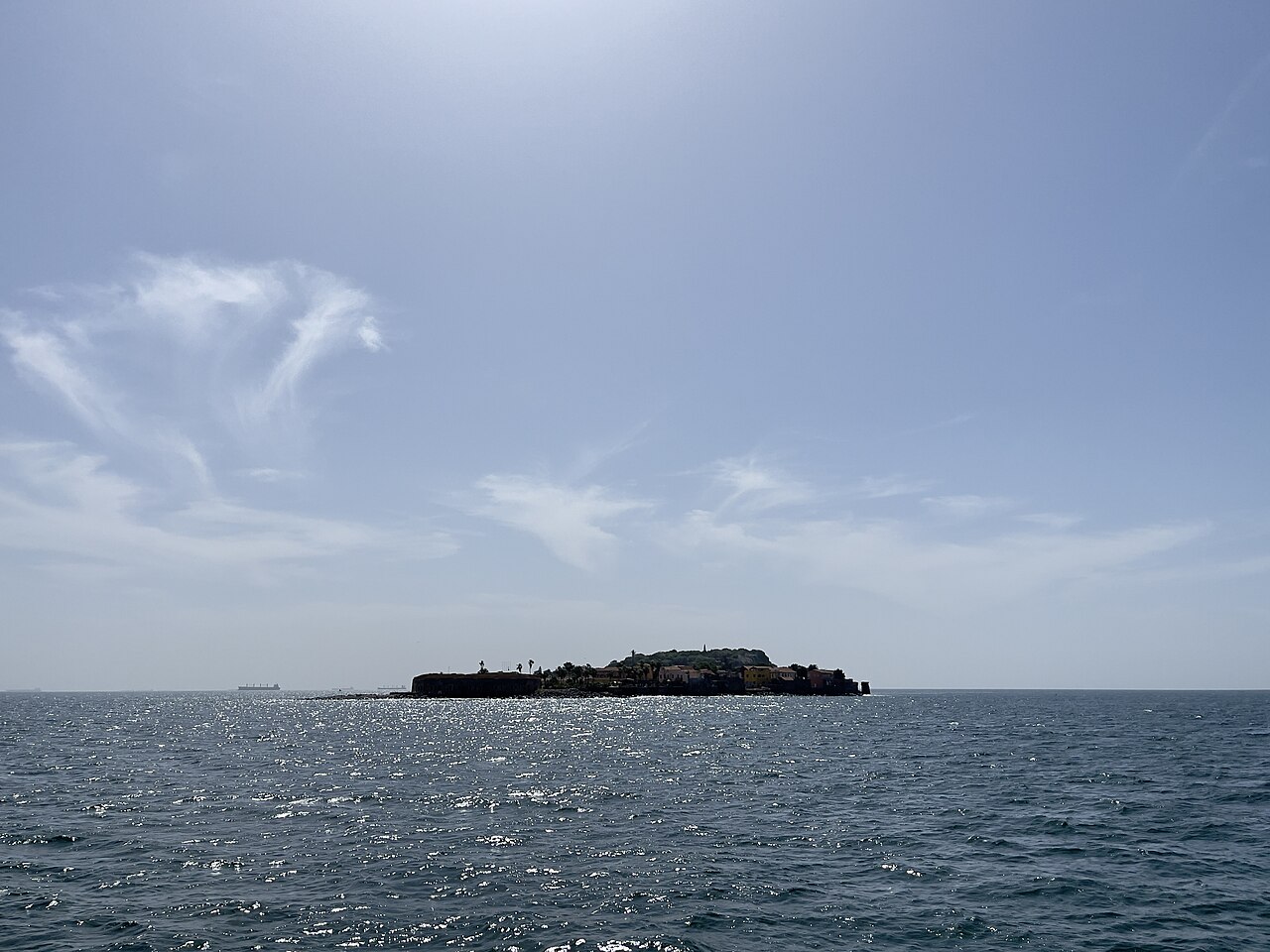
Gorée Island Senegal is barely 900 metres long and 300 metres wide, a speck of volcanic rock and ochre-walled houses floating two and a half kilometres off the coast of Dakar. Yet this tiny island has become one of the most visited memorial sites on the African continent — a place where the history of the transatlantic slave trade is preserved, contested, and reckoned with. For millions of visitors, many of them members of the African diaspora returning for the first time, stepping off the ferry onto Gorée is an emotional threshold rather than a simple tourist excursion.
- Why Gorée Island Senegal Matters in Global History
- The House of Slaves and the Door of No Return
- Key Dates in the Life of Gorée Island Senegal
- Getting There: The Ferry, the Streets, and the Rhythm of Island Life
- Gorée as a Place of Memory and Return
- Practical Notes for Visitors
- Beyond the Memorial: Gorée in Senegalese and African Life Today
- The Takeaway: Why Gorée Still Matters
What makes Gorée remarkable is not size but density of meaning. Within a fifteen-minute walk you can pass a seventeenth-century fort, a colonial governor’s residence, a mosque, a church, a museum, artists’ studios, and the famous House of Slaves with its “Door of No Return.” The island holds layers of Portuguese, Dutch, French, and British history, and today it is a living Senegalese community of a few thousand residents — not a museum piece, but a neighbourhood where children play football at dusk and fishermen still cross from the mainland.
Why Gorée Island Senegal Matters in Global History
Between roughly the sixteenth and the mid-nineteenth centuries, European powers shipped an estimated 12.5 million Africans across the Atlantic in the transatlantic slave trade, according to the Trans-Atlantic Slave Trade Database, a scholarly project hosted at Rice University. Of those, around 10.7 million survived the crossing. Gorée sits at the intersection of this vast system: it was one of dozens of trading posts along the West African coast, positioned at the Cape Verde peninsula where the continent juts farthest west into the Atlantic.
Its strategic value was obvious to every European empire that passed through. The Portuguese, who reached the region in the 1440s and 1450s under navigators sponsored by Prince Henry, established some of the earliest trading contacts along this coast. The Dutch seized Gorée in 1617 and named it Goede Reede — “good roadstead” or safe anchorage — which is the origin of the name “Gorée.” The French and British traded control repeatedly over the following two centuries, with the French generally dominant from the late seventeenth century onward and the British occupying it during the Seven Years’ War and again during the Napoleonic Wars.
The island’s economy rested on a brutal triangle: European manufactured goods (textiles, firearms, alcohol, iron bars) were exchanged with African elites and merchants for captives, who were then transported across the Atlantic, with slave-produced commodities like sugar, rum, and cotton flowing back to Europe. African rulers, merchants, and intermediaries were not passive participants — they were central actors, sometimes enriching themselves enormously, sometimes resisting, and often both at once. This complexity is essential to understanding Gorée honestly.
A Trading Post, Not a Prison Camp
Historians have debated the exact role Gorée played. It was never the single “depot” where millions were warehoused before shipment, as older popular narratives sometimes implied. Most captives who left this coast were embarked from places like Saint-Louis in the north, the Gambia River, or further along the coast, and many passed through Gorée only briefly — or not at all. Scholars such as Philip Curtin and later researchers of the slave trade database have emphasised that Gorée functioned as a commercial hub and transit point within a much larger network. That nuance does not diminish its symbolic power; it deepens it. Gorée represents the entire system, not a single warehouse.
The House of Slaves and the Door of No Return
No building on the island carries more emotional weight than the Maison des Esclaves, the House of Slaves. Built in 1776 by the French, it was restored and opened as a museum in 1962 under the direction of Boubacar Joseph Ndiaye, a Senegalese curator whose passionate guided tours made the site internationally famous. Ndiaye, who died in 2009, told visitors that the house had held captives in cramped cells beneath the upper floors, weighed and sorted them, and led them through a narrow doorway facing the sea directly onto waiting ships. That doorway is now known worldwide as the Door of No Return.
The emotional architecture of the building is deliberate: dark cells for men, a slightly larger room for women, a small chamber for children, and a corridor leading to that low door where the Atlantic glitters just metres away. Visitors often describe the moment of passing through as overwhelming. For descendants of enslaved Africans, the door is a wound and a homecoming simultaneously — the last point of African soil their ancestors touched.
I came to find my ancestors, and I found the ocean they were forced to cross. Standing at that door, I understood that my existence is an act of survival.
That sentiment, repeated in countless variations by pilgrims from Brazil, the United States, Haiti, Jamaica, and across Africa, is part of what makes Gorée a memorial rather than merely a historic site. In 1978, UNESCO inscribed Gorée Island on its World Heritage List, describing it as “the largest slave-trading centre on the African coast” — a formulation that later scholars have refined, but one that cemented the island’s global status.
Contested Histories
Not all historians accept the full popular narrative. Some researchers argue that the House of Slaves was primarily a residence and trading house, and that the number of captives held there at any one time was far smaller than the millions sometimes claimed by tour guides. Scholars including Ralph Austen and Ana Lucia Araujo have urged more careful, evidence-based interpretation. The Senegalese government and museum authorities have increasingly acknowledged this complexity, and modern exhibits at the island’s other institutions — notably the Musée historique du Sénégal in the Fort d’Estrées — present a broader, more documented account of the trade. This tension between memory and evidence is itself part of Gorée’s story, and visitors do well to hold both.
Key Dates in the Life of Gorée Island Senegal
The island’s timeline reads like a compressed history of European rivalry in West Africa. The table below sketches the milestones most useful for a visitor or student trying to place Gorée in context.
| Period / Date | Event |
|---|---|
| 1440s–1450s | Portuguese navigators reach the Senegambian coast; early trading contacts begin |
| 1617 | Dutch seize the island and name it Goede Reede, the origin of “Gorée” |
| 1677 | French take control; Gorée becomes a key post in the French Atlantic empire |
| 1758–1763 | British occupation during the Seven Years’ War; returned to France by treaty |
| 1776 | Construction of the House of Slaves (Maison des Esclaves) |
| 1962 | House of Slaves opens as a museum under curator Boubacar Joseph Ndiaye |
| 1978 | UNESCO inscribes Gorée Island on the World Heritage List |
Getting There: The Ferry, the Streets, and the Rhythm of Island Life
Gorée is reached by a public ferry from the Gare Maritime at the port of Dakar. The crossing takes about twenty minutes, and the boats run several times a day, starting early in the morning. The fare is modest — a few thousand CFA francs for visitors — and the ride itself is part of the experience: Dakar’s skyline recedes, fishing pirogues with brightly painted hulls cut across the swell, and the island’s pale buildings rise slowly into view.
Cars are essentially absent on Gorée; the island is explored on foot, and the pace is slow and human. Bougainvillea spills over walls painted in faded pinks, yellows, and whites. The main square, Place du Gouvernement, is shaded by enormous baobab and flame trees, and the old colonial governor’s palace now houses the Institut fondamental d’Afrique noire (IFAN), a research institute affiliated with Cheikh Anta Diop University in Dakar. Nearby, the Castel — a hilltop fort with panoramic views — offers one of the best vantage points in the region.
What to See Beyond the House of Slaves
- Fort d’Estrées and the Historical Museum of Senegal: Housed in a seventeenth-century fort, this museum provides the broader historical context that the House of Slaves alone cannot.
- Musée de la Femme Henriette Bathily: A museum dedicated to the history and achievements of Senegalese women, located in the former residence of the signares.
- The Signares’ Houses: Elegant two-storey homes built by signares — African and mixed-heritage women who, in the eighteenth and nineteenth centuries, became wealthy traders, property owners, and cultural brokers. Their story complicates any simple narrative of victimhood and agency.
- Gorée’s Artists’ Colony: The island has long attracted painters, sculptors, and photographers; several studios welcome visitors.
- The Beaches and the Baobab: Small coves on the island’s south side offer calm swimming, and the enormous baobab near the Castel is a favourite gathering spot.
The signares deserve particular attention. Women like Anne Pépin and Victoria Albis were pivotal figures in Gorée’s commercial life, marrying European traders in arrangements that gave them legal and economic standing, and leaving behind the graceful houses that still define the island’s architecture. Their existence is a reminder that African women shaped the Atlantic world as traders, diplomats, and matriarchs — not merely as bystanders.
Gorée as a Place of Memory and Return
Since the 1970s, Gorée has become a focal point for diaspora pilgrimage. Pope John Paul II visited in 1992, calling the island a place where “the memory of a shameful past” must be confronted. Nelson Mandela, Barack Obama, and countless African American church groups, Brazilian quilombola communities, and Caribbean heritage travellers have made the journey. In 1998, the Gorée Island Slave Trade Museum initiative and subsequent international conferences drew scholars and activists from across the Atlantic world.
The island also hosts the annual Gorée Diaspora Festival and related cultural events that bring musicians, writers, and visual artists together. Dakar’s broader cultural calendar — including the Dakar Biennale of contemporary African art (Dak’Art), founded in 1990 and held in venues across the city and sometimes on the island — keeps Gorée connected to the living, breathing present of Senegalese creativity, not just its past.
Commemoration in the 21st Century
In 2024, Senegal marked the thirtieth anniversary of the Gorée Memorial project — a broader national and international effort to preserve the island’s heritage and develop it as a centre for education and research. Restoration work on colonial-era buildings, improved museum interpretation, and digital archiving projects have all been part of the effort. The island’s status as a UNESCO site brings both protection and pressure: rising sea levels, salt erosion, and the sheer volume of visitors pose ongoing challenges that Senegalese authorities and international partners continue to address.
There is also a growing emphasis on telling the story of the trade from African perspectives — not only the suffering of the Middle Passage, but the political, economic, and social worlds of Senegambia before, during, and after. The Musée historique and new interpretive panels around the island reflect this shift, presenting the voices of African traders, rulers, and communities alongside those of European merchants and enslaved people.
Practical Notes for Visitors
Gorée rewards preparation and humility. A few practical points help ensure a meaningful visit:
- Allow at least half a day, ideally a full day. The island is small, but its layers reveal themselves slowly.
- Hire a certified guide. Local guides are knowledgeable, and their fees support the island community. Ask questions; the best guides welcome them.
- Dress respectfully at memorial sites, and be mindful that Gorée is a residential neighbourhood, not only a museum.
- Bring water and sun protection. Shade is plentiful but the Senegalese sun is strong.
- Visit the museums, not just the House of Slaves. The Historical Museum and the Women’s Museum add essential context.
- Support local artisans and restaurants. The island’s economy depends on visitors who engage thoughtfully.
Ferries run roughly every one to two hours from the Gare Maritime in Dakar; check current schedules locally, as they shift with the season. The island can be busy with school groups and tour parties in the mornings, so late afternoon visits often feel more contemplative.
Beyond the Memorial: Gorée in Senegalese and African Life Today
It would be a mistake to reduce Gorée to its slave-trade history alone. The island is a living Senegalese community with schools, a health post, a mosque, a church, and families whose roots there stretch back generations. Fishermen still launch their colourful pirogues from the mainland and sell their catch on the island. Musicians play mbalax — the Senegalese popular music pioneered by artists like Youssou N’Dour — at local gatherings, and the island’s cultural calendar includes concerts, film screenings, and literary events.
Gorée also sits within a broader Senegalese heritage landscape that includes the Île de Saint-Louis, another UNESCO World Heritage site to the north, and the Djoudj National Bird Sanctuary, one of the most important wetlands in West Africa. Together these sites tell a story of Senegal that is far richer than any single narrative: a nation of Wolof, Pulaar, Serer, Jola, Mandinka, and many other peoples, with a vibrant contemporary culture, a robust democracy, and a deep engagement with its own history.
A Memorial That Speaks to the Future
What Gorée ultimately offers is not only grief but instruction. The island asks visitors to consider how the trade shaped the modern world — its economies, its racial hierarchies, its migrations — and to ask what repair, remembrance, and reconciliation might look like today. For the African diaspora, it is a site of origin and return. For Africans, it is a reminder of the continent’s centrality to global history. For everyone, it is a lesson in the power of place.
The Takeaway: Why Gorée Still Matters
Gorée Island Senegal is many things at once: a UNESCO World Heritage site, a museum, a pilgrimage destination, a working neighbourhood, and a contested historical record. Its power lies precisely in this multiplicity. The island does not offer easy answers about the slave trade, and it should not. What it offers is a physical, sensory encounter with a history that reshaped four continents — and an invitation to carry that history forward with honesty and care.
Standing at the Door of No Return, looking out at the Atlantic, visitors confront something that no textbook can fully convey. The sea is beautiful there. The light is extraordinary. And the silence, when the tour groups have moved on, is the silence of a place that remembers. Gorée endures not because it explains the past, but because it makes the past impossible to ignore — and that, perhaps, is the most valuable memorial of all.