📅 Last updated: 01.10.2026
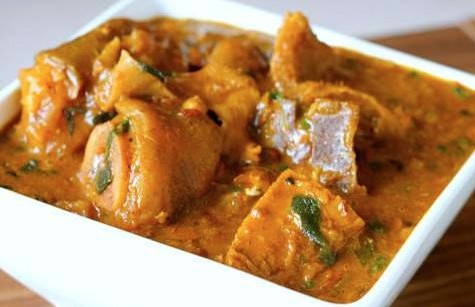
Ogbono soup is one of Nigeria’s most beloved “draw” soups — a glossy, slightly viscous stew made from the ground seeds of the wild African bush mango (Irvingia gabonensis), and it turns up on dinner tables from Lagos to Enugu, from Abuja to Port Harcourt. For millions of Nigerians at home and in the diaspora, the word ogbono triggers an immediate sensory memory: the slippery pull of the soup against a ball of pounded yam, the deep, earthy aroma, the faint sweetness of the seed. It is a dish that is at once humble and sophisticated, ancient and thoroughly modern, and it deserves far more attention than it usually gets outside West Africa.
- What Exactly Is Ogbono Soup?
- A Short History of a Very Old Seed
- How Ogbono Soup Is Made: The Method Behind the Draw
- Ogbono Soup Across Nigeria: Regional Variations
- Nutrition, Science, and the "Weight Loss" Claim
- How to Eat Ogbono Soup (and What to Eat It With)
- Buying, Storing, and Choosing Good Ogbono
- Ogbono Soup in the Modern World
- The Takeaway: A Soup Worth Knowing
What Exactly Is Ogbono Soup?
At its core, Ogbono soup is a Nigerian draw soup — draw meaning that the soup has a distinctive mucilaginous, slightly stringy texture that stretches when you lift a spoon or a morsel of swallow from the bowl. That texture comes from the ground seeds of the bush mango tree, known scientifically as Irvingia gabonensis and Irvingia wombolu. In Nigeria, the seed is called ogbono or apon (in Yoruba), and the tree itself is often called the African wild mango or bush mango.
The seed is cracked to remove the shell, then the kernel is dried and ground into a fine, pale-brown powder. When that powder hits hot oil and stock, it swells and thickens dramatically, giving the soup its signature body. Unlike okra, which draws through its own mucilage, ogbono’s draw comes from the seed’s high content of water-soluble polysaccharides — a natural hydrocolloid that behaves almost like a culinary thickener designed by evolution.
The soup is typically cooked with a protein base — beef, goat, chicken, smoked fish, dried fish, or a combination — and seasoned with a familiar Nigerian pantry: onions, peppers, crayfish, locust beans (iru), and leafy greens such as spinach, ugu (fluted pumpkin leaf), or bitterleaf. The result is a rich, brownish-green soup that is almost always eaten with a “swallow” — pounded yam, eba (garri), fufu, semo (semolina), or wheat — rather than with a spoon alone.
A Short History of a Very Old Seed
Ogbono is not a modern invention. The bush mango tree is indigenous to the humid forests of West and Central Africa, and the seeds have been used as food and medicine for centuries. In southeastern Nigeria, among the Igbo, the seed is central to traditional cooking and is also used in folk medicine for everything from digestive complaints to weight management. Yoruba communities in the southwest have their own long relationship with apon, and the soup appears in regional variations across the country.
The seed has also traveled. Irvingia kernels are traded across the Gulf of Guinea — in Cameroon (where it is called andok or ndo’o), Gabon, and the Democratic Republic of the Congo — and they appear in the cuisines of those countries as well. In the 20th and 21st centuries, migration carried ogbono to the United Kingdom, the United States, Canada, and the Gulf, where it became a staple in African grocery stores and a marker of home for the Nigerian diaspora.
What has changed is not the seed but the scale. Today, ogbono is sold as a packaged powder in supermarkets, exported frozen or dried, and increasingly studied by food scientists for its thickening properties and potential health benefits. It is a heritage ingredient that has quietly become a global commodity.
How Ogbono Soup Is Made: The Method Behind the Draw
Cooking ogbono soup well is a test of technique. The powder is delicate: add it to cold liquid and it clumps; add it to boiling liquid too fast and it can turn lumpy or lose its draw. Experienced cooks have strong opinions about the right method, and the debate is part of the pleasure.
The classic approach
- Prepare the base. Season and cook your protein — beef, goat, or chicken — in a stock flavored with onion, salt, and spices. Reserve the stock.
- Make the ogbono paste. Mix the ground ogbono with a little warm water or palm oil to form a smooth paste. This step prevents lumps.
- Build the soup. Heat palm oil in a pot, add the paste, and stir continuously over medium heat until it dissolves and begins to draw.
- Add stock and seasoning. Pour in the reserved stock, then add crayfish, ground pepper, iru (locust beans), and any smoked or dried fish.
- Simmer and finish. Let the soup simmer until it thickens, then add your greens — ugu, spinach, or bitterleaf — and cook briefly so they stay bright.
- Adjust. Taste for salt and heat. Serve hot with a swallow of your choice.
Some cooks add okra alongside ogbono for an even stronger draw; others insist that ogbono should stand alone. In Delta and Edo kitchens, ogbono is sometimes combined with egusi (melon seed) to create a hybrid soup that is both thick and nutty. In the southwest, apon soup is often cooked with ewedu (jute leaf) or efo greens, giving it a distinct Yoruba character.
The oil question
Palm oil is the traditional fat, and it contributes both color and flavor. But many modern cooks use a blend of palm oil and a neutral oil, or reduce the palm oil for health reasons. The choice affects the final taste and the depth of the soup’s reddish-brown hue. There is no single “correct” version — only the version your family makes.
Ogbono Soup Across Nigeria: Regional Variations
Nigeria is a country of more than 200 million people and over 500 languages, and its soups reflect that diversity. Ogbono is no exception. The same seed produces strikingly different bowls depending on where you are and who is cooking.
- Igbo (Southeast): Often cooked with ugba (fermented African oil bean), stockfish, and ugwu leaves. The soup tends to be thick and deeply savory.
- Yoruba (Southwest): Known as apon, frequently paired with ewedu or efo, and sometimes with gbegiri (cow tripe) for a hearty, textured bowl.
- Edo and Delta (South-South): Often includes a mix of seafood — dried fish, prawns, and periwinkles — and may be combined with egusi or okra.
- Middle Belt and North: Less common as a traditional dish, but increasingly popular in urban centers like Abuja and Jos, where cooks adapt it to local proteins and spices.
- Diaspora: In London, Houston, Toronto, and Dubai, ogbono is often made with frozen spinach and pre-ground powder, a practical adaptation that still delivers the draw.
These variations are not rigid categories. Families move, marry, and blend traditions, and a single pot of ogbono can carry Igbo, Yoruba, and Delta influences at once. That fluidity is part of what makes Nigerian food so alive.
Nutrition, Science, and the “Weight Loss” Claim
Ogbono has attracted attention beyond the kitchen. The seed is rich in fat, protein, and dietary fiber, and its mucilage is a soluble fiber that can slow digestion and promote a feeling of fullness. In the 2000s and 2010s, Irvingia gabonensis extracts became a popular ingredient in Western weight-loss supplements, marketed under names like “African mango.”
The science is more nuanced than the marketing. Some small studies have suggested that Irvingia extracts may modestly affect body weight, blood sugar, and cholesterol, but the evidence is limited, and many trials have been small or industry-funded. The seed itself is nutritious, but no single food is a magic bullet. What is clear is that ogbono soup, eaten as part of a balanced diet, is a satisfying, fiber-rich meal — and that is a reasonable claim to make without exaggeration.
It is also worth noting that the draw of ogbono is a functional property, not just a texture. The mucilage helps the soup coat the palate and binds the flavors of stock, pepper, and crayfish into a cohesive whole. In food science terms, it is a natural hydrocolloid; in Nigerian terms, it is simply correct.
How to Eat Ogbono Soup (and What to Eat It With)
Ogbono soup is almost always eaten with a swallow — a starchy, malleable side that is rolled into a ball with the fingers, dipped into the soup, and eaten in one motion. The draw of the soup makes this particularly satisfying: the swallow and the soup cling to each other.
| Swallow | Made From | Texture | Best With |
|---|---|---|---|
| Pounded yam (iyan) | Boiled and pounded yam | Smooth, dense, stretchy | Rich ogbono with goat or stockfish |
| Eba | Garri (cassava flour) | Firm, slightly grainy | Everyday ogbono with beef |
| Fufu | Cassava, plantain, or cocoyam | Soft, elastic | Ogbono with smoked fish |
| Semo | Semolina | Light, smooth | Lighter ogbono with chicken |
| Wheat | Wheat flour | Chewy, firm | Seafood ogbono |
There is a technique to eating it. Wash your hands, take a small ball of swallow, dip it into the soup, and use your thumb to create a small hollow that scoops up soup and protein together. First-timers often struggle with the draw — the soup stretches and resists — but that resistance is the point. It is a tactile, communal way of eating, and it rewards practice.
Buying, Storing, and Choosing Good Ogbono
Quality matters enormously. Good ogbono powder is pale brown, dry, and free of grit; it should smell nutty and faintly sweet, not rancid. Because the seed is high in oil, it can go stale if stored poorly. A few practical guidelines:
- Buy from a trusted source. Markets like Ogbete in Enugu, Balogun in Lagos, and Wuse in Abuja are famous for spices and seeds, but packaged brands are increasingly reliable.
- Check for purity. Some powders are cut with fillers. If the powder is unusually pale or has little aroma, be suspicious.
- Store cool and dry. Keep it in an airtight container away from heat and sunlight. Refrigeration extends shelf life.
- Grind fresh if you can. Whole dried kernels, ground at home, deliver the best flavor and draw.
In the diaspora, frozen ogbono paste is a convenient alternative, though purists argue it lacks the same aroma. Both have their place.
“Ogbono is not just food. It is memory. When I cook it in London, my kitchen smells like my grandmother’s in Owerri.” — a sentiment echoed by many Nigerians abroad.
Ogbono Soup in the Modern World
Ogbono soup is having a moment. Nigerian chefs are reinterpreting it in fine-dining settings, food writers are documenting regional variations, and diaspora cooks are sharing techniques on YouTube and TikTok. In Lagos, restaurants like those in Victoria Island and Lekki serve ogbono alongside contemporary Nigerian dishes; in London, pop-ups and supper clubs feature it as a centerpiece. The seed is also being studied for sustainable agriculture — the bush mango tree is a valuable forest resource, and its cultivation supports rural livelihoods in states like Cross River, Akwa Ibom, and Ogun.
At the same time, there are challenges. Deforestation and changing land use threaten wild Irvingia populations in some areas, and the supply chain for ogbono is often informal and underdocumented. Efforts to cultivate the tree commercially and to improve processing could help secure the future of the ingredient — and the livelihoods of the women who often dominate its trade.
What has not changed is the soup’s role at the table. It is a dish of celebration and comfort, served at weddings, naming ceremonies, Sunday lunches, and quiet weeknight dinners. It is a link between generations and geographies, and it is unmistakably Nigerian.
The Takeaway: A Soup Worth Knowing
Ogbono soup is more than a recipe. It is a lesson in how African ingredients — often overlooked or exoticized — carry deep knowledge of ecology, nutrition, and flavor. The bush mango seed that thickens a pot of soup in Enugu is the same seed studied in laboratories and sold in global markets; the draw that delights a child in Benin City is the same draw that comforts a student in Manchester. Understanding ogbono means understanding something about Nigeria itself: its diversity, its ingenuity, and its ability to turn a humble forest seed into a bowl of pure satisfaction.
If you have never tried it, find a Nigerian restaurant or a friend who cooks it well. Order pounded yam. Take a deep breath. Dip. And let the draw do the rest.