📅 Last updated: 03.10.2026
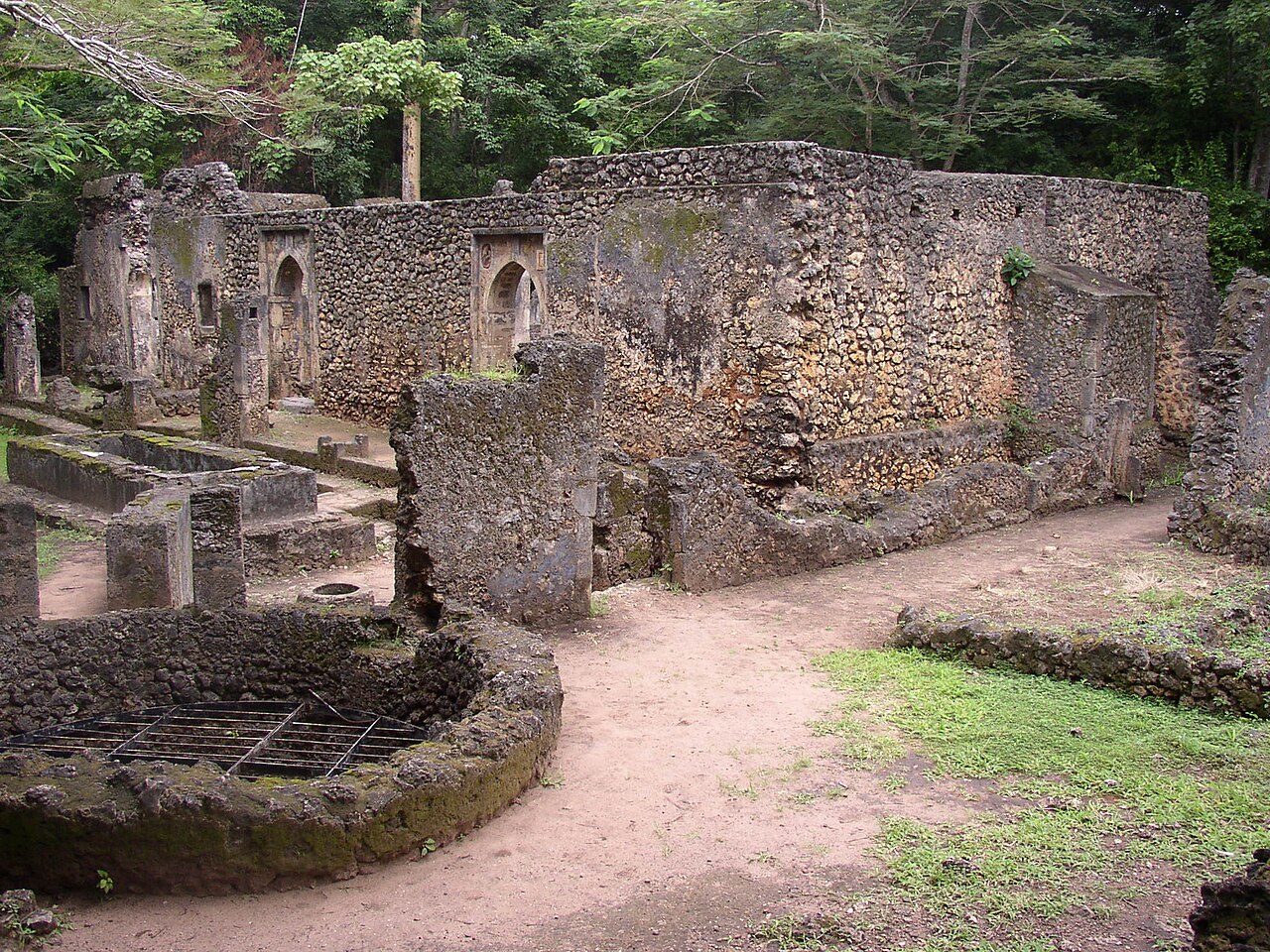
The Gedi Ruins Kenya, hidden in the coastal forest near the modern town of Watamu, remain one of East Africa’s most haunting archaeological treasures — a once-thriving Swahili city that flourished for centuries before mysteriously vanishing. Walk through its coral-stone arches today, and you’ll hear only birdsong and the rustle of leaves where merchants, scholars, and traders once bartered for gold, ivory, and Chinese porcelain. Gedi is not a ruin in the romantic European sense of a fallen empire; it is a distinctly African, distinctly Swahili story of urban sophistication, Indian Ocean commerce, and a culture that wove together Islam, Bantu traditions, and global trade long before Europeans arrived on these shores.
- The Rediscovery of a Forgotten City
- Where Is Gedi Ruins Kenya Located?
- A Trading Power of the Swahili Coast
- Inside the Walls: Architecture and Daily Life
- Timeline: The Rise and Fall of Gedi
- Why Was Gedi Abandoned?
- Gedi Ruins Kenya Today: Conservation and Controversy
- What to See and Do at Gedi
- Gedi's Place in African and World History
- A Takeaway Worth Carrying Home
The Rediscovery of a Forgotten City
For generations, the people living near the coast knew the overgrown mounds as a place of spirits. Local Giriama communities avoided the site, believing it was inhabited by supernatural beings, and this taboo arguably helped preserve the ruins from looting and destruction. It wasn’t until 1927 that a British colonial administrator, John Allen Lambert, formally brought Gedi to the attention of the outside world. His report to the Kenyan colonial government described “extensive ruins” buried under dense forest, sparking the first archaeological interest in the site.
Systematic excavation began in 1948, led by the pioneering archaeologist James Kirkman, who worked at Gedi for nearly three decades. Kirkman cleared the forest, mapped the city, and reconstructed key structures, publishing his landmark study Gedi: The Palace in 1963. His work revealed that this was no simple village. It was a planned, walled town of stone houses, mosques, and tombs — evidence of a sophisticated urban society that had been almost entirely erased from historical memory.
In 2024, Gedi was inscribed as a UNESCO World Heritage Site, a recognition that came after years of lobbying by Kenyan heritage officials. The designation placed this Swahili city alongside the likes of Kilwa Kisiwani in Tanzania and Great Zimbabwe, cementing its status as a cornerstone of African urban history.
Where Is Gedi Ruins Kenya Located?
The Gedi Ruins Kenya site sits roughly 90 kilometres north of Mombasa and about 16 kilometres south of Malindi, tucked just inland from the Indian Ocean near the coastal town of Watamu. The ruins are surrounded by the lush Arabuko-Sokoke Forest, the largest surviving patch of coastal dry forest in East Africa and home to rare species like the golden-rumped elephant shrew and the Sokoke scops owl. The juxtaposition is striking: ancient coral-stone walls rising from a forest teeming with endangered wildlife, with the turquoise waters of the Indian Ocean only a few kilometres away.
Getting there is straightforward. From Mombasa, the A7 highway runs north through Kilifi and Malindi, and matatus (shared minibuses) and private taxis make the journey regularly. Many visitors base themselves in Watamu or Malindi, both of which have grown into popular tourism hubs with hotels, restaurants, and marine parks. The site itself is managed by the National Museums of Kenya, and entry fees — modest by international standards — help fund ongoing conservation.
A Trading Power of the Swahili Coast
Gedi’s story is inseparable from the broader history of the Swahili coast, a string of cosmopolitan city-states that stretched from present-day Somalia to Mozambique. These cities — Mogadishu, Lamu, Mombasa, Kilwa, Sofala — were not isolated outposts. They were connected by monsoon winds to Arabia, Persia, India, and even China, forming one of the most dynamic trading networks of the medieval world.
Archaeological finds at Gedi tell this story vividly. Excavators have unearthed Ming dynasty porcelain, Persian ceramics, Indian glass beads, and Venetian glass, alongside locally made pottery and iron tools. Coins from as far afield as China have been recovered. These aren’t the trinkets of a marginal village; they’re the detritus of a wealthy, globally connected merchant class.
The city’s economy rested on several pillars:
- Ivory and slaves — traded from the African interior down to the coast
- Gold — much of it flowing from the Zimbabwean plateau through Sofala and up the coast
- Mangrove poles and timber — highly prized in the treeless Persian Gulf and Arabia
- Spices, cowrie shells, and textiles — moving between India, Arabia, and the African interior
Gedi’s merchants would have spoken Kiswahili, the Bantu lingua franca that became the language of trade across the region, and practiced Islam, as evidenced by the numerous mosques and the orientation of tombs toward Mecca. Yet they remained culturally African, blending Islamic, Persian, and Bantu influences into something entirely their own.
Inside the Walls: Architecture and Daily Life
What makes Gedi so compelling is how much of its urban fabric survives. The city was enclosed by a wall roughly 2.5 metres high, built from coral rag and mortar, with two main gates. Inside, a network of narrow streets and alleys separated residential blocks, and the layout suggests careful urban planning rather than organic growth.
The Great Mosque
At the heart of Gedi stands the Great Mosque, the largest of the city’s several mosques and a testament to the community’s religious devotion. It features a deep mihrab (prayer niche) decorated with coral, a raised platform for the muezzin, and a well that once supplied water for ritual ablutions. The mosque was expanded several times, indicating a growing population and prosperity. Nearby, a smaller mosque and several tombs — some with elaborate coral decoration and inscriptions in Arabic — mark the resting places of Gedi’s elite.
The Palace
The so-called Palace, a sprawling complex in the northeast of the city, is the largest structure at Gedi. It includes a central courtyard, a sunken bath, a reception hall, and private quarters. Whether it housed a single ruler or served as a kind of civic centre remains debated, but its scale and refinement point to a stratified society with a clear ruling class. James Kirkman interpreted it as the residence of a sultan, though later scholars have suggested it may have been a merchant’s compound or a communal building.
Houses and Wells
Ordinary houses at Gedi were built of coral stone and lime mortar, with thatched roofs and interior courtyards. Many had private wells, latrines, and bathing areas — amenities that would have been remarkable in medieval Europe outside the largest cities. The presence of rock-cut cisterns and wells throughout the site shows careful water management in a region with seasonal rainfall.
Timeline: The Rise and Fall of Gedi
| Period | Key Developments |
|---|---|
| 11th–12th century | Earliest settlement; small Swahili community establishes itself near the coast |
| 13th–14th century | Gedi grows into a walled town; first mosques and stone houses built; trade with Persia, Arabia, and India expands |
| 15th century | Peak of prosperity; Ming porcelain and Venetian glass arrive; population may have reached 2,500 |
| 16th century | Portuguese incursions disrupt Indian Ocean trade; Gedi begins to decline |
| 17th century | City abandoned; forest reclaims the site |
| 1927–2024 | Rediscovery, excavation, reconstruction, and UNESCO World Heritage inscription |
Why Was Gedi Abandoned?
The abandonment of Gedi is one of East African archaeology’s great unsolved mysteries. No single cause explains it, and the most credible explanations point to a combination of factors.
Portuguese disruption is often cited. After Vasco da Gama’s arrival in 1498, the Portuguese sought to control Indian Ocean trade, attacking and subjugating Swahili city-states. Their forts at Mombasa and Malindi and their naval patrols disrupted the monsoon trade that had enriched Gedi. The city’s inland position — unlike Mombasa or Malindi, it had no natural harbour — may have made it especially vulnerable when trade routes shifted.
Environmental degradation is another factor. The surrounding Arabuko-Sokoke Forest and the region’s soils may have been overexploited; wells may have silted up or salinised. Some scholars have pointed to the depletion of freshwater sources as a slow but fatal blow.
Political and economic shifts also played a role. As Portuguese, Omani, and later British power reshaped the coast, smaller city-states lost their autonomy. Gedi’s ruling elite may have migrated to larger, more defensible centres like Mombasa or Malindi. By the early 17th century, the city was empty, and the forest began its quiet takeover.
“Gedi is not a dead city. It is a city that has simply stopped — a snapshot of Swahili urban life frozen in time.” — attributed to a National Museums of Kenya curator
Gedi Ruins Kenya Today: Conservation and Controversy
Visiting the Gedi Ruins Kenya today is a surprisingly intimate experience. Unlike the crowded ruins of Pompeii or Angkor Wat, Gedi receives a fraction of the visitors, and you can often wander its streets and mosques in near-total solitude. The National Museums of Kenya maintains a small museum at the entrance, displaying artefacts recovered from the site, and guides — many of them local Giriama or Swahili men — offer tours that bring the city’s history to life.
But conservation is a constant challenge. The coral stone is porous and vulnerable to rain, humidity, and salt air. Tree roots pry apart walls. Invasive vegetation must be cleared regularly. And the site’s proximity to Watamu’s booming tourism industry raises difficult questions about development, land use, and the balance between access and preservation.
There are also ongoing debates about how Gedi should be interpreted. Some scholars argue that earlier excavations, conducted under colonial auspices, overemphasised foreign influences — Persian, Arab, Indian — at the expense of Gedi’s African character. Modern research, including work by Kenyan archaeologists like Chapurukha Kusimba, has reframed the Swahili coast as fundamentally African, with Islam and international trade as elements of a distinctly African civilisation rather than evidence of colonisation from abroad. This shift matters: it restores agency to the Swahili people themselves.
What to See and Do at Gedi
If you’re planning a visit, here’s what to prioritise:
- The Great Mosque — the spiritual heart of the city, with its finely carved mihrab
- The Palace — the largest and most complex structure, with its sunken bath and courtyards
- The Tombs — several elaborately decorated tombs, some with Arabic inscriptions
- The Museum — small but informative, with artefacts and context
- The Forest Walk — the surrounding Arabuko-Sokoke Forest is a birdwatcher’s paradise
- Watamu Marine National Park — combine your visit with snorkelling or diving on the nearby reef
Practical tips: go early in the morning to avoid the heat, wear sturdy shoes, bring water, and hire a guide — the stories transform the stones. Entry is inexpensive, and the site is open daily. Combine your trip with a visit to the nearby Gede Museum and the Watamu Turtle Watch project, which protects nesting sea turtles on the adjacent beaches.
Gedi’s Place in African and World History
Gedi deserves to be mentioned in the same breath as Timbuktu, Great Zimbabwe, and Lalibela — African cities and monuments that testify to the continent’s deep history of urbanism, trade, and cultural achievement. Too often, African history is taught as if it began with European contact. Gedi is a powerful corrective: a city that was cosmopolitan, literate, Muslim, and globally connected centuries before the first Portuguese ship rounded the Cape.
Its story also speaks to the resilience and adaptability of Swahili culture. The Kiswahili language, spoken today by over 200 million people across East and Central Africa, is a direct descendant of the linguistic world of Gedi and its sister cities. The coastal cuisine — pilau, biryani, coconut curries, and spiced tea — carries echoes of the Indian Ocean trade that built Gedi’s wealth. The architecture, the religion, the social structures: all of it lives on, transformed but recognisable.
And then there’s the mystery. Why did a thriving city of thousands simply vanish? How did its people live, love, argue, and pray? What did they think about as they watched the forest creep closer? These questions may never be fully answered, and perhaps that’s part of Gedi’s enduring power. It invites us to imagine, to wonder, and to remember that Africa’s past is far richer, stranger, and more interconnected than any single narrative can contain.
A Takeaway Worth Carrying Home
The Gedi Ruins Kenya are more than a tourist attraction or an archaeological site. They are a reminder that history is not always written in grand monuments or famous names. Sometimes it survives in coral walls, in the curve of a mihrab, in a shard of Ming porcelain half-buried in red earth. Gedi tells us that Africa’s story is not one of isolation but of connection — of merchants who sailed by monsoon winds, of scholars who wrote in Arabic and spoke Kiswahili, of communities that built cities of stone and then, for reasons we still don’t fully understand, walked away.
When you stand in the Great Mosque at Gedi, with the forest pressing in and the ocean somewhere beyond the trees, you’re standing at the crossroads of continents. You’re touching a history that belongs not just to Kenya, not just to Africa, but to the world. And you’re reminded that the past is never truly lost — it’s just waiting, patiently, for someone to clear the leaves and listen.