📅 Last updated: 03.10.2026
Ask anyone in northern Nigeria to name a woman who rode to war, and the answer comes quickly: Queen Amina of Zaria, the sixteenth-century ruler of Zazzau whose campaigns reshaped the politics of Hausaland and whose memory still animates markets, classrooms, and pop culture from Kano to Kaduna. She is the rare historical figure who belongs simultaneously to chronicle and to legend — a warrior queen remembered in both the written histories of the Sokoto Caliphate and the oral traditions of the Hausa bakandamiya, the royal bards who kept the stories of kings and queens alive for generations. Yet behind the bronze statues and the schoolbook summaries stands a real woman who governed a real city at a real moment of enormous upheaval, and whose story is far more interesting than the simplified legend.
- Who Was Queen Amina of Zaria?
- Zazzau, Hausaland, and the World Around Her
- The Warrior Queen: Military Campaigns and Expansion
- Key Facts and Timeline
- Why Queen Amina of Zaria Still Matters
- Separating History from Legend
- The Broader Context: Women and Power in Hausa History
- Visiting Amina's Legacy Today
- Conclusion: The Queen Who Refused to Be Forgotten
This is the story of Queen Amina of Zaria: the daughter of a queen, the sister of a king, and a ruler who expanded her domain at a time when the trans-Saharan trade, the rise of the Songhai Empire, and the arrival of new military technology were all transforming West Africa. It is also a story about how history gets made — and remade — and why a woman who lived five centuries ago still matters to Nigerians today.
Who Was Queen Amina of Zaria?
Amina was born into the royal house of Zazzau, one of the seven original Hausa kingdoms — the Hausa Bakwai — that dominated the savanna between the Niger River and Lake Chad. Zazzau’s capital was the walled city of Zaria, known in Hausa as Zariya, whose earthen fortifications still stand today as some of the best-preserved pre-colonial architecture in West Africa. The kingdom sat astride the trade routes that carried salt, leather, cloth, and kola from the Sahara and the Sudanic belt down to the forests of the south, which made it wealthy and, inevitably, contested.
Amina is generally placed in the mid-to-late sixteenth century, though the precise dates of her birth and death are debated by historians. The most widely cited chronology, drawn from the Kano Chronicle and the records compiled by nineteenth-century scholars, suggests she ruled Zazzau for roughly thirty-four years and died around 1610. Her mother, Bakwa Turunku, was herself a reigning queen — one of several women who held power in Hausa political tradition, where royal descent could pass through the female line and where queens sometimes ruled in their own right.
That last point matters, because it pushes back against a common misconception. Amina was not an anomaly who seized power in a society that had never imagined a woman ruler. She inherited a tradition. What she did with that inheritance — the scale of her conquests and the duration of her reign — is what made her exceptional.
Zazzau, Hausaland, and the World Around Her
To understand Amina’s achievements, you have to picture the political map of West Africa in the 1500s. The Songhai Empire, centered on Gao and Timbuktu, was at its height under Askia Muhammad and his successors, controlling the middle Niger and much of the trans-Saharan trade. To the east, the Kanem-Bornu Empire dominated the Lake Chad basin. Between and around these giants sat the Hausa city-states — Kano, Katsina, Zazzau, Gobir, Kebbi, Zamfara, and others — each with its own walled capital, its own cavalry, and its own carefully managed relationship with its larger neighbors.
These were not isolated villages. Kano in particular was a cosmopolitan commercial hub, its markets crowded with merchants from North Africa and the Sahel, its scholars connected to networks that stretched to Cairo and Fez. Islam had taken root in the cities from around the fourteenth century, coexisting with older religious practices in ways that scholars still debate. Hausa was already a major trade language. This was a sophisticated, literate, urban world — a fact too often lost when African history is reduced to a single story of isolation.
The Seven Hausa Kingdoms
- Kano — the great commercial city, hub of trans-Saharan trade and Islamic scholarship.
- Katsina — a rival trading power and center of learning, sometimes called the “home of the seven markets.”
- Zazzau (Zaria) — Amina’s kingdom, positioned on key north-south trade corridors.
- Gobir — northernmost of the seven, oriented toward the Sahara.
- Kebbi — a power that would later challenge Songhai influence.
- Zamfara — a kingdom tied closely to Zazzau’s history.
- Rano, Daura, and others — smaller but historically significant states, with Daura holding a special place in Hausa origin traditions.
Amina’s Zazzau sat at the crossroads of this system. Control the routes, and you controlled the revenue. Lose them, and your kingdom shrank. That logic drove much of her military strategy.
The Warrior Queen: Military Campaigns and Expansion
According to the Kano Chronicle and the accounts compiled by the Sokoto scholar and caliph Muhammad Bello in the early nineteenth century, Amina campaigned relentlessly. She is said to have led her armies personally, riding at the head of her cavalry, and to have fought so consistently that she never married — or, in some versions of the tradition, that she took a new husband from each conquered territory and had him killed the morning after, a detail that most historians treat as later embellishment rather than reliable record.
What seems more solidly grounded is the geography of her campaigns. Tradition credits her with subduing the kingdoms of Katsina and Kano — though not permanently annexing them — and with pushing southward and westward into the lands of the Nupe and the Kwararafa, and toward the Benue River valley. She is also associated with the conquest of territories around Bauchi and the Jos Plateau. Her armies are said to have reached as far as the Niger River, and some traditions claim she crossed it.
The military technology of the period shaped what was possible. Cavalry was decisive in the savanna: a mounted force could cover ground quickly, strike before defenders could mass, and dominate open terrain. Zazzau’s access to horses through Saharan trade routes gave Amina a real advantage — but horses were expensive, and maintaining a large cavalry required wealth. Her campaigns, in other words, were not just about glory. They were about capturing the trade routes and tribute that paid for the horses that won the next campaign. It was a cycle, and she ran it well.
“She was a woman of great courage and ability, and she made war upon the people of the Sudan until she had conquered them all.” — a paraphrase of the tradition as recorded in the Kano Chronicle and later Hausa histories, which credit Amina with thirty-four years of campaigns.
The Walls of Amina
Perhaps the most tangible legacy attributed to Amina is architectural. Hausa tradition credits her with building or strengthening the defensive walls — ganuwar Amina, “Amina’s walls” — around Zaria and other towns in her domain. These were not decorative structures. They were massive earthen ramparts, often several meters high and thick enough to walk along, with gates that controlled entry to the city and its markets.
Archaeological work on the surviving walls of Zaria has confirmed their pre-colonial origins and their scale, though attributing every segment to Amina herself is impossible. What is clear is that the tradition remembers her as a builder as much as a conqueror — a ruler who understood that territory held by force must be held by infrastructure. Some accounts also credit her with introducing the cultivation of kola nuts to the region, a crop that would become economically important across West Africa.
Key Facts and Timeline
| Period / Date | Event |
|---|---|
| c. 15th–16th century | Bakwa Turunku, Amina’s mother, reigns as queen of Zazzau. |
| Mid-16th century | Amina is born into the royal house of Zazzau; her brother Karama succeeds their mother as king. |
| Late 16th century | Karama dies; Amina becomes ruler of Zazzau and begins her military campaigns. |
| c. 1576–1610 | Traditional dating of Amina’s reign — roughly 34 years of expansion, wall-building, and trade consolidation. |
| c. 1610 | Amina dies, according to tradition at a place called Atagara (or Atagar), during a campaign. |
| 19th century | Muhammad Bello and other chroniclers record her story in written form; the legend grows. |
The table above reflects the most commonly cited chronology, but it is worth being honest about its limits. Sixteenth-century West African history relies heavily on oral tradition and on documents written centuries later, sometimes by authors with their own political agendas. The broad outline of Amina’s reign is well attested; the specifics of individual battles are not.
Why Queen Amina of Zaria Still Matters
Amina’s story has been used and reused for centuries, and each era has found something different in it. In the nineteenth century, chroniclers of the Sokoto Caliphate folded her into Islamic historiography, emphasizing her campaigns against non-Muslim peoples. In the twentieth century, Nigerian nationalists and educators elevated her as a symbol of pre-colonial achievement and female leadership. In the twenty-first, she has become a touchstone for conversations about women in power across Africa and the diaspora.
That adaptability is not a weakness. It reflects the fact that Amina genuinely occupied several roles at once: a queen regnant in a political system that allowed it, a military commander in an era of cavalry warfare, an urban planner whose walls outlasted her, and a trader’s ally who understood that commerce and conquest were the same project.
Amina in Nigerian Culture Today
- Education — Her story appears in Nigerian primary and secondary school curricula, often as the standard example of female leadership in pre-colonial Africa.
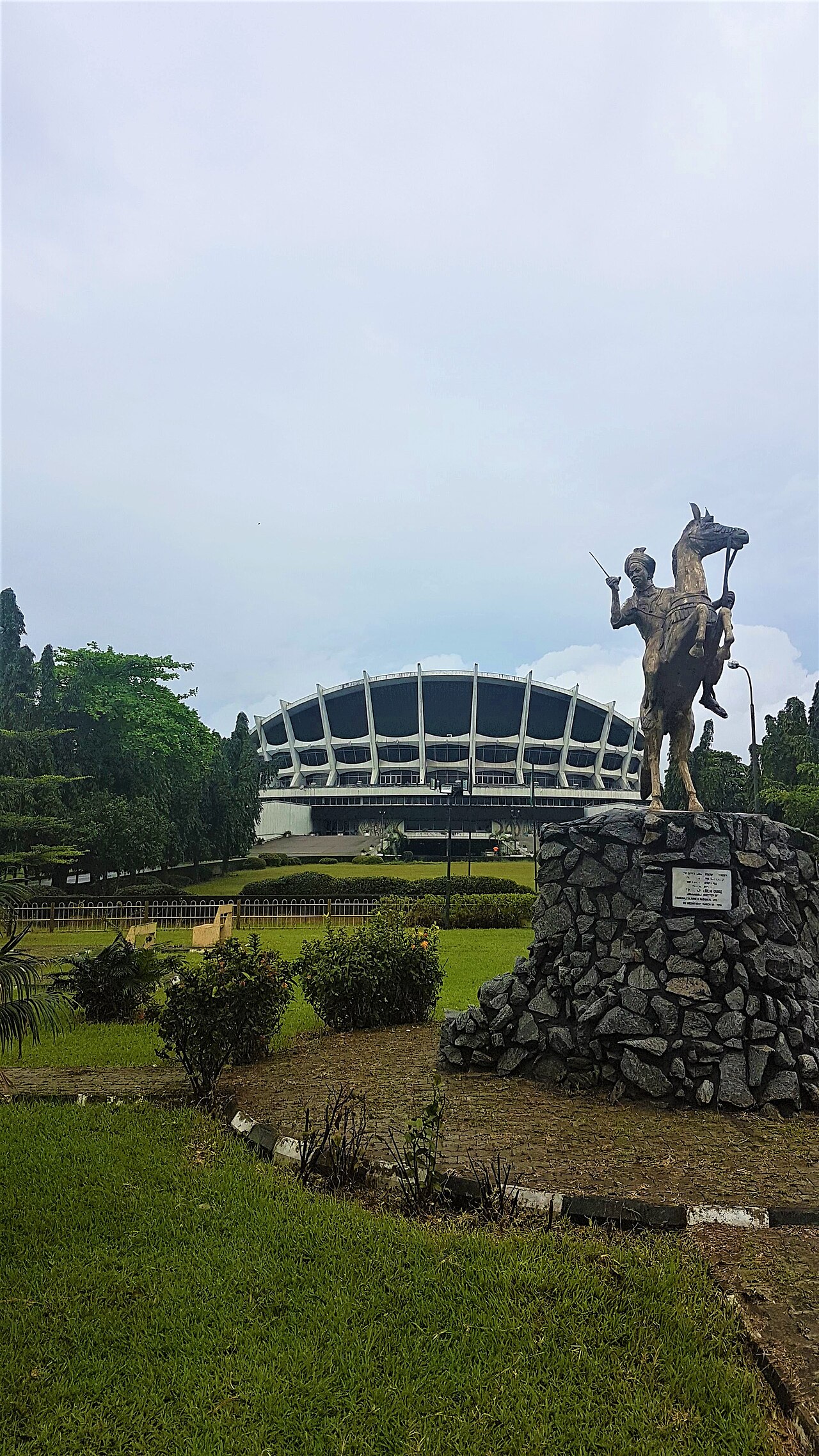
- Monuments — A bronze equestrian statue of Amina stands in Lagos, and her image has appeared on Nigerian currency and postage stamps.
- Popular culture — She features in novels, plays, and television productions, including Nollywood treatments and the 2021 film Amina, which drew both praise and criticism for its historical liberties.
- Contemporary politics — Northern Nigerian women’s organizations and political commentators invoke her when arguing for greater female representation in government.
- Diaspora — African diaspora communities, particularly in the Americas and Europe, have adopted her as a symbol of Black female sovereignty and resistance.
The 2021 Netflix film Amina, directed by Izu Ojukwu, is a useful case study in how these interpretations collide. The film faced criticism from some historians and cultural figures for departing from established tradition — including its portrayal of her marriage and its treatment of her relationship with her brother. The debate itself was revealing: Nigerians cared deeply about getting this story right, because Amina belongs to them in a way that few historical figures do.
Separating History from Legend
Good history requires distinguishing what we can reasonably know from what we have inherited as story. With Amina, that line is genuinely blurry, and honest writers should say so rather than pretending otherwise.
What We Can Reasonably Establish
- Amina was a real historical figure who ruled Zazzau in the sixteenth century.
- She came from a royal lineage that included a reigning queen, her mother Bakwa Turunku.
- Her reign was long and militarily active, and it expanded Zazzau’s influence significantly.
- She is associated with major construction of defensive walls in the region.
- Her memory was preserved and elaborated by both oral tradition and later written chronicles.
What Remains Contested or Legendary
- The exact dates of her birth, accession, and death.
- The extent and permanence of her conquests, which later chroniclers may have exaggerated.
- The story of her taking and killing a husband each night, which most scholars regard as folklore.
- The claim that she personally led every campaign attributed to her.
- Whether she introduced kola cultivation to the region or merely benefited from an existing trade.
None of this diminishes her. If anything, the fact that her story survived five centuries of upheaval — through the collapse of Songhai, the rise and fall of empires, the Sokoto jihad, British colonization, and Nigerian independence — says something powerful about how much she meant to the people who kept telling it.
The Broader Context: Women and Power in Hausa History
Amina is often described as exceptional, and she was — but she was not alone. Hausa political tradition included several mechanisms by which women exercised power. The title of magajiya, or queen, existed in multiple kingdoms. Royal women managed estates, controlled revenue, and in some cases held veto power over succession. The institutional memory of female authority was strong enough that it survived into the colonial period and shaped how Hausa women negotiated with British administrators.
This context complicates the lazy assumption that pre-colonial Africa was uniformly patriarchal and that women only gained power through Western influence. The reality is more textured: gender relations varied enormously across the continent, and in Hausaland specifically, the combination of Islamic law, indigenous custom, and economic necessity produced arrangements in which women could and did rule. Amina is the most famous example, but she stands at the head of a longer tradition that includes figures like Queen Daura in Hausa origin narratives and the powerful women of later northern Nigerian history.
It is also worth noting that colonialism narrowed these possibilities. British indirect rule in northern Nigeria tended to work through male emirs and to formalize male authority in ways that had not been absolute before. Amina’s memory became, in that context, a kind of counter-argument — evidence that women’s exclusion from power was not traditional but, in part, a colonial inheritance.
Visiting Amina’s Legacy Today
For travelers and diaspora visitors interested in Amina’s world, northern Nigeria offers tangible connections to her story — though it requires planning and local guidance, and visitors should check current travel advisories and work with trusted local contacts.
- Zaria, Kaduna State — The historic walled city, home to the surviving earthen walls associated with Amina and to the emir’s palace. The old city retains its pre-colonial street layout and gate sites.
- Kano — The ancient city walls, the Kurmi Market (dating to the fifteenth century), and the Gidan Makama Museum offer deep context on Hausa urban history and trade.
- Lagos — The bronze equestrian statue of Queen Amina, a prominent public monument and a popular reference point in national memory.
- Kaduna and Abuja — Museums and cultural institutions that interpret northern Nigerian history for a national audience.
These sites matter because they keep history physical. A wall you can touch is harder to erase from memory than a paragraph in a textbook. And in a country where colonial-era narratives often minimized African achievement, the survival of Zaria’s walls is a quiet act of resistance.
Conclusion: The Queen Who Refused to Be Forgotten
Queen Amina of Zaria is more than a schoolbook name. She was a ruler who inherited power in a sophisticated, urban, trade-connected society; who used cavalry, diplomacy, and construction to expand and defend her kingdom; and whose legacy proved flexible enough to survive every political and religious transformation that followed her. The debates about her — over dates, over the details of her marriages, over how she should be portrayed on screen — are themselves a form of respect. People argue about her because she still belongs to them.
What makes her story genuinely useful today is not the legend of the invincible warrior, but the reality of a woman who operated within the constraints and opportunities of her time and expanded both. She built walls and she built a reputation. She fought, and she governed. Five centuries later, in a Nigeria where women still fight for political representation, that example carries weight.
The next time you see her bronze figure on a Lagos street or hear her name in a classroom in Kaduna, remember what it stands for: not a fairy tale, but a historical woman who ruled, built, and endured — and whose story, told honestly, is more inspiring than any myth.