📅 Last updated: 06.10.2026
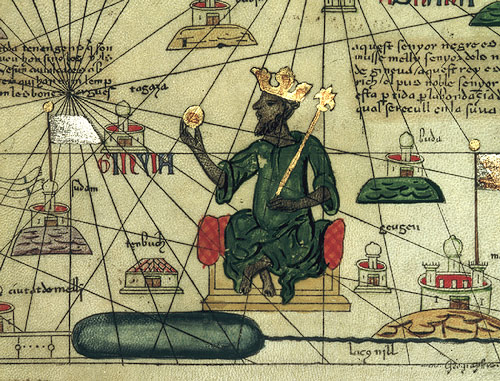
Ask anyone to name the richest person who ever lived, and you will hear the usual answers: John D. Rockefeller, Andrew Carnegie, Jeff Bezos. But a growing chorus of historians and economists points instead to a fourteenth-century West African emperor, Mansa Musa, whose fortune was so vast that it defies modern accounting. Ruler of the Mali Empire at its zenith, he controlled more gold than any private individual in recorded history — and he spent it with a generosity that reshaped the economy of an entire region. His story is not a curiosity. It is a window into medieval Africa’s sophistication, its global trade networks, and the intellectual culture that flourished in cities like Timbuktu and Djenné long before European contact.
Who Was Mansa Musa?
Mansa Musa (c. 1280–c. 1337) was the tenth mansa, or emperor, of the Mali Empire, ruling from roughly 1312 until his death. “Mansa” is a Mandinka title meaning “king of kings,” and the Mali Empire he inherited was already one of the largest and wealthiest states in the world. Stretching across what is now Mali, Senegal, Gambia, Guinea, Burkina Faso, Niger, and Mauritania, it sat astride the trans-Saharan trade routes that connected West African gold and salt to North Africa, the Mediterranean, and beyond.
Musa came to power after a period of instability. His predecessor, Abu Bakr II, reportedly abdicated to sail west across the Atlantic in search of new lands — a story that still fascinates historians and fuels debates about pre-Columbian contact. Musa, possibly Abu Bakr’s grandson or a court official elevated to the throne, inherited a realm rich in gold, copper, and salt, and he proved to be both a shrewd administrator and a deeply devout Muslim.
What set him apart was not merely the wealth he controlled but how he used it. He built mosques, funded schools, patronized scholars, and turned cities like Timbuktu into centers of learning that drew students from across the Islamic world. His reign is often described as Mali’s golden age — and for good reason.
The Source of the Wealth: Gold, Salt, and Trade
To understand why Mansa Musa’s fortune was so staggering, you have to understand the economy he presided over. Medieval Mali was, quite simply, the world’s leading producer of gold. The Bambuk and Bure goldfields, located in the upper Senegal and Niger river regions, supplied an estimated two-thirds of the Old World’s gold supply during the fourteenth century. This gold flowed north along caravan routes to cities like Sijilmasa and Marrakesh, then onward to Europe and the Middle East.
But gold was only half the story. The Sahara was not a barrier but a highway, and the Mali Empire controlled the trade that moved across it. Salt from the mines of Taghaza — a settlement so remote that buildings were constructed from slabs of salt — was as valuable as gold in West Africa, essential for preserving food and maintaining health in a hot climate. Copper, kola nuts, and enslaved people also moved along these routes, exchanged for textiles, horses, books, and luxury goods from North Africa and beyond.
The Mali Empire taxed this trade efficiently. Goods entering and leaving were subject to duties, and the state maintained a monopoly on certain commodities, particularly gold nuggets. Musa’s treasury was not merely a pile of metal; it was the nerve center of a commercial network that stretched from the Atlantic coast to the Nile Valley.
A Sophisticated Financial System
Mali’s economy was not primitive. It used standardized weights and measures, employed professional merchants and caravan leaders, and maintained diplomatic and commercial ties with the Marinid dynasty in Morocco and the Mamluk Sultanate in Egypt. The empire’s capital, Niani, was a bustling city of trade and governance, though its exact location remains a subject of archaeological debate.
This was not a kingdom that stumbled onto wealth. It was a state that understood markets, taxation, and the value of strategic alliances. When Musa traveled, he was not merely a pilgrim; he was the head of a trading empire making a statement of power and piety.
The Legendary Pilgrimage to Mecca
In 1324, Mansa Musa embarked on the hajj, the pilgrimage to Mecca that every able Muslim is expected to undertake at least once. His journey, however, was unlike any other. According to contemporary accounts — including those of the Arab historian Ibn Battuta, who visited Mali a decade later, and the Egyptian chronicler al-Umari — Musa traveled with a caravan of astonishing size and opulence.
The numbers vary by source, but the scale is consistent: tens of thousands of people, including soldiers, officials, scholars, and enslaved attendants; dozens of camels carrying hundreds of pounds of gold dust each; and a procession so magnificent that it reportedly took a full day to pass a single point. Musa himself rode at the center, accompanied by his senior wife and a retinue of courtiers dressed in fine silks and jewelry.
Along the way, he gave generously. In Cairo, he distributed gold to the poor, to officials, and to holy men. He bought goods at inflated prices, built mosques, and left behind a trail of largesse that stunned observers. The Egyptian historian al-Maqrizi wrote that Musa “flooded Cairo with his kindness” — and with his gold.
The Economic Shockwave
The consequences were dramatic. So much gold entered Cairo’s markets that the value of the metal plummeted. Prices for goods and services soared. According to al-Umari, the gold market in Cairo took more than a decade to recover. In a single act of piety, Musa had inadvertently triggered what might be history’s first recorded hyperinflation.
“This man flooded Cairo with his benefactions. He left no court emir nor holder of a royal office without the gift of a load of gold. The Cairenes made incalculable profits out of him and his suite in buying and selling and giving gifts.” — Al-Umari, fourteenth-century chronicler
The pilgrimage also had a diplomatic dimension. Musa’s visit to Mecca and his passage through Mamluk Egypt put Mali on the mental map of the Islamic world. He returned home with scholars, architects, and administrators — including the poet and architect Abu Ishaq al-Sahili, who is credited with introducing new building techniques to the empire. The journey was not just a religious obligation; it was a strategic act of statecraft.
Mansa Musa and the Golden Age of Timbuktu
If the pilgrimage made Mansa Musa famous abroad, his domestic policies made him legendary at home. Upon his return, he invested heavily in education and architecture, transforming Timbuktu from a trading post into a city of scholars. He commissioned the Djinguereber Mosque, a UNESCO World Heritage Site that still stands today, and supported the construction of libraries and madrasas.
Timbuktu became a magnet for intellectuals. The Sankore Madrasa, which flourished under Musa’s patronage and that of his successors, attracted astronomers, mathematicians, jurists, and physicians from across the Islamic world. Scholars studied the Quran, but also logic, rhetoric, medicine, and astronomy. The city’s libraries held thousands of manuscripts — many of which survive today in family collections in Timbuktu, despite efforts by extremists to destroy them in 2012.
This was not an isolated flowering. Djenné, another major Mali city, was already renowned for its Great Mosque — a masterpiece of Sudano-Sahelian architecture — and its role as a center of Islamic learning. The Mali Empire was not merely rich; it was cultured, cosmopolitan, and connected.
Scholarship and the Manuscript Tradition
The Timbuktu manuscripts are among Africa’s greatest intellectual treasures. Written in Arabic and local languages, they cover topics from astronomy and mathematics to law, medicine, and poetry. They are a testament to a vibrant scholarly tradition that predates European colonialism by centuries — and a reminder that Africa’s history is not one of isolation but of exchange and innovation.
Musa’s patronage helped institutionalize this culture. He understood that wealth without knowledge was fragile, and he invested accordingly. His reign set a precedent that his successors, including Mansa Sulayman, continued.
How Rich Was He, Really?
Estimating Mansa Musa’s wealth in modern terms is a speculative exercise, but it is a revealing one. Economists and historians have attempted to quantify his fortune using various methods, and the results are staggering. Some estimates place his net worth at $400 billion in today’s dollars; others suggest figures exceeding $4 trillion. The truth is that such comparisons are inherently flawed.
Musa did not have a bank account. His wealth was tangible: gold, land, trade routes, and the labor of his subjects. The Mali Empire’s economy was not monetized in the way modern economies are, and the value of gold fluctuated wildly depending on supply. What we can say with confidence is that Musa controlled a larger share of the world’s gold supply than any individual in recorded history — and that his spending power, relative to the global economy of his time, was likely unmatched.
| Figure | Era | Primary Source of Wealth | Estimated Modern Equivalent |
|---|---|---|---|
| Mansa Musa | 14th century | Gold, salt, trans-Saharan trade | $400 billion – $4 trillion (disputed) |
| John D. Rockefeller | 19th–20th century | Oil (Standard Oil) | ~$340 billion |
| Andrew Carnegie | 19th–20th century | Steel | ~$310 billion |
| Jeff Bezos | 21st century | E-commerce (Amazon) | ~$200 billion (varies) |
The comparison is imperfect, but it makes a point: Musa’s wealth was not just large; it was systemic. He was not a billionaire in a world of millions; he was an emperor in a world where gold was the ultimate currency, and he controlled the supply.
Beyond the Gold: Governance, Culture, and Legacy
Mansa Musa’s legacy is not limited to his wealth. He was a capable ruler who expanded Mali’s territory, strengthened its administration, and maintained peace across a diverse empire. He appointed governors, judges, and tax collectors, and he ensured that Islamic law was applied alongside traditional customs — a pragmatic approach that kept the peace in a multi-ethnic, multi-faith realm.
He also understood the power of symbolism. His pilgrimage was a statement: Mali was not a peripheral kingdom but a major player on the world stage. His patronage of architecture and scholarship was an investment in soft power. And his generosity, however economically disruptive, cemented his reputation as a just and pious ruler.
The Empire After Musa
Mali’s golden age did not end with Musa’s death around 1337. His son, Maghan I, and later his brother, Mansa Sulayman, continued to rule a prosperous empire. Ibn Battuta, who visited Mali in 1352–1353, described a well-governed state with a strong sense of justice, where travelers were safe and the rule of law was respected. He noted the abundance of food, the quality of the horses, and the piety of the people — though he also criticized what he saw as the persistence of pre-Islamic customs.
Over time, however, Mali’s dominance waned. Internal succession disputes, the rise of the Songhai Empire to the east, and shifting trade routes eroded its power. By the seventeenth century, the empire had fragmented into smaller states. But its cultural and intellectual legacy endured, particularly in Timbuktu, which remained a center of learning for centuries.
Why Mansa Musa Matters Today
Mansa Musa’s story challenges the stereotypes that have long distorted the way Africa is viewed. Here was a Black African emperor who was richer than any European monarch of his time, who built libraries and mosques, who traded with the wider world, and who was celebrated by Arab chroniclers for his piety and generosity. His existence is not an anomaly; it is a reminder that Africa’s history is one of achievement, complexity, and global influence.
For the African diaspora, Musa is a symbol of pride and possibility. For historians, he is a case study in the power of trade, the role of religion in statecraft, and the ways in which wealth can be used to build — or destabilize — economies. For anyone interested in the medieval world, he is a reminder that the era was not just about Europe’s cathedrals and crusades; it was also about Mali’s gold, Timbuktu’s scholars, and the caravans that crossed the Sahara.
In recent years, Musa has enjoyed a pop-culture revival. He appears in video games, documentaries, and social media memes. But the real man was more interesting than the legend. He was a ruler who understood that wealth was a tool, not an end — and who used it to leave a mark on the world that still resonates seven centuries later.
Conclusion: The Measure of a Man
Was Mansa Musa the richest man in history? By some measures, yes. By others, the question is unanswerable. But the more important point is that his wealth was not merely a matter of gold. It was a matter of vision. He built institutions, supported scholars, and connected his empire to the wider world. He made Mali a name that echoed from the Niger River to the Nile, and from the Sahara to the Mediterranean.
His story is a reminder that Africa’s past is not a footnote to Europe’s. It is a history of empires and ideas, of trade and faith, of ambition and achievement. Mansa Musa did not just accumulate wealth; he shaped a civilization. And in doing so, he left us with a question that still resonates today: what is wealth for, if not to build something that outlasts you?