📅 Last updated: 22.08.2026
Standing in the shadow of the Great Zimbabwe ruins, with the wind whispering through ancient granite walls, is to confront a profound truth about African history that was for too long denied. These monumental stone structures, rising from the savannah of Masvingo Province, are not just remnants of a past kingdom; they are a testament to the ingenuity, organization, and architectural brilliance of the Shona people who built them between the 11th and 15th centuries. For centuries, the Great Zimbabwe ruins have stood as Africa’s most enduring architectural enigma, a place where the very stones seem to hold the memory of a civilization that once commanded the trade routes of southern Africa.
- The Genesis of a Kingdom: Context and Origins
- Decoding the Architecture: The Hill Complex, the Great Enclosure, and the Valley Ruins
- A Hub of Commerce: Trade, Gold, and the Indian Ocean World
- The Enigma of the Soapstone Birds
- Mysteries and Misconceptions: The Fight Against Colonial Narratives
- A Visitor’s Guide to the Present: Exploring Masvingo and Beyond
- Key Facts and Figures at a Glance
- Preservation and Legacy: The Monument in the 21st Century
- Beyond the Stones: The Living Culture of the Shona
- The Enduring Symbol of a Nation
To walk the narrow passageways and climb the ancient staircases is to step into a world that challenges every outdated narrative about the continent’s past. This is not a story of foreign builders or lost civilizations, but one of indigenous innovation and power. The sheer scale of the site — covering nearly 1,800 acres — and the precision of its dry-stone construction, with walls that have stood for over 700 years without mortar, are achievements that demand admiration and careful study. It is a place that speaks to the complexity of African societies long before the arrival of European colonizers, and it is a source of immense pride for modern Zimbabwe, a nation that took its very name from this magnificent edifice.
The Genesis of a Kingdom: Context and Origins
The story of Great Zimbabwe begins not with the stones themselves, but with the land and the people who inhabited it. The region, located on the high plateau between the Zambezi and Limpopo Rivers, was already home to thriving agricultural communities by the early first millennium AD. These early settlers, ancestors of the modern Shona people, were skilled in ironworking, cattle herding, and farming, laying the economic foundations upon which a powerful state would later be built.
The shift from scattered homesteads to a centralized, urbanized center was a gradual process driven by a confluence of factors. The most significant of these was the control of gold and ivory trade with the Swahili coastal city-states, such as Kilwa Kisiwani and Sofala, which were themselves connected to the vast Indian Ocean trade network. This maritime commerce linked East Africa to the Middle East, India, and even China. By the 12th century, the settlement at Great Zimbabwe had grown from a modest village into a bustling metropolis, its rulers accumulating immense wealth by controlling the flow of gold and ivory from the interior to the coast.
The Rise of the Shona State
This period of economic expansion coincided with the consolidation of political power. The rulers of Great Zimbabwe, known as the Mambos, established a centralized state that exerted influence over a vast territory, potentially encompassing much of modern-day Zimbabwe and parts of Mozambique and Botswana. Their authority was not solely based on wealth; it was also spiritual. The king was considered a divine intermediary, connecting the living with the ancestors, a concept central to Shona cosmology. The power of the monarch was reinforced by the very architecture of the city, which was designed to separate the royal elite from the common populace, creating a physical and spiritual hierarchy that legitimized their rule.
The city’s population at its peak around the 14th century is estimated to have been between 10,000 and 20,000 people — a staggering figure for a pre-colonial African city. This urban center was supported by a complex economic system that included not only long-distance trade but also local agriculture, cattle herding, and specialized crafts such as pottery, weaving, and, most importantly, the working of gold and iron. The wealth of the kingdom was not hoarded, but rather used to support a large court, a standing army, and a class of artisans and priests, creating a sophisticated social structure that was the envy of its neighbors.
Decoding the Architecture: The Hill Complex, the Great Enclosure, and the Valley Ruins
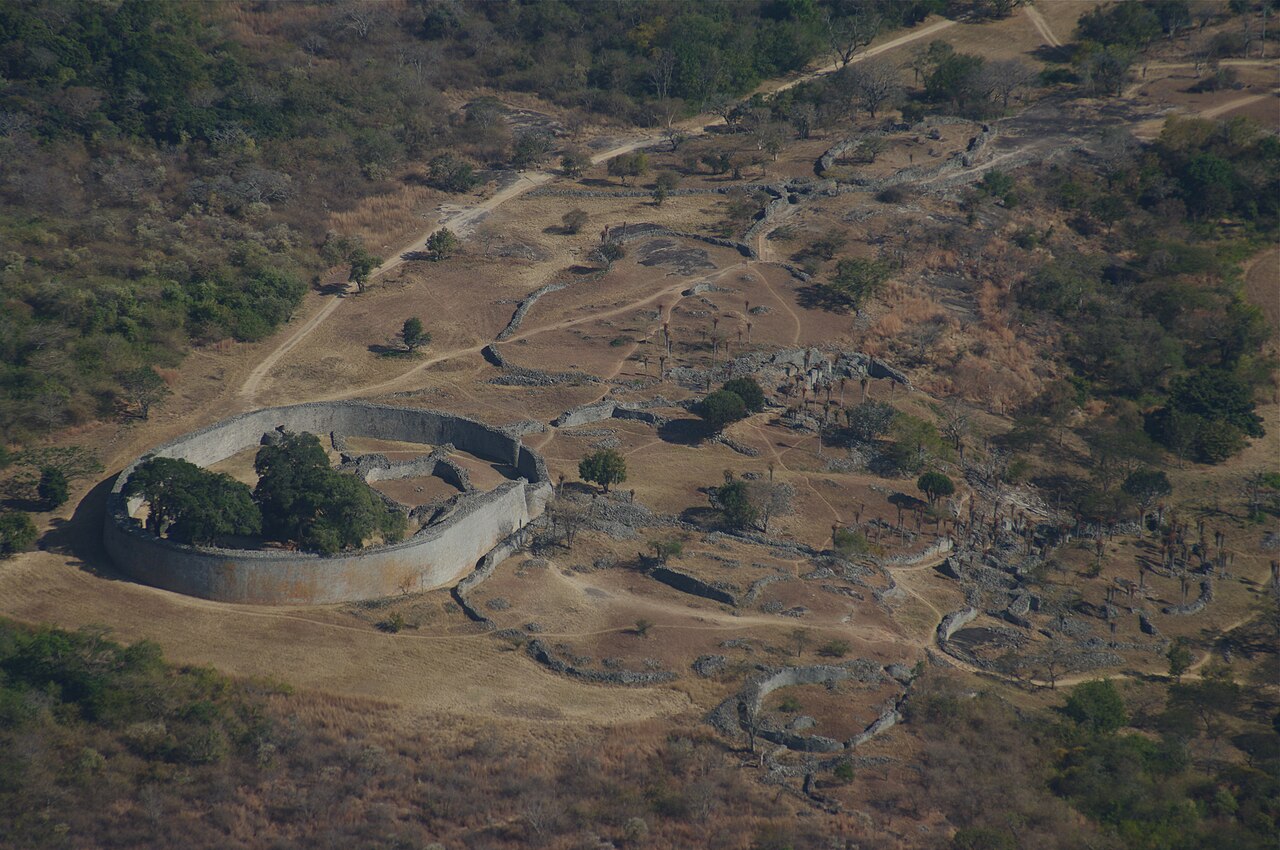
The Great Zimbabwe ruins are not a single structure but a sprawling complex divided into three main architectural groups, each with its own distinct purpose and character. Understanding these different areas is key to appreciating the sophistication of the city’s design and social organization. The builders used locally sourced granite blocks, which naturally split into flat, brick-like pieces due to the region’s specific geological conditions, a technique that required immense skill and labor.
The Hill Complex: The Spiritual and Political Heart
Perched on a massive, 80-meter-high granite hill, the Hill Complex is the oldest part of the settlement and is widely believed to have been the royal residence and the center of spiritual power. It is also the site of the famous Great Zimbabwe ruins of the Eastern Enclosure, where the most important artifacts, including the eight carved soapstone birds that have become the national symbol of Zimbabwe, were discovered. The hilltop location provided a natural defensive advantage and a commanding view of the surrounding plains, reinforcing the king’s status as the all-seeing protector of his people.
Access to the Hill Complex was deliberately difficult, involving a narrow, steep climb through massive boulders and along stone walls. This was a calculated design to control who could approach the king and to create a sense of awe and reverence. The architecture here is organic, seamlessly integrating natural rock formations with man-made walls, a hallmark of the builders’ ability to work with, rather than against, their environment. Within the complex are the remains of many daga (earth and clay) houses, indicating that it was a bustling residential and ceremonial center, not just a symbol of power.
The Great Enclosure: An Architectural Masterpiece
Perhaps the most iconic and awe-inspiring part of the site is the Great Enclosure, a massive elliptical structure that is the largest single ancient structure in sub-Saharan Africa. Its outer wall, which stands up to 11 meters high and stretches for 250 meters, is composed of an estimated 900,000 granite blocks, all fitted together with remarkable precision. The wall is not uniformly flat; it features a distinctive chevron pattern near the top, a decorative flourish that demonstrates the builders’ aesthetic sensibilities and their mastery of their craft.
The purpose of the Great Enclosure remains a subject of debate among archaeologists. Some theorize that it was a royal palace, while others suggest it was a symbolic grain storehouse or a center for ritual ceremonies. The presence of a conical tower, 9 meters high and 5.5 meters in diameter, has led to speculation that it represents a grain bin, a symbol of fertility and abundance. What is clear is that the enclosure was a high-status area, with its inhabitants enjoying access to imported goods like Chinese porcelain and Arabian glass beads, evidence of the city’s far-reaching trade connections. The sheer effort required to construct this massive structure is a powerful symbol of the state’s ability to mobilize and organize vast amounts of labor.
The Valley Ruins: The Hub of Daily Life
Spread across the valley floor between the Hill Complex and the Great Enclosure are the Valley Ruins, a collection of numerous smaller stone enclosures that were the residences of the common people, artisans, and lower-ranking officials. This area was the bustling heart of the city, where daily life unfolded. Excavations have revealed evidence of thriving industries, including iron smelting, pottery production, and the crafting of jewelry. These areas show a more organic layout, with homesteads clustered together, suggesting a vibrant and interconnected community.
The Valley Ruins are crucial for understanding the social stratification of the city. While the elite lived in the stone enclosures, many of the common people would have lived in wooden and daga huts, the remains of which are less visible today. The presence of these distinct zones shows that Great Zimbabwe was a complex, class-based society, organized around a powerful central authority but also allowing for a degree of local autonomy and economic specialization. The entire complex, from the hilltop to the valley floor, was a living, breathing city for over 300 years.
A Hub of Commerce: Trade, Gold, and the Indian Ocean World
To understand the wealth and power of Great Zimbabwe, one must look beyond its walls to the vast commercial networks it was part of. The city was not an isolated phenomenon but a key node in a global trade system that connected the African interior to the wider Indian Ocean world. The primary exports were gold and ivory, both of which were in high demand in the markets of the Middle East, India, and even China.
The gold was not mined in the city itself, but in the extensive goldfields of the Zimbabwean plateau. The rulers of Great Zimbabwe controlled the trade routes that led from these mines to the coast, taxing the caravans that passed through their territory. In return, they imported luxury goods that were symbols of status and power. Among the most significant finds at the site are shards of Chinese celadon porcelain from the Song and Ming dynasties, Persian faience, and thousands of glass beads from India and Arabia. These artifacts are physical proof of the city’s participation in a sophisticated, long-distance maritime economy.
The Sofala Connection
The most crucial trading partner for Great Zimbabwe was the Swahili port city of Sofala, located on the coast of modern-day Mozambique. Sofala was the main outlet for the gold trade from the interior, and the Swahili merchants who lived there acted as intermediaries between the inland kingdom and the Arab and Indian traders who sailed the monsoon winds. This relationship was mutually beneficial: the Swahili cities needed the gold and ivory from the interior, and Great Zimbabwe needed the manufactured goods and luxury items that only the coast could provide.
The Portuguese, upon their arrival on the East African coast in the late 15th century, were astonished by the wealth and sophistication of this inland kingdom. They recorded detailed accounts of the trade, noting that the gold was of high quality and that the ruler of the interior was a powerful and respected figure. These European accounts are valuable historical sources, but they also reveal a persistent bias: many Europeans found it difficult to believe that Africans were capable of building such a magnificent city, leading to centuries of myths attributing its construction to the Queen of Sheba or the Phoenicians. It was not until the 20th century that archaeological evidence conclusively proved the indigenous African origins of the site.
The Enigma of the Soapstone Birds
Among the most iconic and culturally significant artifacts discovered at the Great Zimbabwe ruins are the eight soapstone birds. These carvings, which stand about 40 centimeters tall, depict a bird that is perched on a pedestal, and they are unique in the world of African art. The birds are not naturalistic representations of a specific species; instead, they combine human and avian features, suggesting they were symbolic beings of great spiritual importance.
Scholars believe the birds represent the Shiri ya Mwari, or the “Bird of God,” a messenger between the human world and the spiritual realm. They were likely used in royal rituals and were associated with the power and authority of the king. The bird is believed to be a bateleur eagle, a powerful bird of prey that is revered in Shona culture for its keen eyesight and its ability to soar high in the sky, close to the heavens. The soapstone birds are not just works of art; they are religious icons that embody the spiritual and political ideology of the state.
Sadly, these treasures were not left in place. In the late 19th century, the site was looted by European treasure hunters, and the birds were removed. One of them was even taken to Cecil Rhodes’ estate in Cape Town, where it remained for over a century. In a powerful act of restitution, the Zimbabwean government successfully negotiated the return of the last of these birds in 2003. Today, they are proudly displayed in the Zimbabwe Museum of Human Sciences in Harare, serving as a national symbol and a reminder of the country’s glorious heritage. The bird, known as the Great Zimbabwe Bird, is now emblazoned on the national flag, a permanent and proud emblem of the nation’s identity.
Mysteries and Misconceptions: The Fight Against Colonial Narratives
For centuries, the story of the Great Zimbabwe ruins was distorted by colonial prejudice and pseudoscientific theories. When European explorers and settlers first encountered the site in the late 19th century, they were so unwilling to accept that Africans could have built such an impressive structure that they invented elaborate theories to explain its existence. Some claimed it was the work of the ancient Egyptians, others the Phoenicians, and still others said it was the legendary city of Ophir, the source of King Solomon’s gold.
This deliberate misattribution was not just a matter of ignorance; it was a tool of colonial oppression. If a “superior” civilization had built the ruins, then the indigenous Shona people could be portrayed as the descendants of primitive interlopers who had no legitimate claim to the land. This narrative was used to justify the seizure of land and the imposition of white minority rule. The fight to correct this narrative was led by pioneering archaeologists like Gertrude Caton-Thompson, who in 1929 concluded that the ruins were “unquestionably of African origin,” a finding that was met with hostility and disbelief from the colonial establishment.
The struggle over the meaning of Great Zimbabwe continued during the colonial era and into the Rhodesian period. The white minority government of Ian Smith actively promoted the idea that the ruins were of foreign origin, as it supported their claim to the land. It was only after Zimbabwean independence in 1980 that the true history of the site was fully embraced and celebrated. The new nation, named after the ruins, adopted the soapstone bird as its national symbol, reclaiming its history and turning a symbol of colonial myth into a powerful icon of African pride and resilience.
A Visitor’s Guide to the Present: Exploring Masvingo and Beyond
Today, the Great Zimbabwe ruins are a UNESCO World Heritage Site and a place of pilgrimage for Zimbabweans and tourists from around the world. A visit to the site is not just a historical excursion; it is a deeply moving experience. The site is located near the modern town of Masvingo, the oldest colonial settlement in the country, which serves as a convenient base for exploration. The contrast between the colonial-era town and the ancient African city is a powerful reminder of the layers of history that shape the nation.
As you walk through the ruins, you are guided by well-maintained paths that lead you through the three main areas. The climb up the Hill Complex is a must-do, offering breathtaking panoramic views of the surrounding landscape. The Great Enclosure is best appreciated in the late afternoon, when the golden light illuminates the stonework and highlights the beautiful chevron patterns. It is easy to stand in the middle of the enclosure and feel the weight of history, imagining the ceremonies and daily life that once filled this space.
Beyond the ruins themselves, the area offers a glimpse into modern Zimbabwean life. The nearby town of Masvingo has a vibrant market and local restaurants where you can try traditional Shona dishes. Visitors can also explore Lake Mutirikwi, a large reservoir created in the 1960s, which is a popular spot for fishing and boating. For those interested in deeper cultural immersion, the local community offers guided tours that provide insights into Shona customs, music, and spirituality, connecting the ancient past with the living present. It is a destination that offers a profound connection to Africa’s heritage while also showcasing the warmth and resilience of its people today.
Key Facts and Figures at a Glance
To appreciate the scale and significance of this remarkable site, the following table summarizes some of the most important facts about the Great Zimbabwe ruins.
| Aspect | Detail |
|---|---|
| Location | Masvingo Province, southeastern Zimbabwe |
| Period of Major Construction | 11th to 15th centuries AD |
| Estimated Peak Population | 10,000 – 20,000 inhabitants |
| Total Area of Site | Approximately 1,800 acres (720 hectares) |
| UNESCO World Heritage Status | Inscribed in 1986 |
| Primary Building Material | Locally quarried granite blocks, dry-stacked without mortar |
The enduring mystery of how exactly the walls were built and the precise function of certain structures, like the conical tower, continues to fascinate researchers. What is not a mystery is the immense skill and organization required to create such a lasting monument. The fact that the walls have survived centuries of rain, wind, and seismic activity is a testament to the engineering knowledge of their builders.
Preservation and Legacy: The Monument in the 21st Century
Preserving the Great Zimbabwe ruins for future generations is a complex and ongoing challenge. The site faces threats from natural erosion, vegetation growth, and the impact of climate change, including heavier rainfall and extreme temperatures. However, the most significant threats in recent decades have been from human activity and economic hardship. The Zimbabwean government, in partnership with international organizations like UNESCO, has worked to stabilize the structures and improve site management. However, funding is often scarce, and the site has faced challenges in maintaining its infrastructure.
Despite these challenges, there is a powerful sense of ownership and pride among Zimbabweans regarding the ruins. Local communities are actively involved in conservation efforts, and there is a growing movement to use the site as an educational resource to teach young Africans about their pre-colonial history. The ruins are more than just a tourist attraction; they are a symbol of national identity and a source of inspiration. The name “Zimbabwe” itself, derived from the Shona term Dzimba dzemabwe, meaning “houses of stone,” is a permanent daily reminder of this legacy.
Looking forward, there are ambitious plans to develop the site further, including better visitor facilities and a more immersive museum experience that can contextualize the ruins within the broader history of the region. The goal is to create a world-class heritage destination that not only attracts tourists but also serves as a center for research and cultural exchange. The legacy of Great Zimbabwe is not just in its ancient stones, but in what it represents: the capability, resilience, and creativity of the African people.
Beyond the Stones: The Living Culture of the Shona
It is essential to remember that the Great Zimbabwe ruins are not a relic of a dead civilization. The Shona people, who are the descendants of the city’s builders, are one of the largest and most vibrant ethnic groups in southern Africa today. Their language, culture, and traditions have persisted and evolved over the centuries, connecting the modern nation to its ancient roots. The spiritual beliefs that underpinned the kingdom, particularly the reverence for ancestors and the importance of the spirit world, remain central to Shona life.
This living culture is most vividly expressed in the arts. Zimbabwe is famous for its Shona sculpture, a contemporary art movement that began in the 1950s and has gained international acclaim. Artists like Nicholas Mukomberanwa and Henry Munyaradzi have created powerful works in stone that, while modern in their expression, are deeply informed by Shona cosmology and the spiritual relationship between humanity and the natural world. This artistic tradition is a direct, living link to the soapstone birds of Great Zimbabwe, showing a continuity of cultural expression that spans over a thousand years. When you visit the ruins, you are not just looking at history; you are witnessing the enduring soul of a people.
The Enduring Symbol of a Nation
The Great Zimbabwe ruins are far more than an archaeological site; they are the cornerstone of a national identity and a powerful rebuttal to the colonial narratives that sought to diminish Africa’s past. They stand as a proud testament to the fact that long before the arrival of Europeans, Africa was home to sophisticated, powerful, and wealthy civilizations capable of monumental architectural achievements. The city was a hub of innovation, trade, and culture, connecting the heart of the continent to the wider world.
For the modern visitor, walking among these ancient walls is an experience that is both humbling and inspiring. It is a chance to connect with a history that is often untold and to appreciate the deep roots of African civilization. The ruins are a symbol of resilience, survival, and pride. They remind us that history is not a simple linear story, but a complex tapestry of human achievement, and that the stones of Great Zimbabwe will continue to speak for centuries to come, telling a story of African greatness that was never lost, but merely waiting to be rediscovered and embraced.