📅 Last updated: 23.08.2026
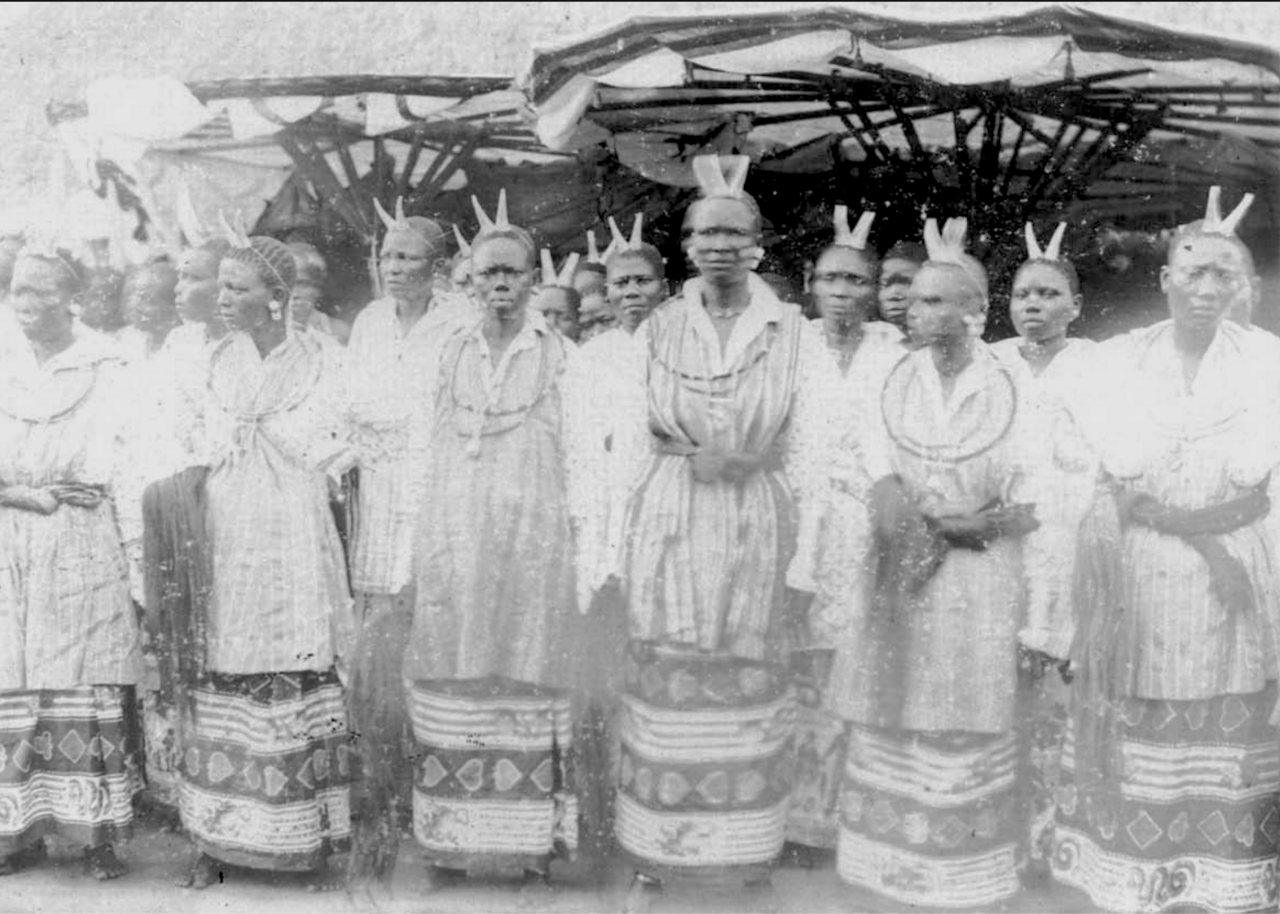
Before the world ever heard of the Black Panther’s Dora Milaje, before the cinema screens lit up with the sight of an all-female fighting force, the Dahomey Amazons were a thunderous reality in West Africa, striking terror into the hearts of their enemies and awe into the eyes of European visitors. These were not mythic figures or distant legends; they were a meticulously trained, fiercely loyal, and devastatingly effective military corps that served the Kingdom of Dahomey, in what is now the Republic of Benin, for over two centuries. Their story is not merely a footnote in military history; it is a complex, often brutal, and utterly fascinating chapter in the rich and diverse tapestry of African statecraft, a testament to a society that could elevate women to the highest echelons of martial power in a world that often denied them even basic agency.
- Origins of the Agojie: From Elephant Huntresses to Royal Guard
- Inside the Barracks: The Life and Legendary Training of the Dahomey Amazons
- The Amazons in Battle: Shock Troops of a Militaristic Kingdom
- A Unique Force: Context and Comparison in a Global Military History
- Key Facts at a Glance: The Dahomey Amazons
- The Fall of the Amazons: The Franco-Dahomean Wars
- The Last Survivor: Nafungbé and the Legend's End
- Legacy and Modern Resonance: From Abomey to the Global Stage
- A Complex Inheritance: Remembering the Dahomey Amazons
Origins of the Agojie: From Elephant Huntresses to Royal Guard
The precise genesis of the Dahomey Amazons is a matter of historical debate, shrouded in the mists of oral tradition and the fragmented records of European slavers and traders who plied the coast. Most historians, however, trace their formal inception to the reign of King Houegbadja, who ruled from 1645 to 1685. It was Houegbadja who is credited with establishing the gbeto, a corps of female elephant hunters, and also with creating a personal bodyguard of women for the king. This initial force was likely a symbol of prestige and a practical measure of security, as the king trusted his life more readily to women he believed were less susceptible to the palace coups that were a constant threat in the region.
The transformation from a small royal guard into a full-fledged standing army occurred over the following century, particularly during the reign of King Ghezo, who ruled from 1818 to 1858. Ghezo was a warrior-king who understood the immense potential of his female soldiers. He not only expanded their numbers dramatically—swelling their ranks to an estimated 4,000 to 6,000 women, roughly a third of the entire Dahomeyan army—but he also professionalized their training and elevated their status. They were no longer just bodyguards; they were shock troops, the elite vanguard of Dahomey’s expansionist military campaigns. They became known as the Agojie (meaning “warriors” or “those who are not men”) or the Mino (meaning “our mothers”)—a name that reflected their status as wives, in a symbolic sense, of the king.
This was a deeply patriarchal society in many ways, yet it carved out a unique and powerful space for these women. They were considered the king’s wives, regardless of their actual marital status, which meant they were forbidden from marrying or bearing children. They were, in a very real sense, wedded to the state and to their martial duty. This celibacy was a sacrifice that bought them immense privilege: they were among the highest-ranking members of the court, had access to the best food and goods, and held a status that surpassed that of most men. They were a living contradiction—both the ultimate symbol of the king’s power and the most potent expression of female agency in the pre-colonial African world.
Inside the Barracks: The Life and Legendary Training of the Dahomey Amazons
The life of an Amazon was one of rigorous discipline, physical exertion, and absolute loyalty. Recruitment was not always a matter of choice. While some women volunteered, drawn by the promise of glory and status, others were conscripted, and some were even offered to the king by their husbands or fathers as a form of tribute or punishment. But once a woman entered the ranks, her life was irrevocably changed.
The Crucible of Training
Training was brutal and unrelenting, designed to forge these women into warriors as formidable as any man. They were hardened through grueling physical exercises, including running long distances through thorny acacia scrub, a practice that built immense stamina and leg strength while hardening their skin against the elements. They were trained to scale walls of thorny acacia trees as if they were enemy fortifications, their bodies becoming covered in scars that were worn as badges of honor. They practiced with a terrifying arsenal of weapons, including the coup-coup (a sharp, curved machete-like blade), the kpinga (a throwing knife), and, later, muskets and rifles acquired through trade with European powers.
One of the most famous and often-cited tests of their prowess involved a prisoner of war being tied to a post. An Amazon was required to decapitate the prisoner with a single swing of her blade. If she faltered or needed a second strike, she was subjected to public ridicule and faced severe consequences. This was not mere cruelty; it was a calculated method of ensuring that in the chaos of battle, they would not hesitate.
Beyond physical skill, the training instilled a profound psychological conditioning. A French naval officer, Jean Bayol, who witnessed a recruitment ceremony in 1889, left a chilling account. He saw a young woman, who had volunteered, take a test where she was required to execute a prisoner. He noted her calm demeanor as she approached the man, and how she swung her heavy knife with a single, clean blow, severing the head. This level of detachment was the ultimate goal of their training—to become efficient, fearless, and unwavering instruments of the king’s will.
Status and Privilege
The rewards for this brutal life were substantial. The Amazons lived within the royal palace complex in Abomey, the capital, in a state of luxury that was unheard of for women in the general population. They slept on elevated platforms, a sign of prestige, and were provided with tobacco, alcohol, and slaves to attend to their daily needs. Each Amazon carried a small bell, which served as a symbol of her rank and was used to announce her presence, allowing her to move freely through a society where women were generally expected to defer to men. When they went to war, they were preceded by a young girl who blew a whistle to clear the path, a reminder that these were the king’s own elite. Their presence was a spectacle of power. Sir Richard Burton, the famous British explorer and translator, visited Dahomey in 1863 and described them as “a sort of female Janissary,” a reference to the elite slave-soldiers of the Ottoman Empire, noting their impressive drill and physical condition.
The Amazons in Battle: Shock Troops of a Militaristic Kingdom
The Dahomey Amazons were not merely a ceremonial guard; they were the frontline shock troops in Dahomey’s many wars of conquest and, later, its desperate defense against colonial encroachment. Their battlefield tactics were as distinctive as their appearance. While European armies relied on massed formations and volley fire, the Amazons were known for their rapid, aggressive, and often ferocious assault tactics. They would often be used in the initial assault, leading the charge against fortified enemy positions, their momentum and ferocity intended to break the enemy’s will before the main male forces were even engaged.
Their primary targets were often the kingdoms to the east and west of Dahomey, most notably the Oyo Empire to the northeast, which Dahomey had once been forced to pay tribute to. Under King Ghezo, the Amazons played a crucial role in Dahomey’s successful revolt against Oyo dominance in 1823, a victory that solidified their reputation as the kingdom’s most potent military asset. They were also instrumental in raiding the coastal and inland territories to capture slaves for the transatlantic trade, a grim and inescapable part of the kingdom’s economy and power structure. The very wealth that funded their lavish lifestyle was built on the backs of those they captured. This brutal economic reality is an essential part of their story, a reminder that their martial glory was inextricably linked to the human suffering of the slave trade.
European observers were consistently astounded by their effectiveness. One French officer, describing an attack on the Egba people in 1851, wrote of their “terrible” and “furious” assault, noting that they fought with a courage and abandon that matched, and often surpassed, that of the male soldiers. They were known to be merciless, taking few prisoners, and their reputation for ferocity often preceded them, causing panic in enemy ranks before a single blow was struck. They were the psychological weapon of the Dahomeyan army, their very name a harbinger of death and destruction.
A Unique Force: Context and Comparison in a Global Military History
To fully appreciate the significance of the Dahomey Amazons, it is essential to place them within a broader global and historical context. While women have participated in warfare throughout history, the Amazons of Dahomey were unique in their scale, organization, and official status as a permanent, state-funded, and highly trained component of a national army. They were not a mobile force assembled in times of crisis, nor were they a small unit of bodyguards. They were a standing army of thousands, with a formal hierarchy, dedicated barracks, and a defined tactical role.
They are often compared to the female warriors of other cultures, but these comparisons reveal more differences than similarities. For example:
- The Scythian women: While the ancient Scythians of the Eurasian steppes had women who fought and were buried with weapons, they were not a distinct, segregated military corps. They fought alongside men and were part of a nomadic warrior culture, where gender roles in combat were more fluid.
- The Celtic warrior queens: Figures like Boudicca led armies, but they were exceptional individuals, not the products of an institutionalized system that trained thousands of women for a single purpose.
- The Trung Sisters of Vietnam: These sisters led a rebellion in 40 AD, but their force was a temporary uprising, not a permanent standing army.
The Dahomey Amazons stand alone as a professional, state-sanctioned, and elite fighting force. Their existence challenges the Western-centric narrative that pre-colonial African societies were simple or primitive. They were a complex, organized, and highly stratified state with a sophisticated military apparatus that included, in a way almost unique in world history, women at its very heart. Their story forces a re-evaluation of what we think we know about gender, power, and warfare in the pre-modern world.
Key Facts at a Glance: The Dahomey Amazons
To summarize the core facts of this remarkable force, the following table provides a concise overview of their key attributes and timeline.
| Aspect | Detail |
|---|---|
| Name | Agojie (Dahomey Amazons, or Mino, “Our Mothers”) |
| Origin | Formally established under King Houegbadja (r. 1645–1685) as a royal guard, expanded into a full army under King Ghezo (r. 1818–1858). |
| Peak Size | Estimated between 4,000 and 6,000 women, constituting roughly one-third of the Dahomeyan army. |
| Primary Role | Elite shock troops, royal bodyguards, and frontline assault forces in Dahomey’s wars of conquest and defense. |
| End of the Corps | Decisively defeated in the Franco-Dahomean War, culminating in the fall of Abomey in 1892 and the dissolution of the kingdom in 1894. |
The Fall of the Amazons: The Franco-Dahomean Wars
The late 19th century brought a new and existential threat to the Kingdom of Dahomey: the relentless expansion of European colonial powers. France, seeking to control the lucrative trade routes and resources of West Africa, began to press inland from its coastal colony of Porto-Novo, a rival kingdom to Dahomey. The stage was set for a confrontation between one of Africa’s most powerful and militaristic kingdoms and one of Europe’s major imperial powers.
The conflict came to a head in 1890 and again in 1892. In the first Franco-Dahomean War, the Amazons were at the forefront of the Dahomeyan attacks against French forces and their allies. They fought with their characteristic ferocity, launching bayonet charges against French infantry who were armed with more modern rifles and, crucially, supported by artillery and machine guns. Despite their immense courage, they were outgunned. The French, under the command of Colonel Alfred-Amédée Dodds, a remarkable officer of mixed French and Senegalese heritage, were a professional, modern army. The raw, close-quarters tactics of the Dahomeyans, while terrifying, were no match for the firepower of the mitrailleuse and the disciplined volleys of the French Tirailleurs Sénégalais.
The decisive battle came at Cana, near Abomey, in November 1892. The Dahomeyan army, including the Amazons, made a desperate, last-ditch stand. They fought with an almost suicidal bravery, charging into the teeth of French fire. One French account describes the Amazons as being “animated by a sort of frenzied rage,” throwing themselves at the French lines with a disregard for death that shocked even the hardened colonial soldiers. But valor could not overcome the technological and tactical superiority of the French. The Dahomeyan army was shattered, and King Béhanzin, Ghezo’s son and successor, was forced to flee Abomey, which was then burned to the ground. The kingdom was formally annexed by France in 1894, and with it, the era of the Dahomey Amazons came to a violent and tragic end.
The Last Survivor: Nafungbé and the Legend’s End
With the kingdom’s defeat, the surviving Amazons were scattered. Some were killed in the final battles, others were captured, and many are believed to have taken their own lives rather than face the ignominy of defeat and the humiliation of a life without their martial purpose. Their world had been built on the twin pillars of the king and the state, and with both gone, they were left adrift. Some faded into obscurity, marrying and living quiet lives in the villages of what was now French Dahomey, their warrior past a secret or a source of shame. Others, it is said, returned to the ruins of Abomey, refusing to abandon the city that was the symbol of their former glory.
The legend of the Amazons found a poignant final chapter in the figure of Nafungbé, who is widely believed to have been the last surviving member of the corps. For decades after the kingdom’s fall, she lived in a modest home in Abomey, a living relic of a bygone era. In the 1970s, she was “rediscovered” by historians and journalists, who were astonished to find a direct link to this legendary fighting force. In interviews, given in her native Fon language, she would recount tales of her training and the wars, often becoming animated, re-enacting the drills and battle charges of her youth. She spoke of the strict discipline, the pride of serving the king, and the terrible price of war. Her accounts were a precious, invaluable primary source, confirming and enriching the historical record. She died in 1979, at an estimated age of 100, and with her death, the last living memory of the Dahomey Amazons passed into history.
Legacy and Modern Resonance: From Abomey to the Global Stage
The legacy of the Dahomey Amazons is multifaceted and continues to evolve. In the Republic of Benin, they are celebrated as national heroines, symbols of strength and resistance. The historical sites of Abomey, including the royal palaces and the museums that now house their artifacts, are a UNESCO World Heritage site, drawing visitors from around the world who come to learn their story. The government has made efforts to preserve their memory, and they are a source of immense national pride.
Their story has also found a powerful new audience in the 21st century. The most prominent example is the 2022 Hollywood film The Woman King, starring Viola Davis as a fictionalized general of the Agojie. While the film takes significant creative liberties with historical events, it succeeded in bringing the story of the Dahomey Amazons to a massive global audience, sparking a renewed interest in their history and sparking important conversations about African history, gender, and representation. The film, and the subsequent documentaries and articles it inspired, have cemented the Amazons’ place in the global popular imagination as icons of female power and agency.
This resonance is particularly strong for the African diaspora. For many people of African descent, the story of the Amazons is a powerful counter-narrative to the pervasive images of Africa as a continent of victims. It offers a vision of pre-colonial African power, sophistication, and complexity, and it showcases a history where women were not just passive figures but were central to the exercise of state power. The Amazons offer a powerful and complex inheritance, a story of female strength and independence that is both inspiring and deeply tied to a brutal history of warfare and the slave trade.
A Complex Inheritance: Remembering the Dahomey Amazons
To remember the Dahomey Amazons is to hold two truths at once. They were, without question, one of the most remarkable and unique military forces in world history. Their very existence is a testament to the extraordinary and varied forms of social and political organization that flourished in pre-colonial Africa. They were disciplined, courageous, and highly effective, and their story offers a powerful and enduring image of female strength and capability that continues to inspire women around the world.
Yet, we must also remember that their power was built on a foundation of violence and subjugation. They were the instruments of a militaristic kingdom that enriched itself through the slave trade, and their martial glory was inextricably linked to immense human suffering. Their story is not a simple fairy tale of empowerment; it is a complex and often uncomfortable history that forces us to grapple with uncomfortable questions about power, morality, and the human cost of greatness.
Their legacy is a challenge. It challenges us to move beyond simplistic narratives of Africa and to engage with its history in all its nuance and contradiction. It challenges us to see women not just as victims or as symbols, but as complex actors in history, capable of immense strength and immense violence. The Dahomey Amazons were the product of their time and place, a unique and terrifying phenomenon that emerged from the crucible of a powerful African kingdom. Their story is not just a relic of the past; it is a living, breathing testament to the enduring complexity of human history and the indomitable spirit of the women who shaped it. They were the Mino, “our mothers,” and their memory, fierce and unyielding, will not be forgotten.