📅 Last updated: 05.07.2026
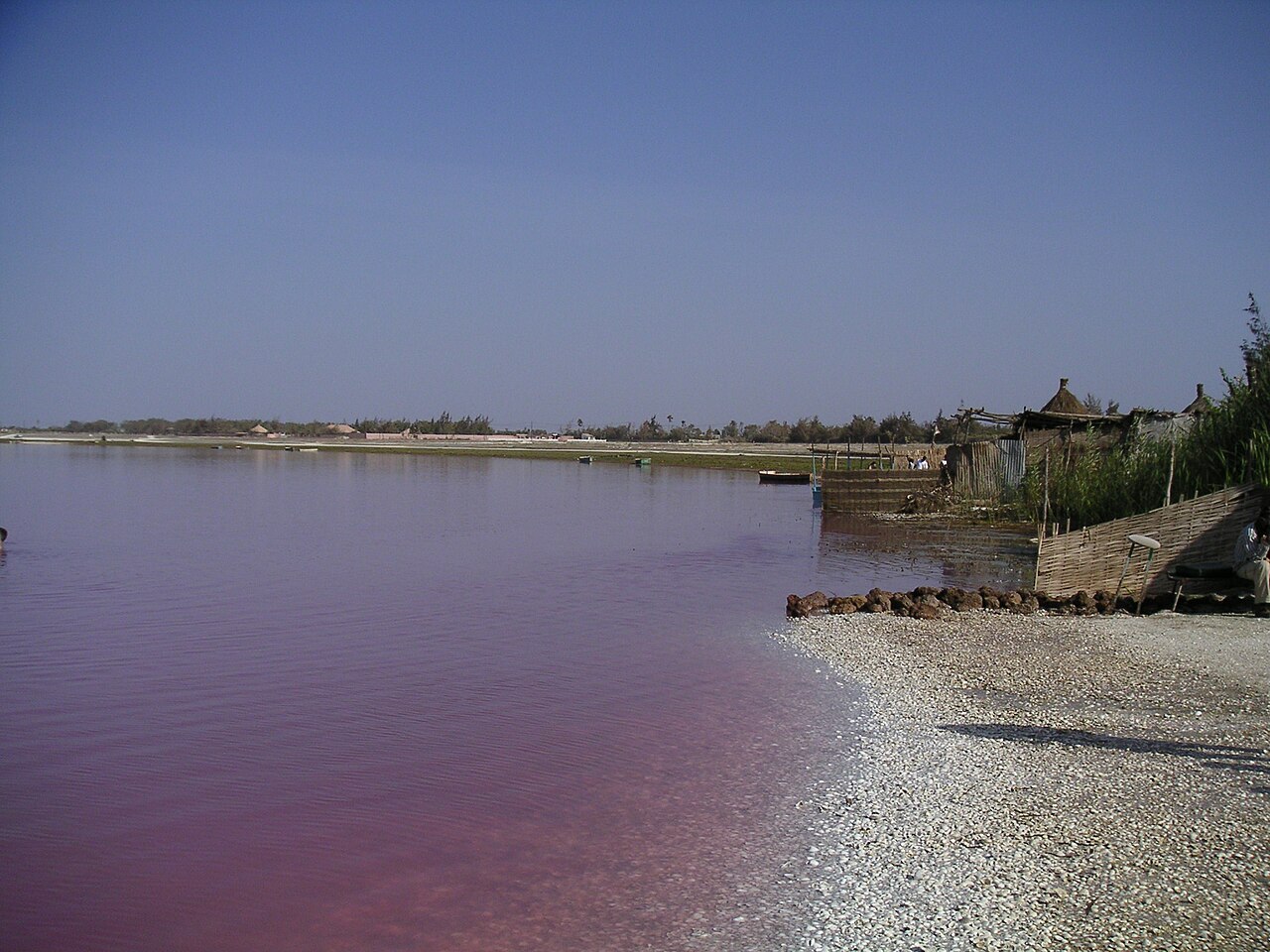
In the heart of the Petite Côte, about 35 kilometers northeast of Senegal’s vibrant capital, Dakar, lies a natural wonder that defies the conventions of a typical coastal lake: Lake Retba Senegal is a body of water so shockingly pink it looks as though a giant spilled a vat of strawberry milkshake across the savannah. This 3-square-kilometer lagoon, separated from the Atlantic Ocean by a thin strip of dunes, is not a trick of light or a seasonal bloom of algae—it is a year-round spectacle that has fascinated travelers, scientists, and the local Lebou community for generations. But the mystery of its color is only the beginning; beneath the rosy surface lies a story of survival, salt, and a changing climate that is rewriting the future of this iconic landscape.
- The Science Behind the Pink: Why Lake Retba Senegal Wears Its Color
- Salt of the Earth: The Human Story of Lake Retba Senegal
- Tourism and Transformation: A Pink Lake in a Modern World
- A Timeline of Change: Key Moments in the Lake’s History
- Beyond the Pink: Wildlife and Ecosystem of Lake Retba Senegal
- Cultural Significance: The Lake in Senegalese Life and Art
- Practical Guide: Visiting Lake Retba Senegal Responsibly
- The Future of Lake Retba Senegal: Between Preservation and Profit
The Science Behind the Pink: Why Lake Retba Senegal Wears Its Color
The first question every visitor asks, standing on the shore with the wind whipping off the Atlantic, is simple: why is it pink? The answer is a masterclass in extremophile biology. Lake Retba Senegal is a hypersaline lake, with a salinity level often exceeding that of the Dead Sea—reaching up to 40% in places. This harsh environment, where few fish or plants can survive, is the perfect habitat for a microscopic alga called Dunaliella salina.
This single-celled organism thrives in high-salt conditions by producing massive amounts of beta-carotene, a red-orange pigment that protects it from intense sunlight. When the sun is high, especially between November and June, the algae proliferate and turn the water a vivid bubblegum pink. The color intensifies with heat and light; during the rainy season (July to October), when freshwater dilutes the lake, the hue fades to a pale rose or even gray. But when conditions are right, the lake looks like a spilled watercolor palette, with patches of deep magenta, cotton-candy pink, and, along the edges where salt crystallizes, a blinding white.
Beyond the algae, the lake’s geology plays a role. The water is only about 3 meters deep at its maximum, and the lake sits in a depression fed by subterranean seawater and occasional rainfall. The high evaporation rate concentrates the salt and the algae, creating a self-reinforcing cycle of pinkness. It is a rare example of a natural phenomenon where biology and chemistry dance in plain sight, yet still feel like magic.
Salt of the Earth: The Human Story of Lake Retba Senegal
For centuries, the lake’s salt has been a lifeline. The Lebou people, who have lived along the Senegalese coast for generations, were the first to recognize the value of this briny treasure. Today, a community of about 3,000 salt harvesters works the lake year-round, using techniques that have changed little since the 19th century. These men and women, often referred to as “salt miners,” wade into the waist-deep, hyper-saline water, their bodies slathered in shea butter (karité) to protect their skin from the corrosive salt.
The process is grueling. Workers use long wooden poles to break the salt crust that forms on the lakebed, then scoop the crystals into small, flat-bottomed boats called pirogues. Each boat can carry up to 500 kilograms of salt per trip. Once ashore, the salt is piled into gleaming white mounds, where it is left to dry for several days before being washed, sorted, and bagged. The salt from Lake Retba Senegal is prized for its purity—it contains up to 98% sodium chloride—and is sold across West Africa for food preservation, fish curing, and even cosmetic products.
But the work is dangerous. Prolonged exposure to the brine can cause severe skin burns, eye damage, and respiratory issues from inhaling salt dust. The harvesters, who earn roughly 5,000 to 10,000 CFA francs (about $8 to $16 USD) per day, often work from dawn to dusk. Despite the grueling conditions, there is a fierce pride in their craft. As one harvester, Mamadou Diop, told a visiting journalist in 2022: “This lake is our mother. It feeds us. It gives us life. We know its moods, its colors, its secrets. It is not just water—it is our identity.”
The Salt Economy: A Regional Powerhouse
The salt from Lake Retba is not just a local commodity; it is a regional economic engine. Senegal exports approximately 200,000 tons of salt annually, much of it sourced from this lake and other coastal salines. The salt is used in the Senegalese fishing industry to cure fish like keccax (dried fish) and yett (smoked fish), which are staples of West African cuisine. It also finds its way into tanneries, chemical plants, and even luxury spas in Europe, where it is marketed as “pink salt” for its supposed health benefits.
However, the salt industry is not without controversy. Environmentalists warn that over-extraction is lowering the lake’s water level and increasing its salinity, which could eventually kill the Dunaliella salina algae that gives the lake its color. The balance between economic necessity and ecological preservation is a tightrope that the Senegalese government and local communities are still learning to walk.
Tourism and Transformation: A Pink Lake in a Modern World
In the past two decades, Lake Retba Senegal has become a major tourist attraction, drawing visitors from Europe, the Americas, and across Africa. Travelers come for the Instagram-worthy photos—floating effortlessly in the buoyant water, watching sunset over the pink horizon, or taking a pirogue ride across the surreal landscape. The lake is often compared to Australia’s Lake Hillier, but it has a cultural depth that its antipodean counterpart lacks.
The village of Niaga, which sits on the lake’s western shore, has transformed from a quiet fishing hamlet into a bustling tourist hub. Small restaurants serve thieboudienne (Senegal’s national dish of fish and rice) with a view of the pink water. Local artisans sell salt-based skincare products, jewelry, and carved wooden souvenirs. Horse-drawn carts and 4x4s ferry visitors along the sandy roads. On any given weekend, you might hear Wolof, French, English, and Mandarin mixing in the air.
But tourism brings its own set of challenges. The influx of visitors has led to litter, erosion of the fragile dunes, and pressure on the local water supply. Some harvesters complain that tourists disrupt their work, while others have pivoted entirely to guiding tours or selling crafts. The lake’s ecosystem is sensitive: boat motors churn up sediment, and sunscreen from swimmers can pollute the water. In 2019, the Senegalese Ministry of Tourism, in partnership with the NGO EcoRetba, launched a sustainable tourism initiative that includes waste management programs, guided eco-tours, and a ban on motorized watercraft during peak algae bloom periods.
A Timeline of Change: Key Moments in the Lake’s History
| Year | Event | Significance |
|---|---|---|
| 1880s | First recorded salt harvesting by Lebou communities | Establishment of traditional extraction methods still used today |
| 1950s | Lake becomes a secondary source of salt for Dakar’s fish industry | Economic shift from subsistence to regional trade |
| 1998 | Lake Retba featured in National Geographic as “The Pink Lake” | International tourism begins to grow |
| 2005 | Designated as a protected Ramsar wetland site | International recognition of ecological importance |
| 2015 | First documented decline in algae bloom intensity | Raises alarm about climate change and over-extraction |
| 2021 | Senegal launches “Retba 2030” sustainability plan | Government commits to balancing tourism, salt mining, and conservation |
This timeline reveals a lake in transition. What was once a quiet, natural resource has become a flashpoint for debates about development, tradition, and environmental stewardship. The Ramsar designation in 2005 was a milestone, but it has not been enough to halt the pressures of modernity.
Beyond the Pink: Wildlife and Ecosystem of Lake Retba Senegal
While the lake’s extreme salinity limits biodiversity, it is not a dead zone. The Dunaliella salina algae form the base of a simple but resilient food web. Brine shrimp (Artemia salina) thrive in the water, feeding on the algae, and in turn attract migratory birds, including flamingos, herons, and sandpipers. During the winter months, the lake’s edges become a temporary haven for these birds, which add splashes of white and grey to the pink landscape.
The surrounding dunes and savannah are home to monitor lizards, jackals, and a variety of insects. The lake also plays a role in the local hydrology, acting as a natural sink for groundwater that would otherwise seep into the Atlantic. However, the ecosystem is fragile. Invasive species, such as the Australian salt-tolerant plant Salicornia, have been spotted along the shores, and rising sea levels threaten to breach the narrow sandbar that separates the lake from the ocean. If that happens, the lake could become a brackish lagoon, losing its pink color and its unique ecological character.
The Climate Threat: A Lake on the Edge
Climate change is the elephant in the room for Lake Retba Senegal. The region has experienced a 15% decrease in rainfall over the past 50 years, according to data from Senegal’s National Agency of Civil Aviation and Meteorology (ANACIM). This has reduced freshwater inflow, concentrating the salt and raising the lake’s temperature. At the same time, stronger Atlantic storms and a 20-centimeter rise in sea level since 1980 have increased the risk of saltwater intrusion from the ocean.
In 2020, researchers from the University of Dakar published a study warning that the lake’s color could permanently fade within 50 years if current trends continue. The study modeled scenarios where the algae’s habitat shrinks, leading to a “bleaching” effect where the water turns a dull, murky brown. The local community is acutely aware of this threat. “We see the lake changing,” says Aïssatou Ndiaye, a village elder in Niaga. “The pink is not as strong as when I was a girl. The water feels hotter. We are worried, but what can we do? We need the salt to live.”
Cultural Significance: The Lake in Senegalese Life and Art
Lake Retba is more than a tourist attraction or an economic resource; it is woven into the cultural fabric of Senegal. In Wolof mythology, the lake is said to be the tears of a goddess who wept for a lost love, staining the water pink with her sorrow. This story is told to children, and it carries a deeper message about the sacredness of water and the land. The lake also appears in contemporary Senegalese music and film. In 2018, the Senegalese singer Baaba Maal released a music video titled “Pink Water,” which featured the lake as a symbol of resilience and beauty in the face of hardship.
For the Lebou people, the lake is a site of ritual. During the annual Fanals festival in Dakar, some families travel to Lake Retba to offer salt and prayers to the ancestors, asking for blessings on the harvest and protection for the community. This blend of tradition and modernity is typical of Senegal—a country that honors its past while embracing the future.
Practical Guide: Visiting Lake Retba Senegal Responsibly
If you plan to visit this pink wonder, here are some practical tips that respect both the environment and the local community:
- Best time to visit: November to June, when the algae are most active and the color is brightest. Avoid the rainy season (July-October) when the lake can be dull.
- Getting there: From Dakar, take a taxi or a bus to the village of Niaga (about 1 hour). Alternatively, join a guided tour that includes transport and a local guide.
- What to bring: Sunscreen (reef-safe, if possible), a hat, sunglasses, and water. Do not wear jewelry or swimwear you care about—the salt will stain and corrode fabrics.
- Activities: Floating in the lake (you’ll bob like a cork), taking a pirogue ride, visiting the salt mounds, and buying local crafts. Avoid touching your eyes after swimming—the salt is intensely irritating.
- Responsible tourism: Hire a local guide, buy salt products directly from harvesters, and do not litter. Support businesses that practice eco-friendly methods, such as those certified by EcoRetba.
- Don’t miss: The nearby Reserve de Faune de la Somone (a bird sanctuary) and the fishing village of Mbour, both a short drive away.
Visitors often describe the experience as surreal—a moment where nature feels like art. But the key is to leave the lake as you found it, so that future generations can share in that wonder.
The Future of Lake Retba Senegal: Between Preservation and Profit
As Senegal accelerates its development under the Plan Senegal Emergent, a national strategy to achieve middle-income status by 2035, the pressure on natural resources like Lake Retba will only intensify. The government has proposed building a new highway connecting Dakar to the Petite Côte, which would bring more tourists but also more pollution and land speculation. At the same time, international investors have expressed interest in industrial salt extraction, which could dramatically increase the volume of salt harvested but also destroy the lake’s ecology.
However, there are reasons for cautious optimism. The “Retba 2030” plan, launched in 2021, includes measures to cap salt extraction at 50,000 tons per year, establish a buffer zone around the lake, and invest in alternative livelihoods for harvesters, such as ecotourism and aquaculture. Local cooperatives, like the Union des Exploitants du Lac Retba, have begun to adopt sustainable harvesting methods, such as rotating extraction zones to allow the salt crust to regenerate. And a new generation of Senegalese scientists, like Dr. Fatou Sarr of the Institute of Environmental Sciences in Dakar, are studying the lake’s microbiology to develop early-warning systems for ecosystem stress.
The future of Lake Retba Senegal hinges on a delicate balance. It is a place of extraordinary beauty, but also of hard labor and deep cultural meaning. It is a symbol of Senegal’s natural heritage, but also a test case for how developing nations can manage their resources wisely. The pink lake is not just a mystery to be solved; it is a mirror reflecting our choices as a global community. Will we protect the places that astonish us, or will we let them fade into memory? The answer, as the lake’s color shifts with the seasons, is still being written.