📅 Last updated: 05.07.2026
- The Golden Throne: The Empire Mansa Musa Inherited
- The Hajj That Shook the World: Mansa Musa’s Pilgrimage to Mecca
- Building a Legacy of Stone and Knowledge: Mansa Musa’s Architectural Vision
- A Leader of Justice and Faith: The Reign of Mansa Musa
- The Modern Echo: Mansa Musa’s Legacy in Contemporary Africa
- Beyond the Gold: A Nuanced View of Mansa Musa’s World
- Reclaiming the Narrative: Mansa Musa and African History
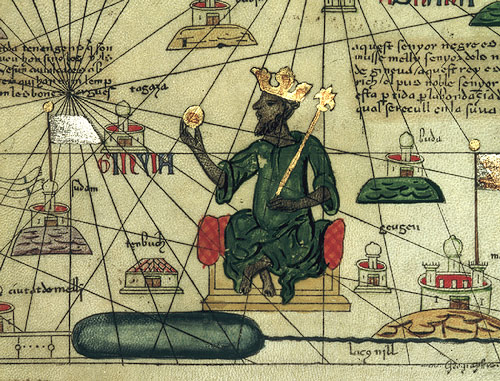
Mansa Musa, the 14th-century ruler of the Mali Empire, is widely regarded as the wealthiest person to have ever lived, a figure whose legendary pilgrimage to Mecca in 1324 CE literally reshaped the economies of entire regions. His name is synonymous with unimaginable gold, but to reduce him to a mere entry in a list of billionaires is to miss the profound and enduring legacy of a man who built a golden age of learning, law, and culture in the heart of West Africa. To understand Mansa Musa is to understand a pivotal moment when Africa was not a passive observer of world history, but its central, dazzling engine.
The Golden Throne: The Empire Mansa Musa Inherited
Mansa Musa, whose full name was Musa I, ascended to the throne of the Mali Empire around 1312 CE. He was not the empire’s founder—that credit belongs to the legendary warrior-king Sundiata Keita, who defeated the Sosso king Soumaoro Kanté at the Battle of Kirina in 1235 CE. By the time Musa took power, the empire was already a formidable state, but he would transform it into a colossus.
The empire’s wealth was built on a dual foundation: gold and salt. The Bambuk and Bure goldfields, located in what is now Mali and Guinea, were among the richest in the medieval world. At a time when Europe was clawing its way out of the Dark Ages, Mali produced more than half of the Old World’s gold. This gold was not simply mined; it was a carefully managed state resource. The empire also controlled the trans-Saharan trade routes, with the city of Timbuktu and the trading hub of Djenné serving as bustling terminals where salt from the Sahara, copper from the north, and textiles from the Maghreb were exchanged for the precious yellow metal.
Governance and Administration
Mansa Musa was not a mere figurehead. He was a shrewd administrator who understood that power required structure. He divided his vast empire—which stretched from the Atlantic coast to the Niger River bend and beyond—into provinces, each governed by a trusted farba (governor). He maintained a formidable standing army, including a cavalry corps that could project power deep into the Sahel. The empire was also notably prosperous for its time, with a strong agricultural base along the Niger River, which was used for irrigation and transport.
- Capital City: Niani (in modern-day Guinea), a bustling metropolis of mud-brick architecture and royal palaces.
- Official Religion: Islam, though traditional African beliefs were widely tolerated.
- Key Exports: Gold, slaves, ivory, ostrich feathers, and kola nuts.
- Key Imports: Salt, copper, cloth, horses, and books.
The Hajj That Shook the World: Mansa Musa’s Pilgrimage to Mecca
No single event in Mansa Musa’s reign—or perhaps in medieval African history—has captured the global imagination like his 1324 pilgrimage to Mecca. This was not a quiet journey of personal devotion. It was a state-sponsored procession of staggering proportions, a mobile city of wealth and power that announced Mali’s arrival on the world stage.
The caravan was, by all contemporary accounts, almost beyond comprehension. Chroniclers like Al-Umari, who interviewed people who had been in Cairo during Musa’s visit, recorded details that still boggle the mind. Musa traveled with a retinue of 60,000 men, including 12,000 personal servants, all dressed in fine silks and brocade. But the most famous detail was the train of camels—hundreds, perhaps thousands—each laden with 300 pounds of gold. There were also 500 slaves, each carrying a solid gold staff.
The Economic Impact on Cairo
The journey took him through Cairo, the capital of the Mamluk Sultanate, then the richest and most powerful Islamic state. Here, Mansa Musa did something that would have lasting consequences. He gave away gold with such reckless generosity that he crashed the local economy. He distributed so much gold in charity, gifts, and bribes that the value of the metal in Cairo plummeted. Al-Maqrizi, a later Egyptian historian, noted that the price of gold in Egypt did not recover for over a decade. This is the only time in recorded history where a single man’s personal travel had a measurable, negative effect on a major currency market.
“This man, Mansa Musa, spread upon Cairo the flood of his generosity… He was a young man, brown-skinned, with a pleasant face, and a fine figure. He left his country with a large army and an immense quantity of gold.” — Al-Umari, Masalik al-Absar
It is a testament to his wealth that even after this economic disruption, he still had enough gold to commission a new mosque every Friday during his journey and to purchase vast quantities of goods for his return.
Building a Legacy of Stone and Knowledge: Mansa Musa’s Architectural Vision
Mansa Musa’s pilgrimage was not just a display of wealth; it was an investment in his empire’s future. He returned to Mali not only with more gold—having borrowed heavily from Cairo’s moneylenders at high interest to fund his return journey—but with scholars, architects, and poets. The most famous of these was the Andalusian poet-architect Abu Ishaq al-Sahili, whom Musa brought back from Cairo.
Al-Sahili is credited with introducing baked brick and sophisticated stone architecture to the Sahel. Under Mansa Musa’s patronage, he designed and built the Djinguereber Mosque in Timbuktu, the Sankore Madrasah, and a grand palace in the capital, Niani. These were not just buildings; they were statements of permanence and civilization. The Djinguereber Mosque, with its distinctive pyramidal minaret and earthen walls, still stands today as a UNESCO World Heritage site and a living symbol of medieval Mali’s grandeur.
The University of Timbuktu
Perhaps Mansa Musa’s most enduring achievement was his transformation of Timbuktu from a dusty trading post into a world-class center of learning. He established the Sankore Madrasah, which evolved into the University of Timbuktu. At a time when Oxford and Cambridge were still small, parochial institutions, Timbuktu’s university attracted scholars from across the Islamic world—from Morocco to Mecca, from Cairo to Córdoba.
The curriculum was broad and rigorous, encompassing:
- Theology and Islamic Law (Fiqh): The Maliki school of thought was dominant.
- Astronomy and Mathematics: Scholars used complex calculations for navigation and timekeeping.
- Medicine: Advanced surgical techniques and herbal remedies were studied.
- Literature and Grammar: Arabic was the lingua franca of scholarship.
The city’s libraries housed hundreds of thousands of manuscripts, many of which survive today in private collections and the Ahmed Baba Institute. These manuscripts cover topics from astrology to poetry, proving that Africa was not a continent of oral tradition alone, but a place of deep, written intellectual history.
A Leader of Justice and Faith: The Reign of Mansa Musa
Beyond the gold and the grandiose architecture, Mansa Musa was a ruler who understood the moral and legal foundations of power. He was a devout Muslim who sought to bring Islamic law and order to his empire, but he did so with a pragmatic understanding of his subjects’ diverse beliefs.
Legal Reforms
He established a system of courts, with Qadis (Islamic judges) in major cities. He was known to be a fair judge himself, often hearing cases personally. He also enforced a strict code of conduct for his officials, punishing corruption severely. One famous story recounts how he executed a provincial governor for taking bribes, sending a clear message that the rule of law applied to everyone, regardless of rank.
Economic Management
Contrary to the image of a spendthrift, Mansa Musa was a careful manager of the empire’s resources. He maintained a monopoly on the production and export of gold, ensuring that the empire, rather than individual miners or traders, captured the bulk of the profits. He also established a stable currency based on gold dust, cowrie shells, and copper, facilitating trade across the vast empire.
| Aspect of Reign | Key Action | Long-Term Impact |
|---|---|---|
| Religious Policy | Promoted Islam while tolerating traditional beliefs | Created a stable, multi-faith society; boosted trade with North Africa |
| Education | Founded the University of Timbuktu | Made Timbuktu a global intellectual center for centuries |
| Infrastructure | Commissioned mosques and palaces using baked brick | Established a permanent architectural legacy in the Sahel |
| Economic Policy | State monopoly on gold; crashed Cairo’s economy | Demonstrated the empire’s power; caused long-term inflation in Egypt |
| Military | Maintained a 100,000-man army (including cavalry) | Secured trade routes and expanded the empire’s borders |
The Modern Echo: Mansa Musa’s Legacy in Contemporary Africa
The story of Mansa Musa did not end with his death around 1337 CE. His legacy is woven into the fabric of modern West Africa. The Mali Empire eventually declined due to internal succession disputes and the rise of the Songhai Empire, but the memory of its golden age endures.
Cultural and National Identity
In the modern Republic of Mali, Mansa Musa is a national hero. His image appears on currency, school textbooks, and public monuments. The annual Festival in the Desert held near Timbuktu, though disrupted by conflict, celebrates the Tuareg and Songhai cultures that were part of his empire. His story is a powerful counter-narrative to the idea that Africa was a continent without history or achievement before colonialism.
Economic Lessons
Economists and historians still debate the lessons of Mansa Musa’s wealth. His ability to crash the Cairo gold market is a textbook example of the “resource curse”—the paradox that countries with abundant natural resources often have worse economic outcomes than those with fewer. However, his careful management of Mali’s gold reserves for decades also shows a sophisticated understanding of monetary policy.
Global Recognition
In recent years, Mansa Musa has experienced a resurgence in global popular culture. He has been featured in video games like Civilization VI and Age of Empires IV, on television shows, and in countless “richest people in history” lists. While these modern depictions sometimes focus on the sensational aspects of his wealth, they also introduce a new generation to the reality of a powerful, sophisticated medieval African empire.
Beyond the Gold: A Nuanced View of Mansa Musa’s World
It is crucial to approach Mansa Musa’s story with nuance. The wealth he commanded came from systems of labor that included slavery. The trans-Saharan slave trade was a brutal reality, and while it was smaller in scale than the Atlantic trade, it was still a source of human suffering. Mali’s gold was often mined by enslaved people or through systems of forced labor.
Furthermore, the empire’s prosperity was not shared equally. While Timbuktu and Djenné were cosmopolitan centers of wealth and learning, the rural majority lived in relative poverty, their lives tied to subsistence farming along the Niger River. Mansa Musa’s Islamization of the empire, while generally tolerant, did lead to the suppression of some traditional practices and the marginalization of non-Muslim communities in some areas.
The Decline and Its Causes
The Mali Empire began to fracture within a generation of Mansa Musa’s death. His son, Mansa Maghan I, was a weak ruler. Succession disputes, combined with the rise of the Songhai kingdom to the east and pressure from the Mossi states to the south, eroded the empire’s power. By the 15th century, the Songhai Empire under Sonni Ali and Askia Muhammad had eclipsed Mali as the dominant power in the region. The lesson is clear: even the greatest wealth cannot guarantee perpetual power without strong institutions and competent leadership.
Reclaiming the Narrative: Mansa Musa and African History
For centuries, the story of Mansa Musa was marginalized in Western historiography. He was a footnote, a curiosity, a “negro king” who had gold but little else. This was a deliberate erasure, part of the intellectual framework of colonialism that sought to deny Africa a history of its own.
Today, scholars and Africans themselves are reclaiming this narrative. Mansa Musa is not just a figure of the past; he is a symbol of African potential. His story shows that before the trans-Atlantic slave trade and colonial partition, Africa was home to empires that rivaled any in the world in wealth, sophistication, and intellectual ambition. The manuscripts of Timbuktu, now being digitized and studied, are a testament to a continent that was a producer of knowledge, not just a consumer.
The richest man in history was not a European industrialist or an oil baron. He was a 14th-century African emperor who understood that true wealth was not just about gold, but about building a civilization. He built schools, not just palaces. He imported scholars, not just luxuries. He created a legacy of learning that endured for centuries, even as the gold ran out and the empire faded.
Mansa Musa’s story is a powerful reminder that the history of Africa is not a story of poverty and victimhood, but of agency, grandeur, and enduring intellectual ambition. His gold may have been the source of his fame, but his vision was the source of his greatness.