📅 Last updated: 12.09.2026
When Captain Ibrahim Traoré was sworn in as President of Burkina Faso on 21 October 2022, he became the world’s youngest serving head of state at just 34 years old — a former artillery officer from a small town in the country’s west who had, only weeks earlier, been an obscure figure even to many Burkinabè. Within two years he would reshape his nation’s foreign policy, expel French troops, pivot toward Russia, and become a folk hero for millions of young West Africans frustrated by decades of stagnation and insecurity. He has also presided over a tightening of press freedoms, the conscription of citizens, and an escalating war against jihadist insurgents that has displaced more than two million people. Understanding Ibrahim Traoré means holding those contradictions together — and understanding why a military captain in one of the world’s poorest countries became, almost overnight, a symbol of a generation’s impatience.
- Who Is Ibrahim Traoré?
- From Captain to Coup Leader: The 2022 Takeover
- Why Ibrahim Traoré Resonates Across the Sahel
- Foreign Policy: Breaking With France, Turning to Russia
- Security and the War on the Ground
- Governance, Press Freedom, and the Cost of Dissent
- Burkina Faso's Cultural and Historical Context
- What Comes Next for Ibrahim Traoré and Burkina Faso?
- The Takeaway: A Symbol of a Generation's Impatience
Who Is Ibrahim Traoré?
Ibrahim Traoré was born in 1988 in Kéra, a village near Bondokuy in the Mouhoun Province of western Burkina Faso, a region of cotton fields, savannah, and the Bobo and Bwa communities that have farmed the land for centuries. He is a member of the Bissa ethnic group, one of the country’s many minority peoples, and grew up in a family that was not politically prominent. He attended primary school in Bondokuy and secondary school in Bobo-Dioulasso, Burkina Faso’s second city and its cultural capital, a cosmopolitan hub of music, textiles, and the famous Grand Marché.
In 2009 he joined the army, training at the Georges Namoano Military Academy in Pô, in the country’s south, where he was commissioned as an officer and later specialised in artillery. He served in a unit that fought against the jihadist insurgency in the north, and by 2020 he was a captain stationed in Kaya, a dusty garrison town about 100 kilometres northeast of the capital, Ouagadougou. Colleagues described him as disciplined, reserved, and deeply frustrated by what he saw as the army’s inability to protect civilians — a frustration shared by many junior officers who watched their comrades die in ambushes while politicians in the capital seemed detached from the front line.
From Captain to Coup Leader: The 2022 Takeover
Burkina Faso’s slide into instability began well before Traoré. The country had long been a relative island of stability in the Sahel, but from around 2015 jihadist groups — including Ansarul Islam, the Group for the Support of Islam and Muslims (JNIM), and the Islamic State in the Greater Sahara — began launching attacks from neighbouring Mali, spreading across the north and east. By 2021, thousands of civilians and soldiers were dying each year, and the government’s response was widely seen as failing.
In January 2022, Lieutenant Colonel Paul-Henri Sandaogo Damiba overthrew President Roch Marc Christian Kaboré in a coup, promising to restore security. Nine months later, Damiba had little to show for it. On 30 September 2022, Traoré and a group of fellow officers seized power in Ouagadougou, detaining Damiba and announcing on national television that the army had lost confidence in its commander. The takeover was the second coup in eight months and the third in Burkina Faso’s history since 2015.
Traoré was initially appointed president of a transitional government, with a promise to hold elections by July 2024. That promise was later abandoned; in 2024 the junta extended its rule for another five years, citing the ongoing security emergency. For his supporters, the extension was a necessary wartime measure. For critics, it was another African strongman settling in for the long haul.
Why Ibrahim Traoré Resonates Across the Sahel
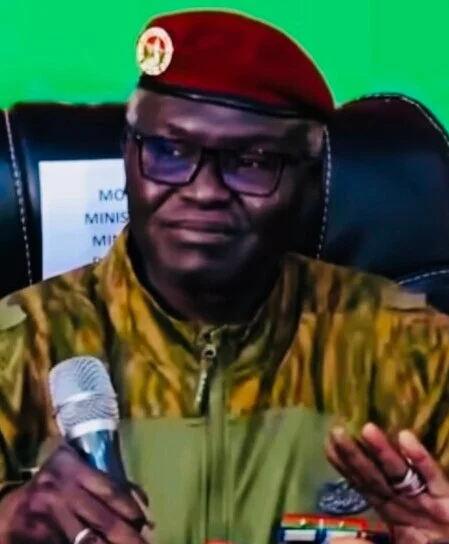
To understand Traoré’s appeal, you have to understand the mood of the Sahel in the 2020s. Across Mali, Burkina Faso, and Niger, a generation that came of age after the Arab Spring has grown up watching their governments fail to deliver security, jobs, or dignity — often while former colonial power France maintained a military presence that many saw as ineffective and paternalistic. When Traoré appeared on television in a beret and military fatigues, speaking plainly about sovereignty and self-reliance, he struck a chord that transcended Burkina Faso’s borders.
His rhetoric is deliberately Pan-African. He has invoked Thomas Sankara, Burkina Faso’s revolutionary president from 1983 to 1987, who renamed the country from Upper Volta, championed women’s rights, and was assassinated in a coup widely believed to have been backed by France and regional allies. Traoré has worn Sankara-style fatigues, quoted him in speeches, and promised to continue what he calls the “revolution” — though his government has also cracked down on dissent in ways Sankara’s admirers find troubling.
“We are fighting for the sovereignty of our country. We are not fighting against a religion, we are not fighting against a community. We are fighting against terrorism.” — Ibrahim Traoré, in a 2023 address to the nation
That framing matters. The insurgency in Burkina Faso has killed more than 20,000 people since 2015 and displaced over two million, according to UN and government figures. It has also fuelled vigilante militias — the Volunteers for the Defence of the Homeland (VDP), a civilian auxiliary force that Traoré has expanded and armed — and deepened ethnic tensions, particularly between Fulani herders and other communities who accuse them of harbouring jihadists.
Foreign Policy: Breaking With France, Turning to Russia
Perhaps no aspect of Ibrahim Traoré’s rule has drawn more global attention than his foreign policy. In January 2023, his government demanded the withdrawal of French troops stationed in Burkina Faso under a 2018 agreement. By February, French special forces had left. In the months that followed, Traoré expelled French diplomats, shut down French state broadcaster France 24‘s operations, and deepened ties with Moscow.
In December 2023, Traoré visited Moscow and met President Vladimir Putin, discussing military cooperation, nuclear energy, and grain supplies. Russian military instructors and equipment have since arrived in Burkina Faso, and the government has echoed Russian narratives about Western “neo-colonialism.” In September 2023, Burkina Faso, Mali, and Niger — all led by military juntas — signed the Liptako-Gourma Charter, creating the Alliance of Sahel States (AES), a mutual defence pact. In early 2024, all three announced their withdrawal from the Economic Community of West African States (ECOWAS), accusing the bloc of being a tool of foreign powers.
Not everyone celebrates this pivot. Critics note that Russia’s Wagner Group, which operates in neighbouring Mali, has been accused by the UN and human rights groups of massacres and abuses. Whether Russian involvement will improve security in Burkina Faso, or simply replace one form of external dependence with another, remains an open and urgent question.
| Date | Event | Significance |
|---|---|---|
| 1988 | Born in Kéra, Mouhoun Province | Early life in western Burkina Faso |
| 2009 | Joins the army; trained at Pô | Begins military career as artillery officer |
| 30 September 2022 | Overthrows Lt. Col. Damiba | Becomes world’s youngest head of state at 34 |
| January–February 2023 | Expels French troops | Major break with former colonial power |
| September 2023 | Signs Liptako-Gourma Charter | Creates Alliance of Sahel States with Mali and Niger |
| 2024 | Extends transitional rule five years | Postpones elections indefinitely |
Security and the War on the Ground
Traoré’s central promise — to defeat the insurgency — remains unfulfilled. Violence has continued and in some areas intensified. In 2023 and 2024, jihadist groups launched attacks on military bases, convoys, and villages across the north, east, and Sahel regions. In August 2024, one of the deadliest attacks of the conflict killed hundreds of civilians and soldiers in Barsalogho, in the Centre-North region, when fighters from JNIM opened fire on people digging defensive trenches. The government’s response — including mass conscription, arming civilian volunteers, and a “total war” rhetoric — has drawn both praise for resolve and condemnation for exposing civilians to greater danger.
The human cost is staggering. According to the United Nations, more than two million Burkinabè are internally displaced, one of the fastest-growing displacement crises in the world. Schools and health centres have closed across swathes of the country. The World Food Programme has warned of catastrophic hunger in besieged towns. Burkina Faso, a country of roughly 23 million people, now sits near the bottom of the UN’s Human Development Index.
The Volunteer Forces Controversy
The VDP, created in 2020 and expanded under Traoré, arms civilians to defend their villages. Supporters say they fill a gap the army cannot. Human rights organisations, including Human Rights Watch and Amnesty International, have documented abuses by both jihadists and government-aligned forces, including summary executions and forced displacement. In 2023, a UN report accused the Burkinabè army of killing dozens of civilians in Djibo, a town under blockade. The government rejected the findings.
Governance, Press Freedom, and the Cost of Dissent
Traoré’s government has tightened its grip on public life. Since 2022, several journalists have been detained, including Burkina24 reporter Alain Traoré (no relation), and French media have been banned. In 2023, the junta suspended the constitution, dissolved the National Assembly, and ruled by decree. Trade union leaders and civil society activists have been arrested. In 2024, the government announced a “general mobilisation” allowing the conscription of citizens over 18 for the war effort.
Yet Traoré retains genuine popularity, particularly among young people in Ouagadougou and Bobo-Dioulasso. His public appearances draw crowds. Street vendors sell his portrait alongside Sankara’s. In a country where the median age is just 17, his youth is itself a political asset — he speaks the language of a generation that feels betrayed by the old guard.
The tension between his liberatory rhetoric and his authoritarian methods is the central paradox of his rule. He invokes Pan-Africanism and sovereignty while restricting the very civil liberties that make self-determination meaningful. He promises democracy while postponing elections. He blames external forces while silencing internal critics.
Burkina Faso’s Cultural and Historical Context
Burkina Faso is not a blank slate onto which strongmen are projected. It is the land of the Mossi kingdoms, which ruled the central plateau for centuries; of the Bobo, Lobi, Fulani, Gourmantché, and dozens of other peoples; of the FESPACO film festival, Africa’s largest, held biennially in Ouagadougou since 1969; and of musicians like Amadou Balaké and Floby. Its name means “Land of Upright People” — a phrase coined by Sankara and Kaboré in 1984 to replace the colonial-era “Upper Volta.”
Traoré’s rise is inseparable from that history. The country’s revolutionary tradition, its suspicion of foreign interference, and its fierce sense of dignity all shape how Burkinabè interpret his rule. So too does the trauma of the 2014 uprising that toppled Blaise Compaoré, who had ruled for 27 years, and the dashed hopes of the democratic transition that followed.
What Comes Next for Ibrahim Traoré and Burkina Faso?
The trajectory is uncertain. Traoré has said he will not run in any future election and has floated the idea of a “new constitution” drafted by the people. But the junta’s five-year extension means he could remain in power until 2029. Whether he steps aside, or becomes another long-serving military ruler, will define his legacy.
Regionally, the AES alliance gives him leverage but also isolates Burkina Faso from ECOWAS, its largest trading partners, and much of the international donor community. The withdrawal from ECOWAS, which took effect in January 2025, is a gamble: it may strengthen sovereignty, but it also complicates trade, migration, and diplomatic ties at a moment of acute crisis.
Economically, Burkina Faso remains dependent on gold — its top export — and cotton, both of which are vulnerable to global price swings and insecurity. The country’s gold mines, many of them foreign-owned, have been targeted by jihadists; in 2024, the government took over several mines and threatened to nationalise others.
For the wider Sahel, Traoré’s experiment matters. If he can restore security and deliver development without elections, he will become a model for other frustrated populations. If he cannot, he will become another cautionary tale about the limits of military rule.
The Takeaway: A Symbol of a Generation’s Impatience
Ibrahim Traoré is not a simple figure. He is a soldier who seized power by force, a Pan-Africanist who has curtailed civil liberties, a young leader who speaks for a generation tired of being governed badly, and a wartime president whose country bleeds while he consolidates control. He is celebrated in the streets of Ouagadougou and criticised in the newsrooms he has silenced. He has broken with France and embraced Russia, invoked Sankara and extended his own rule.
What is undeniable is that he has become a symbol — of impatience, of sovereignty, of the refusal of young Africans to accept the status quo. Whether that symbol becomes a durable legacy or a cautionary footnote depends on what happens next in Burkina Faso’s fields, cities, and barracks. For now, the world is watching a 36-year-old captain from a village near Bondokuy try to rewrite the rules of a region the rest of the world has too often ignored.