📅 Last updated: 08.09.2026
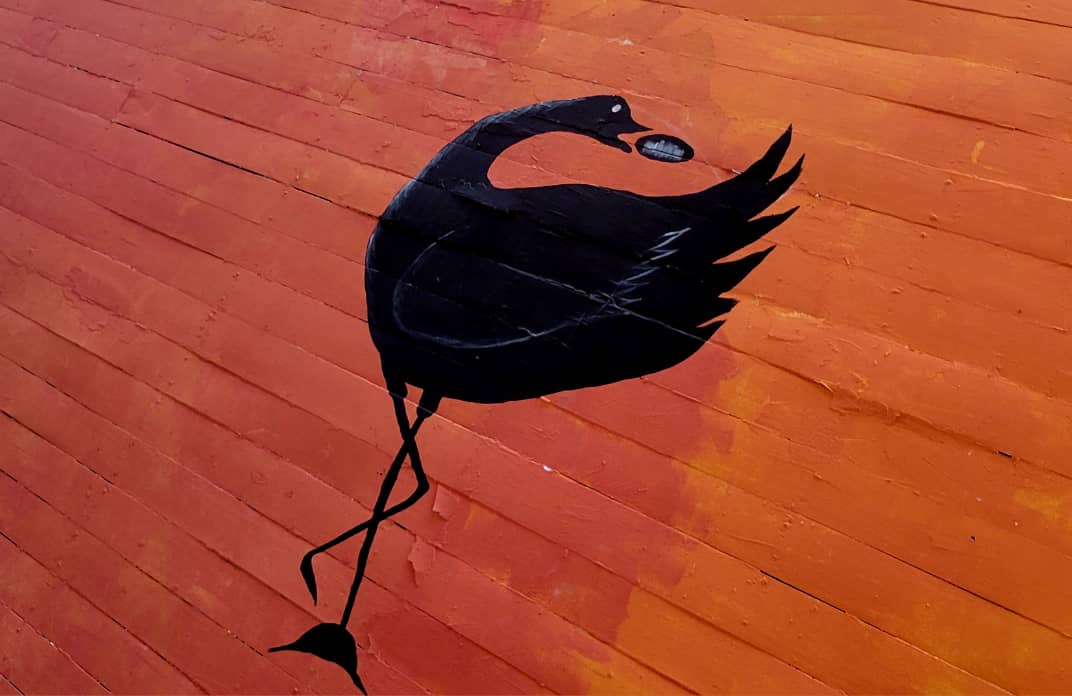
The Sankofa bird, with its feet planted firmly forward and its head turned gracefully backward to pluck a precious egg from its own back, is one of Africa’s most profound and globally resonant visual philosophies. Originating from the Akan people of Ghana, this elegant symbol—often rendered as a stylized bird or a heart-like motif—encapsulates a simple yet revolutionary idea: it is not only permissible but essential to reach back and retrieve the wisdom of the past in order to move forward into the future. In an age of relentless disruption and digital amnesia, the Sankofa bird is no longer just an artifact of West African heritage; it has become a guiding principle for a continent reclaiming its narrative and a global diaspora seeking connection.
- The Akan Genesis: More Than Just a Bird
- The Sankofa Bird in the Crucible of History
- Visual and Artistic Manifestations of the Sankofa Bird
- Practical Wisdom: Applying Sankofa to Modern Life
- The Sankofa Bird in the Diaspora: A Transatlantic Bridge
- Ghana's Golden Future: Looking Back to Move Forward
- Beyond Borders: Sankofa as a Universal Human Value
- The Enduring Power of the Sankofa Bird
To encounter Sankofa is to engage with a civilization that understood the cyclical nature of time and the importance of memory long before the modern self-help movement coined the term “healing.” The word itself comes from the Twi language of the Akan, translating roughly to “it is not taboo to go back and fetch what you forgot.” This is not a nostalgic yearning for a romanticized past, but a pragmatic, actionable directive. It is a call to audit history—both its triumphs and its traumas—and to use that audit as a blueprint for the present.
The Akan Genesis: More Than Just a Bird
The Sankofa bird is the most famous of the Adinkra symbols, a rich visual language created by the Akan peoples of Ghana and Côte d’Ivoire. Adinkra symbols are not merely decorative; they are proverbs, philosophical concepts, and historical records woven into fabric, stamped onto pottery, and carved into architecture. The symbols were traditionally printed on cloth worn during funerals and important ceremonies, but today they adorn everything from high-fashion runways in Accra to the walls of corporate boardrooms in New York.
While the bird is the most recognizable representation, the Sankofa symbol also appears in a second, equally powerful form: a stylized heart shape. In this geometric iteration, the inner curves represent the interconnectedness of the past, present, and future. Both forms communicate the same core value: the necessity of reflection. According to oral tradition, the symbol’s power lies in its duality—it acknowledges that one cannot know where they are going unless they know where they have been. For the Akan, history was not a linear progression but a spiral, where the wisdom of ancestors continually circles back to inform the decisions of the living.
The philosophical weight of Sankofa is deeply embedded in the everyday life of Ghana. It is not an abstract concept reserved for academics; it is a lived reality. When a Ghanaian elder advises a young entrepreneur to consult with the family before making a major decision, they are practicing Sankofa. When a community restores a crumbling colonial-era fort not to celebrate the colonizer, but to memorialize the resilience of those who passed through its doors, they are practicing Sankofa. It is a tool for survival, a mechanism for grounding oneself in a world that often demands rapid, unthinking progress.
The Akan Cosmology of Time
To fully grasp the Sankofa bird, one must understand the Akan perception of time. Unlike the Western linear model—where time is a river flowing inexorably from past to future—the Akan traditionally viewed time as a cyclical and recursive force. The past (Dabere) is not gone; it is a reservoir of experiences that coexists with the present (Seesei). The future (Daakye) is not a blank slate but a space that is shaped by how effectively one mines the past.
This cosmology creates a culture of deep respect for ancestry and elders. The saying, “Sankofa ma yɛn nyinaa,” meaning “we all need to look back,” is a communal call to action. It suggests that progress is a collective endeavor that requires the input of all generations. The bird’s feet facing forward signify that the ultimate goal is motion and advancement, but the backward glance ensures that this advancement is ethical, informed, and rooted.
The Sankofa Bird in the Crucible of History
Ghana’s history has given Sankofa a profound, and often painful, relevance. The transatlantic slave trade, which reached its horrifying peak between the 16th and 19th centuries, turned the Gold Coast into a landscape of trauma. The coastal forts of Cape Coast and Elmina stand as chilling monuments to this era. These UNESCO World Heritage sites, with their “Door of No Return,” are the physical embodiment of what happens when a people are violently severed from their past.
For the millions of Africans who were forcibly taken from the continent, Sankofa was not a symbol of choice but a survival instinct. In the Americas, the Caribbean, and Europe, enslaved Africans created new cultures—from the spirituals of the American South to the Candomblé faith in Brazil and the Kumina traditions in Jamaica—by secretly preserving fragments of their Akan, Ga, and Ewe heritage. They were reaching back, desperately and creatively, to retrieve the spiritual and cultural eggs that would sustain them through the horrors of bondage.
This historical context makes the Sankofa bird a symbol of immense weight. It is not merely a cute proverb; it is a testament to the resilience of the human spirit. When African Americans and other members of the diaspora visit Ghana today, often participating in the “Year of Return” or “Beyond the Return” initiatives, they are engaging in a massive, collective Sankofa act. They are physically walking backward to the forts, touching the dungeons, and then walking forward into a future of reconnection, often taking up citizenship and investing in the local economy.
A Symbol of Repatriation and Healing
The 2019 “Year of Return” marked the 400th anniversary of the first enslaved Africans landing in Jamestown, Virginia. The initiative, spearheaded by the Ghanaian government, was a direct application of the Sankofa philosophy on a national scale. It invited the global African family to return home, to confront the painful past, and to contribute to the nation’s development. The result was a surge in tourism, with over one million visitors arriving that year, including high-profile figures like Idris Elba and Naomi Campbell.
This is Sankofa operating at its most potent level. It transforms the trauma of history into a platform for economic and cultural exchange. The diaspora is not coming as tourists but as stakeholders. They are building schools, funding startups, and creating a new narrative of African unity that bypasses the borders imposed by colonialism. The bird’s glance backward is here a literal look at the forts, but its forward feet are planting seeds for a transnational future.
Visual and Artistic Manifestations of the Sankofa Bird
While the Adinkra cloth is the traditional home of Sankofa, the symbol has transcended its textile origins to become a dominant motif in contemporary African art and design. In Accra’s bustling art districts, such as the Artists Alliance Gallery in La, you will see Sankofa rendered in everything from massive oil paintings to delicate gold jewelry. The symbol has become a shorthand for “African authenticity” in a global market that is increasingly hungry for cultural depth.
Contemporary Ghanaian artists like El Anatsui and Ablade Glover have incorporated Adinkra philosophy into their work, though often in abstract ways. Anatsui’s shimmering installations made from bottle tops and metal scraps speak to the recycling of history—a modern Sankofa where discarded materials are transformed into objects of breathtaking beauty, mirroring how discarded peoples and cultures were forced to rebuild. The aesthetic is global, but the philosophical root is distinctly Akan.
Beyond the visual arts, the Sankofa bird has found its way into literature and film. The late novelist Ayi Kwei Armah, in his masterpiece Two Thousand Seasons, explores the concept of “reciprocity” and the need to reclaim African history from colonial distortion—a literary version of Sankofa. More recently, the symbol has appeared in global cinema and television, often used to signify a character’s journey toward self-discovery. It is a visual cue that instantly communicates a commitment to heritage.
Sankofa in Modern Fashion and Design
The fashion industry in Ghana has embraced Sankofa with vigor. Designers like Osei-Duro and the late Kofi Ansah have blended the Adinkra symbols with contemporary silhouettes, creating garments that are worn on the international stage. The Sankofa bird is often embroidered on lapels or printed on vibrant Ankara fabric, serving as a declaration of identity.
This is not cultural appropriation but cultural assertion. By wearing Sankofa, a young Ghanaian in London or a fashionista in Lagos is making a statement about the validity and power of indigenous knowledge systems. The symbol’s clean lines and geometric elegance translate perfectly into modern aesthetics, proving that ancient wisdom can be stylish and relevant without losing its meaning.
Practical Wisdom: Applying Sankofa to Modern Life
The beauty of the Sankofa bird is its applicability beyond the African context. It offers a universal framework for personal and professional growth. In the West, the concept of “learning from your mistakes” is often shallow, focusing on immediate correction. Sankofa goes deeper, suggesting that our ancestors’ experiences—both biological and cultural—carry lessons that can help us navigate current crises.
In the corporate world, management consultants are increasingly looking toward indigenous models of leadership. The Sankofa principle is being used to encourage companies to audit their institutional histories, to understand why certain biases exist, and to recover the foundational values that may have been lost during rapid scaling. It is a model of “regenerative leadership” that contrasts sharply with the “disruptive innovation” mantra of Silicon Valley.
Here are a few practical ways the Sankofa principle is being applied in contemporary settings:
- In Education: Curriculum reforms in Ghana and across the diaspora are pushing to include pre-colonial African history, mathematics, and science, ensuring students know the contributions of empires like Ghana, Mali, and Songhai before learning about colonial intervention.
- In Mental Health: Psychologists are using the Sankofa concept in therapy to help patients of African descent process intergenerational trauma, recognizing that healing often requires understanding the historical roots of family dysfunction.
- In Urban Planning: Architects in cities like Kumasi are integrating traditional compound housing designs—which foster community interaction—into modern developments, fighting the isolation of Western-style gated communities.
- In Technology: Tech startups in Accra’s “Silicon Lagoon” are digitizing Adinkra symbols and oral histories, creating apps that teach Akan languages and preserve folklore for future generations.
The application of Sankofa is not about living in the past; it is about using the past as a resource. It is a deeply pragmatic philosophy that rejects the notion that “new” always means “better.” It asks us to consider the cost of forgetting.
| Domain | Traditional Sankofa Application | Modern Sankofa Application |
|---|---|---|
| Governance | Council of Elders advising the chief on decisions based on historical precedent. | National reconciliation committees (like Ghana’s) using truth-telling to heal post-conflict societies. |
| Economy | Passing down trade skills and guild knowledge from master to apprentice. | Diaspora investment funds that specifically finance heritage tourism and cultural preservation projects. |
| Health | Use of herbal remedies and traditional birth attendants. | Integrative medicine clinics that combine pharmacognosy (study of medicines from plants) with modern clinical trials to validate and use indigenous botanicals. |
| Spirituality | Libation pouring and honoring of ancestors during festivals like Odwira. | Pan-African spiritual retreats held at sacred sites, reconnecting the diaspora with traditional cosmology. |
The Sankofa Bird in the Diaspora: A Transatlantic Bridge
The Sankofa bird has become one of the most powerful symbols of the African diaspora. It appears in the logos of cultural institutions like the Smithsonian National Museum of African Art and in the regalia of Black fraternal organizations. For a people whose history was systematically erased during slavery, Sankofa offers a roadmap for reconstruction. It asserts that despite the Middle Passage, despite the loss of language and family names, the “egg” of cultural memory was never entirely destroyed.
In the United States, the symbol resonates deeply within the context of the Black Lives Matter movement and the push for reparative justice. Activists argue that America, as a nation, must perform its own Sankofa—acknowledging the foundational sins of slavery and segregation to build a truly equitable future. The symbol has been sighted at protests, woven into the hats of Black cowboys in Philadelphia, and tattooed on the arms of college students. It represents a refusal to “move on” without first achieving a truthful accounting of history.
This transatlantic dialogue is a two-way street. While the diaspora looks to Ghana for roots, Ghana looks to the diaspora for resources and global connectivity. The Sankofa bird is the emblem of this mutual exchange. It validates the diaspora’s desire to return while also affirming the importance of the homeland in the global Black imagination. It is a symbol that acknowledges the pain of separation while celebrating the potential of reunion.
Literary and Academic Echoes
Academics have adopted Sankofa as a methodological tool. In the field of Africana Studies, the “Sankofa paradigm” is used to analyze contemporary issues through the lens of African-derived knowledge, rather than solely through Eurocentric frameworks. Scholars like Dr. Molefi Kete Asante have championed Afrocentricity, which aligns closely with the Sankofa principle, arguing that African people must view themselves as subjects of history, not merely objects of it.
This academic rigor ensures that the Sankofa bird is not reduced to a mere “motivational poster” aesthetic. It is a serious epistemological stance—a way of knowing that validates oral tradition, community memory, and spiritual insight as legitimate sources of data. In literature, authors like Chimamanda Ngozi Adichie and Yaa Gyasi explore these themes, with Gyasi’s novel Homegoing serving as a perfect literary embodiment of Sankofa, tracing the lineage of two sisters from Ghana through centuries of slavery and freedom, showing how the past lives on in the present.
Ghana’s Golden Future: Looking Back to Move Forward
As Ghana celebrates its history as the first sub-Saharan African nation to gain independence from colonial rule in 1957, the Sankofa bird remains the nation’s philosophical compass. Under the leadership of Kwame Nkrumah, the country’s first president, there was a conscious effort to build a modern state that was still rooted in African identity. Nkrumah understood the Sankofa principle intuitively; he looked back to the great empires of Africa to inspire his vision of a united, industrialized continent.
Today, Ghana is a vibrant democracy with a rapidly growing economy, driven by gold, cocoa, and increasingly, oil and technology. The nation is simultaneously undergoing a cultural renaissance. The restoration of the Manhyia Palace Museum in Kumasi, the seat of the Asantehene, is a Sankofa act of the highest order. It preserves the regalia and history of the Asante Kingdom, which fiercely resisted British colonization, reminding Ghanaians and visitors of the sophisticated political systems that existed before the scramble for Africa.
The symbol also influences policy around national development. The “Ghana Beyond Aid” agenda, championed by President Nana Akufo-Addo, is a forward-looking vision that explicitly draws on the self-sufficiency and entrepreneurial spirit of pre-colonial Ghana. The goal is to build an economy that does not rely on foreign charity but on the internal resources and ingenuity of its people—a modern application of the Akan principle of Biako ye (self-reliance).
Festivals and the Living Tradition
To see the Sankofa bird in its most organic state, one must attend a traditional festival. During the Aboakyer Festival of the Effutu people in Winneba or the Damba Festival in the north, you witness a society actively performing its history. Drumming, dancing, and the retelling of epic myths are all Sankofa in action—they are the retrieval of the egg of identity.
These festivals are not static museum pieces. They are dynamic, incorporating modern elements while maintaining ancient core rituals. They attract tourists, yes, but they are primarily for the community itself—a time to reset, to remember, and to recommit to shared values. In this sense, Sankofa is a communal practice that strengthens social cohesion in a rapidly changing world.
Beyond Borders: Sankofa as a Universal Human Value
While the Sankofa bird is distinctly Ghanaian, its message is universal. Every culture has its version of this wisdom—the Japanese concept of Kintsugi, where broken pottery is repaired with gold, celebrating the history of the break rather than hiding it; the Ubuntu philosophy of Southern Africa, which emphasizes interconnectedness. However, Sankofa offers a unique visual metaphor that is immediately accessible: the bird with the egg. It teaches us that we carry our history on our backs; we cannot escape it, so we must use it.
In a globalized world facing climate crisis, political polarization, and technological upheaval, the impulse is to look forward for solutions. Yet, Sankofa reminds us that many of the answers we seek lie in the wisdom of our ancestors. Indigenous farming techniques that preserve soil health, communal governance models that ensure no one is left behind, and architectural designs that work with the climate rather than against it—these are all “eggs” waiting to be retrieved.
The symbol is a gentle rebuke to the arrogance of the present. It suggests that we do not have all the answers and that humility in the face of history is a strength, not a weakness. To embrace Sankofa is to accept that we are part of a continuum, responsible to both those who came before us and those who will come after.
The Enduring Power of the Sankofa Bird
The Sankofa bird is far more than a decorative stamp on a piece of cloth. It is a sophisticated philosophical system, a historical survival tool, and a guide for future innovation. From the royal courts of the Asante Kingdom to the bustling streets of modern Accra, and across the Atlantic to the neighborhoods of Harlem and Brixton, the symbol continues to speak to the human condition.
It challenges the modern obsession with speed and novelty, insisting that the best way to navigate the future is to understand the foundations upon which we stand. For Ghanaians, it is a source of immense pride—a reminder that their ancestors possessed great wisdom. For the diaspora, it is a lifeline—a bridge across the dark waters of the Middle Passage. And for the rest of the world, it is an invitation to reconsider the relationship between memory and progress.
As you move forward in your own life, consider the Sankofa bird. Look at your own history—your family, your culture, your failures, and your joys. What eggs are you carrying on your back that you have yet to acknowledge? What wisdom from your past could illuminate your path ahead? The bird does not fly backward; it stands firm and turns its head. It is a posture of balance and courage. In a world that often feels unmoored, Sankofa offers a way to anchor ourselves without being trapped, to honor the past without being imprisoned by it. That is the true gift of this ancient Akan symbol—the wisdom to know that our future is found, in part, in our past.