📅 Last updated: 19.10.2026
The Great Zimbabwe ruins stand as the largest stone structures in sub-Saharan Africa, a sprawling complex of granite walls and towers built between the 11th and 15th centuries by the ancestors of the Shona people. Long misrepresented by colonial-era writers who refused to credit African builders, the site is now recognised as the capital of a powerful trading kingdom that exchanged gold and ivory with merchants from as far away as China and Persia.
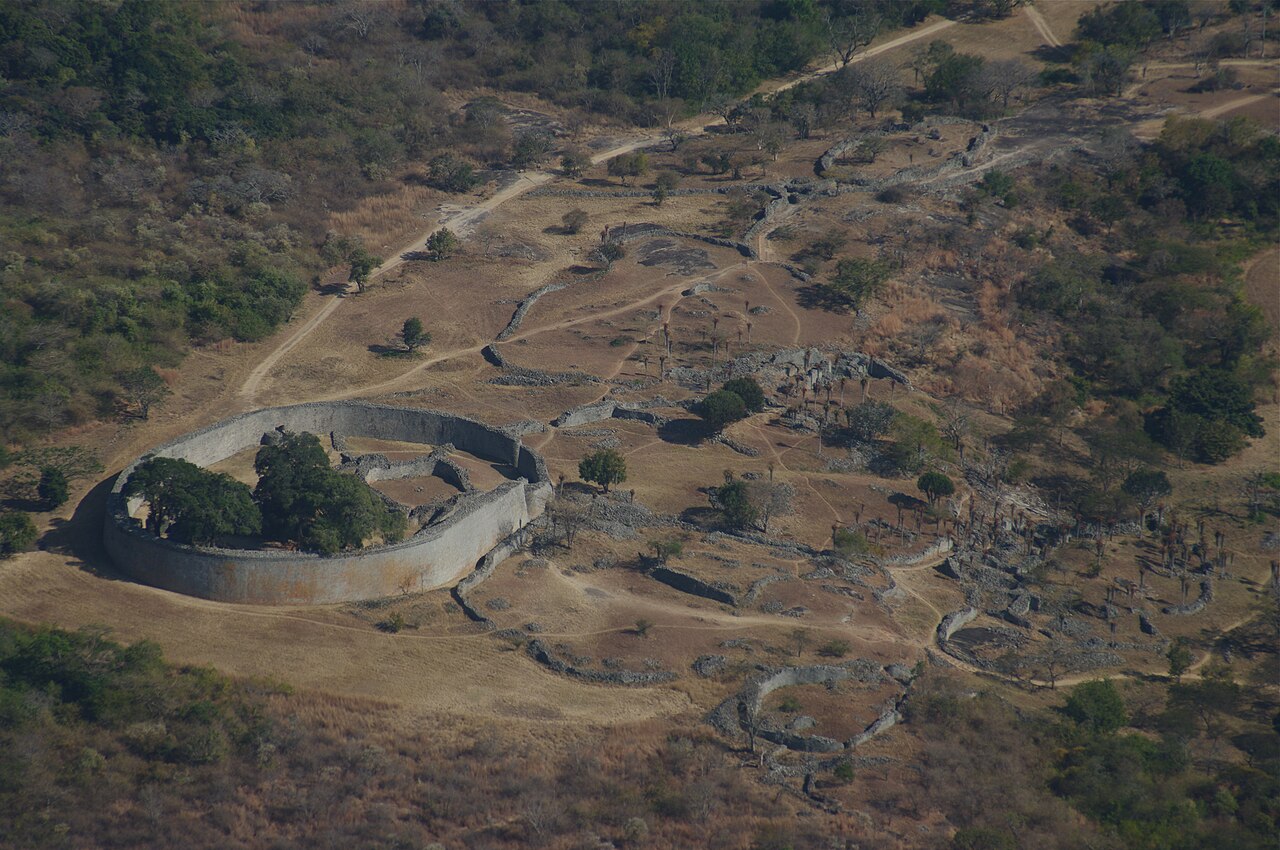
The Great Zimbabwe ruins are the remains of a medieval city in southeastern Zimbabwe that served as the capital of the Kingdom of Zimbabwe from roughly 1100 to 1450 CE. The site covers about 720 hectares and includes the Hill Complex, the Great Enclosure, and the Valley Ruins, all built from dry-stone granite walls without mortar. It was a major trading hub connected to Indian Ocean commerce, and it gave the modern nation of Zimbabwe its name.
- What Are the Great Zimbabwe Ruins and Where Do They Stand?
- Who Built the Great Zimbabwe Ruins — and When?
- How Were the Great Zimbabwe Ruins Engineered Without Mortar?
- What Was Life Like in the Kingdom of Great Zimbabwe?
- Why Do the Great Zimbabwe Ruins Matter Today?
- How Can Visitors Experience the Great Zimbabwe Ruins?
- What Remains Unresolved About the Great Zimbabwe Ruins?
- The Great Zimbabwe Ruins: A Legacy Set in Stone
What Are the Great Zimbabwe Ruins and Where Do They Stand?
The ruins sit about 30 kilometres southeast of Masvingo, in the granite-rich highlands of southeastern Zimbabwe, near the shores of Lake Mutirikwi. The name “Zimbabwe” itself comes from the Shona words dzimba dza mabwe, meaning “houses of stone” — a phrase that appears in variations across several Shona dialects. The modern nation adopted the name at independence in 1980, a deliberate reclaiming of a precolonial heritage that colonial Rhodesia had spent decades trying to deny.
The site is vast. Roughly 720 hectares are protected within the Great Zimbabwe National Monument, and the standing walls represent only a fraction of what once existed. Archaeologists estimate that the full settlement may have housed up to 18,000 people at its peak — a city comparable in scale to many contemporary European urban centres. The granite used in construction was quarried locally and shaped by heating and rapid cooling, a technique that caused the stone to fracture along natural planes.
The Three Main Zones
The monument is conventionally divided into three areas, each with distinct architecture and likely function:
- The Hill Complex: The oldest section, perched on a granite outcrop rising about 80 metres above the valley. Its narrow passages and elaborate walls suggest a royal or ritual centre, possibly reserved for the king and religious specialists.
- The Great Enclosure: The largest single ancient structure in sub-Saharan Africa, with outer walls reaching 11 metres high and 5 metres thick in places. Inside stands the famous Conical Tower, a solid granite cone about 10 metres tall.
- The Valley Ruins: A scatter of smaller walled enclosures where most of the city’s ordinary residents likely lived and worked.
Who Built the Great Zimbabwe Ruins — and When?
The builders were ancestors of the Shona-speaking peoples, specifically the Gokomere and later the Karanga, who developed the Zimbabwe culture across the plateau between the Limpopo and Zambezi rivers. Construction began around 1100 CE and continued in phases for roughly three centuries, with the Great Enclosure reaching its final form by the 14th century.
Archaeological evidence is unambiguous. Excavations by David Randall-MacIver in 1905, followed by Gertrude Caton-Thompson in 1929, uncovered locally made pottery, iron tools, and soapstone carvings consistent with Shona material culture. Caton-Thompson, a British archaeologist, concluded firmly that the ruins were “of African origin and built by Africans” — a finding that contradicted the prevailing colonial narrative and made her unpopular with Rhodesian authorities.
The Colonial Denial and Its Undoing
For decades, white Rhodesian governments promoted the myth that the ruins were built by Phoenicians, Arabs, or the Queen of Sheba. The 1905 Rhodesia Ancient Ruins Company even looted the site for gold and sold artefacts abroad. It was not until Zimbabwe’s independence in 1980 that serious state investment in research and conservation resumed. In 1986, UNESCO inscribed the Great Zimbabwe ruins as a World Heritage Site, citing their outstanding universal value.
| Period | Key Development | Approximate Dates |
|---|---|---|
| Early settlement | First stone walls on the Hill Complex; small farming community | c. 1100–1200 CE |
| Rise of the kingdom | Great Enclosure begun; trade in gold and ivory expands | c. 1200–1350 CE |
| Peak population | City reaches up to 18,000 residents; extensive valley settlement | c. 1350–1450 CE |
| Decline and abandonment | Trade routes shift; population disperses to Mutapa and other centres | c. 1450–1550 CE |
| Colonial looting | Rhodesia Ancient Ruins Company plunders site for gold | 1905 |
| World Heritage listing | UNESCO recognises the site; conservation and research expand | 1986 |
How Were the Great Zimbabwe Ruins Engineered Without Mortar?
The walls of Great Zimbabwe are dry-stone constructions — granite blocks fitted together without any binding material. This is not a primitive technique but a sophisticated one. The stability comes from careful shaping: blocks were cut to interlock, and the walls were built with a slight inward lean that uses gravity to hold the structure together. The Great Enclosure’s outer wall, for instance, curves in a gentle ellipse about 250 metres in circumference, and its height varies from 7 to 11 metres.
The Conical Tower inside the Great Enclosure has puzzled researchers for over a century. It is solid, not hollow, and appears to have had no practical function. Some scholars link it to grain storage symbolism, others to royal power or fertility rituals. Shona oral tradition connects such structures to the mbira and to ceremonies honouring ancestral spirits, but no single interpretation has been proven.
The Chequerboard and Herringbone Patterns
Certain walls feature decorative stonework — chequerboard patterns, herringbone courses, and rows of projecting stones called daga — that serve no structural purpose. These details suggest that the builders were not merely practical engineers but artists working within a shared aesthetic tradition. Similar patterns appear at smaller Zimbabwe-culture sites such as Khami and Mapungubwe, indicating a regional style.
What Was Life Like in the Kingdom of Great Zimbabwe?
At its height, the city was a cosmopolitan trading centre. Excavations have yielded Chinese celadon pottery, Persian faience, Arab glass beads, and coins from the Kilwa Sultanate on the East African coast. In return, the kingdom exported gold from the plateau’s mines, ivory from elephants, and possibly copper and iron. The trade routes ran eastward to the port of Sofala, where Swahili merchants connected the interior to the Indian Ocean world.
The economy rested on cattle herding, agriculture (millet, sorghum, and later maize after the Columbian exchange), and gold mining. Soapstone birds — eight of which were found at the site and are now national symbols appearing on Zimbabwe’s flag and currency — likely had religious significance. The birds are carved with human features and may represent messengers between the living and the ancestral spirits.
Social Structure and the King
Shona oral traditions describe a ruler known as the Mambo, supported by a council of elders and a class of ritual specialists. The Hill Complex’s restricted access and the Great Enclosure’s monumental scale suggest a society with clear hierarchies. Commoners likely lived in daga (clay) houses with thatched roofs in the valley, while the elite occupied the stone enclosures. The city’s decline around 1450 is often linked to overpopulation, environmental degradation, and the shifting of trade routes northward to the Mutapa Empire.
Why Do the Great Zimbabwe Ruins Matter Today?
The Great Zimbabwe ruins are more than an archaeological site. They are a physical rebuttal to the colonial lie that sub-Saharan Africa produced no monumental architecture. For Zimbabweans, the ruins are a source of national pride and a symbol of precolonial achievement. The soapstone bird appears on the national flag, and the site’s name is embedded in the country’s identity.
Conservation remains a challenge. The site faces pressures from tourism, vegetation growth, and the effects of climate change on the granite. The Great Zimbabwe National Monument is managed by the National Museums and Monuments of Zimbabwe, which works with UNESCO and international partners on preservation. Local communities around Masvingo are increasingly involved in tourism enterprises, though benefits are unevenly distributed.
How Can Visitors Experience the Great Zimbabwe Ruins?
The site is open to visitors year-round and is accessible by road from Masvingo, about 30 kilometres away. Guided tours are available, and the on-site museum provides context on the Shona civilization and the colonial-era looting. The best time to visit is during the dry season, from May to October, when paths are clear and the granite walls catch the low sun.
- Start at the museum: It explains the site’s chronology and displays artefacts, including replicas of the soapstone birds.
- Climb the Hill Complex first: The ascent is steep but rewards with panoramic views and a sense of the site’s defensive logic.
- Allow a full day: The Valley Ruins and Great Enclosure deserve unhurried exploration.
- Hire a local guide: Shona guides offer oral traditions and interpretations that written sources often miss.
What Remains Unresolved About the Great Zimbabwe Ruins?
Despite over a century of research, key questions persist. The exact function of the Conical Tower, the reasons for the city’s abandonment, and the precise relationship between Great Zimbabwe and earlier sites like Mapungubwe remain debated. New technologies — LiDAR mapping, isotope analysis of artefacts, and DNA studies of local populations — are gradually filling gaps, but funding for African archaeology remains limited compared to European or Middle Eastern sites.
What is not in doubt is the achievement itself. The Great Zimbabwe ruins demonstrate that medieval Africans engineered complex structures, managed long-distance trade, and built a city of thousands — all without written records, mortar, or the wheel. That is a legacy worth celebrating, and one that the modern world is only beginning to fully acknowledge.
The Great Zimbabwe Ruins: A Legacy Set in Stone
The Great Zimbabwe ruins endure as a reminder that African history is not a footnote to other histories but a central chapter in human achievement. The walls that once enclosed a thriving kingdom now stand as silent witnesses to a civilization that traded with the world, built with genius, and left behind a name that a nation still carries. To walk among those granite walls is to step into a story that colonial writers tried to erase — and that Zimbabweans, and the world, have reclaimed.