📅 Last updated: 21.10.2026
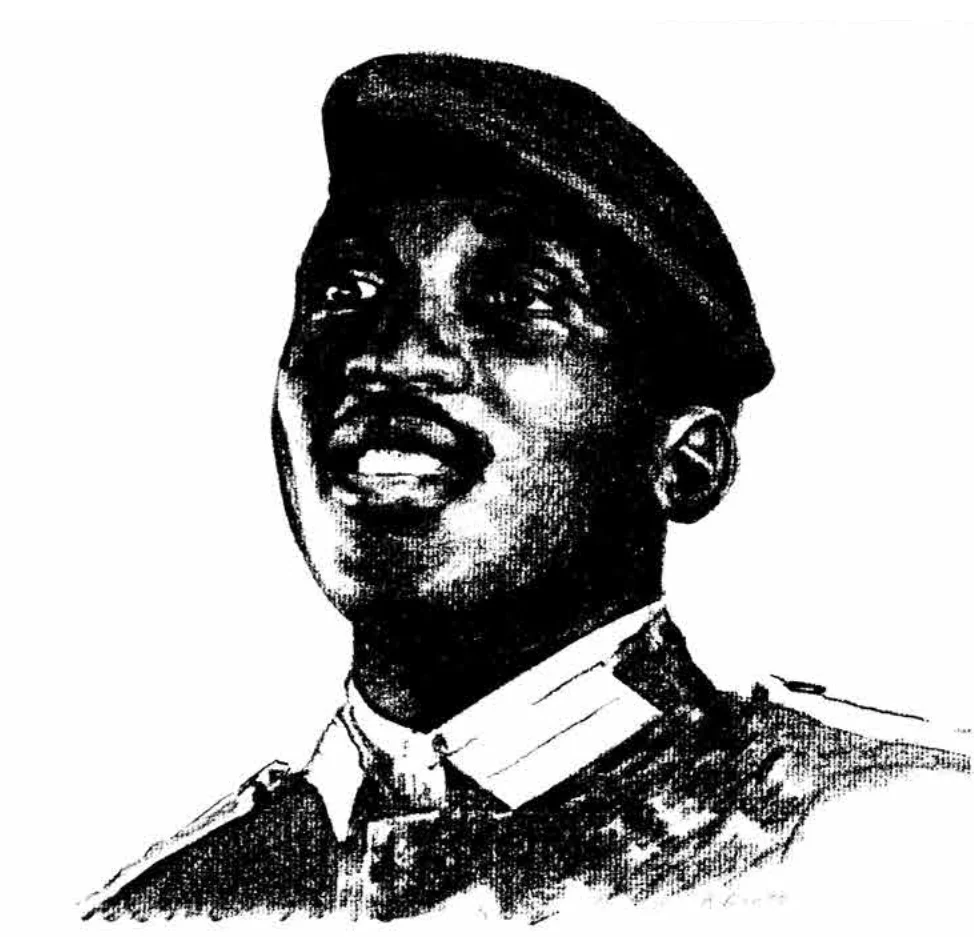
Thomas Sankara remains one of the most electrifying figures in modern African history — a soldier who seized power in a poor, landlocked West African nation and spent four years trying to rebuild it from the ground up. Between 1983 and 1987, the man his people called “Africa’s Che Guevara” renamed his country Burkina Faso, “the land of upright people,” and pushed a radical program of self-reliance, women’s emancipation, and anti-imperialism. He was gunned down at 38, yet his ideas outlived the bullets.
Thomas Sankara was a Burkinabè military officer and Marxist revolutionary who ruled Upper Volta (renamed Burkina Faso in 1984) as president from August 1983 until his assassination on 15 October 1987. In just four years he launched mass vaccination drives, nationwide literacy campaigns, anti-corruption tribunals, and landmark policies on women’s rights and debt refusal. He was killed in a coup that brought Blaise Compaoré to power, and a Burkinabè court convicted Compaoré in absentia in 2022 for his role in the killing.
- Who Was Thomas Sankara Before He Became President?
- How Did Thomas Sankara Come to Power in 1983?
- What Did Thomas Sankara's Revolution Actually Change?
- Why Did Thomas Sankara's Anti-Debt Stance Resonate Across Africa?
- How Did Thomas Sankara Die — and What Happened to His Killers?
- What Does Thomas Sankara's Legacy Look Like in Burkina Faso Today?
- Why Does Thomas Sankara Still Matter Beyond Burkina Faso?
- What Can Today's Leaders Learn From Thomas Sankara?
- The Lasting Perspective: A Revolution Measured in Ideas
Who Was Thomas Sankara Before He Became President?
Sankara was born on 21 December 1949 in Yako, a small town in the north of what was then Upper Volta, a French colony until 1960. His father was a gendarme, and the family moved around the country as he was posted. Sankara was a gifted student who could have pursued almost anything; he chose the military academy at Kadiogo, then continued his training in Madagascar and later in France, where he studied at the military school in Antibes.
Those years abroad sharpened his politics. In Madagascar in the early 1970s he witnessed the student and nationalist uprisings against the neocolonial order, and in France he read widely in Marxist theory. He returned home a decorated officer — he had fought with distinction when Upper Volta briefly went to war with Mali over the Agacher Strip in 1974 — but also a convinced revolutionary. By the late 1970s he had become a public figure, famous for playing guitar in a band and for speaking bluntly about the corruption of the ruling elite.
Upper Volta in that era was a byword for instability. Between independence in 1960 and Sankara’s own rise in 1983, the country endured a rotating cast of coups, weak civilian governments, and military juntas. Drought and desertification were pushing the Sahel toward famine. Sankara’s answer was not more foreign aid pledges but a break with the system that produced the crisis.
How Did Thomas Sankara Come to Power in 1983?
Sankara first entered government in 1981 as Minister of Information in a military-led administration. He resigned within months rather than defend the regime’s censorship, a gesture that made him enormously popular. In 1982 a new coup brought the left-leaning Conseil de Salut du Peuple to power, with Sankara as Prime Minister — and within weeks he was arrested and jailed by rivals who feared his radicalism. The episode turned him into a symbol.
On 4 August 1983, a group of soldiers loyal to Sankara — including his close comrade Blaise Compaoré — stormed the capital Ouagadougou and freed him. Sankara took power at the head of the Conseil National de la Révolution (CNR). He was 33 years old.
His first acts set the tone. He sold off the government’s fleet of Mercedes-Benz cars and replaced them with modest Renault 5s. He cut his own salary and those of senior officials. He declared that public servants would be required to declare their assets. On the first anniversary of the revolution, he renamed the country Burkina Faso, drawing on the Mooré and Dioula languages to mean “land of upright people,” and gave its citizens a new identity as Burkinabè.
What Did Thomas Sankara’s Revolution Actually Change?
The CNR’s program was ambitious to the point of audacity, and much of it was carried out through mass mobilization rather than through a large state bureaucracy. Sankara understood that a country with a tiny formal economy and a largely rural population could not be transformed by decree from Ouagadougou. So he built a structure of Comités de Défense de la Révolution (CDRs) in villages and neighborhoods, and used them to organize labor, distribute supplies, and spread the government’s message.
Health, Education, and the “Battle for the Countryside”
In 1985, with support from Cuban doctors and the WHO, Burkina Faso ran one of the most successful mass vaccination campaigns Africa had seen. Roughly 2.5 million children were immunized against measles, meningitis, and yellow fever in about two weeks. Infant mortality fell sharply. A national literacy campaign — “Operation Bantaaré” — sent students and civil servants into villages to teach reading and writing in local languages; adult literacy rose from a low single-digit percentage to roughly 13 percent by 1986, and school enrollment climbed substantially.
Sankara also pushed through land reform, distributed land to peasants, and launched a “battle for the countryside” that included planting trees to slow the southward creep of the Sahara. Under his government, Burkina Faso planted millions of seedlings in a single rainy season, and he personally took part in tree-planting drives.
Women’s Rights as a Cornerstone
Sankara’s record on gender was ahead of its time for any government, let alone a military regime in 1980s West Africa. His government banned forced marriage, female genital cutting, and polygamy (at least in principle), and campaigned against the practice of dowries. He appointed women to senior posts, encouraged them to join the army and police, and made 8 March — International Women’s Day — a public holiday in Burkina Faso. In a famous 1987 speech he asked why men should speak on behalf of women, and said: “There is no true revolution without the emancipation of women.”
Anti-Corruption and Austerity
In 1987 Sankara convened a “tribunal of the people” that tried and punished senior officials and businessmen for corruption and embezzlement. He publicly declared that the revolution’s enemies were not only foreign powers but also the “greedy” at home. His own lifestyle was famously austere: he lived in a modest house, drove an ordinary car, and owned little more than his uniform and a few instruments.
Why Did Thomas Sankara’s Anti-Debt Stance Resonate Across Africa?
At the Organisation of African Unity summit in Addis Ababa in July 1987, Sankara delivered a speech that crystallized a generation’s frustration. He argued that Africa’s debt was a colonial inheritance, contracted by elites who no longer held power and often squandered on arms or personal enrichment. “Debt is a cleverly managed reconquest of Africa,” he said, and called on the continent to refuse to repay. “Those who led us into debt were gambling, as if they were in a casino.”
The speech did not change the debt regime — the Bretton Woods institutions and Western creditors continued to dictate terms across the continent — but it gave language to an argument that still animates African political debate today. Sankara was also a vocal opponent of apartheid South Africa and of French military influence in West Africa, and he supported liberation movements in Namibia and beyond. His foreign policy was non-aligned but unmistakably Pan-African: he hosted leaders from across the continent, and his speeches were reprinted in newspapers from Dakar to Dar es Salaam.
How Did Thomas Sankara Die — and What Happened to His Killers?
On 15 October 1987, Sankara was killed by a group of soldiers at the headquarters of the CNR in Ouagadougou. His body was buried hastily in a grave the family was not allowed to inspect. The coup brought Blaise Compaoré — his former comrade and best man at his wedding — to power. Compaoré ruled Burkina Faso for 27 years, reversed many of Sankara’s policies, and cultivated close ties with France and with Western donors.
For decades the assassination was officially described as an accident or a “tragic misunderstanding.” That changed with the fall of Compaoré in 2014, after mass protests against his attempt to amend the constitution and extend his rule. In 2015 Sankara’s remains were exhumed; a forensic report found his body riddled with bullets, contradicting the old official story. A trial opened in 2021, and in April 2022 a military court in Ouagadougou convicted Compaoré in absentia and sentenced him to life imprisonment for complicity in the murder. Two former commanders, Gilbert Diendéré and Hyacinthe Kafando, were also convicted. Compaoré, who had fled to Côte d’Ivoire, has never returned to face the sentence.
| Date | Event | Significance |
|---|---|---|
| 21 December 1949 | Born in Yako, Upper Volta | Son of a gendarme; later trained in Madagascar and France |
| 4 August 1983 | Seizes power in a coup | Founds the Conseil National de la Révolution at age 33 |
| 4 August 1984 | Country renamed Burkina Faso | “Land of upright people”; citizens become Burkinabè |
| 1985 | Mass vaccination campaign | Roughly 2.5 million children immunized in about two weeks |
| July 1987 | OAU debt speech in Addis Ababa | Calls on Africa to refuse to repay “odious” debt |
| 15 October 1987 | Assassinated in Ouagadougou | Blaise Compaoré takes power; rules for 27 years |
| April 2022 | Compaoré convicted in absentia | Life sentence for complicity in the murder |
What Does Thomas Sankara’s Legacy Look Like in Burkina Faso Today?
Walk through Ouagadougou and you will find his face on murals, T-shirts, and the walls of university buildings. His speeches circulate on YouTube and TikTok, often remixed for a new generation. In a country that has endured a brutal jihadist insurgency since 2015 and two coups in 2022, Sankara’s memory is invoked by everyone from student activists to army officers — sometimes to very different ends.
The current military government of Captain Ibrahim Traoré, who took power in September 2022, has publicly claimed Sankara’s mantle, borrowing his rhetoric on sovereignty and anti-imperialism and even his signature red beret. Whether that borrowing is sincere or opportunistic is a live debate in Ouagadougou. What is not in doubt is Sankara’s cultural reach: his image appears alongside Che Guevara and Patrice Lumumba in Pan-African iconography, and his speeches are quoted in classrooms from Accra to Nairobi.
The Unfinished Business
Sankara’s revolution was never consolidated. Many of its gains were reversed under Compaoré, and the country’s structural problems — dependence on cotton and gold exports, vulnerability to drought, weak institutions — remain. Some of Sankara’s methods were also harsh: the CDRs sometimes operated as informal enforcers, political opponents were detained, and the “people’s tribunals” raised questions about due process. A clear-eyed assessment has to hold both truths: the man was a genuine visionary, and his government was not a liberal democracy.
Why Does Thomas Sankara Still Matter Beyond Burkina Faso?
Few African leaders of the post-independence era are quoted as often as Sankara, and few are as widely claimed across ideological lines. For the left, he is the proof that an African government could pursue a genuinely redistributive program. For Pan-Africanists, he is the clearest voice of the argument that the continent’s problems are political, not cultural. For young activists, he is a model of integrity in public life — a leader who refused the trappings of office and spoke in plain language about power.
His most quoted lines have become part of the continent’s political vocabulary:
- “He who feeds you, controls you.”
- “You cannot carry out fundamental change without a certain amount of madness.”
- “While revolutionaries as individuals can be murdered, you cannot kill ideas.”
- “Debt is a cleverly managed reconquest of Africa.”
Those lines travel because they describe problems that have not gone away. The debt debate Sankara opened in 1987 is still being fought in the corridors of the IMF and the African Union. The struggle for women’s equality he championed remains unfinished across the continent. The question of whether African governments can chart an independent course in a world of great-power competition is as urgent as it was in the 1980s.
What Can Today’s Leaders Learn From Thomas Sankara?
Strip away the mythology and Sankara’s method was surprisingly practical. He focused on things a poor state could actually do: vaccinate children, teach adults to read, plant trees, cut the perks of the elite, and speak directly to citizens in their own languages. He understood that legitimacy comes from visible sacrifice by those in power, which is why the sold Mercedes and the modest Renault mattered as much as any policy paper.
He also understood the limits of his position. Burkina Faso was small, landlocked, and poor; Sankara could not break the structural constraints imposed by the global economy, and his confrontational style made enemies at home and abroad. The lesson is not that charisma and conviction are enough. It is that a government can choose to spend its limited resources on its poorest citizens rather than on its most powerful ones — and that choice, made visibly and consistently, can outlast the leader who made it.
In October 1987, Sankara was 38 years old. He had been in power for four years and one month. The brevity is part of the story: a life cut short leaves room for projection, and every generation finds in him what it needs. But the concrete record — the vaccinations, the literacy campaigns, the renamed country, the debt speech, the trial that finally named his killers — is specific enough to resist nostalgia. Thomas Sankara built something real in four years, and the struggle over what it meant is still being waged in the streets of Ouagadougou and the councils of the world.
The Lasting Perspective: A Revolution Measured in Ideas
Revolutions are usually judged by what they leave behind in institutions, and by that measure Sankara’s was fragile. But there is another measure: the vocabulary a society uses to talk about itself. Before 1983, Upper Volta was a byword for coups and poverty. After Sankara, Burkina Faso had a name that asserted dignity, a citizenry with a shared identity, and a leader whose speeches are still quoted when Africans argue about debt, sovereignty, and equality. That is a rare kind of inheritance. It does not belong to a party or a government; it belongs to anyone who picks up the argument where he left it. And in a continent of young, connected, impatient populations, that argument is being picked up again.