📅 Last updated: 07.09.2026
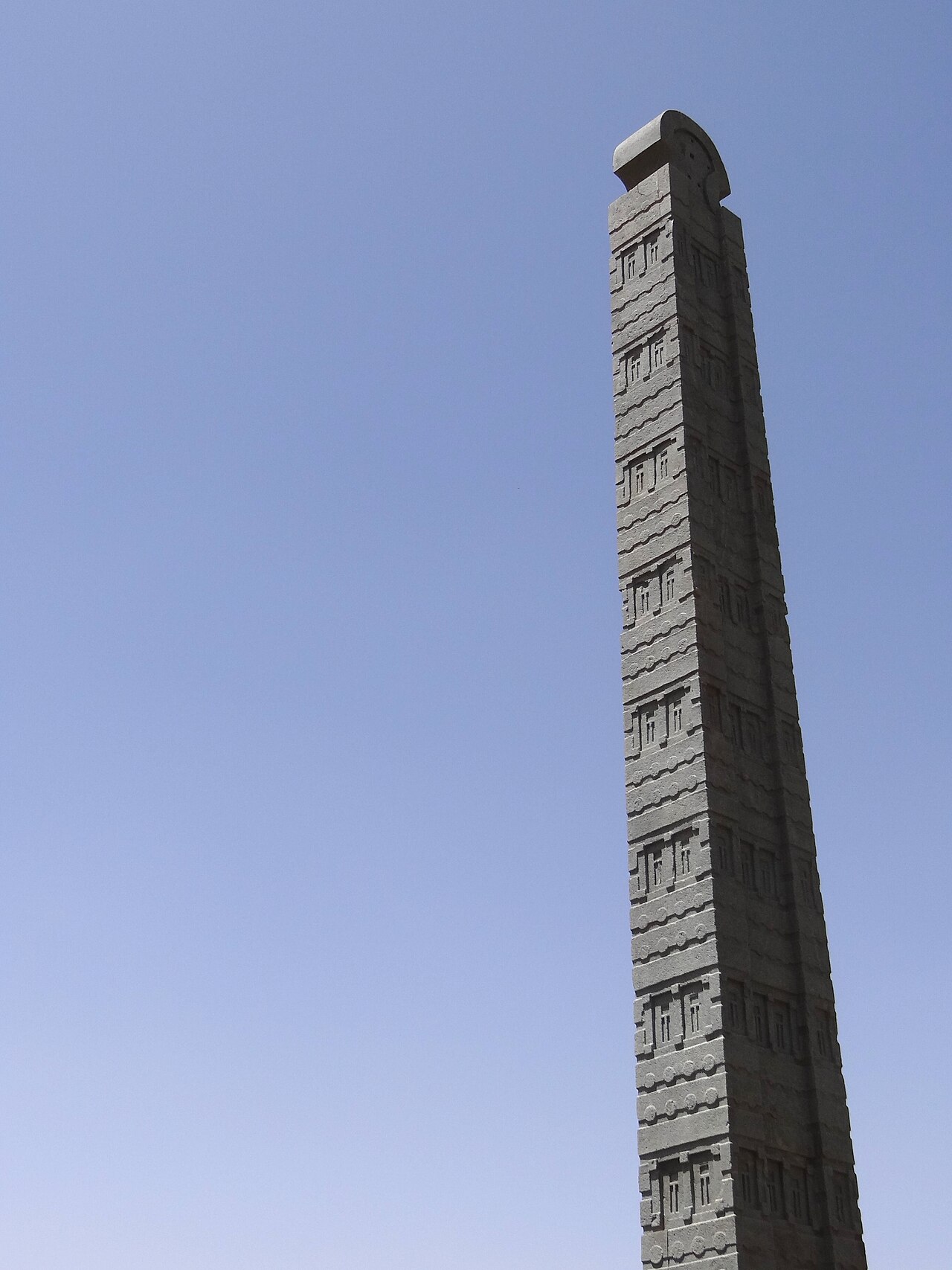
Standing on the windswept Adwa plateau in northern Ethiopia, where granite monoliths pierce a sky of impossible blue, you’re confronted by the most enduring monument to the Aksumite Empire: a 1,700-year-old obelisk weighing 160 tonnes, carved from a single block of nepheline syenite and rising 24 metres into the air. It’s a sight that stops you mid-breath, not merely for its engineering audacity but for what it represents — a civilisation that once commanded the trade routes between the Roman world and the Indian Ocean, minted its own gold currency when much of Europe was bartering in the Dark Ages, and claimed the Ark of the Covenant as its most sacred treasure. The Aksumite Empire wasn’t a footnote in African history; for nearly a millennium, it was the pivot upon which the ancient world’s commerce turned.
- The Rise of a Red Sea Superpower
- Kings, Conquests, and the Throne of the World
- Trade Routes, Ivory, and the Global Economy
- Society, Culture, and the Aksumite Way of Life
- Decline: The Unravelling of a Trade Empire
- The Aksumite Legacy in Modern Ethiopia
- Why the Aksumite Empire Matters Today
- Reflections: The Stones Still Speak
The Rise of a Red Sea Superpower
The story begins not with conquest but with geography. By the first century CE, the port of Adulis, on the Red Sea coast of what is now Eritrea, had become the terminus of a vast trading network. Caravans laden with ivory, frankincense, myrrh, and gold dust descended from the Ethiopian highlands, while dhows and Greek merchant vessels arrived from Egypt, Arabia, and India. The anonymous author of the Periplus of the Erythraean Sea, a first-century Greek sailing manual, described Adulis with the breathless precision of a seasoned trader, noting that ivory was brought there “through the whole of the Kushite country” and that the port was governed by a ruler who controlled the hinterland.
That hinterland was the Tigray region, a highland bastion of fertile volcanic soils and dramatic escarpments. Here, a people known as the Habashat (from which “Abyssinia” derives) had been consolidating power since the last centuries BCE, influenced by, but never subservient to, the Sabaean kingdoms of South Arabia across the Red Sea. By around 100 CE, they had fused trade wealth with agricultural surplus to create a state capable of mobilising thousands of labourers and soldiers. The Aksumite Empire emerged not as a sudden explosion but as a deliberate consolidation — a kingdom that understood that control of the interface between the sea and the interior was the surest path to power.
What set Aksum apart from earlier Ethiopian polities was its outward gaze. While the Nile Valley civilisations looked north along the river, Aksum’s rulers looked east, across the water, to the wealthy kingdoms of Himyar and Saba, and beyond, to the spice ports of Kerala and the silk merchants of Ceylon. They were, in the truest sense, an Indo-Pacific power before the term existed. Their ships, built from African timber and rigged with Egyptian linen sails, plied monsoon winds with a confidence born of generations of accumulated maritime knowledge. By 200 CE, the Roman historian Pliny the Elder was already referring to Aksum as a “city of consequence,” and its kings were styling themselves in inscriptions as “King of Kings, Lord of Aksum, of Himyar, of Raydan, of Saba, and of Salhen.”
Kings, Conquests, and the Throne of the World
The empire’s golden age began in earnest under King Endubis (circa 270–300 CE), who made a decision that would echo through centuries: he minted his own coins. Modelled on Roman and Kushan denarii but distinctly African, these gold, silver, and bronze pieces bore his portrait and, crucially, inscriptions in Greek — the lingua franca of ancient commerce. This was no mere vanity project. By controlling his own currency, Aksum freed itself from dependence on Roman or Persian coinage and signalled to the world that it was an equal player in the global economy. The coins themselves are works of art, depicting the king in profile with a crown, often accompanied by a wheat stalk or a crescent-and-disc symbol that suggests a syncretic blend of indigenous and South Arabian religious practices.
But the ruler who truly stamped Aksum’s name on the pages of world history was King Ezana, who ascended the throne around 320 CE. Ezana was a military genius and a political visionary. His campaigns pushed Aksum’s borders west into the Kingdom of Kush, culminating in the sack of Meroë — the ancient Nubian capital that had once dominated Egypt. This was not a mere raid; it was a strategic annihilation of a rival that had controlled the Nile trade for a millennium. Inscriptions left by Ezana, carved in Ge’ez (the ancient Ethiopian language), Sabaean, and Greek, describe his victories with chilling detail, cataloguing the spoils: “gold, silver, iron, copper, brass, bronze, and ivory.”
Ezana’s most consequential act, however, was not military but spiritual. Sometime between 330 and 350 CE, he converted to Christianity. The exact circumstances remain shrouded in legend — some sources credit the influence of a Syrian Christian philosopher named Frumentius, who had been shipwrecked on the Red Sea coast as a boy and rose to become a trusted advisor at the Aksumite court. Frumentius travelled to Alexandria, where he was consecrated as the first Bishop of Aksum by Athanasius, the Patriarch of Egypt. Ezana accepted the new faith, and in doing so, he aligned Aksum with the emerging Christian world of the late Roman Empire. His later coins dropped the pagan crescent-and-disc and replaced them with the cross — a revolution visible in the archaeological record to this day.
This conversion was not a simple cultural import. Aksumite Christianity developed its own distinct character, deeply rooted in the Ge’ez liturgy and infused with elements of the earlier Jewish-influenced religion of the highlands. The result was a faith that was both fully Christian and uniquely Ethiopian — a synthesis that would eventually give rise to the legend of the Ark of the Covenant’s arrival in Aksum, supposedly brought by Menelik I, the reputed son of the Queen of Sheba and King Solomon. Whether historically accurate or not, this legend cemented the ideological foundation of the Ethiopian Orthodox Church: that Aksum was the New Jerusalem, a chosen nation with a direct line to the biblical past.
The Rock-Hewn Marvels of a Christian Kingdom
Ezana’s conversion set the stage for one of Africa’s most extraordinary architectural achievements. While the famous rock-hewn churches of Lalibela were carved centuries later (in the 12th and 13th centuries), their spiritual and technical ancestors lie in Aksum. The earliest Aksumite churches, built in the 4th to 6th centuries, followed a basilica plan — a central nave flanked by aisles, often with a raised sanctuary at the eastern end. The Cathedral of Our Lady Mary of Zion, first built in the 4th century and rebuilt multiple times since, is the most sacred site in Ethiopia. According to Ethiopian Orthodox tradition, it houses the original Ark of the Covenant, guarded by a single monk who never leaves its precincts. Whether the Ark is truly there is a question that has fascinated scholars for centuries, but for millions of Ethiopians, it is not a matter of doubt but of faith.
The architectural sophistication of Aksum is perhaps best seen in its mausoleums and stelae fields. The Stelae of Aksum, of which the great obelisk is the most famous, were funerary monuments marking the tombs of kings and nobles. They are carved to imitate multi-storey buildings, complete with false doors, window frames, and wooden beam ends — a frozen representation of Aksumite palatial architecture. The largest surviving stele, now fallen and broken, is estimated to have stood 33 metres tall and weighed over 500 tonnes. No other ancient civilisation in sub-Saharan Africa attempted anything remotely comparable. The engineering required to quarry, transport, and erect these monoliths is still not fully understood, but it speaks to a state with immense labour resources, sophisticated surveying skills, and a profound ideological investment in commemorating its rulers.
Trade Routes, Ivory, and the Global Economy
To understand the Aksumite Empire’s wealth, you must picture its capital not as a city in the modern sense but as a sprawling ceremonial and administrative complex, surrounded by agricultural lands and connected to the coast by a network of well-maintained roads. The kingdom’s economic engine was twofold: agriculture and trade. The highlands produced teff, wheat, barley, and sorghum in abundance, along with livestock. This food surplus supported a non-producing elite class — priests, administrators, soldiers, and artisans — and also fuelled long-distance exchange.
The primary export was ivory, harvested from elephants that then roamed the lowlands of what is now Sudan and Eritrea. Aksumite ivory was prized in the Mediterranean world for its quality, and it was traded as far as Constantinople, where it was carved into imperial diptychs and religious icons. Alongside ivory, Aksum exported frankincense and myrrh from the arid coastal plains, gold from the southern highlands, emeralds, and slaves. In return, it imported wine and olive oil from the Roman East, silk and spices from India, and glass and metalwork from the Persian Gulf. The Kebra Nagast (Glory of Kings), a 14th-century Ethiopian text that preserves older traditions, describes the wealth of Aksum in luxuriant detail, speaking of “vessels of gold and silver, and garments of silk and purple.”
The trade was not passive. Aksumite kings actively projected naval power to protect their commercial interests. In the 6th century, under King Kaleb (circa 520–540 CE), Aksum launched a major military expedition across the Red Sea to Yemen, overthrowing a Jewish king named Dhu Nuwas who had been persecuting Christians in his realm. Kaleb’s victory established Aksumite hegemony over parts of South Arabia for several decades, making Aksum one of the few African powers ever to rule territory in Asia. This was not colonial ambition in the modern sense but a pragmatic response to the need to secure trade routes and protect coreligionists. The expedition, chronicled by the Byzantine historian Procopius, demonstrates that Aksum was a major geopolitical player, capable of projecting force across the sea and negotiating on equal terms with the Byzantine Empire.
The Axumite Currency: A Numismatic Marvel
One of the most tangible legacies of Aksumite power is its coinage. Over a period of more than 700 years, from Endubis to the empire’s decline, Aksumite kings issued coins in gold, silver, and bronze. These coins are remarkable for several reasons. First, they are the only indigenous coins minted in sub-Saharan Africa during antiquity. Second, they preserve a detailed visual record of royal ideology — showing kings in various regalia, sometimes with a cross, sometimes with a crescent, and often with a Ge’ez inscription. Third, they provide a secure chronological framework for dating Aksumite history, as each king’s coins bear his name and often his reign’s length.
The gold coin of King Ezana, issued after his conversion, is a masterpiece of early Christian art. On one side, Ezana’s portrait, crowned and draped, with a cross in the field. On the reverse, a simple cross surrounded by the legend “TOYTOAPECHTHXWPA” — a Greek transliteration of the Ge’ez phrase meaning “May this please the people.” This bilingual, bicultural coinage reflects the cosmopolitan nature of Aksumite society, which was fluent in Greek, Sabaean, and Ge’ez, and comfortable navigating between African, Middle Eastern, and Mediterranean worlds. The coins were not merely money; they were ambassadors of Aksumite sovereignty, circulating in markets from Arabia to India and announcing to all who handled them that here was a power that could not be ignored.
Society, Culture, and the Aksumite Way of Life
Beneath the kings and the merchants lay a complex society. At the apex were the royal family and the nobility, who controlled vast estates worked by serfs and slaves. Below them were free farmers, who owned their land and paid tribute in kind, and a substantial class of artisans — masons, blacksmiths, potters, weavers, and jewellers. The Aksumite elite lived in multi-storey stone palaces with flat roofs, wooden balconies, and interior courtyards. The most famous of these, the Dungur Palace (also known as the Palace of the Queen of Sheba, though it dates to the 6th century CE), covers more than 3,000 square metres and contains evidence of sophisticated water management, including cisterns, drains, and bathing pools.
Daily life revolved around agriculture and religion. The staple food was a flatbread made from teff, known today as injera, which was probably invented during the Aksumite period. The people also brewed a barley beer called siwa and drank mead made from honey. Cattle were central to the economy and to social status, as they remain in parts of Ethiopia today. The Aksumites practised a form of ancestor veneration, erecting stelae over tombs, and later, after conversion, built churches and monasteries. They were also literate; Ge’ez, written in a script derived from South Arabian, was used for inscriptions, religious texts, and administrative records. The translation of the Bible into Ge’ez, completed by the 6th century, was one of the great intellectual achievements of the ancient world, preserving texts that were later lost in their original Greek versions.
Women in Aksumite society held a more prominent role than in many contemporary cultures. The titles of queen mothers and royal consorts appear on inscriptions and coins, and some women owned land and engaged in trade. The legendary Queen of Sheba, whatever her historical basis, reflects a tradition of female authority in the Horn of Africa that predates Islam and Christianity. The 6th-century Byzantine historian John of Ephesus mentions an Aksumite queen who ruled as regent for her young son, demonstrating that women could exercise real political power when circumstances demanded.
Decline: The Unravelling of a Trade Empire
The decline of the Aksumite Empire was gradual, spanning more than two centuries, and was caused by a confluence of factors rather than a single catastrophic blow. The first major shock came from the environment. The highlands of Tigray, once well-watered, began to experience increasing aridity from around the 6th century. Soil erosion, exacerbated by intensive agriculture and deforestation for construction and fuel, reduced agricultural yields. The kingdom’s food surplus, the foundation of its wealth and power, began to shrink.
The second shock was geopolitical. The rise of Islam in the 7th century transformed the Red Sea from a friendly thoroughfare into a contested frontier. Arab Muslim fleets began to dominate maritime trade, and the port of Adulis was sacked and abandoned. Aksum, cut off from its coastal outlets, became landlocked and economically isolated. The new Islamic caliphates had no interest in maintaining the old Christian trading networks, and Aksum’s access to the Indian Ocean trade was severed. The empire’s focus shifted inward, away from commerce and toward highland agriculture and religious life.
A third factor was the loss of its southern provinces. The Agaw people of the central highlands, who had long been subjects of Aksum, began to assert their independence. By the 9th century, a new dynasty, the Zagwe, had risen to power, and the centre of Ethiopian political gravity moved south to the region of Lasta, where Lalibela’s churches would later be carved. Aksum itself was not destroyed — it remained a holy city and a symbol of Ethiopian identity — but it was no longer the seat of a great empire. The final blow came in the 10th century when a queen known as Gudit (or Yodit) is said to have sacked Aksum, burning its churches and massacring its inhabitants. Historians debate her identity and the exact date, but the event, whether historical or legendary, marks the definitive end of the Aksumite era.
| Period | Key Ruler / Event | Significance |
|---|---|---|
| c. 100–270 CE | Early kings; rise of Adulis port | Consolidation of Red Sea trade; emergence of Aksum as regional power |
| c. 270–300 CE | King Endubis | First Aksumite coins minted; formal integration into global economy |
| c. 320–360 CE | King Ezana | Conversion to Christianity; conquest of Kush; golden age begins |
| c. 520–540 CE | King Kaleb | Military expedition to Yemen; Aksumite hegemony over South Arabia |
| 7th–10th centuries | Rise of Islam; loss of Red Sea trade | Gradual decline, isolation, and eventual collapse; rise of Zagwe dynasty |
The Aksumite Legacy in Modern Ethiopia
To walk through modern Aksum is to understand that the past is not dead but vibrantly alive. The town, with a population of around 70,000, is a pilgrimage centre for Ethiopian Orthodox Christians, who flock to the Cathedral of Our Lady of Mary of Zion, especially during the festival of Timkat (Epiphany) in January. The Ark of the Covenant, believed to reside in a small chapel adjacent to the cathedral, remains the spiritual heart of the nation. No one outside the guardian monk has seen it, and its authenticity is a matter of faith, not historical verification. For Ethiopians, however, the Ark is not a relic to be debated but a living presence that connects them directly to the biblical covenant.
The stelae field, a UNESCO World Heritage Site, is a place of profound national pride. In 2005, Italy returned the 24-metre obelisk that had been looted to Rome during the fascist era, and it was re-erected in Aksum in 2008 amid great celebration. This repatriation was more than a diplomatic gesture; it was an acknowledgment of the enduring significance of Aksumite civilisation to African and world history. The obelisk now stands as a symbol of resilience, of cultural continuity, and of the ability of African peoples to reclaim their heritage from colonial appropriation.
The legacy of the Aksumite Empire also persists in less visible but equally important ways. The Ge’ez language, once the tongue of Aksumite kings, remains the liturgical language of the Ethiopian Orthodox Church, much as Latin is used in the Roman Catholic Church. The institution of the Ethiopian monarchy, which lasted until the overthrow of Emperor Haile Selassie in 1974, traced its legitimacy back to the Aksumite kings and, ultimately, to Solomon and Sheba. The very idea of Ethiopia as a distinct, sovereign nation with an unbroken Christian identity — a beacon of independence in a continent later ravaged by colonialism — is rooted in the Aksumite experience.
Why the Aksumite Empire Matters Today
In an era when globalisation is often framed as a Western invention, the Aksumite Empire stands as a powerful corrective. Here was an African civilisation that, from the 1st to the 7th century CE, was a full participant in the first age of globalisation — the Indian Ocean trade network that connected East Africa, Arabia, India, and Southeast Asia. Aksumite merchants were not passive receivers of foreign goods but active agents who shaped markets, controlled key chokepoints, and even minted their own currency for international exchange. The empire’s kings corresponded with Byzantine emperors as equals, negotiated with Persian shahs, and launched naval expeditions across the Red Sea.
The Aksumite Empire also challenges simplistic narratives about African development. It demonstrates that complex, urbanised, literate, and technologically advanced societies flourished in Africa long before European contact. The stelae of Aksum are engineering marvels; the coinage is a numismatic achievement of the first order; the architectural tradition gave rise to the wonders of Lalibela. To dismiss African history as a prelude to colonialism is to ignore the very real achievements of civilisations like Aksum, which built empires, developed writing systems, and engaged with the wider world on their own terms.
For the African diaspora, the Aksumite Empire is a source of ancestral pride — proof that the continent’s contributions to world civilisation extend far beyond the pyramids of Egypt or the kingdoms of the Sahel. It is a reminder that Africa was not a passive recipient of history but an active maker of it. The story of Aksum is the story of a people who, at the crossroads of three continents, created something unique and enduring — a civilisation that blended African, Middle Eastern, and Mediterranean influences into a synthesis that remains visible in Ethiopian culture to this day.
Reflections: The Stones Still Speak
Standing again before the great obelisk as the sun sets over the Tigray highlands, you feel the weight of time pressing down. These stones have witnessed the rise and fall of empires, the spread of religions, the ebb and flow of trade, and the relentless passage of centuries. They have been silent for over a millennium, yet they speak with eloquence to those who take the time to listen. They tell of a people who dared to look beyond their horizons, who built ships to cross oceans and monuments to touch the sky, and who forged a civilisation that, though fallen, never truly disappeared.
The Aksumite Empire did not vanish from the earth; it transformed, adapted, and lived on in the faith, language, and identity of the Ethiopian people. When you visit Aksum today, you are not visiting a museum of dead antiquities but a living community that carries the torch of an ancient heritage. The priests still chant in Ge’ez, the faithful still venerate the Ark, and the stelae still rise above a landscape that has been sacred for two thousand years. The empire is gone, but its soul remains — a testament to the enduring power of human ambition, faith, and the unbreakable connection between a people and their land.
As the 21st century unfolds, and as Africa assumes a new role in the global order, the Aksumite Empire offers a lesson of profound relevance. It shows that Africans have always been global citizens, that the continent’s engagement with the wider world is not a recent phenomenon but a deep historical current. The Aksumites were not isolated; they were connected, curious, and confident. Their story is an invitation to all of us — African and non-African alike — to look again at the continent with fresh eyes, to see beyond the stereotypes of crisis and poverty, and to recognise the rich, complex, and inspiring civilisations that have flourished here since the dawn of history. The stones of Aksum are not mute relics; they are witnesses to a glorious past and a promise of what Africa can be again.