📅 Last updated: 01.09.2026
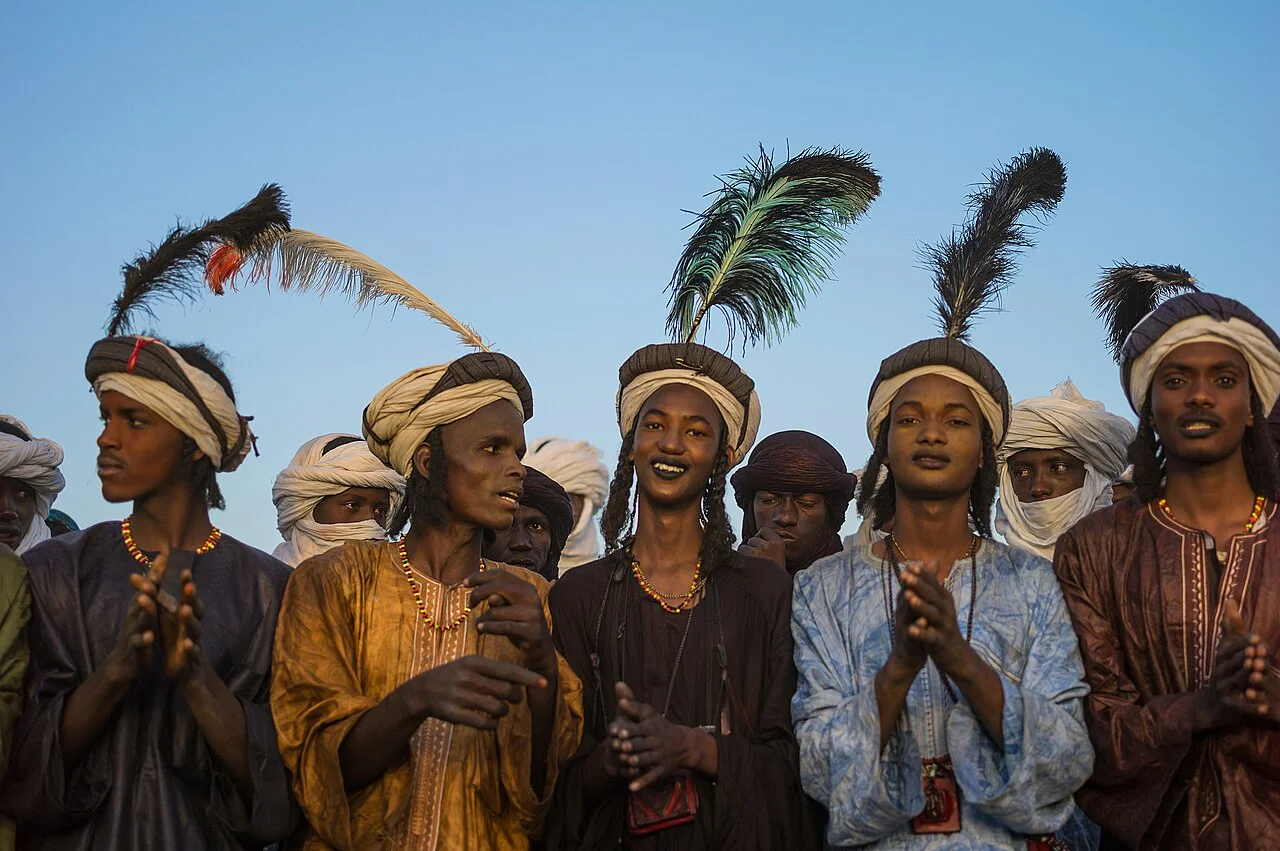
The Gerewol Festival is one of the most visually spectacular and culturally profound events not just in Niger, but on the entire African continent—a week-long courtship ritual of the Wodaabe people, where young men adorned in elaborate makeup, ostrich feathers, and dazzling white smiles dance for hours under the searing Sahelian sun to win the admiration of eligible women. It is a festival that defies Western notions of romance, placing the male body and beauty squarely in the spotlight, and transforming the harsh, unforgiving landscape of the Ténéré desert into a vibrant, pulsing stage of human connection. For the Wodaabe, a semi-nomadic Fulani subgroup, this is not merely a tourist attraction; it is the very heart of their social fabric—a meticulously choreographed spectacle of endurance, aesthetics, and subtle familial politics that has survived centuries of drought, displacement, and modernization.
- Who Are the Wodaabe? The Nomadic Heart of the Sahel
- The Gerewol Festival: A Week of Spectacle and Strategy
- Beauty Standards and the Role of Women in the Gerewol Festival
- A Comparative Table: The Gerewol and Other African Courtship Rituals
- The Aesthetics of Endurance: The Yaake and Ruume Dances
- The Gerewol Festival in the 21st Century: Tourism, Politics, and Change
- Beyond the Spectacle: The Gerewol’s Cultural and Social Significance
- Preserving the Heritage: The Future of the Wodaabe and the Gerewol
- Conclusion: A Dance of Survival and Beauty
Who Are the Wodaabe? The Nomadic Heart of the Sahel
To understand the Gerewol Festival, one must first understand the people who created it. The Wodaabe, whose name translates to “people of the taboo,” are a subset of the larger Fulani (or Peul) ethnic group, numbering roughly 100,000 to 200,000 individuals dispersed across Niger, Chad, northern Nigeria, and Cameroon. They are among the last true nomads of West Africa, moving their herds of zebu cattle across the scrublands of the Sahel in a cyclical migration pattern dictated by the unpredictable rains. Their existence is a delicate balance of survival, where water and pasture are more precious than gold, and where social cohesion is not a luxury but a necessity for survival.
Unlike many settled agricultural communities, the Wodaabe place an immense cultural premium on pulaaku—a complex code of conduct encompassing modesty, patience, and self-control, but most importantly, beauty. In Wodaabe cosmology, physical beauty is not a superficial vanity; it is a visible manifestation of inner virtue, spiritual health, and moral uprightness. This belief system elevates the annual gathering of clans from a simple social reunion into a high-stakes arena where reputations are forged and broken. The men, who are traditionally reserved and subservient in daily life, transform into flamboyant peacocks during the festival, using their bodies as canvases to advertise their genetic fitness and spiritual grace to the women who hold the power of selection.
The Wodaabe’s migration routes are not random. They follow ancient corridors that cross national borders, often ignoring the arbitrary lines drawn by colonial powers in the late 19th century. This has historically put them at odds with central governments, particularly in Niger, where the state has attempted to encourage sedentarization. Yet, despite these pressures, the Wodaabe have retained their distinct language (a dialect of Fula), their intricate social hierarchies, and their unwavering commitment to the Gerewol, which serves as a powerful anchor of identity in a world that is rapidly changing around them.
The Gerewol Festival: A Week of Spectacle and Strategy
The Gerewol Festival is not a single-day event; it is a week-long convergence that typically occurs in September or October, following the end of the rainy season when the millet harvest is complete and the cattle are fat. The most famous gatherings take place in the region around the town of Ingall, located in the Aïr Mountains of northern Niger, and near the villages of Sabon Kafi and Chalawa in the southwestern part of the country. These locations are chosen because they offer reliable water sources and grazing land for the thousands of cattle that accompany the families. The festival is technically a component of a larger gathering known as the Daddo, which includes camel races, wrestling matches, and the trading of goods—but it is the Gerewol itself that draws the crowds.
The event is organized along strict lineage lines. Clans that have intermarried or share ancestral ties will set up their temporary encampments in a large circle, leaving a central clearing—the dandal—which serves as the stage. The atmosphere is a heady mix of excitement and tension. For the young men, known as kaoju, this is their moment of supreme trial. For the young women, known as kanyal, it is a rare opportunity to exert agency in a patriarchal society, to publicly evaluate and select suitors based on criteria that go far beyond wealth or status.
The festival is structured around several distinct dance ceremonies, each with its own rhythm, purpose, and aesthetic. The most famous is the Yaake, a hypnotic dance of endurance performed at sunset, where the men form a line, lock arms, and bob up and down on their heels for hours, their eyes rolled back to expose the whites—a gesture believed to heighten their beauty and hypnotize the onlookers. The Yaake is a test of stamina; the men who can maintain the rhythm and the facial expressions of ecstasy without collapsing are considered the most virile and self-controlled.
Following the Yaake is the Ruume, a more animated and competitive dance that takes place under the moonlight. Here, the men break into smaller groups, singing in a high-pitched, nasal falsetto that is unique to the Wodaabe, while performing exaggerated facial movements—puffing out their cheeks, flashing their teeth, and winking—to catch the eye of the female judges. The women, meanwhile, stand on the periphery, observing with feigned indifference, occasionally pointing at a dancer they find particularly appealing. It is a courtship ritual, but it is also a public performance of masculinity, where vulnerability and bravado are woven together in a complex tapestry of desire.
The Art of Seduction: A Man’s Toilette
The preparation for the Gerewol Festival is as elaborate as the dance itself. For days before the event, the young men engage in a rigorous beauty regimen that involves both natural cosmetics and meticulous grooming. The goal is to achieve the ideal Wodaabe aesthetic: tall, slender, with elongated faces, bright eyes, and, crucially, perfect white teeth. To enhance their features, they apply a foundation made from a mixture of clay, ground bones, and cow dung, which is carefully painted onto their faces to create a pale, chalky base. This is then accented with black kohl made from antimony or burnt almonds, which is applied heavily around the eyes to draw attention to them, and red ochre is used to highlight the lips and cheekbones.
The men spend hours perfecting these intricate designs, which are not merely random but follow specific geometric patterns that vary by clan. They also adorn themselves with jewelry—silver earrings, beaded necklaces, and amulets—and wear a distinctive turban called an alasho, which is often dyed with indigo and adorned with ostrich feathers. The overall effect is otherworldly, a deliberate departure from their mundane, dusty appearance of daily herding life. This transformation is essential; the Gerewol is a liminal space where the ordinary rules of modesty are suspended, allowing men to become living works of art.
Beauty Standards and the Role of Women in the Gerewol Festival
While the Gerewol Festival appears to be about male display, the true power dynamics lie with the women. It is the kanyal who hold the ultimate authority, acting as judges and arbiters of beauty. They are the ones who will decide, through subtle gestures and public declarations, which men have succeeded in embodying the Wodaabe ideal. This is a profound inversion of the typical gender roles found in many conservative societies, where women are the objects of the male gaze. Here, the gaze is reversed, and men are subjected to intense scrutiny and judgment.
The criteria for male beauty in Wodaabe culture are specific and exacting. A handsome man, or kaydum, must possess:
- Tall, slender stature: A long neck, narrow hips, and a straight posture are considered signs of aristocratic lineage and good breeding.
- Facial symmetry: An elongated face, a high forehead, and a straight nose are highly prized. The practice of jodugo, where infants have their noses gently squeezed to elongate them, is a testament to the enduring nature of this ideal.
- Bright, clear eyes: The whites of the eyes are considered particularly beautiful, which is why dancers roll them back during the Yaake to display them prominently.
- Perfect teeth: A wide, complete smile with brilliant white teeth is a non-negotiable requirement. Many men use a small stick to scrub their teeth with a mixture of ash and plant sap to achieve the desired brightness.
- Graceful movement: The ability to maintain a fluid, rhythmic motion during hours of dancing, while remaining composed and smiling, is seen as a sign of mental fortitude and physical stamina.
It is important to note that the Gerewol is not merely a beauty pageant; it is a serious social mechanism for forming alliances and ensuring genetic diversity. While the festival allows for romantic encounters and even elopements, the selection of a spouse is ultimately a matter for the extended family. A woman’s choice at the Gerewol carries significant weight, but it is often the first step in a long process of negotiation between clans, involving bride wealth (traditionally paid in cattle) and complex kinship obligations. The festival, therefore, serves as a public dating pool, where initial attractions are formed, but where the final decision on marriage is made with the full weight of communal tradition behind it.
A Comparative Table: The Gerewol and Other African Courtship Rituals
To fully appreciate the uniqueness of the Gerewol Festival, it is helpful to place it in the broader context of African courtship traditions. While many cultures on the continent have elaborate marriage ceremonies, the Gerewol is distinct in its focus on male physical display as the primary courtship mechanism. The table below compares the Gerewol with two other notable traditions:
| Festival/Custom | Ethnic Group & Location | Primary Courtship Display | Key Distinguishing Feature |
|---|---|---|---|
| Gerewol | Wodaabe (Niger, Chad) | Male endurance dancing, facial makeup, and song | The men are the primary objects of aesthetic scrutiny; women are the judges. |
| Evangelist Dance | Various (e.g., Himba in Namibia) | Female adornment with ochre and jewelry | Female beauty is displayed, but the focus is on status and lineage, not male competition. |
| Jigi Sembe | Bamana (Mali) | Masked performances and acrobatic displays | Integrates spiritual and ancestral elements; courtship is secondary to ritual initiation. |
This comparison highlights a crucial point: the Gerewol Festival is not an anomaly but rather a specialized expression of a broader African tradition of using performance and aesthetic display to navigate the complexities of human relationships. What sets it apart is the inversion of the male gaze and the sheer physical toll it takes on the participants.
The Aesthetics of Endurance: The Yaake and Ruume Dances
The physical demands of the Gerewol Festival cannot be overstated. The Yaake, performed at dusk, is a grueling test of cardiovascular endurance. The men, often numbering over thirty, line up shoulder-to-shoulder, their arms linked, and begin a rhythmic bobbing motion that is synchronized with a low, guttural chant. They maintain this motion for hours, often without water, under the relentless heat of the setting sun. The dancers’ faces are a study in contradiction: their eyes are rolled back, their cheeks are puffed out, and their lips are drawn back to expose their teeth, all in an effort to appear both possessed by spiritual ecstasy and in complete control of their physical faculties.
The Ruume, which follows in the moonlight, is a more frenetic affair. The tempo increases, and the men break into smaller groups, engaging in call-and-response singing that is both melodic and haunting. The high-pitched, nasal tone is produced by constricting the throat, a technique that is passed down through generations. During the Ruume, individual dancers will step forward to showcase their skills, performing rapid spins and sudden freezes, all while maintaining the requisite smile. The women, who have been watching from the periphery, will sometimes approach a dancer and tap him on the shoulder or chest—a signal of approval that is the highest honor a man can receive. If a woman is particularly taken with a man, she may even remove her jewelry and offer it to him, a gesture that is both a gift and a public declaration of interest.
The Role of Music and Song
Music is the lifeblood of the Gerewol Festival. Without the hypnotic rhythms and the soaring vocals, the dances would lose their power. The Wodaabe sing in a unique style that is instantly recognizable, characterized by intricate harmonies and a deliberate distortion of the voice. The lyrics often praise the beauty of the dancers, extol the virtues of the clan, or recount historical legends of the Wodaabe people. The songs are not static; they are composed and improvised in real-time, with the lead singers responding to the energy of the crowd and the actions of the dancers. The only instruments used are the human voice and the rhythmic clapping of hands, which creates a raw, organic soundscape that is perfectly suited to the stark desert environment.
The Gerewol Festival in the 21st Century: Tourism, Politics, and Change
The Gerewol Festival is no longer a private affair. Since the 1980s, and increasingly in the 2000s, it has attracted a growing number of international tourists, photographers, and documentary filmmakers. The influx of outsiders has brought both opportunities and challenges. On one hand, tourism provides a much-needed source of cash income for the Wodaabe, who often struggle to survive in an economy that is increasingly hostile to nomadic pastoralism. The sale of handicrafts, the offering of “photo fees,” and the employment of local guides all contribute to the household economy.
On the other hand, the presence of tourists has undeniably altered the dynamics of the festival. There is a palpable tension between the authentic, internal purpose of the Gerewol and its external performance for a global audience. Some elders worry that the young men are now dancing for the cameras rather than for the kanyal, and that the sacred nature of the ritual is being diluted by commercialization. The Nigerian government, for its part, has recognized the festival’s potential as a cultural tourism asset, and has begun to promote it through the Ministry of Tourism, even creating a formal “National Festival of Nomads” that incorporates the Gerewol. This institutionalization brings with it security and infrastructure, but it also risks codifying a living tradition into a static spectacle.
Furthermore, the Gerewol Festival faces existential threats that go far beyond the lens of a camera. The Sahel region is a frontline of the climate crisis. The Lake Chad Basin has shrunk by 90% since the 1960s, and the Aïr and Ténéré National Reserve, where many Wodaabe roam, has seen a dramatic decline in rainfall over the past two decades. This has led to increased competition for pasture and water, escalating conflicts with settled farmers and other herding groups. The security situation in Niger is also precarious. The presence of jihadist groups in the tri-border area with Mali and Burkina Faso, and the simmering insurgency in the Lake Chad region, have made travel dangerous and have disrupted traditional migration routes. The Gerewol Festival, which relies on the safe convergence of thousands of people from across borders, has been severely impacted. In recent years, some gatherings have been cancelled or scaled down due to security concerns, a stark reminder that this ancient tradition is not immune to the geopolitical realities of the modern world.
Beyond the Spectacle: The Gerewol’s Cultural and Social Significance
To dismiss the Gerewol Festival as a mere tourist show or an exotic curiosity would be a profound misunderstanding. For the Wodaabe, the festival is a vital mechanism for social cohesion, conflict resolution, and the transmission of cultural values. It is a time when dispersed clans can renew their ties, settle disputes, and arrange marriages that will bind families together for generations. The festival also serves as a form of communal therapy, a cathartic release of the pressures of a demanding and precarious lifestyle. The intense physical exertion of the dance, the emotional highs and lows of the courtship, and the sheer joy of communal celebration all contribute to a sense of collective well-being.
The Gerewol also challenges simplistic narratives about Africa. It showcases a society where aesthetic appreciation is a core cultural value, where men are comfortable being objects of beauty, and where women hold significant power in the realm of romantic selection. It is a testament to the diversity of human experience and a powerful reminder that there is no single “African” way of life. The festival is a living, breathing entity that is constantly evolving, absorbing new influences while retaining its essential character. It is a symbol of resilience, a defiant assertion of identity in a world that often seeks to homogenize or marginalize nomadic peoples.
Preserving the Heritage: The Future of the Wodaabe and the Gerewol
As the Wodaabe face an uncertain future, the question of how to preserve the Gerewol Festival becomes increasingly urgent. The challenge is to protect the tradition without freezing it in amber, to allow it to evolve organically while safeguarding its core meaning. Several initiatives are underway to document and support the Wodaabe. Cultural associations, often led by educated Wodaabe diaspora members, are working to record oral histories, create archives of songs and dances, and advocate for the rights of nomadic peoples with national governments. There is also a growing movement to promote “cultural tourism” that is respectful and sustainable, ensuring that the Wodaabe are not merely passive subjects of the tourist gaze but active participants who benefit economically and culturally from the exchange.
However, the ultimate preservation of the Gerewol depends on the preservation of the Wodaabe way of life itself. This requires a fundamental shift in policy, both in Niger and internationally, to recognize the value of nomadic pastoralism as a sustainable land-use system that is perfectly adapted to the arid environment. It requires investment in mobile health and education services that can reach the Wodaabe where they are, rather than forcing them into permanent settlements. And it requires a commitment to peace and security in the Sahel, so that the ancient migration corridors remain open and safe for future generations.
Conclusion: A Dance of Survival and Beauty
The Gerewol Festival is far more than a courtship dance; it is a profound expression of what it means to be human in one of the most challenging environments on Earth. It is a celebration of beauty, endurance, and grace, a testament to the power of culture to provide meaning and structure in the face of immense hardship. As the sun sets over the dunes and the young men of the Wodaabe line up for the Yaake, they are not just performing for the women who watch them; they are performing for their ancestors, for their community, and for the very survival of their way of life. The festival is a thread connecting them to a past that stretches back centuries, and a bridge to a future that is uncertain but not without hope.
To witness the Gerewol is to witness resilience in its most beautiful form. It is a reminder that even in the face of climate change, political instability, and the relentless march of globalization, the human spirit’s capacity for creativity, joy, and love endures. The Gerewol Festival is not a relic of a bygone era; it is a living, dynamic force that continues to shape the lives of the Wodaabe and to inspire all those who are fortunate enough to encounter it. It is a dance of survival, a celebration of identity, and a testament to the enduring power of beauty to bind a people together. As the Wodaabe themselves say, “A man without beauty is a man without a soul.” And in the heart of the Sahel, the soul of a people is danced into existence, year after year, under the vast, indifferent African sky.