📅 Last updated: 18.10.2026
Ethiopian injera bread is far more than a flatbread; it is the edible plate, the communal heart, and a living fermentation of one of the world’s oldest civilisations. Made from the tiny, iron-rich grain teff, this vast, porous sourdough pancake defines the texture of daily life across the Ethiopian highlands. It is a food that turns a meal into a shared ritual, a geography lesson, and a testament to the ingenuity of a people who have cultivated the same grain for thousands of years.
Ethiopian injera bread is a large, spongy sourdough flatbread made primarily from teff flour, a gluten-free grain native to the Ethiopian highlands. It is fermented for two to four days, giving it a distinctive tangy flavour and honeycomb texture, and is traditionally eaten by hand, serving as both the plate and the utensil for accompanying stews.
- What Makes Ethiopian Injera Bread So Unique?
- How Is Ethiopian Injera Bread Made? The Fermentation Ritual
- What Is the History and Cultural Significance of Ethiopian Injera Bread?
- Injera vs. Other African Flatbreads: A Comparative Look
- How Is Ethiopian Injera Bread Eaten? The Communal Plate
- Is Ethiopian Injera Bread Healthy? Nutrition and Modern Science
- What Challenges Does Ethiopian Injera Bread Face Today?
- Where Can You Experience Authentic Ethiopian Injera Bread?
- Why Ethiopian Injera Bread Matters Beyond the Plate
What Makes Ethiopian Injera Bread So Unique?
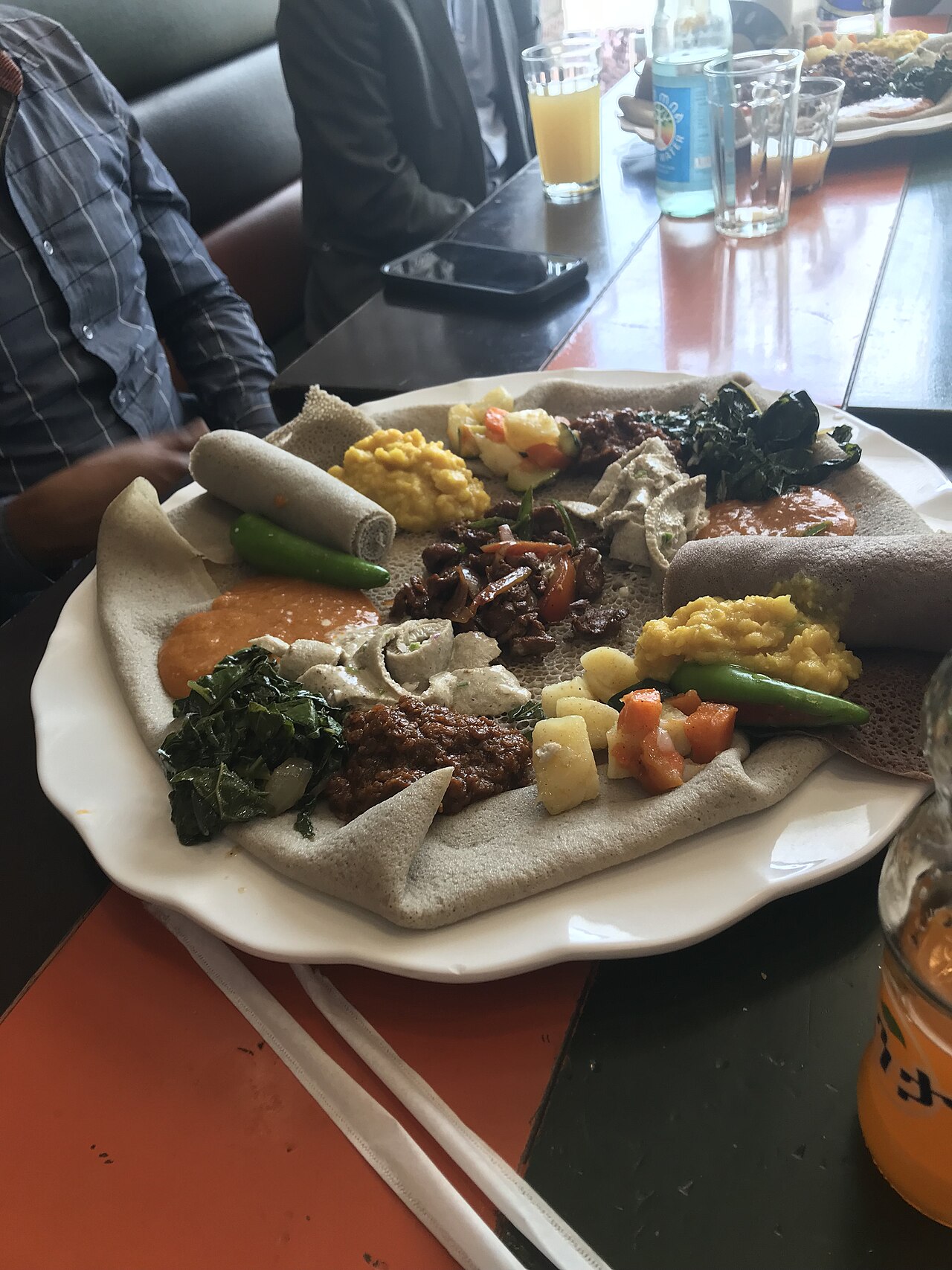
The first thing that strikes a newcomer is the size. An injera served in a traditional mesob — the woven, hourglass-shaped basket that holds the meal — can easily span half a metre across. But the true novelty lies in its structure. The surface is riddled with “eyes,” the ayen that bakers prize, a honeycomb of bubbles created by wild yeast and bacteria during fermentation. Those bubbles give injera its soft, slightly elastic springiness, so that a torn piece can pinch and scoop a stew without disintegrating.
The flavour is equally distinctive: a mild, sour tang, reminiscent of a tangier sourdough loaf, that makes the bread a perfect counterpoint to the fiery, spiced stews it carries. Nutritionally, injera made from pure teff is a quiet marvel. Teff is gluten-free, high in calcium, iron, and dietary fibre, and has a low glycemic index. Its grains are so small — roughly one-hundredth the size of a wheat kernel — that a single handful can sow a whole field, a fact that has shaped Ethiopian agriculture for millennia.
There is also the matter of how it is eaten. No cutlery is used. Diners gather around a shared platter, tearing pieces of injera with their right hand and wrapping them around morsels of doro wat (spiced chicken stew), shiro (chickpea purée), or tibs (sautéed meat). The bread is both vessel and meal, and the shared platter is an invitation to intimacy: to eat from the same injera is to share a bond.
Teff: The Grain That Built a Civilisation
Teff (Eragrostis tef) is believed to have been domesticated in the Ethiopian highlands between roughly 4000 and 3000 BCE, making it one of the earliest cultivated grains in Africa. It thrives in the highlands’ poor soils and erratic rainfall, and it remains the foundation of Ethiopian cuisine. Ethiopia is the world’s largest producer of teff, and the grain supports the livelihoods of millions of smallholder farmers. In 2006, the Ethiopian government restricted teff exports to protect domestic supply — a measure that speaks to the grain’s cultural and economic weight.
How Is Ethiopian Injera Bread Made? The Fermentation Ritual
Making injera is a slow, patient craft, one that begins days before the meal. The process is a household ritual passed down through generations, and in many homes the fermentation is started by a mother or grandmother, whose hands are said to hold the best ersho — the sourdough starter that leavens each new batch.
From Flour to Batter: The Steps
- Mix and ferment: Teff flour is combined with water and a portion of ersho (the reserved sourdough starter) in a large clay or plastic container. The batter is left to ferment at room temperature for two to four days, sometimes longer, until it smells pleasantly sour and bubbles rise to the surface.
- Thin the batter: Once fermented, a little water is added to thin the batter to a pourable consistency, and a small amount of the mixture is sometimes cooked and returned to the batter (a technique called absit) to sweeten it and adjust the acidity.
- Bake on the mogogo: The batter is poured in a spiral onto a hot, flat clay griddle called a mogogo, traditionally set over a wood fire. Covered with a lid, the injera cooks for a few minutes until the surface is set and the eyes have formed, but the underside is not browned — it should stay pale and soft.
- Cool and stack: Finished injera are lifted off with a flat spatula, cooled briefly, and stacked. They keep for several days and are often made in large batches for family meals and communal gatherings.
The fermentation is a living ecosystem of wild yeasts and lactic acid bacteria, similar to the microbes that leaven sourdough bread in Europe or ferment dosa batter in South India. This natural fermentation is what gives injera its tang and its keeping qualities, and it is why no commercial yeast is used in the traditional method.
What Is the History and Cultural Significance of Ethiopian Injera Bread?
Injera’s story is intertwined with the history of the Ethiopian state itself. The highlands of Tigray and Amhara, where teff has been cultivated for millennia, are also the heartland of the Aksumite Empire (roughly 100–940 CE), one of the great civilisations of the ancient world. Archaeological and linguistic evidence suggests that fermented flatbreads were part of the diet of the region long before the Aksumite period, and injera has been a staple ever since.
The bread carries deep cultural meaning. In the Ethiopian Orthodox Tewahedo Church, injera is central to the fasting tradition: during the many fasting days of the liturgical calendar — which can total more than 200 days a year for the devout — the faithful abstain from meat and dairy, and injera with lentils, chickpeas, and vegetables becomes the daily sustenance. The bread is also a symbol of hospitality. When a guest arrives, the first act of welcome is often to set a mesob of injera before them. At weddings, funerals, and religious festivals such as Timkat (Epiphany) and Meskel (the Finding of the True Cross), the shared injera platter is the centre of the gathering.
In the diaspora, injera has become a marker of identity. Ethiopian restaurants from Washington, D.C. — home to one of the largest Ethiopian communities outside Africa — to London, Toronto, and Melbourne serve injera as the anchor of the meal, and the bread connects second- and third-generation Ethiopians to the kitchens of their grandparents.
Injera vs. Other African Flatbreads: A Comparative Look
Injera is part of a wider family of fermented flatbreads across Africa, each shaped by local grains and climates. Understanding how it compares helps explain what makes the Ethiopian version distinctive.
| Bread | Region | Main Grain | Fermentation | Key Characteristic |
|---|---|---|---|---|
| Injera | Ethiopia, Eritrea | Teff (sometimes blended with sorghum or barley) | 2–4 days, wild sourdough | Large, spongy, honeycomb “eyes,” sour tang |
| Dosa | South India (for comparison) | Rice and urad dal | 8–12 hours | Thin, crisp, fermented batter |
| Kisra | Sudan, South Sudan | Sorghum | 1–2 days | Thin, slightly sour, cooked on a flat griddle |
| Lahoh | Somalia, Djibouti, Yemen | Sorghum, corn, or wheat | Overnight | Spongy, cooked on one side, served with honey or stew |
| Chapati | East Africa (Kenya, Tanzania, Uganda) | Wheat | None (unleavened) | Soft, layered, pan-fried |
The table shows that injera’s closest cousins are kisra and lahoh, both fermented sorghum-based breads of the Horn of Africa and the Sahel. Injera’s use of teff, however, is unique, and its scale — the sheer size of the bread — sets it apart from the thinner kisra and the smaller lahoh.
How Is Ethiopian Injera Bread Eaten? The Communal Plate
To eat injera properly is to participate in a social contract. The bread is laid out on a large platter or in a mesob, and the stews are spooned directly onto its surface. Diners sit around the platter, and each person tears off a piece of injera from the edge nearest them, using only the right hand. The piece is folded around a morsel of stew and eaten in one bite. The injera at the centre of the platter, soaked in the juices of the stews, is considered the best part, and it is often left for the most honoured guest or shared among the group.
There are etiquette rules, too. Eating with the left hand is considered impolite; the left hand is reserved for other tasks. It is customary to eat from the section of the platter in front of you, and to accept gursha — a morsel of food offered by hand to a guest or loved one — as a gesture of affection and respect. The meal is often accompanied by tella (a traditional beer) or tej (honey wine), and it ends with a coffee ceremony, the elaborate roasting and brewing of coffee that is itself a cornerstone of Ethiopian hospitality.
The Coffee Ceremony and the Injera Meal
The coffee ceremony, or buna, is the natural conclusion to an injera meal. Green coffee beans are roasted over hot coals, ground, and brewed in a clay jebena pot, then served in small cups with incense burning nearby. The ceremony can last an hour or more, and it is a time for conversation, storytelling, and community. Together, injera and coffee form a complete social ritual: the meal nourishes the body, and the coffee ceremony nourishes the spirit.
Is Ethiopian Injera Bread Healthy? Nutrition and Modern Science
Teff’s nutritional profile has attracted growing attention from food scientists and health-conscious consumers. Because it is gluten-free, injera is a safe staple for people with celiac disease or gluten sensitivity, and it is increasingly sold in health food stores in Europe and North America. Teff is also rich in iron, calcium, and resistant starch, which feeds beneficial gut bacteria — a benefit amplified by the fermentation process.
Research on fermented foods has highlighted the role of lactic acid bacteria in improving digestibility and bioavailability of minerals. The fermentation of injera breaks down phytic acid, a compound in grains that can inhibit the absorption of iron and zinc, making the bread’s minerals more accessible to the body. For a region where iron deficiency is a public health concern, this is no small matter.
That said, injera is not a complete meal on its own. Its nutritional value depends on what accompanies it: a diet of injera with legumes and vegetables is balanced and fibre-rich, while injera with rich meat stews is heavier. The traditional Ethiopian approach — a base of injera with a variety of stews, including plenty of plant-based options — reflects a sensible balance.
What Challenges Does Ethiopian Injera Bread Face Today?
Injera’s future is tied to the future of teff and of Ethiopian agriculture. Climate change is a real threat: erratic rainfall and rising temperatures in the highlands affect teff yields, and smallholder farmers — who grow the vast majority of the crop — are vulnerable to drought and market fluctuations. The Ethiopian government’s restrictions on teff exports, introduced in 2006 and revised since, reflect a tension between protecting domestic food security and capturing export revenue from a grain that is increasingly in demand abroad.
Urbanisation is changing how injera is made and eaten. In Addis Ababa and other cities, many households buy injera from neighbourhood bakeries rather than fermenting their own, and the traditional clay mogogo is giving way to electric griddles. Commercial injera producers now supply supermarkets and restaurants, and the diaspora market has spurred innovations such as frozen injera and teff flour blends. These changes raise questions about authenticity and tradition, but they also show the adaptability of a food that has survived for millennia.
- Climate resilience: Teff is relatively drought-tolerant, but research into improved varieties and water management is essential to protect yields.
- Market access: Balancing export restrictions with the potential of teff as a global gluten-free commodity requires careful policy.
- Cultural continuity: Encouraging home fermentation and traditional baking alongside commercial production keeps the craft alive.
Where Can You Experience Authentic Ethiopian Injera Bread?
The best place to eat injera is, of course, Ethiopia. In Addis Ababa, restaurants such as Yod Abyssinia and Habesha 2000 offer traditional meals with music and dance, while neighbourhood injera bets (injera houses) serve the bread fresh from the mogogo. In the northern city of Mekelle and the historic town of Axum, the injera is often made from local teff varieties with a distinctly robust flavour. In the diaspora, cities with large Ethiopian communities — Washington, D.C., London, Toronto, Frankfurt, and Melbourne — have restaurants where injera is made in-house, and the mesob is set out just as it would be in Addis.
For travellers, a visit to a local market — such as the Merkato in Addis Ababa, one of the largest markets in Africa — offers a chance to see teff flour, ersho starters, and clay mogogos for sale. Cooking classes in Addis Ababa and in diaspora communities teach visitors the fermentation process, and the experience of making injera is as much about patience as it is about technique.
Why Ethiopian Injera Bread Matters Beyond the Plate
Ethiopian injera bread is a food that carries the weight of history and the warmth of community in every spongy bite. It is a product of the Ethiopian highlands, of a grain domesticated thousands of years ago, and of a fermentation tradition that predates modern food science by millennia. It is also a living food, adapting to urban life, diaspora markets, and global health trends without losing its essential character. To share injera is to share a piece of Ethiopia’s soul — a reminder that the most profound culinary traditions are often the simplest: grain, water, time, and the hands that bring them together.
For anyone who has sat around a mesob, torn a piece of injera, and wrapped it around a morsel of doro wat, the bread is unforgettable. It is a food that teaches patience, generosity, and the value of eating together. And in a world increasingly disconnected from its food sources, that lesson is worth savouring.