📅 Last updated: 08.11.2026
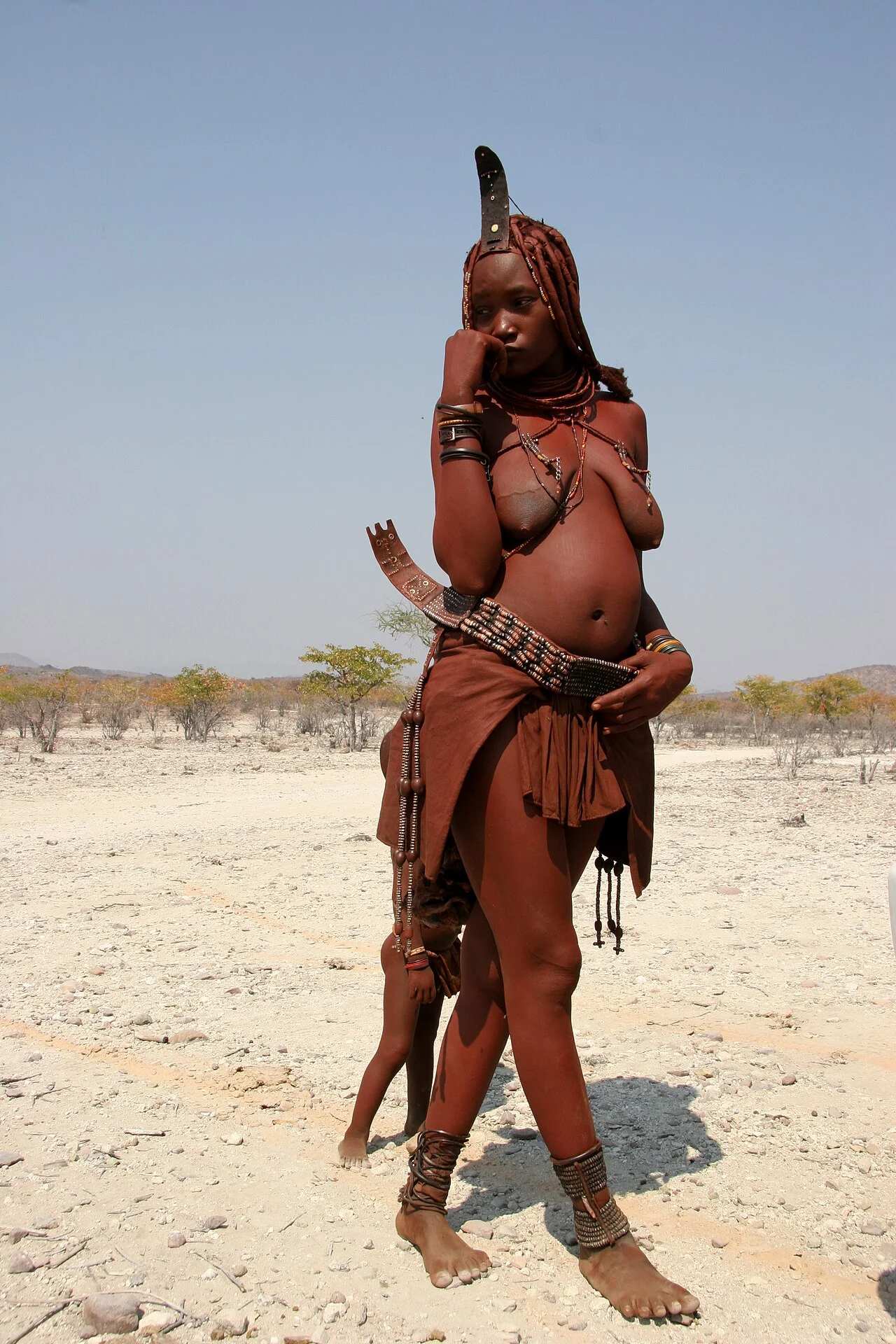
Himba red ochre — known in the Otjiherero language as otjize — is far more than a cosmetic; it is a daily ritual of identity, hygiene, and spiritual connection practiced by the Himba people of north-western Namibia. The paste of powdered ochre mixed with butterfat and aromatic resin coats the skin and hair of Himba women, protecting against the sun and insects while signalling life stage, beauty, and belonging. For the Himba, applying otjize each morning is an act of self-care and cultural continuity that has survived colonialism, displacement, and a rapidly modernising nation.
The Himba red ochre ritual centres on otjize, a paste of ground ochre, clarified butterfat, and sometimes omuzumba resin, applied daily by Himba women in Namibia’s Kunene Region. It protects skin from sun and insects, conditions hair, marks age and marital status, and carries deep spiritual meaning tied to ancestor reverence and the sacred fire. The practice persists today despite displacement from ancestral lands and pressures from tourism and modern life.
- What Is Himba Red Ochre and Why Does It Matter?
- How Is Himba Red Ochre Prepared and Applied?
- Why Is Himba Red Ochre Central to Identity and Spirituality?
- Himba Red Ochre in the Shadow of History: Displacement and Survival
- Is Himba Red Ochre Under Threat — or Adapting?
- What Can Visitors Learn from the Himba Red Ochre Ritual?
- Frequently Asked Questions About Himba Red Ochre
- Himba Red Ochre: A Living Heritage, Not a Curiosity
What Is Himba Red Ochre and Why Does It Matter?
The Himba are a semi-nomadic pastoral people, roughly 50,000 strong, living mainly in the Kunene Region of north-western Namibia — a harsh, semi-arid landscape of mopane scrub, granite outcrops, and the seasonal rivers that drain toward the Atlantic. They speak Otjiherero, closely related to the Herero language, and trace their lineage to the great Herero migrations southward from the Great Lakes region centuries ago. Where the Herero of central Namibia adopted European dress after the genocidal war of 1904–1908, the Himba of the north-west retained much of their material culture, including otjize.
The ochre itself is a red iron-oxide-rich earth, often described as hematite or red laterite, gathered from specific deposits in the region. Women grind the stone into a fine powder on flat stones, then blend it with butterfat (rendered from cow’s milk), and in many preparations add a pinch of aromatic resin from the omuzumba shrub — a plant whose burnt leaves give the mixture its distinctive sweet, smoky scent. The result is a thick, rust-coloured paste applied to the whole body, and especially to the hair, where it is worked into elaborate braids.
What outsiders often see as “decoration” is, in Himba terms, a system of meaning. The paste is sun protection in a region where daytime temperatures routinely exceed 35°C. The fat content moisturises skin in one of Africa’s driest climates. The resin and smoke act as a natural insect repellent. And the red itself — the colour of blood, earth, and life — is understood as beautiful, a sign of health and vitality.
How Is Himba Red Ochre Prepared and Applied?
The preparation of otjize is women’s work, passed from mother to daughter, and the process is as much social as it is practical. Older women and girls often gather to grind ochre together, trading news and songs while the stones are worked smooth.
From Stone to Paste
The ochre stone is broken and ground on a flat grinding stone, sometimes with a smaller hand stone, until it reaches the consistency of fine flour. The powder is then mixed with butterfat — Himba households keep cattle, and milk products are central to the diet — and kneaded until it forms a smooth, waxy paste. Some families add the resin of the omuzumba bush, which is also burned in the sacred fire, linking the cosmetic to spiritual practice.
The Daily Application
Application is a morning ritual. Women smear the paste over the face, arms, torso, and legs, then work it into the hair. Because Himba women traditionally do not wash with water — water is scarce and precious, and is reserved largely for drinking and livestock — the paste is removed with smoke baths: heated herbs and aromatic woods are placed in a container, and the woman sits wrapped in a blanket to let the smoke cleanse and perfume her skin. The ochre is then reapplied.
Hairstyles communicate a great deal. Young girls wear braids forward over the face; after puberty, braids are worn back. Married women — and women who have borne children — wear the elaborate ekori headdress of tanned hide, and their braids are thickly coated with otjize and shaped into long, ochre-red plaits. Men, by contrast, generally do not use otjize; their hairstyles and adornments follow different conventions.
- Ochre powder — ground from local red iron-oxide stone.
- Butterfat — rendered from cattle milk, providing moisture and binding the paste.
- Omuzumba resin — aromatic plant material adding fragrance and insect-repellent properties.
- Smoke bath — the cleansing method that replaces water washing and perfumes the skin.
Why Is Himba Red Ochre Central to Identity and Spirituality?
Among the Himba, the sacred fire (okuruwo) is the ritual heart of each homestead, tended by a designated fire-keeper and understood as a channel to the ancestors. The smoke of the fire carries prayers upward, and the same smoke is used in the cleansing of the body. Otjize, applied after the smoke bath, is thus bound into a cycle of purification and ancestral connection. The red of the ochre echoes the red of the fire’s embers and the red earth itself.
Anthropologists and Himba elders alike describe otjize as a marker of being Himba — of participation in a community defined by cattle, kinship, and reverence for ancestors. A woman who stops applying otjize may be seen as having left the community’s aesthetic and spiritual world. In this sense the paste is closer to a uniform or a liturgical garment than to makeup.
The Himba also maintain a distinctive relationship with cattle. A man’s wealth and status are measured in herds, and cattle provide milk, meat, and the butterfat essential to otjize. The red ochre ritual is therefore inseparable from the pastoral economy: without cattle, there is no butterfat; without ochre and cattle, there is no otjize. This interdependence helps explain why the ritual has persisted through drought, displacement, and modernisation.
Himba Red Ochre in the Shadow of History: Displacement and Survival
The Himba’s story is inseparable from the broader tragedy of the Herero and Nama peoples. In 1904, German colonial forces under General Lothar von Trotha launched a campaign of extermination against the Herero after an uprising against colonial land seizure. The extermination order of October 1904 and the subsequent concentration camps and forced marches into the Omaheke Desert killed an estimated 65,000–80,000 Herero and around 10,000 Nama — widely recognised today as the first genocide of the twentieth century.
The Himba, living in the remote north-west, were less directly exposed to the campaign, but the aftermath reshaped the region. Colonial boundaries, the creation of game reserves, and later apartheid-era “homeland” policies restricted movement and access to grazing land. In the 1980s and 1990s, proposed dams and conservation areas — notably around the Epupa Falls on the Kunene River and in what became the Kaokoveld — threatened Himba grazing and burial grounds, prompting organised resistance and international attention.
Today the Himba live across communal lands in Kunene, including areas near Opuwo, the regional capital, and the sparsely populated Kaokoveld. Many families combine pastoralism with wage labour, small-scale trade, and — increasingly — tourism. The Himba are not a “living museum”; they are a modern people navigating land rights, climate stress, and the gaze of visitors, while deciding for themselves what parts of their heritage to carry forward.
| Period | Event | Relevance to Himba Red Ochre |
|---|---|---|
| Pre-19th century | Herero migrations southward; Himba emerge as a distinct north-western group | Ochre and pastoral cattle culture take root in the Kunene region |
| 1904–1908 | Herero and Nama genocide under German colonial rule | Decimates Herero society; Himba in remote north-west largely spared direct violence but region transformed |
| 1960s–1980s | Apartheid-era homeland policies and conservation boundaries | Restricts grazing and movement; pressures on pastoral life |
| 1990s | Namibian independence (1990); Epupa Dam controversy | Himba organise against dam; international visibility grows |
| 2000s–present | Tourism boom and land-rights debates | Otjize becomes a visible cultural marker in tourism; debates over commodification and consent |
Is Himba Red Ochre Under Threat — or Adapting?
Both, and often at once. The pressures are real: prolonged drought linked to climate change has strained cattle herds; young Himba increasingly move to towns such as Opuwo and Windhoek for schooling and work; and the tourism economy creates incentives to perform culture for cameras, raising questions about authenticity and fair payment.
Tourism and the Ethics of the Gaze
Visitors to Kunene often encounter Himba women selling crafts or posing for photographs, ochre gleaming in the sun. Some cultural tourism ventures are community-run and pay participants fairly; others extract images and profits with little return. Himba voices themselves are divided — some see tourism as a lifeline and a way to fund schooling and livestock; others worry that the ritual is being reduced to a photo opportunity.
Continuity and Change
At the same time, otjize persists. Young women continue to apply it, sometimes alongside mobile phones and Western clothing. The paste’s practical benefits — sun protection, insect repellence, skin conditioning — remain compelling in a changing climate. And the ritual’s social function, binding women to mothers, grandmothers, and ancestors, has not disappeared. The Himba red ochre is less a relic than a living practice that bends without breaking.
- Climate stress — drought threatens cattle herds and thus the butterfat supply.
- Urban migration — young people balance town life with community obligations.
- Tourism economics — community-run ventures offer fairer returns than exploitative photography.
- Land rights — secure communal tenure underpins the pastoral economy on which otjize depends.
What Can Visitors Learn from the Himba Red Ochre Ritual?
For travellers, the Himba red ochre offers a lesson in seeing beyond the surface. The paste is beautiful, yes — but its beauty is functional, spiritual, and social at once. Approaching it with curiosity rather than consumption means asking permission before photographing, paying fair prices for crafts, and choosing guides from community-based organisations rather than fly-by-night operators.
It also means resisting the temptation to romanticise. The Himba are not untouched by modernity; they are making choices about which traditions to keep. Some young Himba women in Opuwo wear otjize on visits home and not in town; others wear it always. Neither choice is more “authentic” than the other. The ritual’s meaning is negotiated by the people who practice it, not by outsiders who photograph it.
Finally, the ochre invites reflection on how all cultures make beauty from the materials at hand — and how those materials carry histories. The red earth of Kunene is the same earth that holds the bones of ancestors, the same earth that feeds the cattle whose milk binds the paste. To understand otjize is to understand a whole way of life in a single smear of red.
Frequently Asked Questions About Himba Red Ochre
What exactly is Himba red ochre made of?
Ground red ochre stone (iron oxide), mixed with butterfat from cattle milk, and often a small amount of aromatic omuzumba resin.
Do Himba women ever wash with water?
Water is scarce in Kunene and is prioritised for drinking and livestock. Himba women traditionally cleanse with smoke baths of aromatic herbs and woods rather than water, then reapply otjize.
Do Himba men use red ochre?
Otjize is primarily used by women and girls. Men’s adornment and hairstyles follow different conventions, though the sacred fire and smoke rituals involve the whole community.
Is the practice dying out?
No. It is adapting. Young Himba women continue to use otjize, often alongside modern clothing and technology, and the ritual retains its spiritual and social significance.
Himba Red Ochre: A Living Heritage, Not a Curiosity
The Himba red ochre ritual endures because it works — on the skin, in the family, and before the ancestors. It is a technology of beauty and protection refined over generations in one of Africa’s harshest landscapes, and a language of identity spoken in colour. As Namibia changes and the Himba navigate tourism, climate, and land rights, otjize remains a daily choice: a woman grinding stone, mixing fat, smoking her skin, and painting herself the colour of the earth she comes from. That choice, made freely and repeatedly, is what makes the ritual living heritage rather than a museum piece — and what makes it worth understanding on its own terms.