📅 Last updated: 03.10.2026
Few places on Earth compress so much painful history into so little space as Gorée Island, Senegal — a 28-hectare speck of volcanic rock and pastel colonial houses lying 3.5 kilometres off the coast of Dakar. For millions of visitors, it has become the single most emotionally charged memorial to the transatlantic slave trade anywhere in Africa. Yet the island’s story is more complicated, and more interesting, than the postcard version suggests: it is at once a UNESCO World Heritage Site, a living neighbourhood of some 1,200 residents, a former colonial trading post, and a global symbol whose meaning has been fiercely debated by historians.
- Where Is Gorée Island, Senegal?
- Gorée Island, Senegal and the Transatlantic Slave Trade
- The House of Slaves: Symbol and Controversy
- Key Dates in the History of Gorée Island, Senegal
- Visiting Gorée Island, Senegal Today
- Controversies and Conversations
- Why Gorée Matters to the African Diaspora
- A Small Island, a Large Question
This is the full story of Gorée — what happened there, what the famous House of Slaves does and does not tell us, how to visit with clear eyes, and why this small island still matters so much to Senegal, to the African diaspora, and to anyone trying to understand the Atlantic world.
Where Is Gorée Island, Senegal?
Gorée sits in the Atlantic just south of the Cape Verde peninsula, the westernmost point of mainland Africa. On a clear day you can see Dakar’s skyline — the towers, the port cranes, the long sweep of the Corniche — from the island’s northern shore. The ferry, operated by the state company Société Nationale de Transport Maritime, leaves from the Gare Maritime on Boulevard de la Libération roughly every hour or two, and the crossing takes about 20 minutes. It is one of the cheapest and most memorable boat rides in West Africa.
Arriving, you step onto a quay lined with pirogues and fishermen mending nets. There are no cars on Gorée — only a few hand carts and bicycles. Bougainvillea spills over ochre and salmon-pink walls; flamboyant trees shade sandy lanes. The island is small enough to walk end to end in 20 minutes, and that intimacy is precisely what makes its history so overwhelming.
A layered past: Portuguese, Dutch, French, British
Portuguese sailors reached Gorée around 1444, during the voyages sponsored by Prince Henry the Navigator, and named it after a Dutch island in Zeeland — Goeree — a name that stuck through successive occupations. Over the next three centuries the island changed hands repeatedly: the Dutch built Fort Nassau in the 17th century; the French and British fought over it during the wars of the 18th century; the French finally consolidated control in 1817 and held it until Senegalese independence in 1960. Each power used Gorée as a commercial base — for gum arabic, hides, beeswax, and, above all, for the trade in enslaved human beings.
Gorée Island, Senegal and the Transatlantic Slave Trade
Between roughly the mid-16th and the mid-19th centuries, an estimated 12.5 million Africans were forcibly transported across the Atlantic, according to the Slave Voyages database — a research project coordinated by Emory University and other institutions. Of those, around 10.7 million survived the Middle Passage and disembarked in the Americas. Senegal and the wider Senegambia region were part of this system, though they were never its largest source of captives: the bulk of the trade drew on West-Central Africa (modern Angola and the Congo) and the Bight of Benin.
Gorée’s role was less as a mass embarkation point than as a nodal entrepôt — a place where captives were held, sorted, and transhipped, and where European and Eurafrican merchants (signares and their families) brokered deals with African kingdoms and networks further inland. Enslaved people arrived on the island by pirogue from the mainland, often from the Saloum and Gambia river regions, and were held in warehouses before being moved onward.
“Gorée is not the largest slave port, but it is the most eloquent. It is a place of memory, not of statistics.” — a sentiment often voiced by Senegalese guides, echoing the historian Ibrahima Thiaw of Cheikh Anta Diop University, who has cautioned against over-simplifying the island’s role.
How many people passed through?
Precise numbers are impossible to pin down, and reputable estimates vary widely. Some popular accounts claim “millions” passed through Gorée; most academic historians put the figure far lower, in the tens of thousands over the island’s long involvement in the trade. The discrepancy matters, because it shapes how we understand the island: not as the single “door of no return” for the entire diaspora, but as one important node in a vast, decentralised system that stretched from Saint-Louis in the north to the Niger Delta and far beyond.
The House of Slaves: Symbol and Controversy
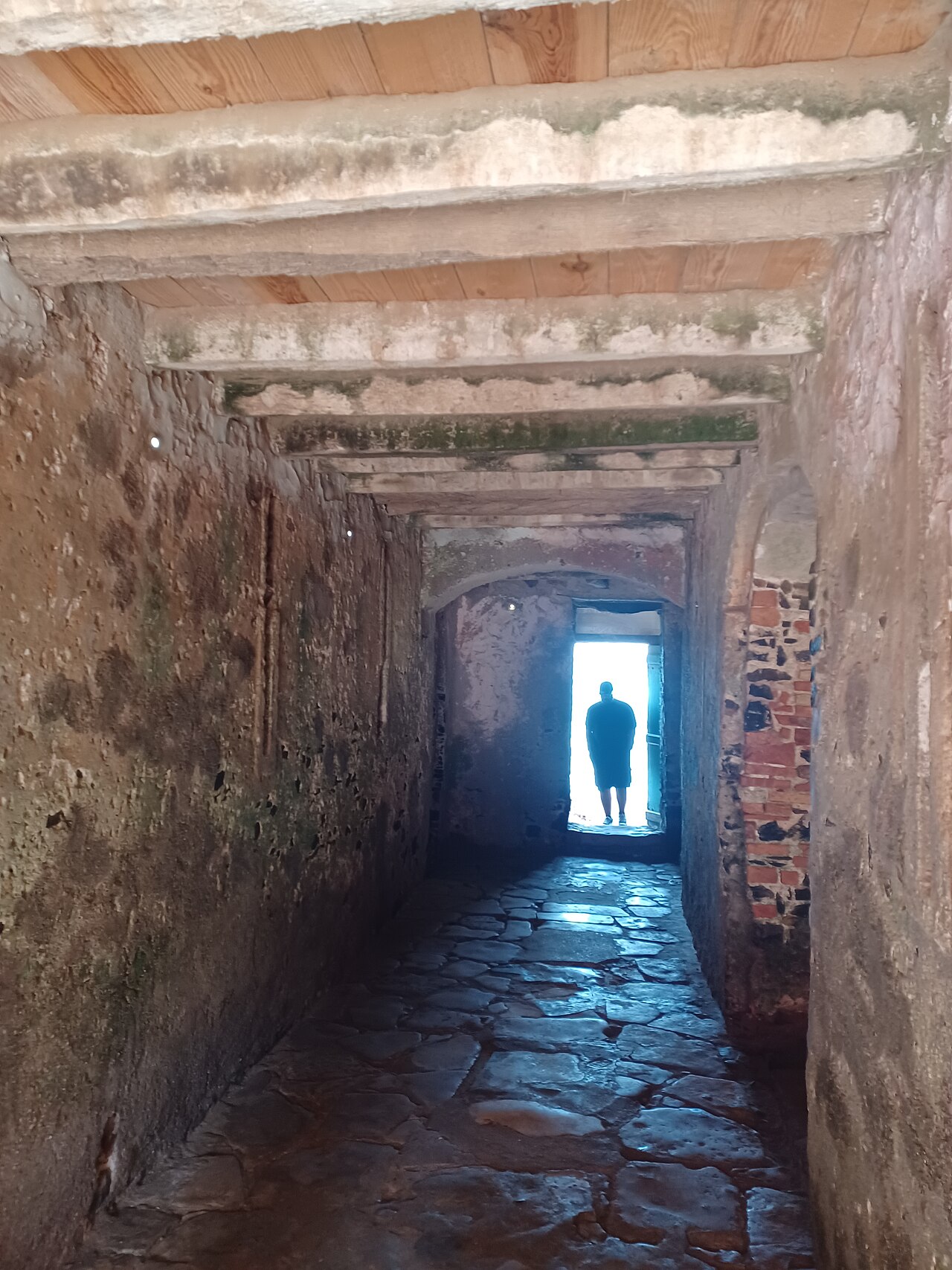
The island’s emotional centre is the Maison des Esclaves (House of Slaves), a two-storey building on the eastern edge of the island, built in 1776 by the Eurafrican merchant Nicolas Pépin. It was restored in the 1960s under the direction of the Senegalese scholar and first director of the Institut Fondamental d’Afrique Noire (IFAN), Boubacar Joseph Ndiaye, who turned it into a museum and became its most famous curator and storyteller. Ndiaye’s tours, delivered with theatrical intensity, described a “door of no return” through which captives were said to have been marched onto waiting ships. The image has become iconic — reproduced on stamps, in documentaries, and in the memories of visitors from around the world.
Yet the building’s history is more modest than the legend. Historians including Philip Curtin and later Ana Lucia Araujo have shown that the House of Slaves was primarily a merchant’s residence and trading house, and that the “door of no return” opening directly onto the sea was likely a later addition or a drainage outlet. The building’s basement cells, though real, could not have held large numbers of people at once.
Why the symbol still matters
None of this diminishes Gorée’s power. A memorial does not have to be a literal reconstruction to be true. The island genuinely was part of the slave-trading world; enslaved people genuinely were held, sold, and shipped from its shores; and the diaspora’s need for a place to grieve, to remember, and to reconnect is real and profound. What the House of Slaves offers is not a precise archive but a lieu de mémoire — a site of memory — in the sense the French historian Pierre Nora gave the term.
Other sites worth seeing on the island
- Castel — the hilltop fort, begun by the Dutch and rebuilt by the French, offering panoramic views of Dakar and the Atlantic.
- Musée de la Femme Henriette Bathily — a museum dedicated to the history and achievements of Senegalese women, housed in a former convent.
- St. Charles Borromeo Church — a Catholic church dating to the 1830s, still in use.
- The signares’ houses — elegant colonial-era homes built by Eurafrican women who wielded considerable economic and social power in 18th- and 19th-century Gorée and Saint-Louis.
- IFAN’s historical museum — artefacts and documents tracing the island’s layered past.
Key Dates in the History of Gorée Island, Senegal
The timeline below summarises the island’s major turning points. It is a useful frame for understanding how a small trading post became a global memorial.
| Year | Event | Significance |
|---|---|---|
| c. 1444 | Portuguese navigators reach the island | Begins European involvement in the region |
| 1677 | French capture Gorée from the Dutch | France becomes the dominant European power on the island |
| 1776 | Maison des Esclaves built by Nicolas Pépin | Becomes the island’s most famous — and most debated — site |
| 1817 | France abolishes the slave trade (though slavery itself continues in colonies until 1848) | Gorée’s role in the trade declines |
| 1960 | Senegal gains independence from France | Gorée becomes part of the new nation |
| 1978 | UNESCO inscribes Gorée Island as a World Heritage Site | Global recognition as a memorial to the slave trade |
Visiting Gorée Island, Senegal Today
Gorée is one of the most visited sites in West Africa, drawing pilgrims, school groups, scholars, and tourists — many of them African American, Afro-Caribbean, or Afro-European travellers retracing ancestral routes. The island is also a working community: children play football in the sandy square, women sell grilled fish and thieboudienne (Senegal’s national dish of rice and fish), and artists display paintings and carvings along the lanes.
Practical notes for travellers
- Getting there: Ferries run from Dakar’s Gare Maritime roughly every one to two hours; the trip takes about 20 minutes. Buy tickets at the terminal; queues are longest in the morning.
- Best time to visit: November to May, during the dry season, when temperatures are milder and humidity lower.
- What to wear: Comfortable shoes for sandy lanes and uneven cobblestones; modest clothing is respectful, especially in religious and memorial spaces.
- Guides: Hiring a licensed local guide is strongly recommended — it supports the island’s economy and deepens understanding. Rates are negotiable but fair.
- Etiquette: The House of Slaves is a place of mourning for many visitors. Speak quietly, avoid flash photography where it is discouraged, and give others space.
- Stay overnight: A handful of small guesthouses let you experience the island after the day-trippers leave — one of the most atmospheric experiences in Senegal.
Beyond the memorial: Gorée as a living place
It would be a mistake to reduce Gorée to its darkest chapter. The island has a vibrant contemporary cultural life: the Gorée Institute, founded in 1993 by the Senegalese economist and statesman Ibrahima Fall, hosts dialogues on African governance and democracy. The island has hosted editions of the Dak’Art biennale, and its Gorée Diaspora Festival brings musicians, writers, and thinkers from across the Atlantic world. Senegalese hip-hop artists, visual artists, and filmmakers regularly engage with the island’s history in their work — proof that memory and modernity are not opposites.
Controversies and Conversations
Gorée is not a settled story. Scholars continue to debate the scale of the island’s role in the slave trade, the authenticity of certain features of the House of Slaves, and the risk that memorialisation can flatten a complex history into a single, marketable image. In 1996, the American historian Philip Curtin argued that Gorée’s importance had been exaggerated; Senegalese historians responded that the island’s symbolic value was never solely about numbers. More recently, researchers such as Ibrahima Thiaw have called for a broader archaeology of the Senegambian coast, so that other sites — Rufisque, Joal, the Saloum delta — receive the attention they deserve.
There is also the question of who gets to tell the story. For decades, the narrative was shaped largely by the museum’s curators and by foreign visitors’ expectations. Today, a new generation of Senegalese scholars, curators, and artists is asserting a more African-centred interpretation — one that connects the island to the continent’s wider history of resistance, from the maroon communities of the Americas to the abolitionists of Saint-Louis and Gorée itself.
Why Gorée Matters to the African Diaspora
For many descendants of enslaved Africans, stepping off the ferry at Gorée is a homecoming and a reckoning at the same time. The island has welcomed heads of state, including Nelson Mandela, Barack Obama, and Pope John Paul II, as well as countless ordinary travellers making personal pilgrimages. In 2013, Senegal’s then-president Macky Sall and the African Union used Gorée as a backdrop for calls to remember and repair the legacies of slavery and colonialism.
The island’s power lies precisely in this duality: it is a place of grief and a place of return, a monument to what was taken and a testament to what survived. The signares, the fishermen, the schoolchildren, the musicians — they are all part of the same story, and they are all still here.
A Small Island, a Large Question
Gorée Island, Senegal, asks visitors to hold two truths at once. It is a modest island whose direct role in the slave trade was smaller than popular legend suggests — and it is also one of the most important memorials to that trade anywhere in the world. Its value is not diminished by historical nuance; if anything, it is deepened. A memorial that can survive scrutiny is stronger than one that cannot.
To visit Gorée is to confront the Atlantic world’s founding wound, and also to witness Senegal’s remarkable capacity for hospitality, art, and reinvention. The ferry back to Dakar takes 20 minutes. The questions it leaves you with can take a lifetime.