📅 Last updated: 02.09.2026
In the heart of the Sahara, where the Niger River bends like a sickle through the southern edge of the desert, lies a city whose very name has become synonymous with the farthest reaches of human ambition—and whose ancient manuscript collections are rewriting the story of Africa’s intellectual past. The Timbuktu manuscripts, a vast and fragile corpus of over 400,000 documents, are not merely relics of a bygone golden age; they are living testaments to a sophisticated, literate, and cosmopolitan society that thrived centuries before European colonialism reshaped the continent’s borders. For generations, these texts were hidden—sealed in wooden chests, buried beneath earthen floors, or tucked into the walls of family homes—protected from the ravages of climate and conquest. Today, as they emerge from their secret vaults, they challenge the world to see Africa not as a passive recipient of history, but as a dynamic engine of knowledge, law, science, and art.
- The City of 333 Saints: A Crucible of Learning
- The Timbuktu Manuscripts: A Library of Everything
- Preservation in Peril: The Modern Rescue of the Timbuktu Manuscripts
- Beyond Timbuktu: A Legacy for the Entire Continent
- The Custodians of Memory: The Families Behind the Texts
- Reading the Future in Ancient Pages
- A Living Legacy: The Ongoing Journey of the Manuscripts
The City of 333 Saints: A Crucible of Learning
To understand the manuscripts, one must first understand Timbuktu itself. Founded by Tuareg nomads around the 5th century as a seasonal camp, the city exploded into prominence by the 14th century, becoming a linchpin of trans-Saharan trade. Gold from the Bambuk and Bure mines in the south flowed northward, while salt from the Taghaza mines—a commodity worth its weight in gold—was hauled south on the backs of camels. But Timbuktu’s true currency was not gold or salt; it was ideas. By the mid-1300s, under the Mali Empire, the city had become a magnet for scholars from Cairo, Fez, and Granada. The University of Sankore, which was not a single campus but a network of independent madrasas and private libraries, boasted thousands of students. It is said that at its zenith, Timbuktu housed more than 25,000 students in a city of perhaps 100,000 inhabitants—a ratio of learning that rivaled any European capital of the era.
This scholarly ecosystem was not an ivory tower. It was deeply embedded in the commercial life of the city. Wealthy merchants funded libraries as a mark of prestige, and scholars often doubled as traders, financing their research through the gold-salt exchange. The great chronicler Mahmud Kati, author of the *Tarikh al-Fattash*, and Abd al-Rahman al-Sadi, who wrote the *Tarikh al-Sudan*, were not isolated academics but active participants in the political and economic life of the Songhai Empire, which absorbed Timbuktu in 1468. These chronicles, written in Arabic but infused with the rhythms of Songhai and Tuareg oral traditions, remain the foundational texts for understanding West African history. They record dynasties, battles, and the biographies of scholars with a meticulousness that European explorers, arriving centuries later, could scarcely believe.
The Golden Age of the Askiyas
The most glorious period for the city’s intellectual life came under the Askiya dynasty of the Songhai Empire, particularly under Askia Muhammad I (r. 1493–1528). A devout Muslim, Askia Muhammad expanded the empire to its greatest territorial extent and made pilgrimage to Mecca, returning with scholars and architects who further enriched Timbuktu’s intellectual tapestry. It was during this era that the great scholar Ahmed Baba al-Timbukti (1556–1627) rose to prominence. A prolific author of over 40 works, Baba was a jurist of the Maliki school of Islamic law whose fatwas (legal opinions) were sought from as far away as North Africa and the Hijaz. His library, which once held over 1,600 volumes, was so vast that it reportedly took his students three years to carry it away when he was exiled to Morocco following the Saadian invasion of 1591.
The Moroccan invasion, led by Sultan Ahmad al-Mansur, marked a brutal turning point. The Saadian army, equipped with firearms and aided by European mercenaries, defeated the Songhai forces at the Battle of Tondibi in 1591. They captured Timbuktu, looting its wealth and deporting its leading scholars—including Ahmed Baba—to Marrakesh. This event is often cited as the beginning of Timbuktu’s long decline. Yet, crucially, the manuscripts survived. The invading forces took what they could carry, but the vast majority of the city’s literary treasures were hidden by families who anticipated the catastrophe. This pattern of concealment would repeat itself over the centuries: during the Fulani jihad of the early 19th century, during French colonial rule (1893–1960), and again during the Tuareg rebellions of the 20th century. Each time, the manuscripts went underground, preserved by a culture of secrecy that valued knowledge above all else.
The Timbuktu Manuscripts: A Library of Everything
What exactly is contained within these fragile pages? The popular imagination often pictures the manuscripts as religious tracts, but the reality is far more diverse and fascinating. The collection is a comprehensive record of a functioning society, covering nearly every aspect of human endeavor. While Qur’anic texts and works of Islamic jurisprudence form a significant portion, they are far from the whole story. The manuscripts reveal a civilization that was deeply engaged with the wider world, translating and adapting knowledge from the Middle East, North Africa, and even Europe.
- Astronomy and Mathematics: Manuscripts contain detailed tables of star positions, treatises on the calculation of lunar phases, and works on algebra and geometry. Scholars in Timbuktu were not merely copying ancient Greek texts; they were building upon them, making original observations relevant to their own latitude and climate.
- Medicine and Pharmacology: Hundreds of texts detail surgical procedures, herbal remedies, and anatomical observations. Many include extensive pharmacopoeias listing local plants and their medicinal uses, demonstrating a sophisticated empirical approach to healthcare that blended Islamic medical traditions with indigenous knowledge.
- Law and Governance: The fatwas of Ahmed Baba and other jurists provide a window into the legal system. They address issues of trade contracts, marriage, inheritance, and even environmental protection. One famous set of rulings deals with the ethics of the trans-Saharan slave trade, showing that African scholars were engaged in complex moral debates about human bondage centuries before the European abolitionist movement.
- History and Biography: The great chronicles—the *Tarikh al-Sudan*, the *Tarikh al-Fattash*, and the *Fayd al-Mannan*—are complemented by countless biographical dictionaries and genealogies that preserve the memory of local lineages and notable figures.
- Poetry and Literature: From classical Arabic qasidas to Sufi devotional verse to local praise songs transcribed into Arabic script, the literary output is staggering. There are even examples of Tifinagh, the script of the Tuareg, inscribed alongside Arabic, showing a multi-lingual literary culture.
- Commerce and Correspondence: Letters between merchants, partnership agreements, and price lists offer a granular view of the Saharan economy. They show how credit systems worked, how goods were priced, and how disputes were resolved across vast distances.
Written in the Sands: The Physical Beauty of the Texts
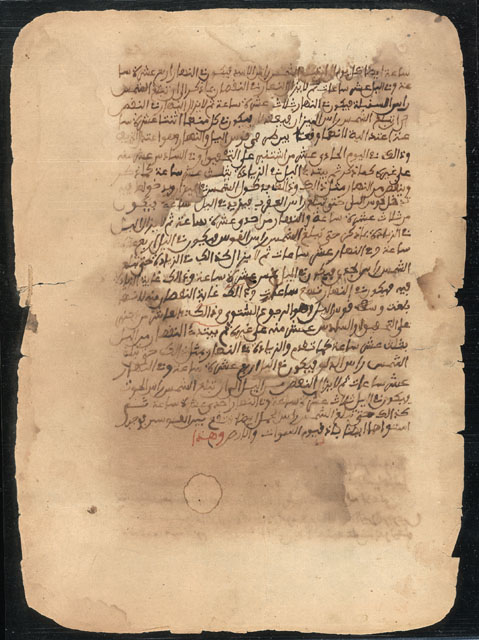
The physical attributes of the manuscripts are as varied as their contents. They are written primarily in Arabic, but many use Ajami—the practice of writing African languages like Songhai, Hausa, and Fulfulde in Arabic script. This demonstrates a high degree of literacy and linguistic adaptability. The calligraphy ranges from the crisp, angular Maghribi script, common in North Africa, to the more rounded Sudani and Saharan styles. The ink, often black or brown, was made from soot, gum arabic, and plant extracts. The paper itself tells a story: the oldest manuscripts are written on sheets made from the bark of the mulberry tree, imported from the Middle East. Later manuscripts, from the 16th century onward, are often on paper produced in Italy, France, or Spain, indicating a thriving import trade in writing materials. Some of the most unique items are written on animal skins, particularly gazelle hide, which was scraped thin and polished to a smooth surface.
Many manuscripts are illuminated with geometric designs, gold leaf, and intricate borders. Others feature marginalia—notes, corrections, and commentary added by successive readers over generations. This is not a static archive; it is a living conversation across time. A single volume might contain the core text, a commentary by a scholar in Fez, a gloss by a student in Timbuktu, and a note from a later owner in Sokoto. Reading these layers is like listening to a centuries-long seminar. The bindings themselves are works of art, often made of leather tooled with geometric patterns, designed to protect the fragile pages from the dry Saharan air and the ever-present threat of insects.
| Subject Area | Approximate Share | Notable Examples |
|---|---|---|
| Religious Sciences (Qur’an, Hadith, Fiqh) | ~45% | Commentaries on Sahih al-Bukhari; Maliki legal manuals |
| Arabic Language & Literature | ~20% | Poetry anthologies; grammar treatises; rhetorical studies |
| History & Biography | ~15% | *Tarikh al-Sudan*; *Tarikh al-Fattash*; local chronicles |
| Sciences (Astronomy, Math, Medicine) | ~10% | Astrolabe manuals; astronomical tables; medical encyclopedias |
| Social Sciences & Commerce | ~10% | Legal contracts; merchant letters; land deeds; ethical treatises |
Note: Percentages are estimates based on surveys of major public and private collections in Timbuktu, such as the Ahmed Baba Institute and the Mamma Haidara Library. The exact composition varies significantly between collections.
Preservation in Peril: The Modern Rescue of the Timbuktu Manuscripts
The late 20th and early 21st centuries brought new and devastating threats to the manuscripts. The first major crisis came in 2012, when Tuareg rebels, followed by Islamist groups affiliated with Al-Qaeda in the Islamic Maghreb (AQIM), seized control of northern Mali, including Timbuktu. Under their extremist interpretation of Islam, the rebels considered many of the manuscripts to be heretical, particularly those dealing with Sufism, astronomy, and music. They systematically destroyed Sufi shrines in the city, and there was a palpable fear that the libraries would be next. The world watched in horror as the occupying forces set fire to a building that housed thousands of manuscripts in January 2013, just days before a French-led military intervention pushed them out of the city.
What the world did not know at the time was that a daring, covert operation was already underway. A coalition of librarians, archivists, and ordinary citizens, led by figures like Abdel Kader Haidara of the Mamma Haidara Memorial Library, had been secretly evacuating the manuscripts from Timbuktu for months. Using a network of trusted couriers, they packed the texts into metal trunks, loaded them onto donkeys, boats, and trucks, and smuggled them hundreds of miles south to the capital, Bamako. It was an extraordinarily risky operation; those involved faced potential execution if caught. By the time the fires were set, the vast majority of the most important collections had already been moved to safety. An estimated 350,000 to 400,000 manuscripts were rescued from the city, with only a few thousand—many of which were copies or less significant works—left behind to burn.
From Hiding to Digitization: A New Chapter
Today, the manuscripts are slowly making their way back to Timbuktu, though many remain in Bamako under carefully controlled conditions. The rescue operation highlighted the urgent need for professional preservation. Organizations like the Ahmed Baba Institute for Higher Islamic Studies and Research, the Mamma Haidara Library, and the Savama-DCI (a consortium of private libraries) are now at the forefront of conservation efforts. The work is painstaking. Conservators must first photograph each page to create a digital record. Then, they painstakingly clean the pages, often using soft brushes and erasers to remove dust and mold. Tears are repaired with delicate Japanese tissue paper and a special starch-based adhesive. The pages are then re-bound, often in traditional leather covers, and stored in acid-free boxes in climate-controlled rooms.
Digitization is a critical component of this preservation strategy. By creating high-resolution digital surrogates, the physical manuscripts can be handled less frequently, reducing wear and tear. More importantly, digitization democratizes access. A scholar in Dakar, a student in London, or a researcher in Washington, D.C., can now view a 14th-century astronomical table without needing to travel to Mali. The Mamma Haidara Library has partnered with international institutions like the Library of Congress and the British Library to make hundreds of thousands of images available online. This digital revolution is not just about preservation; it is about repatriation of knowledge. For centuries, African history was written by outsiders, often from colonial perspectives. The digitization of the Timbuktu manuscripts allows African scholars to reclaim their own narrative, to study their own intellectual heritage on their own terms.
Beyond Timbuktu: A Legacy for the Entire Continent
The significance of the Timbuktu manuscripts extends far beyond the walls of a single desert city. They are proof that Africa had a vibrant written tradition that was not dependent on European contact. This is a crucial corrective to the pernicious myth that Africa was a continent without history, a “dark” place that only emerged into the light of civilization through colonialism. The manuscripts demonstrate that complex legal systems, sophisticated scientific inquiry, and rich literary cultures flourished in West Africa for centuries. They connect the region not only to the broader Islamic world but also to the intellectual currents of the Mediterranean and beyond. The presence of paper from Italy and Spain, for instance, shows that Timbuktu was not isolated but was an active node in a truly global trade network.
Moreover, the manuscripts inspire contemporary African scholarship and creativity. They are a source of national pride for Mali, a symbol of resilience in the face of adversity. The story of their rescue in 2013 has become a modern legend, a testament to the courage of ordinary people who risked everything to protect their cultural heritage. This narrative has inspired similar preservation efforts across the continent. In Ethiopia, in Ghana, in Senegal, and in South Africa, archivists are looking anew at their own manuscript collections, many of which are in similar states of fragility. The Timbuktu model—a combination of community ownership, professional conservation, and digital dissemination—is being studied and adapted as a best-practice example.
“The manuscripts are not just for us. They are for the world. They are proof that we have always been a people of knowledge, and that knowledge can never be burned away.” — A statement often echoed by librarians and custodians in Timbuktu, reflecting a deep sense of collective duty.
The Custodians of Memory: The Families Behind the Texts
It is essential to remember that the Timbuktu manuscripts are not nationalized museum artifacts; they are, for the most part, private property, held by the descendants of the families who have preserved them for centuries. Figures like Ahmed Baba in the 16th century, and Abdel Kader Haidara in the 21st, are just the most famous names in a long line of custodians. These families, such as the Fondo Kati, the Al-Wangari, and the Bullel, possess an intimate, personal relationship with their collections. They know which manuscript contains the family genealogy, which one holds a favorite poem, and which one has a water stain from a flood a hundred years ago. This personal knowledge is invaluable for researchers.
The transition from a private, family-centered model of preservation to a more public, professional one is fraught with challenges. Some families are reluctant to hand over their treasures to central institutions, fearing loss of control or even confiscation. Others are concerned about the commercial exploitation of their heritage. There is also a significant economic dimension. Many of these families are not wealthy, and the costs of proper conservation materials—acid-free boxes, specialized papers, climate control—are prohibitive. Some have been forced to sell manuscripts to private collectors, a trend that worries heritage professionals who fear the dispersal of collections. The future of the manuscripts depends on finding a sustainable model that respects the rights and needs of these traditional custodians while ensuring the long-term survival of the texts. Initiatives that provide training and materials to private libraries, and that establish fair compensation for custodians whose manuscripts are digitized, are crucial steps in this direction.
Reading the Future in Ancient Pages
As the world grapples with challenges like climate change, political instability, and the search for sustainable development, the Timbuktu manuscripts offer unexpected guidance. The legal texts on water rights and land management from the 16th century provide historical precedents for contemporary resource disputes in the Sahel. The astronomical observations, carefully recorded over centuries, contain data on weather patterns and celestial events that modern climate scientists are beginning to analyze. The medical manuscripts, with their detailed descriptions of local plants and remedies, hold potential for new pharmaceutical discoveries. And the philosophical and ethical treatises, which grapple with questions of justice, governance, and the nature of knowledge, speak directly to the challenges of building stable, democratic societies in the 21st century.
The Timbuktu manuscripts are not a relic of a dead past; they are a vibrant, dynamic resource for the present and the future. They remind us that the history of Africa is not a story of tragedy and victimhood, but a story of innovation, resilience, and profound intellectual achievement. They challenge us to rethink our assumptions about the continent and its place in the world. The city of Timbuktu, once a byword for the exotic and unreachable, is now a symbol of the power of knowledge to endure against all odds. The manuscripts are a gift to humanity, a reminder that the written word, when cherished and protected, can outlast empires, droughts, and even the fires of intolerance.
A Living Legacy: The Ongoing Journey of the Manuscripts
The journey of the Timbuktu manuscripts is far from over. The physical repatriation of the texts from Bamako back to Timbuktu is a slow and delicate process, occurring only as new, secure library facilities are completed. The construction of a new, modern conservation center on the outskirts of Timbuktu, funded by international donors, is a positive sign, but much work remains. The fight against the elements—heat, dust, insects, and humidity—is a constant one. The fight against neglect and political instability is also ongoing. The manuscripts require a long-term commitment from the Malian government, the international community, and the local custodians who have guarded them for so long.
Yet, there is reason for profound hope. The successful rescue operation of 2013 demonstrated an extraordinary level of organization and dedication. The growing global interest in the manuscripts has brought new funding and new expertise. And, most importantly, a new generation of African archivists, conservators, and scholars is emerging, trained in the latest techniques and deeply committed to their heritage. They are not just preserving the past; they are actively interpreting it, making it relevant for a new age. They are using the manuscripts to teach schoolchildren about their history, to train lawyers in traditional legal principles, and to inspire artists and writers. The Timbuktu manuscripts, once hidden in the dark, are now stepping into the light, and in doing so, they are illuminating the path forward for an entire continent. The hidden legacy of Timbuktu has been revealed, and its value is immeasurable. The story of these ancient pages is a story of human intellect, courage, and the unyielding belief that knowledge is the most precious treasure of all.