📅 Last updated: 28.08.2026
Benin City Walls: Africa’s Largest Earthwork is a phrase that should resonate far more loudly in the global consciousness than it does, for it describes a feat of engineering and communal labor that, at its zenith, was comparable in scale to the Great Wall of China and four times longer than the pyramids of Giza. This sprawling complex of earthen banks and ditches, which once encircled the ancient capital of the Edo people in what is now southern Nigeria, was not merely a defensive barrier but a profound statement of political power, spatial organization, and urban sophistication. To speak of the Benin City Walls is to speak of a civilization that, long before European contact, had mastered the art of shaping its environment on a colossal scale, creating a monument that challenges the very definitions of what constitutes a “wonder of the world.”
The story of these walls is not a single narrative but a layered palimpsest of ambition, ingenuity, and resilience. It is a story that begins with the rise of a powerful kingdom in the rainforest, reaches its apex during the reign of the Oba (King), and continues to unfold today as archaeologists and historians work to piece together the full extent of its legacy. To understand the walls is to understand the very soul of the Benin Kingdom, a realm whose art, governance, and military prowess made it one of the most formidable states in pre-colonial West Africa. This article delves into the depths of this monumental earthwork, exploring its construction, its purpose, its decline, and the modern efforts to preserve its memory for generations to come.
Origins and the Expansion of the Earthwork
The genesis of the Benin City Walls is intertwined with the legendary history of the Edo people. Oral tradition and contemporary archaeological consensus point to the 13th century as the period when the initial fortifications began to take shape, during the reign of Oba Oguola. However, the monumental expansion that created the vast network we speak of today is largely attributed to the reign of Oba Ewuare the Great, who ruled from approximately 1440 to 1473. It was Ewuare who transformed Benin City from a collection of scattered homesteads into a planned, fortified metropolis, initiating what would become a centuries-long project of urban engineering. He is credited with building the inner city walls and the deep ditches that protected the palace and the core residential areas, establishing a pattern of concentric rings of defense that would be replicated and expanded upon by his successors.
The construction was not a singular event but a continuous process of expansion and reinforcement that spanned over five centuries. Each successive Oba sought to leave his own mark on the landscape, extending the fortifications further into the surrounding territory. This organic growth meant that the city and its protective shell evolved in tandem, with the walls serving as a physical manifestation of the kingdom’s expanding influence and wealth. By the 15th and 16th centuries, Benin had become a sprawling urban center, its layout a testament to deliberate planning. The walls defined the city’s boundaries, channeled movement, and provided a clear demarcation between the urban core and the agricultural hinterland that sustained it.
The Engineering of the Iya
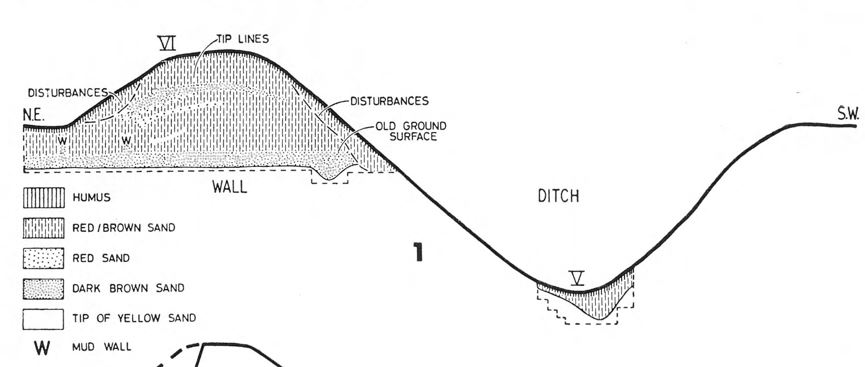
The sheer scale of the project is almost incomprehensible. The walls, known in the Edo language as Iya, were constructed using a sophisticated technique of digging deep ditches and using the excavated earth to pile up parallel embankments. These ditches were not shallow trenches; they were formidable moats, often ranging from 3 to 6 meters deep, with the adjacent ramparts rising to similar heights. The total length of the earthwork, encompassing both the inner and outer systems, is estimated to be around 16,000 kilometers — a figure that includes the main city walls, the extensive network of outer walls, and the intricate system of linear earthworks that crisscrossed the kingdom’s territory, connecting villages and marking boundaries.
This was not a task for slaves or forced labor in the conventional sense. The monumental undertaking was organized through a system of communal mobilization, where each extended family, village, or community group was assigned a specific section to construct and maintain. This was a civic duty, a form of taxation in labor that reinforced social cohesion and collective identity. The result was a marvel of engineering that required no mortar, no stone, and no metal tools—only the strength of human hands, the ingenuity of the planners, and the simple yet effective tools of the forest, such as wooden digging sticks and iron hoes. The sheer volume of earth moved, estimated at some 50 million cubic meters, is a testament to the organizational capabilities and sheer human will of the Edo people.
The Purpose and Function of the Benin City Walls
While the primary function of the walls was undoubtedly defensive, reducing their purpose to mere military fortification would be a gross simplification. They served a multifaceted role in the socio-political and spiritual life of the kingdom. The deep ditches and high banks presented a formidable obstacle to any invading force, particularly cavalry from the north, which was ill-suited for navigating the dense rainforest and the treacherous terrain of the moats. The walls effectively funneled attackers into narrow, predetermined gateways where they could be easily repelled by Benin’s archers and warriors. This defensive network was so effective that the city of Benin was rarely, if ever, taken by force until the British Punitive Expedition of 1897.
Beyond defense, the walls functioned as a powerful symbol of authority and control. They were a physical expression of the Oba’s power, his ability to command the labor of thousands, and his role as the divine protector of his people. The sheer scale of the earthworks was a visible deterrent, a message to potential rivals and subjects alike of the immense resources and organizational capacity at the Oba’s disposal. The walls also served a practical administrative purpose, demarcating the city’s boundaries, controlling trade and movement of people, and providing a secure environment for the kingdom’s thriving craft industries, particularly the famous Benin Bronzes, which were cast in the guild quarters within the walls.
An Urban Planning Marvel
The city inside the walls was equally remarkable. European visitors in the 17th century, such as the Dutch merchant Olfert Dapper, described Benin City as a planned metropolis with wide, straight boulevards, well-ordered houses, and a vast royal palace complex. The walls were integral to this urban plan, creating a series of concentric zones. The innermost wall protected the Oba’s palace, a city within a city. Beyond that were the residential quarters for nobles and chiefs, then the craft and trade districts, and finally the outer walls which protected the agricultural lands and outlying villages. This spatial hierarchy mirrored the social hierarchy of the kingdom, with the Oba at the center and the concentric rings of society radiating outwards. The layout was not just functional but deeply symbolic, reinforcing the cosmic and political order of the Edo world.
The walls also played a crucial role in resource management. The ditches, when not serving as defensive barriers, could be adapted for drainage and water collection. The embankments themselves could be planted with useful trees and vegetation, providing food, medicine, and raw materials. The network of linear earthworks extending far beyond the city also served to delineate agricultural plots, manage the movement of livestock, and mark the boundaries between different clan territories. In this sense, the walls were a sophisticated tool for managing the landscape and its resources on a grand scale, a form of pre-modern land management that was both efficient and sustainable.
The Scale of a Lost Wonder
To truly appreciate the magnitude of the Benin City Walls, one must consider the comparative scale of other famous historical monuments. The figure of 16,000 kilometers is often cited, but it is important to contextualize this number. According to the Guinness Book of Records, the Benin City Walls were considered the largest earthworks in the world, surpassing even the famous earthworks of the Americas. This staggering length is more than four times the length of the Great Wall of China, which is roughly 21,000 kilometers but is primarily a stone and brick construction built over a much longer period and a far larger geographical area. In terms of sheer volume of earth moved, the project is often compared to the Great Pyramid of Giza, with some estimates suggesting that the Benin earthworks involved moving more material.
This immense scale was not a product of a single, centralized empire-building campaign but rather the cumulative effort of a highly organized and densely populated kingdom over many generations. The population of the Benin Empire at its height in the 16th century is estimated to have been in the millions, making it one of the most populous states in the world at the time. This large population, organized under a centralized monarchy, provided the necessary labor force and administrative structure to undertake and maintain such a vast public works project. The walls were thus a reflection of the kingdom’s demographic strength and its ability to sustain large-scale, long-term collective action.
| Monument | Approximate Length | Primary Material | Approximate Construction Period |
|---|---|---|---|
| Benin City Walls | 16,000 km (all earthworks) | Earth (ditch and bank) | 13th – 19th Century |
| Great Wall of China | 21,196 km (all branches) | Stone, brick, earth | 7th Century BC – 17th Century |
| Hadrian’s Wall (UK) | 117 km | Stone and turf | 2nd Century AD |
| Great Zimbabwe Walls | Approx. 250 meters (main wall) | Stone | 11th – 15th Century |
The table above illustrates the stark difference in both scale and material. While the Great Wall is a linear defensive structure, the Benin City Walls are a complex, multi-linear network of earthworks, an entire landscape engineered for defense and organization. The comparison is not about which is “better” but about highlighting the unique and often overlooked achievement of the Edo civilization. The fact that this vast earthwork was constructed in a dense rainforest environment, using perishable materials and relying entirely on human and animal power, makes it an engineering triumph of the highest order. It is a powerful corrective to the narrative that pre-colonial Africa lacked monumental architecture or complex engineering capabilities.
The Decline and Destruction of the Walls
The decline of the Benin City Walls is inextricably linked to the decline of the kingdom itself and the onset of European colonialism. The kingdom’s power and wealth, built on trade (first in pepper and ivory, later in enslaved people) with the Portuguese and other Europeans, began to erode in the 19th century as the transatlantic slave trade was suppressed and internal conflicts arose. However, the most devastating blow came in 1897, with the British Punitive Expedition. Following a dispute over trade and the killing of a British delegation, a large British military force mounted a campaign to conquer the kingdom. The city was captured, looted, and burned, and the Oba was exiled. This event marked a violent rupture in the kingdom’s history and the beginning of the deliberate dismantling of its physical and political infrastructure.
The walls, however, were not destroyed in a single moment of conquest. Their demise was a slower, more insidious process that unfolded over the following decades. The British colonial administration, seeking to modernize the city, viewed the ancient fortifications as obsolete and an obstacle to urban development. A significant portion of the walls was demolished to make way for new roads, administrative buildings, and residential areas. The once-majestic ramparts were flattened, and the ditches were filled in to create level ground for construction. The British officials, largely ignorant of the historical and cultural significance of the earthworks, saw them as little more than primitive barriers that had outlived their purpose.
Modern Encroachment and Erosion
The process of destruction continued well after independence. As Benin City (now the capital of Edo State in Nigeria) expanded rapidly in the 20th and 21st centuries, the remaining sections of the walls came under increasing pressure. Uncontrolled urban sprawl has led to the construction of homes, businesses, and infrastructure directly on top of the ancient earthworks. In many areas, the walls have been quarried for sand and laterite to use in modern construction, or simply used as convenient dumping grounds for refuse. The natural forces of erosion, coupled with the lack of a coordinated preservation effort, have taken their toll. Today, it is estimated that only a small fraction of the original earthwork system remains visible and in a relatively good state of preservation, a mere shadow of its former glory and a stark reminder of the fragility of even the most colossal of human achievements.
The loss is not just physical but also cultural and spiritual. For many Edo people, the walls are not just historical relics but sacred spaces connected to their ancestors and the spiritual foundations of their kingdom. Their destruction represents a severing of a tangible link to a glorious and proud past. The erasure of the walls from the landscape mirrors the broader attempt by colonial powers to diminish and delegitimize African history and achievement. The fight to preserve what remains of the Benin City Walls is therefore not just an archaeological endeavor; it is an act of cultural reclamation and a assertion of historical identity.
Rediscovery, Research, and the Modern Struggle
For decades, the Benin City Walls were largely forgotten outside of Nigeria, relegated to footnotes in colonial-era histories. The modern rediscovery of their true scale is largely credited to the pioneering work of the late Professor Patrick Darling, a British archaeologist who, in the 1970s, conducted extensive aerial and ground surveys of the earthworks. His research was instrumental in mapping the vast extent of the network and bringing its global significance to the attention of the international archaeological community. His work demonstrated that the walls were not a single, isolated feature but a complex and interconnected system of fortifications and boundaries that covered a vast area of the kingdom’s territory.
Since Darling’s initial surveys, archaeological research has continued, albeit on a limited scale due to funding constraints and the challenges of surveying in a rapidly urbanizing environment. Modern techniques, including satellite imagery and Geographic Information Systems (GIS), are being used to map and monitor the remaining sections of the walls. These technologies are providing new insights into the planning, construction, and function of the earthworks. However, the primary challenge remains the same as it was in Darling’s time: the threat of destruction from urban expansion and a lack of political will and public awareness to prioritize their preservation.
Efforts at Preservation and UNESCO Recognition
The effort to preserve the Benin City Walls has been a long and arduous one. The site was added to Nigeria’s National Monument list in 1961, but this designation has provided limited practical protection. There have been ongoing, and so far unsuccessful, campaigns to have the walls inscribed on the UNESCO World Heritage List. While the site is on Nigeria’s Tentative List, formal nomination and inscription have faced numerous bureaucratic hurdles. Supporters argue that UNESCO recognition would not only bring international prestige but also unlock crucial funding and technical expertise for conservation and management. It would also raise global awareness and put pressure on local authorities to enforce existing protection laws.
Despite the challenges, there is a growing movement of local historians, community leaders, and cultural activists who are working to raise awareness about the walls’ importance. They are organizing clean-up initiatives, lobbying the government for better protection, and developing educational programs to teach young people about this remarkable heritage. For these advocates, the walls are not just a relic of the past but a source of pride and identity that can inspire future generations. They see the preservation of the walls as a vital component of a broader narrative of African renaissance, a way to reclaim and celebrate the continent’s rich and complex history on its own terms. The modern struggle is not just about saving dirt and ditches; it is about saving a story, an identity, and a legacy.
The Walls as a Living Legacy
Despite the destruction and neglect, the Benin City Walls are not merely a dead archaeological site. In many areas, the surviving sections of the walls and ditches continue to play a role in the lives of the communities that live alongside them. They are used as boundary markers between families and villages, their embankments providing fertile ground for agriculture, and their ditches serving as natural drainage channels. In some places, the walls are still venerated as sacred sites, associated with ancestral spirits and traditional religious practices. They are a living part of the cultural landscape, even if their original defensive purpose has long since vanished.
The legacy of the walls also lives on in the cultural memory and identity of the Edo people. They are a source of immense pride, a tangible symbol of the power and sophistication of the great Benin Kingdom. The story of their construction is passed down through generations, a narrative of collective achievement and national greatness. The walls are referenced in art, literature, and song, and they remain a potent symbol in discussions about African history and heritage. For the African diaspora, the walls hold a particular significance, representing a powerful counter-narrative to the dominant stories of Africa’s past that focus solely on colonialism and tragedy. They stand as a testament to the fact that Africa was home to complex, organized, and monumental civilizations long before the arrival of Europeans.
The future of the Benin City Walls is uncertain, but it is not without hope. The growing global interest in African heritage, combined with the determined efforts of local communities and scholars, offers a glimmer of possibility. The challenge is to move beyond mere acknowledgment of the walls’ existence and towards concrete, sustainable action. This requires a multi-faceted approach involving government investment, international cooperation, community engagement, and innovative conservation techniques. It requires seeing the walls not as an obstacle to development but as an asset that can enrich the city’s cultural landscape and attract tourism and investment. It requires a fundamental shift in perception, from seeing them as a forgotten relic to recognizing them as a vital and inspiring part of a shared global heritage.
Conclusion: A Monument for the Future
The Benin City Walls are more than just an ancient fortification; they are a profound lesson in the power of human organization, a testament to the ingenuity of a civilization that shaped its world on a monumental scale. They are a symbol of the sophistication of pre-colonial Africa, a challenge to the historical narratives that have long marginalized the continent’s contributions to human achievement. Their story, from their awe-inspiring construction to their tragic neglect and the ongoing fight for their preservation, is a microcosm of the broader African experience—a history of greatness, disruption, resilience, and the ongoing struggle for self-determination and historical justice.
To preserve the Benin City Walls is not to be mired in the past, but to invest in the future. It is to ensure that future generations of Edo people, Nigerians, Africans, and the world at large can stand before these earthen giants and feel the same sense of wonder and pride that must have filled the hearts of their creators. It is to weave a more complete and accurate tapestry of human history, one that gives due credit to all civilizations, regardless of their latitude. The walls are a bridge connecting a glorious past to a hopeful future, a reminder that even the most magnificent structures are built not from stone and steel, but from the collective will and imagination of a people. The call to action is clear: we must not let this, Africa’s largest earthwork, be erased from the map and from memory. We must work to ensure that its legacy stands as tall and as enduring as the very banks of earth that once guarded the great city of Benin.