📅 Last updated: 07.11.2026
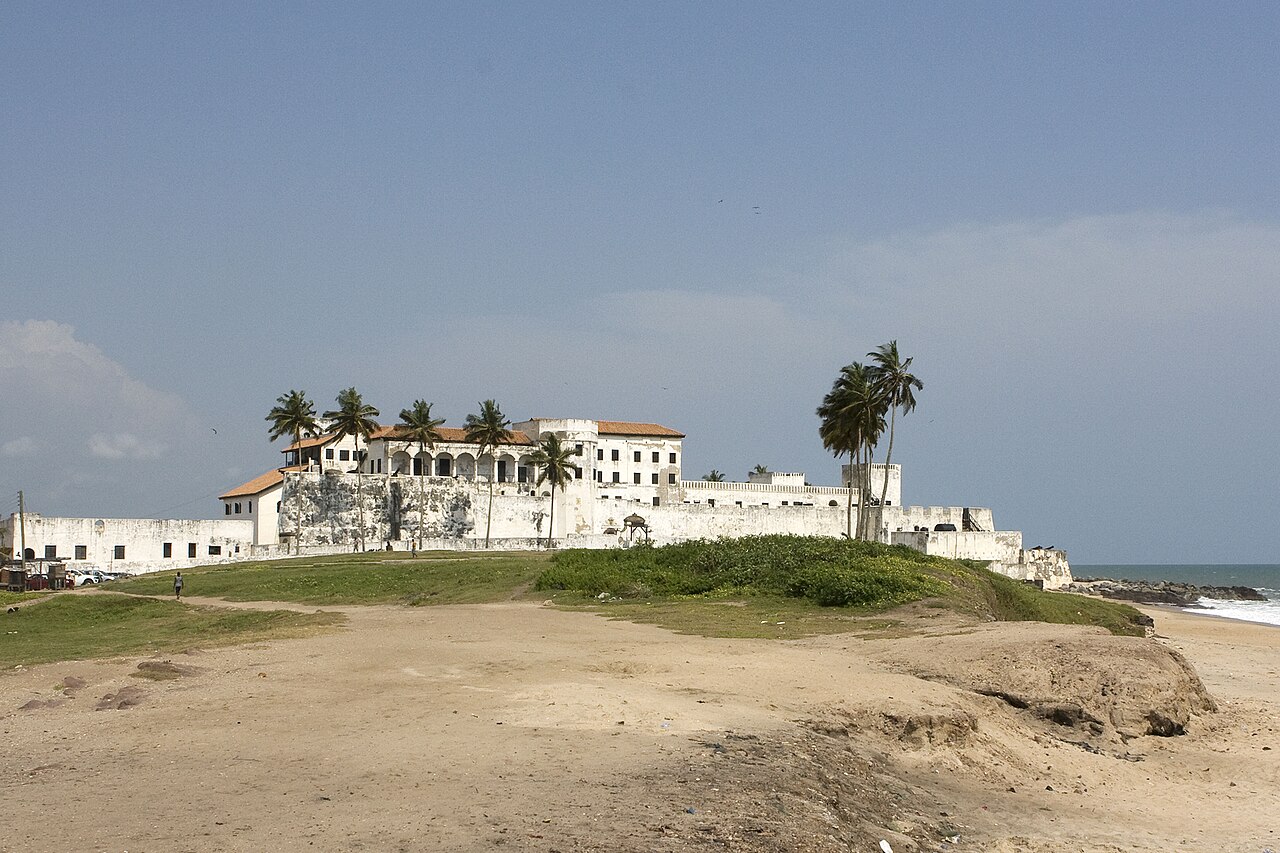
Elmina Castle Ghana stands on the edge of the Atlantic like a memory cast in stone — its whitewashed walls glowing in the West African sun, its cannons still aimed at the sea. Walking through its arched corridors today, you hear the waves, the wind, and something harder to name: the weight of four centuries of history. The castle is one of the oldest surviving European buildings in sub-Saharan Africa, and it is also one of the most consequential.
Elmina Castle Ghana is a 15th-century Portuguese fortress on the coast of Ghana’s Central Region, built in 1482 as São Jorge da Mina. It later became a key node in the transatlantic slave trade under Dutch and British control, and today it is a UNESCO World Heritage Site and a place of pilgrimage for the African diaspora.
- Where Is Elmina Castle Ghana Located and Why Does Geography Matter?
- Who Built Elmina Castle and When? The Portuguese Origins
- How Did Elmina Castle Ghana Become Central to the Transatlantic Slave Trade?
- What Can You See Inside Elmina Castle Today?
- Elmina Castle Ghana: Key Facts and Timeline
- Why Is Elmina Castle Ghana a Place of Pilgrimage for the African Diaspora?
- How Is Elmina Castle Being Preserved and Reinterpreted Today?
- What Else Should You Know Before Visiting Elmina Castle Ghana?
- Frequently Asked Questions About Elmina Castle Ghana
- Elmina Castle Ghana: A Living Memory, Not a Relic
But to understand Elmina is to understand much more than a single building. It is a story about global trade, African agency, human cruelty, and the long memory of a continent. It is also a story about a living town — Elmina — where fishing canoes still return to the shore at dusk, and where young Ghanaians are reclaiming their history on their own terms.
Where Is Elmina Castle Ghana Located and Why Does Geography Matter?
Elmina sits about 12 kilometres west of Cape Coast, on a rocky peninsula where the Benya River meets the Gulf of Guinea. The Portuguese chose the site with cold precision: a natural harbour, a defensible promontory, and access to inland gold routes controlled by the Fante and other Akan peoples.
The town itself predates the castle by centuries. Elmina — originally called Anomansa or Aldea das Duas Partes in early Portuguese accounts — was already a thriving trading settlement when the first European ships arrived. Local fishermen and traders had long been part of trans-Saharan and coastal networks that moved gold, kola nuts, salt, and cloth.
That geography shaped everything. The castle’s position made it a natural choke point for trade, and later for the trafficking of enslaved Africans. The nearby Elmina Java Museum and the town’s bustling fish market remind visitors that this is not a museum piece — it is a working community of roughly 30,000 people.
Who Built Elmina Castle and When? The Portuguese Origins
In 1482, a Portuguese expedition led by Diogo de Azambuja arrived with 600 soldiers and builders, along with prefabricated stone and timber. They began construction almost immediately, and within a few years São Jorge da Mina was the first permanent European fortification in sub-Saharan Africa.
The Gold Trade and Early Prosperity
The castle’s original purpose was gold. The Portuguese crown established a royal trading monopoly, and for decades Elmina was the centre of the West African gold trade. The region became known as the Costa da Mina — the Coast of the Mines — which is where the modern name “Elmina” comes from.
Portuguese traders exchanged brass, copper, cloth, and beads for gold, and the castle grew wealthy. At its height, the Portuguese crown drew a significant share of its West African revenue from Elmina. This was not a marginal outpost — it was a strategic asset.
The Dutch Conquest of 1637
Portuguese dominance did not last. In 1637, after two failed attempts, a Dutch force under Colonel Hans Coine captured the castle. The Dutch West India Company (WIC) took control and expanded the fortifications, adding the outer walls and bastions visible today.
The Dutch rebuilt and enlarged Elmina Castle, turning it into the imposing structure that still stands. They also built Fort Coenraadsburg on the hill above — originally a Portuguese chapel, later a military lookout — which provided a strategic overview of the castle and the surrounding waters.
How Did Elmina Castle Ghana Become Central to the Transatlantic Slave Trade?
The answer is uncomfortable and complex. Elmina was not built as a slave castle, but over time it became one of the most important nodes in the transatlantic slave trade.
The Shift from Gold to Human Cargo
As the gold trade declined in the 17th century, European demand for enslaved labour in the Americas surged. The Dutch West India Company, followed by the English, Portuguese, and others, redirected Elmina’s infrastructure toward the trafficking of human beings.
Enslaved Africans were brought to the castle from inland regions — often by African traders and intermediaries — and held in dungeons beneath the main courtyard. They were then loaded onto ships bound for the Caribbean, Brazil, and North America. Historians estimate that millions of Africans were forcibly transported across the Atlantic, and Elmina was one of the most significant embarkation points on the Gold Coast.
The Castle’s Architecture of Captivity
Walking through Elmina Castle today, the architecture tells its own story. The male dungeon could hold hundreds of men, packed tightly with little ventilation. The female dungeon was separate, and it was here that some of the most harrowing accounts of abuse emerge. A narrow corridor leads to the “Door of No Return” — the portal through which enslaved Africans were led to waiting ships, never to return.
The castle’s upper floors, by contrast, housed governors’ quarters, a chapel, and a courtyard. The contrast between the airy, light-filled rooms above and the dark, suffocating dungeons below is one of the most striking features of the site. It is a physical manifestation of the moral chasm at the heart of the slave trade.
What Can You See Inside Elmina Castle Today?
Today, Elmina Castle Ghana is a museum and memorial site, managed by the Ghana Museums and Monuments Board. A visit is a journey through layers of history, and it rewards those who take their time.
The Courtyard and the Chapel
The central courtyard is where enslaved Africans were assembled and inspected. Above it, the Portuguese chapel — later converted into a Dutch Reformed church — still stands. Its position directly above the female dungeon is a detail that visitors rarely forget.
The Dungeons and the Door of No Return
The dungeons remain largely as they were, though some have been modified for preservation. The “Door of No Return” is now a place of reflection, and many visitors — particularly those from the African diaspora — leave flowers, prayers, and tears there.
Fort Coenraadsburg and the Wider Site
Just uphill from the castle, Fort Coenraadsburg (also called Fort São Tiago) offers panoramic views of Elmina and the coastline. The castle grounds also include the governors’ quarters, now used for exhibitions, and the outer bastions with their original cannons.
Elmina Castle Ghana: Key Facts and Timeline
| Year | Event | Significance |
|---|---|---|
| 1482 | Portuguese begin construction of São Jorge da Mina | First permanent European fortification in sub-Saharan Africa |
| 1637 | Dutch capture the castle from Portugal | Beginning of Dutch West India Company control and expansion |
| 17th–18th centuries | Castle becomes a major slave-trade depot | Millions of Africans trafficked through the Gold Coast |
| 1872 | Dutch cede Elmina to the British | British colonial control of the Gold Coast |
| 1957 | Ghana gains independence | Castle becomes a national monument and symbol of memory |
| 1979 | UNESCO World Heritage Site designation | Recognition of global historical significance |
Why Is Elmina Castle Ghana a Place of Pilgrimage for the African Diaspora?
For many people of African descent, Elmina is not a tourist site — it is a site of return. Since the 1990s, Ghana has actively encouraged diaspora engagement, and Elmina has become a focal point for “Year of Return” initiatives, DNA-tracing journeys, and personal pilgrimages.
In 2019, Ghana’s government declared the “Year of Return” to mark 400 years since the first recorded enslaved Africans arrived in Virginia. Elmina Castle was at the centre of those commemorations. Visitors from the United States, Brazil, the Caribbean, and Europe came to walk through the dungeons and stand at the Door of No Return.
The experience is often described as emotionally overwhelming. Many visitors participate in traditional libations, guided reflections, and ceremonies led by local elders. The castle’s guides — many of them Ghanaians with deep family connections to the region — provide context that no textbook can.
How Is Elmina Castle Being Preserved and Reinterpreted Today?
Elmina Castle Ghana faces the same challenges as many historic sites: coastal erosion, humidity, salt damage, and the pressure of increasing visitor numbers. Conservation efforts are ongoing, supported by UNESCO, the Ghana Museums and Monuments Board, and international partners.
Conservation and Community
Restoration work has focused on stabilising the castle’s walls and improving drainage. But there is also a growing emphasis on community involvement. Local guides, historians, and artisans are central to how the castle is presented and interpreted.
Reclaiming the Narrative
There is a shift in how Elmina is discussed. Rather than presenting the castle solely as a European-built structure, contemporary interpretation emphasises African agency, resistance, and survival. The stories of enslaved Africans who resisted, escaped, or endured are increasingly part of the narrative.
This reinterpretation matters. It ensures that Elmina is not simply a monument to European power, but a site that honours the resilience of African people.
What Else Should You Know Before Visiting Elmina Castle Ghana?
- Respect the space: This is a memorial site. Dress modestly, keep voices low in the dungeons, and follow your guide’s lead.
- Allow time: A meaningful visit takes at least two hours. Combine it with a walk through Elmina town and a visit to Fort Coenraadsburg.
- Engage with local guides: Their knowledge and family histories add depth that self-guided tours cannot.
- Support the local economy: Buy from local artisans and eat at community-run restaurants — tourism should benefit Elmina’s residents.
Frequently Asked Questions About Elmina Castle Ghana
Is Elmina Castle the oldest European building in Africa?
It is one of the oldest surviving European structures in sub-Saharan Africa. Some Portuguese forts in North Africa and islands like São Tomé predate it, but Elmina is the oldest permanent European fortification in sub-Saharan Africa still standing.
How many enslaved Africans passed through Elmina Castle?
Exact figures are impossible to determine, but historians estimate that millions of Africans were trafficked through the Gold Coast, with Elmina serving as one of the most significant embarkation points. The castle’s dungeons could hold hundreds at a time.
Can you visit Elmina Castle without a guide?
Guided tours are strongly recommended and are included with admission. Guides provide essential historical context and help visitors engage respectfully with the site.
What is the connection between Elmina and Cape Coast Castle?
Both are UNESCO World Heritage Sites and major slave-trade memorials on Ghana’s coast. Cape Coast Castle is larger and was the British administrative centre; Elmina was Portuguese and Dutch. Visiting both offers a fuller picture.
Elmina Castle Ghana: A Living Memory, Not a Relic
Standing on the ramparts of Elmina Castle as the sun sets over the Atlantic, it is impossible to separate the beauty of the coastline from the horror of what happened here. That tension is the point. Elmina does not offer easy comfort. It asks visitors to hold both truths: the ingenuity and ambition that built this place, and the suffering that sustained it.
Yet Elmina is also a story of survival. The town below the castle is alive with music, fishing, schoolchildren, and street vendors. Ghana’s Central Region is home to vibrant festivals like Bakatue, celebrated each July by the people of Elmina to mark the opening of the fishing season. The castle and the community exist together, each shaping the other.
For travellers, scholars, and diaspora visitors alike, Elmina Castle Ghana is more than a destination. It is a place where history is not past — it is present, and it is still being written.