📅 Last updated: 06.11.2026
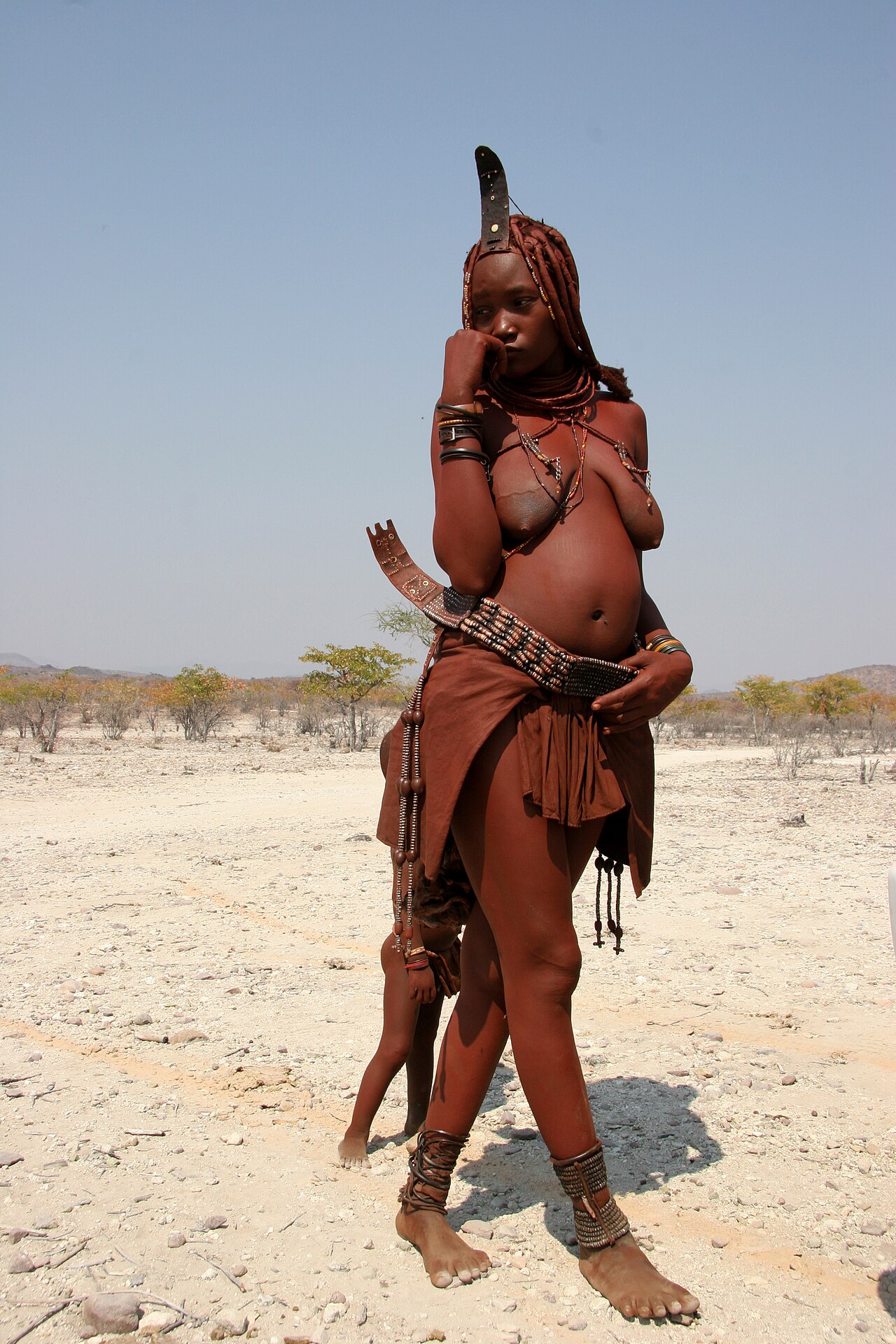
Every morning in the arid hills of northern Namibia, women of the Himba people wake before sunrise to perform one of Africa’s most recognisable beauty rituals: coating their skin and hair with Himba red ochre, a paste of crushed iron-rich stone, butterfat and aromatic resin. The practice, known in the Otjiherero language as otjize, is at once skincare, sun protection, hairstyling and spiritual observance — and it has survived drought, displacement and a century of outside pressure without losing its meaning.
The Himba red ochre ritual centres on otjize, a mixture of ground red hematite stone, rancid butterfat and the resin of the omuzumba shrub, applied daily to the skin and hair. It protects against the sun and insects, gives the skin its deep reddish glow, marks life stages through hairstyle, and carries spiritual significance tied to the sacred ancestral fire.
- What Is Himba Red Ochre and Why Does It Matter?
- How Is Himba Red Ochre Prepared and Applied?
- Why Is the Himba Red Ochre Ritual Spiritually Significant?
- What Do Himba Hairstyles Reveal About Age and Status?
- How Has Himba Red Ochre Survived Colonialism and Modernity?
- Where Can You Encounter Himba Red Ochre Today?
- What Does the Future Hold for Himba Red Ochre?
- The Lasting Meaning of Himba Red Ochre
What Is Himba Red Ochre and Why Does It Matter?
The Himba are a semi-nomadic pastoral people of roughly 50,000 people, most of whom live in the Kunene Region of north-western Namibia — a landscape of granite outcrops, dry riverbeds and scrubland that receives barely 100–150 millimetres of rain in a good year. They speak Otjiherero, closely related to the language of the Herero, from whom they separated in the 16th century during a southward migration from the Great Lakes region of East Africa.
The ochre itself comes from hematite deposits found in the region, particularly near the town of Opuwo, the administrative capital of Kunene and the main service hub for Himba communities. Women grind the soft red stone on flat rocks until it becomes a fine powder, then blend it with butterfat (often from cow’s milk) and a pinch of resin from the omuzumba bush, which adds fragrance and helps bind the mixture. The resulting paste is rubbed into the skin and worked into braids of hair.
The effects are practical before they are decorative. The fat seals moisture into skin exposed to relentless sun and dry wind; the ochre powder provides a physical sunscreen; the resin is thought to repel insects. But the ritual’s importance runs far deeper. A woman who has not applied otjize is considered unkempt, and the daily act of preparation is a moment of social intimacy — mothers anoint daughters, friends help each other with hard-to-reach braids, and the shared scent of resin and smoke becomes a marker of belonging.
How Is Himba Red Ochre Prepared and Applied?
The process is deceptively simple and entirely manual. There is no factory, no packaging, no marketing. The knowledge passes from grandmother to mother to daughter.
From Stone to Paste
Women collect hematite stones from known deposits, sometimes trading for particularly fine-quality ochre with neighbouring communities. The stone is broken into chunks and ground on a flat, hard rock using a smaller stone, a task that can take an hour or more for a week’s supply. The powder is then mixed in a small container — traditionally a hollowed gourd or horn — with melted butterfat until it reaches the consistency of thick cream. The omuzumba resin, harvested from a local shrub, is added last.
The Daily Ritual
Application happens in the cool of early morning. A woman rubs the paste over her face, arms, torso and legs, then works it into her hair. The mixture is reapplied whenever it fades, and the entire body coating is refreshed during the longer sessions that accompany ceremonies. The paste also protects against mosquitoes and other biting insects, a real concern near seasonal waterholes.
- Hematite stone: ground to a fine red powder; the colour source
- Butterfat: binds the powder, moisturises and seals the skin
- Omuzumba resin: adds fragrance and helps preserve the mixture
- Application tools: grinding stones, gourds or horns, and bare hands
Why Is the Himba Red Ochre Ritual Spiritually Significant?
Himba cosmology centres on Mukuru, the creator god, and on veneration of ancestors, who are believed to intercede between the living and the divine. The most visible expression of this belief is the sacred fire, okuruwo, which burns continuously in each homestead. The fire represents the ancestors’ presence and is tended by the family’s senior man; it is never allowed to go out.
The ochre connects the living body to this spiritual order. The red colour evokes blood, life and the earth from which the ancestors came. When a woman applies otjize, she is not merely beautifying herself — she is marking herself as a member of a community bound to its forebears. The same reddish pigment appears in the ochre-stained cloth and body paint used at funerals and initiation ceremonies, where the boundary between the living and the ancestral world is understood to be thinnest.
Anthropologists who have worked in Kaokoland, as the Himba homeland is often called, note that the ritual also encodes social ethics. Cleanliness, care of the body and attention to appearance are treated as forms of respect — for oneself, for one’s family and for the ancestors who watch over the homestead.
What Do Himba Hairstyles Reveal About Age and Status?
Hairstyle is where the Himba red ochre system becomes a public language. Because the ochre paste is worked into the hair, the style itself is inseparable from the pigment — and each style signals a precise stage of life.
Infants and young boys typically wear simple, close-shaven styles or small ochre-coated tufts. As boys approach initiation, their hair is styled differently, and after initiation they may wear a single braid or a more elaborate arrangement. Unmarried girls wear braids that fall forward over the face — a distinctive look often photographed by visitors — while women who have married and had children wear braids that sweep backward and are sometimes topped with a leather headdress.
The most recognisable style belongs to married women with children: long, ochre-coated braids that hang down the back, often finished with leather or hide ornaments. The style is not merely decorative; it tells a stranger at a glance whether a woman is unmarried, newly married or a mother, and it shapes how she is addressed and treated within the community.
| Life Stage | Hairstyle and Ochre Use | Social Meaning |
|---|---|---|
| Infant / young child | Shaved or short hair; light ochre on skin | Protected, not yet initiated |
| Unmarried girl | Ochre-coated braids worn forward over the face | Eligible for marriage; public signal to suitors |
| Newly married woman | Braids restyled; leather headdress added | Transition into a new family |
| Mother | Long ochre braids worn down the back, often with hide ornaments | Full adult status; seniority in the homestead |
| Men (by stage) | Varied: shaved, single braid, or ochre-tinted styles after initiation | Age-grade and marital status |
How Has Himba Red Ochre Survived Colonialism and Modernity?
The Himba’s history is one of remarkable continuity under extreme pressure. In the early 20th century, German colonial forces in South West Africa waged a genocidal campaign against the Herero and Nama peoples (1904–1908), in which tens of thousands died. The Himba, living further north in the remote Kaokoland region, were largely beyond the reach of colonial administration, and their relative isolation helped preserve their language, customs and ochre ritual.
Independence in 1990 brought new challenges: a national government focused on development, a growing tourism industry, and later a proposed hydroelectric dam on the Kunene River that would have flooded Himba grazing lands. Himba communities, with support from local and international advocates, campaigned against the Epupa dam project in the 1990s; the plan was shelved, and a smaller scheme at Baynes was later proposed instead. The episode demonstrated that the Himba were not passive subjects of development but active political actors.
Tourism has been double-edged. Visitors to Opuwo and the surrounding conservancies bring income, and some Himba families run their own camps or sell crafts. But photographers have sometimes paid for portraits in ways that reduce a living culture to a spectacle. Community conservancies — part of Namibia’s pioneering Communal Conservancy programme, which now covers a fifth of the country’s land — have given Himba and other communities formal rights to manage wildlife and tourism on their land.
- 1904–1908: Herero and Nama genocide; Himba largely shielded by remoteness
- 1990: Namibian independence; new development pressures begin
- 1990s: Campaign against the Epupa dam project succeeds in halting the original plan
- 1990s–present: Communal conservancies give communities tourism and wildlife rights
Where Can You Encounter Himba Red Ochre Today?
The heartland of the practice is the Kunene Region, particularly around Opuwo, Sesfontein and the scattered settlements along the Kunene River and its tributaries. Opuwo, a small town of about 15,000 people, is the gateway: its streets mix Himba women in ochre and leather with Herero women in Victorian-style dresses, Ovambo traders and government officials — a visual reminder that northern Namibia is a meeting point of many cultures, not a museum.
Visitors who want to learn about the ochre ritual responsibly should look for community-run tourism initiatives, such as conservancy camps and guided visits arranged through local operators who share fees with the community. The Kaoko Information and Community Tourism Association and conservancies like Torra and ǂKhoadi-//Hôas offer models in which Himba families set the terms of engagement. Photography should always be negotiated directly, and payment should go to the people photographed.
Respectful Visiting
The Himba are not a static culture frozen in time. Young Himba people use mobile phones, attend school, and travel to Windhoek and beyond; some combine ochre with modern clothing, others wear it daily as their mothers did. The ritual persists because it is meaningful to those who practise it, not because outsiders demand it. Approaching with curiosity rather than entitlement — and accepting that some things are not for sale — is the difference between genuine encounter and extraction.
What Does the Future Hold for Himba Red Ochre?
Climate change is the most serious threat. The Kunene Region is drying, and prolonged droughts — such as those of 2013 and 2019 — have decimated cattle herds, the foundation of Himba wealth and identity. When families lose livestock, they are pushed toward wage labour and urban migration, and the daily rhythm of ochre application can falter.
Yet the ritual has proven adaptable. Himba women who move to towns often continue to wear otjize, and the practice has become a marker of identity in a modern, mobile Namibia. Some young Himba entrepreneurs sell ochre-based cosmetics and crafts online, and the pigment’s distinctive look has inspired fashion and art beyond Namibia’s borders — always a delicate balance between appreciation and appropriation.
The deeper point is that Himba red ochre is not a relic. It is a living technology of beauty, protection and belonging, refined over centuries in one of Africa’s harshest environments. Its survival depends not on tourists’ cameras but on the choices of Himba women themselves — and so far, they have chosen to keep it.
The Lasting Meaning of Himba Red Ochre
In a world saturated with mass-produced beauty products, the Himba red ochre ritual offers a different proposition: beauty as daily practice, as kinship, as a relationship with land and ancestors. The red stone is dug from Namibian ground, the fat comes from Himba cattle, the resin from a local shrub, and the knowledge passes between generations of women who greet each sunrise by anointing themselves and each other. That the ritual has endured through genocide, drought, displacement and the glare of global tourism is a testament not to stubborn tradition but to the resilience of a people who have decided that some things are worth carrying forward. The ochre is theirs — and in its quiet, daily persistence, it tells a story about Africa that is far richer than any postcard.