📅 Last updated: 16.11.2026
Nigerian suya is one of West Africa’s most recognizable street foods: thin slices of beef, chicken, or ram, threaded onto wooden skewers, dusted with a reddish spice blend called yaji, and grilled over glowing charcoal until the edges char and the fat sizzles. Walk through Lagos, Kano, Abuja, or Kaduna after dark and you will find suya spots — often called mai suya stands — with clouds of smoke rising and crowds of office workers, students, and taxi drivers gathered around.
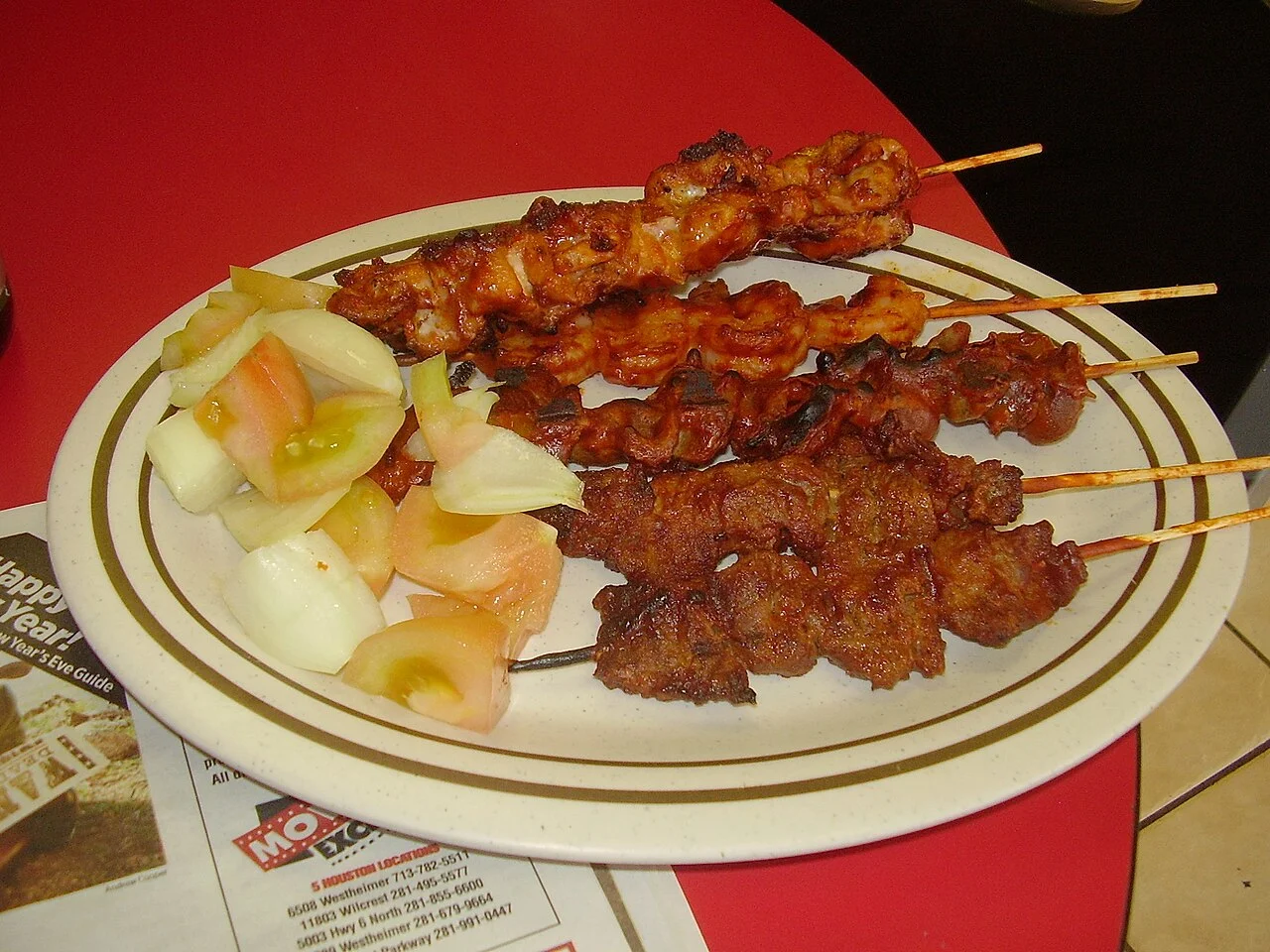
Nigerian suya is a grilled meat skewer from northern Nigeria, traditionally made with beef or ram, seasoned with yaji — a ground blend of peanuts, ginger, garlic, chili, and spices — and cooked over charcoal. It is widely considered a Hausa specialty and is sold most evenings at roadside stands called mai suya, often wrapped in newspaper and served with sliced onions, tomatoes, and extra yaji.
- What Exactly Is Nigerian Suya?
- Where Did Nigerian Suya Come From?
- How Is Nigerian Suya Made, Step by Step?
- What Makes Nigerian Suya Different From Other Grilled Meats?
- Where to Eat the Best Nigerian Suya
- Suya and the Nigerian Night Economy
- Is Nigerian Suya Healthy? What the Nutrition Says
- How Nigerian Suya Travelled the World
- What Does Suya Mean to Nigerians?
- Frequently Asked Questions About Nigerian Suya
- Why Nigerian Suya Endures
The dish carries centuries of history from the Sahel, yet it is entirely at home in a modern country of 220 million people and one of the world’s most vibrant street-food cultures. Understanding Nigerian suya means understanding the Hausa trading networks that spread it, the spice trade that shaped its flavour, and the everyday economics that keep it affordable and beloved from Kano to London.
What Exactly Is Nigerian Suya?
Suya is a skewered, charcoal-grilled meat dish. The meat — most commonly beef, but also ram, chicken, and sometimes offal like kidney and liver — is sliced thinly so it cooks quickly and absorbs seasoning. Before grilling, the meat is typically coated in a light oil and then in yaji, the spice mix that defines the dish. The skewers are placed over hot charcoal and turned constantly, with more yaji dusted on during cooking.
The result is meat that is smoky, chewy at the edges, and coated in a spice crust that is nutty from ground peanuts, warm from ginger and garlic, and hot from chili. It is served in newspaper or paper wraps, topped with raw sliced onions and tomatoes, and always with extra yaji for dipping or sprinkling.
Yaji: The Spice That Makes Suya Suya
Yaji — sometimes called suya spice or tsire seasoning in different regions — is the heart of the dish. Recipes vary by family and region, but the core ingredients are remarkably consistent:
- Ground roasted peanuts — the base that gives yaji its nutty depth and slightly creamy texture
- Ginger and garlic powder — warm, aromatic foundation spices
- Chili powder (often cayenne or a local dried pepper) — the heat
- Paprika or dried red pepper — colour and mild sweetness
- Onion powder, salt, and sometimes cloves, cinnamon, or grains of selim — the finishing layers of flavour
The peanuts are what distinguish yaji from other African chili rubs. They toast against the meat, forming a crust that holds the other spices in place. In northern markets like Kurmi Market in Kano — one of West Africa’s oldest trading centres, dating to the 15th century — vendors sell yaji pre-ground or as whole spices for customers to blend at home.
Where Did Nigerian Suya Come From?
Suya’s roots lie with the Hausa people of northern Nigeria and the wider Sahel — the semi-arid belt that stretches from Senegal through Mali, Niger, Chad, and Sudan. Grilled, spiced meat is a shared tradition across this zone, and similar dishes exist under different names: dambou in Niger, tsire in parts of northern Nigeria, and brochettes across Francophone West Africa.
The word “suya” itself is thought to derive from the Hausa term for grilled meat, and the modern dish took shape through the region’s long-distance trade. Hausa merchants travelled the trans-Saharan routes for centuries, and later the railway and road networks of colonial and post-independence Nigeria carried suya south to Lagos, Ibadan, and Enugu. By the mid-20th century, northern migrants had established suya stands in southern cities, and the dish became a national fixture rather than a regional one.
From Kano to Lagos: How Suya Went National
Kano, the commercial heart of northern Nigeria, remains the spiritual home of suya. The city’s meat markets and grilling traditions are deeply established, and many of the suya vendors who set up in Lagos and Abuja trace their training and family networks back to Kano and neighbouring states like Kaduna and Katsina.
The spread accelerated in the 1970s and 1980s as urbanisation drew northern traders to southern cities. Suya stands became evening institutions — open from roughly 5 p.m. until late, timed to catch commuters heading home. Today the dish is sold in every Nigerian state and has followed the diaspora to London, Houston, Toronto, and Johannesburg.
How Is Nigerian Suya Made, Step by Step?
The process is simple in principle and demanding in practice. Good suya depends on the cut of meat, the freshness of the spice, and the skill of the griller — the mai suya — who controls the fire.
Choosing and Preparing the Meat
Beef is the default, typically lean cuts like sirloin or round, sliced against the grain into thin, even strips about 3–5 mm thick. Ram is prized for its fat content, which bastes the meat as it cooks. Chicken suya uses thigh meat for juiciness. The meat is trimmed, sliced, and sometimes lightly pounded to tenderise it before skewering.
Seasoning and Skewering
The sliced meat is tossed with oil and an initial coating of yaji, then threaded onto flat wooden or metal skewers. Flat skewers prevent the meat from spinning when turned. Some vendors marinate the meat for an hour or more; others season only just before grilling, letting the yaji form a crust rather than penetrate deeply.
Grilling Over Charcoal
The fire matters as much as the spice. Suya is cooked over hardwood charcoal, not gas, because the smoke is part of the flavour. The mai suya arranges the skewers on a wire grill above the coals and turns them frequently, brushing with oil and dusting with more yaji as they cook. Cooking takes roughly 10–15 minutes depending on thickness and heat. The goal is a charred exterior and juicy interior — overcooking dries the meat and turns the spice bitter.
What Makes Nigerian Suya Different From Other Grilled Meats?
Suya’s identity comes from three things: the peanut-based spice crust, the charcoal smoke, and the way it is served. Unlike a marinade-heavy kebab, suya’s seasoning sits on the surface as a dry rub that toasts into a crust. Unlike a Western barbecue, it is not about sauce — the flavour is dry, nutty, and hot.
The serving ritual is equally distinctive. Suya is eaten with bare hands from a newspaper wrap, with raw onion and tomato slices providing cool relief against the spice. Vendors typically add a final dusting of yaji on top, and customers can ask for extra heat or extra peanuts. In northern Nigeria, suya is sometimes served with masa (fermented rice cakes) or fura da nono, a millet-and-yoghurt drink that cools the palate.
| Element | Nigerian Suya | Typical Western Kebab | North African Brochette |
|---|---|---|---|
| Core seasoning | Yaji (peanut, ginger, chili, garlic) | Marinade or dry rub, often herb-based | Spice paste, often cumin and coriander |
| Cooking method | Charcoal grill, frequent turning | Gas or charcoal grill | Charcoal grill |
| Typical meat | Beef, ram, chicken, offal | Lamb, chicken, beef | Lamb, beef |
| Serving style | Newspaper wrap, raw onion and tomato, extra yaji | Flatbread, salad, sauce | Bread, salad, harissa |
| Signature flavour | Nutty, smoky, chili-hot | Varies widely | Earthy, spicy |
Where to Eat the Best Nigerian Suya
Suya is everywhere in Nigeria, but certain cities and neighbourhoods are known for particular styles. In Kano, the grilling tradition is oldest and the spice blends are often the most complex. In Lagos, suya stands cluster around transport hubs and nightlife districts — Ikeja, Surulere, and Victoria Island all have well-known spots. Abuja’s suya scene is younger but thriving, with stands near Wuse and Garki drawing late-night crowds.
Regional Variations Worth Knowing
- Kano-style: Heavily spiced, often using ram, with a deeper char and more complex yaji
- Lagos-style: Beef-forward, faster-grilled, often sold in larger portions for commuters
- Kaduna and Zaria: Known for offal suya — kidney, liver, and intestine — prized by connoisseurs
- Diaspora adaptations: In London and Houston, vendors often use gas grills for regulation, but the best still use charcoal and import or blend their own yaji
For visitors, the advice is simple: follow the smoke and the queue. A busy stand means fresh meat and a well-managed fire. Ask for suya with everything to get the onions, tomatoes, and extra spice.
Suya and the Nigerian Night Economy
Suya is not just food — it is an economic engine. A single mai suya stand can employ a griller, a preparer, and a runner, and many stands support extended families. The trade is largely informal, but it is substantial: street food accounts for a significant share of urban food spending across West Africa, and suya sits at the premium end of that market.
The business model is lean. Vendors buy meat in bulk from local markets, blend or buy yaji, and operate from a roadside spot with a grill, a table, and a cooler. Margins depend on meat prices, which have risen sharply in Nigeria in recent years amid inflation and currency pressures. Many vendors have responded by offering smaller portions or diversifying into chicken and offal, which cost less than beef.
The COVID-19 pandemic hit suya stands hard, with lockdowns closing evening trade. But the sector rebounded quickly, and delivery apps now list suya from established vendors in Lagos and Abuja — a modern twist on a centuries-old trade.
Is Nigerian Suya Healthy? What the Nutrition Says
Suya has real nutritional strengths and real caveats. The meat is a strong source of protein and iron, and grilling over charcoal avoids the heavy batters and deep-frying of some street foods. The peanuts in yaji add healthy fats and protein. On the other hand, suya is typically high in salt, and the charring process produces compounds that nutritionists advise eating in moderation.
- Strengths: High protein, iron-rich, no added sugar, relatively low carbohydrate
- Cautions: High sodium from seasoning, charred surfaces, variable hygiene at some roadside stands
- Practical tip: Choose busy stands with visible fresh meat, ask for lighter salt, and pair with raw onions and tomatoes for fibre and freshness
For people watching their salt intake, asking the vendor to go light on the final yaji dusting helps, since much of the sodium sits in the seasoning rather than the meat.
How Nigerian Suya Travelled the World
Nigerian suya followed the diaspora. London has a well-established suya scene, particularly in areas with large Nigerian communities such as Peckham, Woolwich, and Tottenham. In the United States, Houston, Atlanta, and the Washington DC area all have suya vendors, and food festivals from Brooklyn to Johannesburg feature suya stands.
The international spread has produced innovation alongside tradition. Some diaspora vendors sell yaji as a retail spice blend, and suya has appeared on restaurant menus as a starter or small plate. Chefs have experimented with suya-spiced lamb chops, suya burgers, and even suya-seasoned plantain — adaptations that keep the core flavour while reaching new audiences.
Recognition has followed. Suya is regularly cited in international food media as one of Nigeria’s signature dishes, and yaji has become a globally available spice. The dish’s rise mirrors a broader global interest in West African cuisine, from jollof rice to egusi soup.
What Does Suya Mean to Nigerians?
Suya carries a social meaning beyond its flavour. It is evening food, shared food, and celebration food. Friends meet at suya stands after work; families buy wraps to take home; weddings and parties often include a suya station. In northern Nigeria, suya is tied to Hausa identity and hospitality; in the south, it is simply Nigerian.
The dish also reflects the country’s internal diversity. A Lagosian eating beef suya from a Kano-trained vendor is participating in a trade network that predates the Nigerian state. The spice blend in the wrap carries Sahelian history; the newspaper wrapping carries modern urban life. Suya holds both at once.
Frequently Asked Questions About Nigerian Suya
What meat is used in Nigerian suya?
Beef is most common, followed by ram and chicken. Offal such as kidney and liver is popular in northern Nigeria and among connoisseurs.
Is suya very spicy?
Suya is spicy but adjustable. The heat comes from chili in the yaji, and vendors can dust lightly or heavily. The peanuts and onions balance the heat.
What is yaji made of?
Yaji typically contains ground roasted peanuts, ginger, garlic, chili, paprika, onion powder, and salt, with regional variations adding cloves, cinnamon, or grains of selim.
Can suya be made at home?
Yes. Home cooks can blend yaji from toasted peanuts and spices, thread thinly sliced beef onto skewers, and grill over charcoal or a hot grill pan. The key is thin slices, a hot fire, and frequent turning.
Is suya safe to eat from street vendors?
Suya is generally safe when bought from busy vendors with visible fresh meat and a hot fire. As with any street food, choose stands with good turnover and clean handling.
Why Nigerian Suya Endures
Nigerian suya has survived for centuries because it solves a simple problem beautifully: how to make inexpensive meat taste extraordinary with nothing more than fire and spice. The peanut-based yaji turns a lean cut into something rich and complex; the charcoal adds smoke that no oven can replicate; the newspaper wrap and raw onions make it a complete, portable meal.
Its future looks secure. The diaspora is growing, global interest in West African food is rising, and the spice blend is finding new uses far beyond the skewer. But the heart of suya remains the roadside stand at dusk — the glow of charcoal, the smell of roasting peanuts and chili, and the call of the mai suya turning skewers for a queue of hungry customers. That is where Nigerian suya lives, and that is why it will keep travelling.