📅 Last updated: 03.11.2026
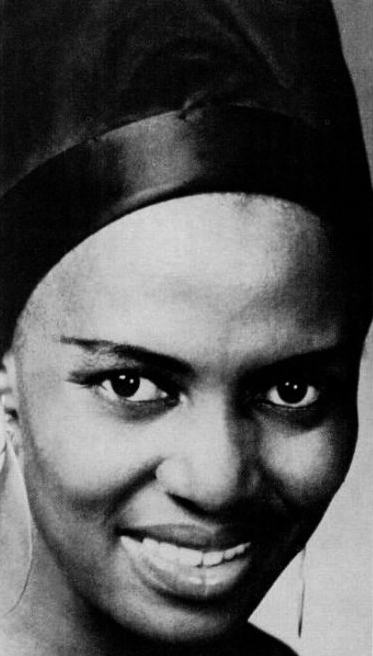
Miriam Makeba was born in a Johannesburg township in 1932, rose to global fame as “Mama Africa,” and spent three decades in exile after her music and testimony exposed the brutality of apartheid. Her voice — warm, precise, and unmistakable — carried Xhosa, Zulu, and Swahili songs into concert halls from London to New York, while her refusal to soften her politics cost her a homeland and very nearly her life. She testified before the United Nations, sang alongside Harry Belafonte and Nina Simone, and returned to South Africa only after Nelson Mandela walked free.
Miriam Makeba (1932–2008) was a South African singer, actress, and anti-apartheid activist whose international career began with the 1959 film Come Back, Africa. The apartheid government revoked her citizenship in 1960 and barred her from returning home for 30 years. She died on 9 November 2008 in Castel Volturno, Italy, shortly after performing at a concert against organized crime.
- Who Was Miriam Makeba, and Why Does Her Story Still Matter?
- How Did Apartheid Turn a Singer Into an Exile?
- Miriam Makeba's Music: What Made Her Voice Distinctive?
- The Political Makeba: Testimony, Sanctions, and Solidarity
- Miriam Makeba's Return: What Happened After 1990?
- What Did Her Exile Cost, and What Did It Achieve?
- How Should We Remember Miriam Makeba Today?
Who Was Miriam Makeba, and Why Does Her Story Still Matter?
Zenzile Miriam Makeba was born on 4 March 1932 in Prospect Township, near Johannesburg. Her mother, Christina, was a domestic worker and traditional healer from Swaziland; her father, Caswell, a Xhosa teacher who died when she was young. The household was poor and strict, and Makeba’s early life was marked by loss and illness. She was diagnosed with breast cancer as a teenager and treated at a mission hospital, an experience she later credited with hardening her resolve.
Her first steady income came from singing. She joined the Manhattan Brothers, a vocal group modeled on American close-harmony quartets, and later formed the all-female Skylarks. Those groups played the shebeens and township halls of Sophiatown, the freehold suburb west of Johannesburg where Black South Africans owned property, mingled across ethnic lines, and produced a remarkable jazz scene before the government bulldozed it in the late 1950s and early 1960s.
What makes her story matter beyond music is the sequence of choices she made. She did not set out to become a political figure. Apartheid made her one. When she appeared in Lionel Rogosin’s documentary Come Back, Africa (1959), a film that showed the world the squalor and humiliation of Black life under segregation, the state treated the exposure as betrayal. Her subsequent tours abroad were read as defection.
The Sophiatown Sound
Makeba’s early repertoire blended American jazz phrasing with African vocal traditions. She sang in Xhosa, Zulu, Sotho, and Swahili, often using click consonants that Western audiences had never heard in popular music. Her 1960s recordings for RCA and Reprise — including “Pata Pata,” “The Click Song” (properly “Qongqothwane”), and “Malaika” — introduced these sounds to millions of listeners who had no other window into southern Africa.
How Did Apartheid Turn a Singer Into an Exile?
Makeba left South Africa in 1959 to appear in Come Back, Africa at the Venice Film Festival. She had intended to return. Instead, the Sharpeville massacre of 21 March 1960 — when police killed 69 unarmed protesters and wounded more than 180 — changed the calculus. Makeba learned she could not go home without risking arrest. In 1960 the government revoked her citizenship and her right to re-enter the country. She would not set foot in South Africa again until 1990.
Exile was not comfortable. She had left behind her mother, who died in 1960 while Makeba was abroad, and a daughter, Bongi, whom she raised largely at a distance. Her marriages were turbulent: to Sonny Pillay, a South African musician; to Hugh Masekela, the trumpeter and fellow exile, from 1964 to 1966; and to Stokely Carmichael, the Black Power activist, in 1968. That last marriage drew intense scrutiny from the U.S. government, which had already been tracking her associations. Record deals dried up, and concert bookings vanished.
The American Years and the Backlash
Makeba’s American period was productive and precarious. She won a Grammy in 1966 for An Evening with Belafonte/Makeba, a collaboration with Harry Belafonte that brought South African songs to mainstream American audiences. She performed at the Apollo Theater, appeared on television, and became a fixture of the civil rights and anti-apartheid circuits. But her marriage to Carmichael, and her outspoken opposition to apartheid, made her a target. She later recalled being surveilled and harassed. By the early 1970s she had relocated to Guinea, where President Ahmed Sékou Touré offered her citizenship and a base.
Miriam Makeba’s Music: What Made Her Voice Distinctive?
Makeba’s instrument was not a large voice by operatic standards. Its power lay in clarity, rhythmic precision, and emotional restraint. She could swing a jazz standard, deliver a lullaby with devastating simplicity, or drive a dance number with the township pulse of marabi and kwela. She treated language as percussion: the clicks of Xhosa and Zulu became rhythmic devices, not curiosities.
Her repertoire was deliberately pan-African. She sang in languages from across the continent and worked with musicians from Guinea, the United States, and Europe. She recorded “Pata Pata” in 1967; the song became a global hit and remains her most recognizable recording. “Malaika,” a Swahili love song, became a standard. “Qongqothwane,” the wedding song known in English as “The Click Song,” became a signature.
- Language as rhythm: Makeba used click consonants and African phonetics as musical texture, not novelty.
- Genre range: She moved between jazz, marabi, kwela, and pan-African folk without losing a consistent voice.
- Restraint: Her most political statements were often delivered quietly, which made them harder to dismiss.
The Political Makeba: Testimony, Sanctions, and Solidarity
Makeba’s activism was not decorative. In 1963 she testified before the United Nations Special Committee against Apartheid, describing the conditions Black South Africans faced and urging international action. She spoke at rallies, raised funds for exiled movements, and used her platform to keep apartheid in the news when Western governments preferred to look away.
Her exile was a form of punishment, but it also gave her leverage. She became a symbol of the cultural boycott and of the broader demand for sanctions. When she performed, audiences heard the politics in the programming: songs in African languages, dedications to political prisoners, and references to Sharpeville and Soweto. She was not a politician, and she did not pretend to be one. She was a witness.
The Guinea Years
From the early 1970s, Makeba lived in Conakry, Guinea, where she served as a delegate to the United Nations and continued to record and tour. Guinea under Touré was a one-party state with its own authoritarian record, and Makeba’s association with it complicated her legacy. She was, in the words of one biographer, a guest in a revolution that had its own costs. She nonetheless used the platform to keep anti-apartheid organizing alive during the years when international attention drifted.
Miriam Makeba’s Return: What Happened After 1990?
Nelson Mandela was released from prison on 11 February 1990. Makeba returned to South Africa later that year, her citizenship restored. The homecoming was emotional and complicated: she had missed her mother’s death, her daughter’s childhood, and the funerals of friends. She performed at the 1990 “Nelson Mandela: An International Tribute for a Free South Africa” concert at Wembley Stadium, and she campaigned in the run-up to the 1994 elections.
Her later years were productive. She recorded Homeland in 2000, an album nominated for a Grammy, and continued to tour. She became a goodwill ambassador for the Food and Agriculture Organization of the United Nations. She spoke about HIV/AIDS at a time when stigma was rampant. She remained, in the public imagination, Mama Africa — a title she accepted with some irony, since it flattened a specific South African life into a continental symbol.
| Year | Event | Significance |
|---|---|---|
| 1932 | Born Zenzile Miriam Makeba in Prospect Township, Johannesburg | Origins in a working-class, multiethnic urban South Africa |
| 1959 | Appears in Come Back, Africa; leaves for Venice Film Festival | First international exposure; beginning of exile |
| 1960 | Sharpeville massacre; citizenship revoked | Exile becomes permanent for three decades |
| 1966 | Grammy Award with Harry Belafonte | Mainstream American recognition |
| 1990 | Returns to South Africa after Mandela’s release | Homecoming and renewed public role |
| 2008 | Dies in Castel Volturno, Italy, after a concert | Final performance against organized crime |
What Did Her Exile Cost, and What Did It Achieve?
The personal cost is easy to understate. Makeba lost her citizenship, her mother, and years with her children. She was surveilled, harassed, and periodically blacklisted. She was also, at moments, used by governments with their own agendas. The achievement is harder to measure but real: she made apartheid audible to audiences who would never have read a UN report. She helped normalize African languages and rhythms in global popular music. She demonstrated that an artist could refuse to separate beauty from politics.
Her influence shows up in unexpected places. South African singers from Yvonne Chaka Chaka to Simphiwe Dana cite her. International artists from Nina Simone to Dave Matthews have covered her songs. The click consonants she popularized now appear routinely in global pop. The cultural boycott she supported is credited, alongside sanctions and internal resistance, with helping to isolate the apartheid state.
- What she lost: citizenship, proximity to family, and years of stability.
- What she gained: a global platform and a role in the international anti-apartheid movement.
- What she changed: how the world heard African music and how it saw apartheid.
How Should We Remember Miriam Makeba Today?
Makeba’s legacy is not a single song or a single speech. It is a method: use whatever platform you have, refuse to be silent, and insist that the specific — a Xhosa wedding song, a Johannesburg township, a Sharpeville funeral — can speak to the world without being diluted. She was not a saint, and her associations with authoritarian leaders complicate any simple tribute. But she was consistent on the thing that mattered most to her: the dignity of Black South Africans and the right to return home.
Her recordings remain in print, her performances circulate online, and her name appears on streets and stages across the continent. The most fitting memorial is not a statue but a listen: put on “Pata Pata” or “Malaika” and hear a voice that carried a country’s grief and defiance across oceans, and came back.