📅 Last updated: 12.10.2026
The Djembe drum is far more than a musical instrument: it is a living archive of West African history, a voice that has carried news, praise, grief and celebration across the savannah and the Atlantic for centuries. Carved from a single block of hardwood, stretched with goatskin and played with bare hands, it produces a range of tones so wide that a skilled player can imitate human speech. From the royal courts of the Mali Empire to the recording studios of Dakar and the festival stages of London and New York, the djembe has travelled the world without ever losing its roots.
- What Exactly Is a Djembe Drum?
- The Mande Roots: Where the Djembe Drum Was Born
- How the Djembe Drum Speaks: Technique and Language
- Key Milestones in the Djembe Drum's Journey
- Independence, Ballets and the Djembe Drum on the World Stage
- How a Djembe Drum Is Made
- Playing the Djembe Drum Today: Etiquette, Learning and Community
- The Sacred Beat: Why the Djembe Drum Still Matters
- Where to Experience the Djembe Drum
- A Beat That Belongs to Everyone — and to Its Home
What Exactly Is a Djembe Drum?
A djembe is a goblet-shaped hand drum: a wide bowl at the top that narrows into a stem and flares out again at the base. The head is made of rawhide — traditionally goatskin, though sometimes antelope or cowhide — laced to the shell with rope that runs down the body of the drum. The player strikes the skin with the palm, fingers and the fleshy base of the hand, producing at least three distinct sounds: the deep, resonant bass, the ringing tone, and the sharp, cracking slap. A skilled drummer can weave these into patterns of astonishing speed and complexity.
The drum’s shape is not decorative. The narrow waist concentrates and amplifies sound, while the wide bowl projects it outward. This design is one reason a single djembe can be heard across an entire village square without amplification — a crucial quality in a culture where drums function as public address systems, summoning people to ceremonies, announcing births and deaths, and accompanying every major rite of passage.
In the Maninka language of the Mande peoples, the drum is called djembé, and its players are djembefola — a title that carries the weight of profession, lineage and community responsibility. A djembefola is not simply a musician; he or she is a historian, an entertainer, a mediator and, in traditional settings, a keeper of social memory.
The Mande Roots: Where the Djembe Drum Was Born
The djembe emerged among the Mande peoples of the Mali Empire, which flourished from roughly 1235 to 1600 CE and at its height stretched across what is now Mali, Guinea, Senegal, Gambia, Burkina Faso, Ivory Coast and beyond. The empire’s founder, Sundiata Keita, is celebrated in the epic tradition of the griots — the hereditary bards and oral historians known in Maninka as jeliw (singular jeli). These families, including the famous Kouyaté and Diabaté lineages, still dominate the musical life of the region today.
The precise origins of the djembe are lost to oral tradition, but several accounts point to the region around the town of Kouroussa in present-day Guinea, or to the historic Mali heartland near Bamako and Kangaba. Blacksmiths — the numu caste — are traditionally credited with carving the first drums, just as they forged the tools and weapons of empire. The drum’s association with smiths is significant: in Mande cosmology, both iron and rhythm are transformative forces, shaping raw material into something that serves the community.
What is not in doubt is the drum’s deep integration into Mande social structure. Among the Malinké and Susu peoples of Guinea, the Bambara of Mali, and related groups across the region, the djembe became inseparable from the great ceremonies of life:
- Weddings, where drumming accompanies the bride’s procession and the celebration that follows.
- Naming ceremonies, held eight days after a birth, when the child is formally welcomed into the community.
- Harvest and planting festivals, marking the agricultural calendar.
- Initiation rites, some of them secret, that guide young people into adulthood.
- Funerals and memorials, where rhythm helps the living process grief and honours the departed.
Crucially, the djembe rarely plays alone. It is the lead voice in an ensemble that typically includes the dunun family — three cylindrical, stick-played bass drums called dununba, sangban and kenkeni — along with iron bells known as kenken or gongoma. The dunun lay down the pulse and the melodic bass line; the djembe improvises and converses on top. This division of labour mirrors Mande social ideals: individual brilliance is only meaningful when it serves the collective groove.
How the Djembe Drum Speaks: Technique and Language
To watch a master djembefola is to watch a conversation. Mande drumming is closely tied to the tonal languages of the region, and specific rhythmic phrases are understood to carry meaning — praise names, proverbs, calls to dance, even warnings. The drum can “say” a person’s family name, salute a dancer, or signal a change in the ceremony.
The Three Core Sounds
Every djembe player begins with three strokes, each produced by a different part of the hand and a different point on the skin:
- Bass — the flat palm strikes the centre of the drum, producing a low, rounded note that resonates through the shell.
- Tone — the fingers, held together and slightly cupped, strike the edge of the skin, giving a clear, ringing pitch.
- Slap — the fingers snap against the rim with a relaxed, whip-like motion, creating a sharp crack that cuts through the ensemble.
From these three elements, drummers build an enormous vocabulary. Traditional rhythms have names — Kuku, Djole, Soli, Wassolonka, Lamban, Sinte — each associated with a particular region, celebration or historical event. Sinte, for instance, is linked to the Susu people of coastal Guinea and is traditionally played to welcome important visitors. Soli, from the Malinké tradition, is performed for circumcision and initiation ceremonies.
“The drum is the telephone of the village,” the Guinean master drummer Mamady Keïta often said. “When the djembe speaks, everyone listens.”
Keïta, born in 1950 in the village of Balandugu in Guinea, became one of the most influential djembefola of the modern era. A member of the legendary Les Ballets Africains from the age of 14, he later founded the ensemble Sewa Kan in Brussels and toured the world, teaching the rhythms he had learned as a child. His recordings and workshops helped turn the djembe into a global instrument without severing it from its Mande roots.
Key Milestones in the Djembe Drum’s Journey
The drum’s path from village square to world stage is a story of empire, independence, migration and digital culture. The table below sketches some of the pivotal moments.
| Period | Development | Significance |
|---|---|---|
| c. 1235–1600 | Rise of the Mali Empire and Mande griot culture | Djembe becomes central to ceremony and oral history |
| 1950s–60s | West African nations gain independence; national ballet companies form | Drumming is staged, professionalised and exported as cultural diplomacy |
| 1980s–90s | Mamady Keïta, Famoudou Konaté and others tour Europe and North America | Global drumming workshops and djembe ensembles take root abroad |
| 2000s–present | Online tutorials, festivals and diaspora scenes flourish | Djembe becomes one of the world’s most widely played hand drums |
Independence, Ballets and the Djembe Drum on the World Stage
The mid-twentieth century transformed the djembe’s fortunes. As Ghana won independence in 1957, Guinea followed in 1958 under Ahmed Sékou Touré, and Mali in 1960, newly independent governments looked to traditional culture as a source of national identity. Sékou Touré’s Guinea in particular made music a pillar of state policy: he sponsored Les Ballets Africains, founded in the early 1950s and later recognised as Guinea’s national ballet, and encouraged regional ensembles across the country.
This had two profound effects. First, it elevated drummers from hereditary professionals to salaried artists and ambassadors. Second, it standardised and staged rhythms that had previously been tied to specific villages and occasions. Some purists argue that this process flattened regional differences; others point out that it preserved traditions that might otherwise have faded under urbanisation and migration.
By the 1970s and 1980s, West African drummers were touring Europe, North America and Japan. Mamady Keïta settled in Belgium; Famoudou Konaté, another Guinean master born in 1940, became a revered teacher in Germany and beyond. Their students — many of them European and American — returned home to form djembe ensembles, and a global teaching circuit was born.
From Bamako to Brooklyn
Today you can hear the djembe in a Bamako wedding courtyard, a Parisian world-music club, a Brooklyn drum circle and a Tokyo taiko fusion concert. The instrument has entered pop, jazz and film scores — its unmistakable slap has backed everything from Broadway musicals to Hollywood soundtracks. Yet the most vital scene remains in West Africa itself, where young players in Conakry, Bamako, Abidjan and Dakar continue to innovate, blending traditional rhythms with hip-hop, jazz and electronic production.
Artists such as Sidiki Diabaté in Mali, a kora player and producer who has worked with global pop stars, illustrate how Mande musical heritage feeds contemporary African pop. In Guinea, ensembles like Ballet Merveilles de Guinée and Ballet Saïdouba keep the classical repertoire alive while pushing it forward. The djembe is not a museum piece; it is a working instrument in a living, evolving culture.
How a Djembe Drum Is Made
Building a djembe is a craft that can take days and involves several specialists. The process begins with the shell, traditionally carved from lenke (Afzelia africana) or dugura (Pterocarpus erinaceus), dense hardwoods that resist cracking and produce a warm, projecting tone. A single carver can spend two or three days hollowing a log by hand, shaping the bowl, waist and foot with adzes and chisels before smoothing the surface.
The skin is then prepared. Goatskin is soaked, scraped to remove hair and fat, and stretched over the rim. The rope lacing — a complex web of vertical and horizontal cords — is tightened progressively to raise the pitch. In the final tuning, the drummer may use a heated iron or simply pull the ropes tighter, adjusting the drum’s voice to the ensemble and the occasion.
The economics matter too. In Guinea, Mali and Senegal, djembe carving supports entire communities, and the export trade to Europe and North America has created both opportunity and controversy. Cheap factory-made drums from Asia now compete with hand-carved instruments, and concerns about deforestation have prompted some workshops to adopt sustainable forestry practices. Buyers who want an authentic instrument are increasingly advised to look for drums made from certified wood and to buy directly from West African makers where possible.
Playing the Djembe Drum Today: Etiquette, Learning and Community
If you want to learn the djembe, the first lesson is respect. In traditional Mande settings, drumming is not a casual hobby but a vocation rooted in family lineage and community obligation. That does not mean outsiders cannot learn — West African masters have taught thousands of foreign students — but it does mean approaching the instrument with humility and curiosity about its context.
Practical advice for newcomers:
- Find a teacher with lineage. Seek out a djembefola or a teacher trained by one, ideally with connections to Guinea, Mali or Senegal.
- Learn the rhythms, not just the strokes. Each rhythm has a name, a history and a purpose. Knowing why Kuku is played matters as much as how.
- Listen to the dunun. The bass drums carry the pulse and the melody; the djembe responds to them. Beginners who only watch the lead player miss half the music.
- Respect the source. Support West African musicians, teachers and drum makers directly where you can.
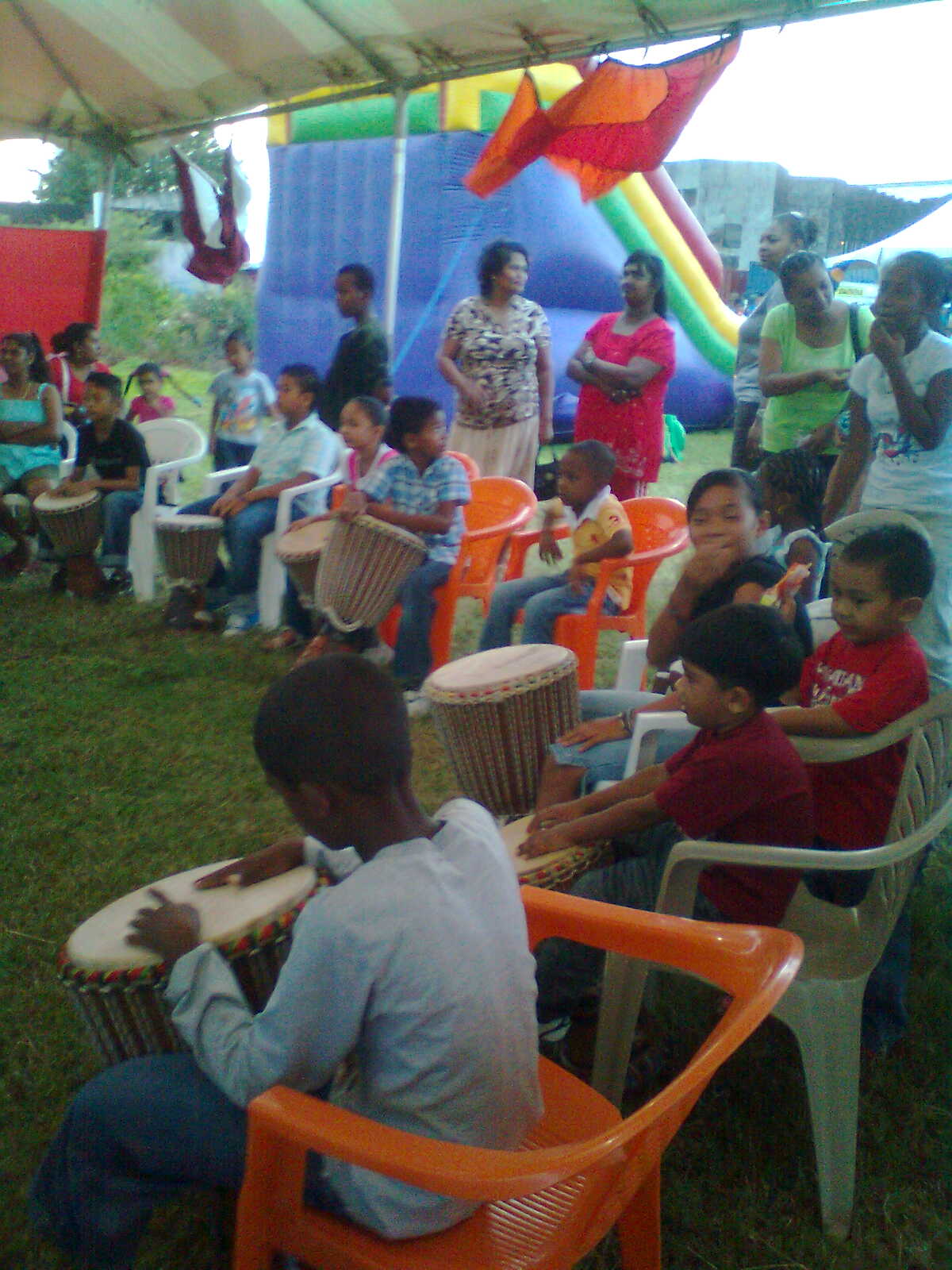
Across the diaspora, the djembe has also become a tool of community building and healing. In cities from London to São Paulo, drum circles bring together people of African descent and others seeking connection to the continent’s cultural heritage. Music therapists use drumming to support mental health; schools use it to teach teamwork and listening. The instrument’s ability to synchronise a group — to make many hands feel like one — is part of its enduring power.
The Sacred Beat: Why the Djembe Drum Still Matters
What makes the djembe sacred is not mysticism for its own sake but function. It marks the passages of life. It remembers the dead. It praises the living. It calls a community together and gives it a shared pulse. In a world of algorithmic feeds and solitary screens, that capacity to synchronise human beings in real time is more valuable than ever.
The drum has also become a symbol of Pan-African identity and cultural resilience. During the era of the transatlantic slave trade, drumming was often banned by enslavers precisely because it could communicate across plantations and sustain collective memory. The rhythms that survived in the Americas — in Cuban rumba, Brazilian samba, Haitian Vodou drumming — are cousins of the Mande tradition, carried across the ocean in the hands and bodies of enslaved Africans. When a djembe sounds today in Kingston, Salvador or New Orleans, it echoes that history.
At the same time, it would be a mistake to treat West Africa as a static repository of tradition. Guinea, Mali and Senegal are young, urbanising nations with vibrant pop scenes, film industries and tech hubs. The djembe sits comfortably alongside Afrobeats, kora-driven jazz and electronic dance music. In Bamako, the annual Festival sur le Niger in nearby Ségou and the city’s own music festivals draw artists from across the region. The instrument is old, but the hands playing it are young.
Where to Experience the Djembe Drum
For travellers and enthusiasts, several destinations offer authentic encounters with the instrument and its culture:
- Conakry and the Guinea highlands — the heartland of djembe tradition, home to many master drummers and the annual Festival International de Percussion de Conakry.
- Bamako, Mali — a historic centre of Mande music, with the Festival on the Niger and vibrant griot performances.
- Dakar, Senegal — a cosmopolitan hub where traditional sabar and djembe drumming meet jazz, hip-hop and mbalax.
- Abidjan, Ivory Coast — a major centre of West African music production and live performance.
- Festivals abroad — events such as the Djembe Festival in Europe and drum camps in the United States connect global students with African teachers.
Visitors should remember that drumming is often tied to specific ceremonies and communities. Watching a public performance is one thing; participating in a private ritual is another. Ask, listen and follow local guidance.
A Beat That Belongs to Everyone — and to Its Home
The djembe drum has travelled further than its makers could ever have imagined, from the courts of Sundiata Keita to concert halls on five continents. Its journey is a reminder that African culture is not a footnote to world history but a driving force within it. The drum’s genius lies in its balance: simple enough for a beginner to produce a satisfying sound, complex enough to occupy a master for a lifetime; rooted in specific families, villages and languages, yet generous enough to welcome newcomers.
To hear a djembe played well is to hear centuries of memory in motion — praise, grief, celebration and community compressed into a single, resonant strike. Whether you encounter it in a Conakry courtyard, a Dakar club or a drum circle in your own city, listen closely. The drum is still speaking, and it has a great deal to say.