📅 Last updated: 05.07.2026
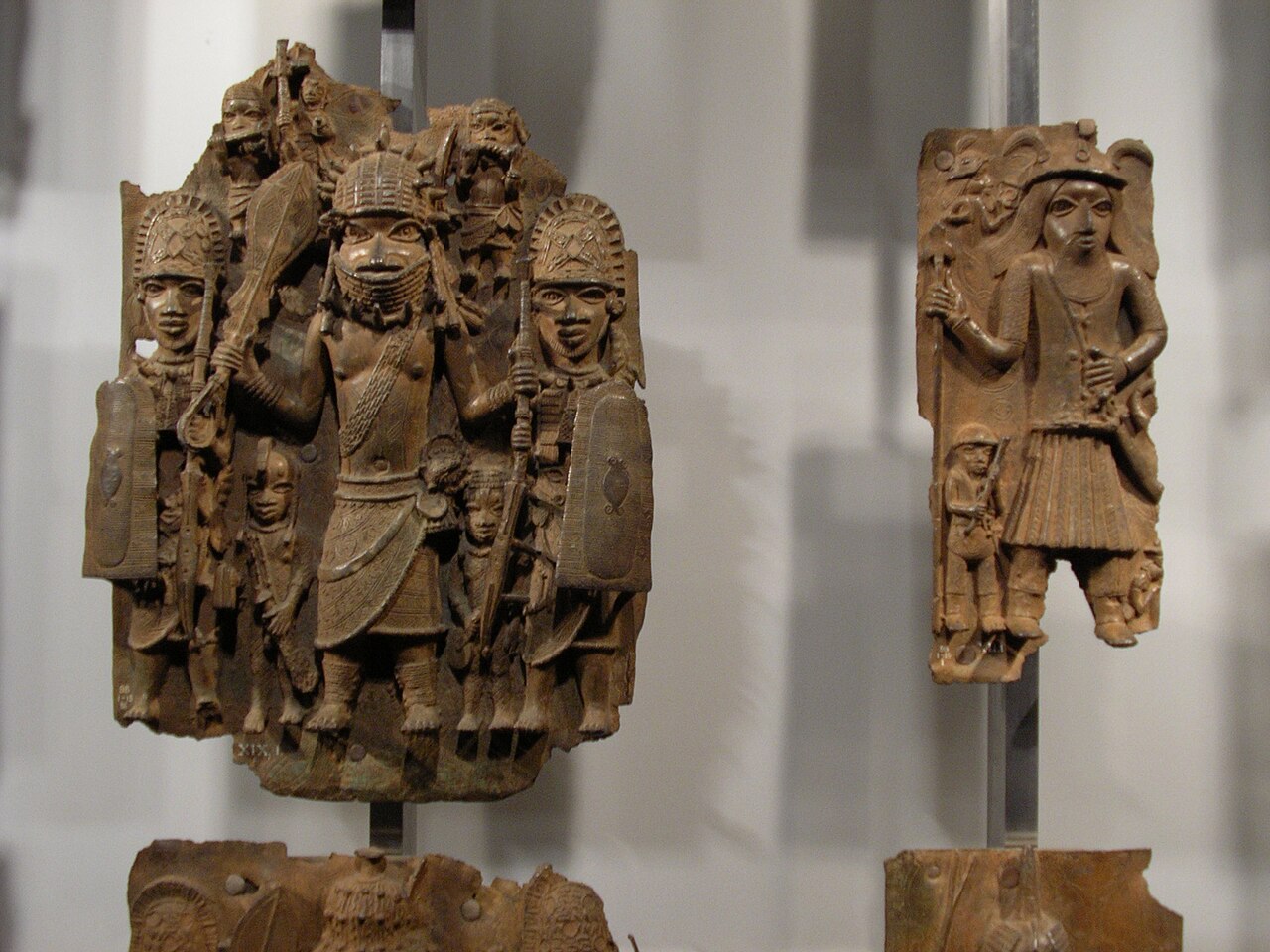
In the hushed, climate-controlled galleries of the British Museum in London, a collection of intricately carved brass and ivory plaques stares out at visitors with an unsettling, silent authority. They are known to the world as the Benin Bronzes, a term that encompasses thousands of metal sculptures, ivory carvings, and ceremonial objects looted in 1897 from the Kingdom of Benin, in what is now Nigeria. But these are not merely artifacts; they are the living memory of a sophisticated civilization, a testament to an artistic tradition that rivaled the Renaissance in its technical mastery, and for over a century, they have been the subject of one of the most contentious and emotionally charged debates in the world of cultural heritage.
- The Kingdom of Benin: A Civilization Cast in Brass
- The Punitive Expedition: Loot in the Name of Empire
- The Diaspora of the Bronzes: A World Dispersed
- The Long Road Home: Repatriation and the New Momentum
- What Does Return Mean? The Politics of Custody
- Beyond Nigeria: A Global Reckoning
- Conclusion: The Return of the Ancestors
The Kingdom of Benin: A Civilization Cast in Brass
To understand the true weight of the Benin Bronzes, one must first step back into the pre-colonial world of the Edo people and the Oba (king) who ruled from the sprawling city of Benin, in the tropical forests of West Africa. This was not a “lost kingdom” discovered by Europeans. By the time Portuguese explorers first made contact in the late 15th century, Benin was already a highly centralized, powerful empire with a complex system of governance, sophisticated urban planning, and a thriving economy based on trade in ivory, pepper, and cloth.
The art of brass and bronze casting—specifically the lost-wax technique—was a royal prerogative. The Oba maintained a guild of master craftsmen, the Igun Eronmwon, who lived and worked in a dedicated quarter of the city. Their sole purpose was to glorify the Oba, record the history of the court, and honor the ancestors. These were not decorative trinkets; they were functional objects of state and spirit.
- Royal Plaques: Over 900 of these rectangular brass plaques once adorned the pillars and walls of the Oba’s palace. Each one is a detailed narrative, depicting warriors, courtiers, animals, and Portuguese traders, offering a visual chronicle of the kingdom’s power, rituals, and international relations.
- Rattan-Staff Heads: Intricately cast brass heads were mounted on carved ivory tusks and placed on ancestral altars. They served as focal points for rituals honoring past Obas, ensuring their continued spiritual presence in the kingdom.
- Ceremonial Objects: From ornate roosters and leopards—symbols of royal power—to elaborate ivory armlets and hip ornaments worn by the Oba, every piece was imbued with deep spiritual and political meaning.
“The art of Benin is not just art; it is a historical document, a religious icon, and a political statement all rolled into one.” — Dr. Peju Layiwola, Nigerian art historian and descendant of the Benin royal family.
This was a living, breathing artistic tradition. The Benin Bronzes were not frozen in time; they were continuously commissioned, updated, and added to for centuries, reflecting the dynamic evolution of the kingdom. The Oba Esigie (c. 1504-1550), for example, commissioned works that celebrated his military victories and incorporated imagery of the Portuguese, who had become valuable trade partners. This was a kingdom looking outward, engaging with the world on its own terms.
The Punitive Expedition: Loot in the Name of Empire
The year 1897 marked a violent rupture. The British Empire, driven by a desire to control trade routes and expand its colonial influence in the Niger Delta, had been pressuring the Oba of Benin to sign a treaty that would effectively cede his sovereignty. The Oba, Ovonramwen Nogbaisi, resisted, wary of British intentions. Tensions escalated when a British delegation, led by Acting Consul General James Phillips, attempted to travel to Benin City without proper notification, despite knowing it was the season of a sacred royal ceremony. The Edo warriors, interpreting the advance as a threat, attacked and killed most of the party.
This event provided the perfect pretext for a full-scale military response. The British assembled a “Punitive Expedition” of over 1,200 soldiers, sailors, and African porters under the command of Admiral Sir Harry Rawson. On February 18, 1897, they launched a devastating assault on Benin City. The Oba and his court fled, and the city was captured with little resistance. But the British did not stop at occupation.
What followed was a systematic, state-sanctioned looting. The soldiers were ordered to strip the royal palace of its treasures. For days, they carted away thousands of objects: the brass plaques, the ivory tusks, the carved altars, the coral bead regalia, and the ceremonial staffs. The palace was then burned to the ground. The booty—officially sanctioned as prize money for the troops—was shipped to London and auctioned off or distributed as gifts to museums and private collectors across Europe and the United States.
The scale of the loss is staggering. An estimated 3,000 to 5,000 individual objects were taken. The British Museum alone received over 900 pieces. Others ended up in the Ethnological Museum of Berlin, the Pitt Rivers Museum in Oxford, the Metropolitan Museum of Art in New York, and countless private collections. The looting was not just a theft of art; it was a deliberate act of cultural decapitation. By removing the physical embodiments of the kingdom’s history, authority, and spiritual life, the British sought to erase the very memory of a sovereign, sophisticated African state.
The Diaspora of the Bronzes: A World Dispersed
For over a century, the Benin Bronzes have lived a strange double life. In the West, they were celebrated as masterpieces of “primitive” art, influencing modernists like Pablo Picasso and Henri Matisse. They were displayed in the great museums of the world, their Edo origins often obscured, their violent acquisition story reduced to a footnote. They became, in the words of one scholar, “the spoils of war dressed up as universal heritage.”
Meanwhile, in Nigeria, the loss was a deep, unhealed wound. The memory of the looting was passed down through generations. The Oba’s palace was rebuilt, but the ancestral altars remained bare. The knowledge of the lost-wax casting tradition, while never entirely extinguished, was fractured. For the Edo people, the Bronzes were not just beautiful objects; they were the living spirits of their ancestors, and their absence was a form of spiritual exile.
The table below illustrates just how widely dispersed these treasures became, highlighting the key institutions that have been central to the repatriation debate.
| Institution | Country | Estimated Number of Objects | Current Status (as of 2024) |
|---|---|---|---|
| British Museum | United Kingdom | ~900 | Long-term loan agreements under negotiation; legal restrictions on deaccessioning remain a major barrier. |
| Ethnological Museum, Berlin | Germany | ~500 | Signed a landmark agreement in 2022 to transfer ownership; first returns made in late 2022. |
| Pitt Rivers Museum & Ashmolean Museum, Oxford | United Kingdom | ~100 | Committed to returning a collection of 97 objects; process is ongoing. |
| Metropolitan Museum of Art | United States | ~160 | Returned two plaques in 2021; others remain under review. |
| World Museum, Liverpool | United Kingdom | ~40 | One of the first UK museums to return an object (a cockerel) in 2021. |
The Long Road Home: Repatriation and the New Momentum
For decades, requests for the return of the Benin Bronzes were met with a wall of legal and institutional resistance. The British Museum’s standard argument—that it holds the objects in trust for “humanity,” that they are better preserved in London, and that the 1963 British Museum Act prevents it from deaccessioning items—became a tired mantra. But the tide has turned dramatically in the last decade, driven by a confluence of factors.
The Digital Revolution and the Power of Proof
The rise of digital cataloging and open-access databases has been a game-changer. Nigerian scholars and activists can now track the provenance of specific objects with unprecedented precision. The Digital Benin project, for example, is a monumental online platform that has mapped the location of over 5,000 objects from the looting, creating an irrefutable digital record of the crime. This transparency has stripped museums of the excuse of “not knowing” where objects came from.
The Activism of a New Generation
The conversation is no longer confined to academic journals. A new generation of Nigerian and diaspora activists, artists, and intellectuals has taken up the cause. The #BringBackOurBeninBronzes movement, amplified by social media, has made repatriation a mainstream issue. Artists like Victor Ehikhamenor have created powerful works that re-imagine the stolen objects, while the current Oba of Benin, Oba Ewuare II, has been a vocal and persistent advocate for the return of his ancestors’ heritage.
Landmark Repatriations
Words have turned into action. In 2021, the University of Aberdeen in Scotland became the first major institution to return a Benin Bronze (a brass cockerel) directly to Nigeria. Later that year, the German government signed a historic agreement with Nigeria to transfer ownership of hundreds of objects from its state-owned museums. The first 20 objects were physically returned in December 2022. Nigeria’s National Commission for Museums and Monuments (NCMM), led by Professor Abba Isa Tijani, has been instrumental in negotiating these returns, while the newly established Edo Museum of West African Art (EMOWAA) in Benin City is being built to house the returned treasures in a state-of-the-art facility designed by the renowned architect David Adjaye.
What Does Return Mean? The Politics of Custody
While the principle of return is now widely accepted, the practicalities are complex and deeply political. A key debate centers on the model of return. Many European museums, particularly the British Museum, are pushing for “long-term loans” rather than outright repatriation. This is a deeply contentious position. For Nigeria, this is not a loan; it is a return of stolen property. The legal and ethical chasm between these two positions is vast.
Furthermore, the question of who the objects are returned to is not simple. The Nigerian government, the Oba of Benin, and the Edo State government all have claims. The creation of EMOWAA has been a unifying project, but tensions remain. The museum’s success will depend on transparent governance, robust security, and a clear vision for how the objects will be used to educate, inspire, and heal. It must not become a mere trophy case, but a living cultural center that reconnects the Edo people with their heritage and serves as a model for other African nations seeking the return of their patrimony.
Beyond Nigeria: A Global Reckoning
The story of the Benin Bronzes is a prism through which a much larger, global conversation is being refracted. The campaign for their return has become a powerful precedent for other restitution claims across Africa and the world. The same arguments—about colonial violence, cultural erasure, and the “universal museum”—are being replayed in debates over the Parthenon Marbles (Greece), the Maqdala treasures (Ethiopia), and the bronzes from the Kingdom of Dahomey (now Benin Republic).
- Ethiopia: The campaign for the return of treasures looted from the fortress of Maqdala by British forces in 1868 is gaining momentum. The UK government has recently passed a law to allow the return of these objects.
- Ghana: The Asante kingdom has seen the return of some royal regalia looted during the Anglo-Asante wars, setting a powerful precedent for cultural restoration.
- Namibia: A formal agreement with Germany for the return of human remains and cultural objects from the Herero and Nama genocide is being implemented.
This is not a zero-sum game. Returning an object does not diminish the art history of the world; it enriches it. It allows a story to be told from a new, more complete perspective. It acknowledges that the “universal museum” was often built on a foundation of colonial violence and that true universality requires a diversity of voices and locations.
Conclusion: The Return of the Ancestors
The journey of the Benin Bronzes from the altars of a powerful kingdom, to the auction houses of London, and now back to the soil of Nigeria is one of the most profound cultural stories of our time. It is a story of artistic genius, imperial greed, and a century-long act of remembrance. It is a testament to the resilience of a people who refused to let their history be erased. The return of these objects is not an end, but a beginning. It is a chance for healing, for education, and for a new, more honest conversation between Africa and the West. As the first crates of bronzes arrive in Benin City, they carry with them not just the weight of history, but the hope of a future where Africa’s cultural treasures can finally speak from their home, telling their own story, in their own voice, for generations to come. The ancestors are coming home.