📅 Last updated: 12.11.2026
Virunga National Park is Africa’s oldest national park, established in 1925 in the eastern Democratic Republic of the Congo and stretching for 300 kilometres along the Albertine Rift. The park protects an extraordinary range of habitats, from the snowfields of the Rwenzori Mountains to the lava plains of Nyamuragira and the bamboo forests where mountain gorillas feed. Its 7,800 square kilometres hold more biodiversity than almost any protected area on Earth, and its rangers have become symbols of conservation under fire.
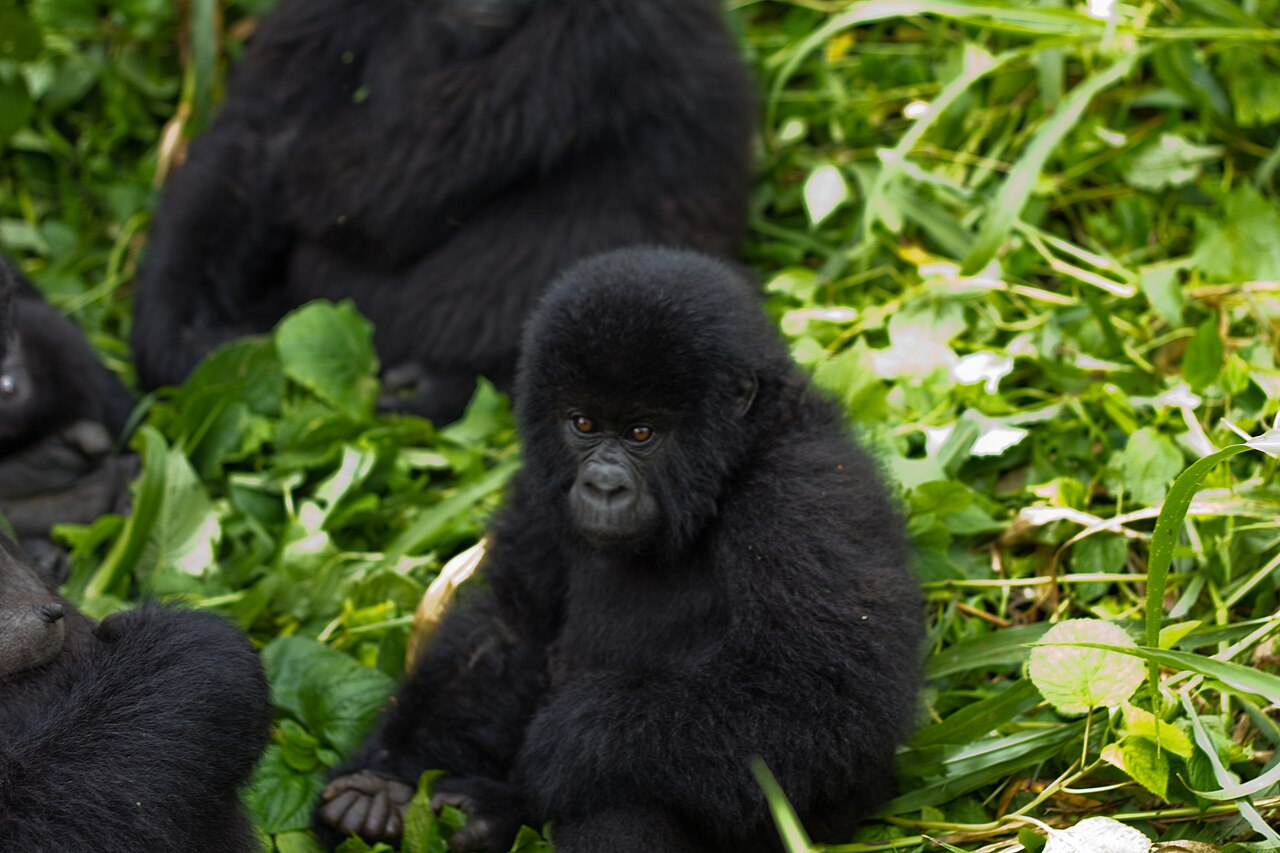
Virunga National Park, created in 1925 as Albert National Park, is Africa’s oldest national park and a UNESCO World Heritage Site since 1979. It covers roughly 7,800 square kilometres in eastern DRC, shelters around a third of the world’s remaining mountain gorillas, and is managed by the Congolese Institute for Nature Conservation (ICCN) with support from the Virunga Foundation. More than 200 rangers have been killed in the line of duty since the 1990s, making it one of the most dangerous conservation postings on the planet.
- Why Is Virunga National Park Considered Africa's Oldest?
- Where Is Virunga National Park and What Does It Protect?
- How Many Mountain Gorillas Live in Virunga National Park?
- What Makes Virunga National Park So Biodiverse?
- Who Protects Virunga National Park, and at What Cost?
- Can You Visit Virunga National Park, and How?
- What Threats Does Virunga National Park Face Today?
- Why Does Virunga National Park Matter Beyond the Congo?
- What Does the Future Hold for Virunga National Park?
Why Is Virunga National Park Considered Africa’s Oldest?
King Albert I of Belgium signed the decree creating Albert National Park on 21 November 1925, making it the first national park on the African continent. The original reserve was carved out of the volcanic plains around the Virunga Mountains and the Kivu region, largely to protect the mountain gorilla population that had been brought to scientific attention by the German explorer Carl Akeley, who died on the slopes of Mount Mikeno in 1926 and was buried there at his own request.
The park’s boundaries shifted several times through the colonial era. After Congolese independence in 1960, the reserve was renamed Virunga National Park in 1969, drawing on the Kinyarwanda word virunga, meaning “volcanoes.” UNESCO inscribed it as a World Heritage Site in 1979 and placed it on the List of World Heritage in Danger in 1994, a status it still holds. The park’s modern identity is inseparable from that history: a colonial-era scientific project that became a Congolese national treasure and, today, a frontline in the global fight to keep great apes alive.
Where Is Virunga National Park and What Does It Protect?
The park runs along the western shore of Lake Edward and the eastern edge of the Congo Basin, bordering Uganda’s Queen Elizabeth National Park to the east and Rwanda’s Volcanoes National Park to the south. That geography matters: the Virunga massif is a single ecosystem divided by three national borders, and gorilla families move across them freely.
Within its boundaries, Virunga holds three distinct zones. The southern sector contains the active volcanoes Nyamuragira and Nyiragongo, whose 2002 and 2021 eruptions sent lava through the streets of Goma. The central sector covers the Rwindi plains and Lake Edward, home to hippos, lions, and the rare shoebill. The northern sector reaches into the Rwenzori foothills, where glaciers are retreating fast. Altitude across the park ranges from about 680 metres at Lake Edward to 5,109 metres at the summit of Margherita Peak on Mount Stanley.
Key Facts at a Glance
| Attribute | Detail |
|---|---|
| Established | 21 November 1925, as Albert National Park |
| Area | Approximately 7,800 km² |
| UNESCO status | World Heritage Site (1979); Danger List since 1994 |
| Mountain gorillas | Roughly one-third of the world population (about 350–400 individuals in the Virunga massif) |
| Bird species | Over 700 recorded |
| Rangers killed since the 1990s | More than 200 |
How Many Mountain Gorillas Live in Virunga National Park?
The Virunga massif, shared by DRC, Rwanda, and Uganda, holds the world’s largest population of mountain gorillas. The most recent coordinated census, published in 2019 and covering the 2016 survey period, counted 604 gorillas in the massif, up from 480 in 2010. Roughly a third of those animals live on the Congolese side, in Virunga National Park’s southern sector around the Mikeno and Karisimbi slopes.
That figure is a genuine conservation success. In the 1980s, the entire Virunga population hovered around 250 individuals. Poaching, habitat loss, and the Rwandan genocide’s spillover into eastern Congo pushed the species toward collapse. Today the mountain gorilla is classified as Endangered rather than Critically Endangered, a downgrade made by the IUCN in 2018, and the total world population has climbed past 1,000.
The gorillas of Virunga are habituated in family groups that rangers and trackers monitor daily. Visitors who buy a permit, currently priced at $400 for foreign non-residents, hike into the forest with armed escorts and spend one hour with a habituated family. The revenue funds ranger salaries, veterinary care through the Gorilla Doctors programme, and community projects. The 2020–2021 closure of tourism during the pandemic cut off a large share of that income, and the park has since rebuilt visitor numbers carefully.
What Makes Virunga National Park So Biodiverse?
Virunga sits at the junction of several biogeographic zones: the Congo Basin rainforest, the Albertine Rift montane forests, the Afroalpine zone of the Rwenzori, and the savanna of the Rift Valley floor. That overlap produces species lists that read like a naturalist’s wish list.
- Mammals: mountain gorillas, eastern lowland (Grauer’s) gorillas, chimpanzees, forest elephants, lions, hippos, okapi, and the endemic Rwenzori duiker.
- Birds: more than 700 species, including the shoebill, the Rwenzori turaco, and the strange, endemic Grauer’s swamp warbler.
- Reptiles and amphibians: the park shelters the world’s largest population of the critically endangered Nile crocodile in some surveys and several endemic frogs in the highlands.
- Plants: over 2,000 recorded species, with giant lobelias and groundsels on the high Rwenzori slopes.
The park’s range of altitude is the engine behind this richness. A single day’s walk from the Rwindi plains to the bamboo belt can take you from lion country to gorilla country, passing through habitats that elsewhere would be separated by hundreds of kilometres.
Who Protects Virunga National Park, and at What Cost?
The Institut Congolais pour la Conservation de la Nature (ICCN), the DRC’s state conservation authority, holds legal responsibility for the park. Since 2010, the ICCN has worked in partnership with the Virunga Foundation, a Congolese non-profit that raises funds, manages tourism, and supports a ranger force of roughly 700 men and women.
That force operates in one of the hardest environments in conservation. Armed groups, including factions of the M23 rebellion and the Democratic Forces for the Liberation of Rwanda (FDLR), have repeatedly occupied park territory, particularly in the northern sector. More than 200 rangers have been killed since the 1990s, many in ambushes. The park’s most notorious episode was the 2014 killing of the Belgian conservationist Emmanuel de Merode’s attackers and the 2017 murder of ranger Rodrigue Katembo Mugaruka’s colleagues, events documented in the 2014 film Virunga, which also exposed oil exploration plans inside the park’s boundaries.
Those plans were shelved. In 2014, the French oil company Total pledged not to drill inside the UNESCO site, and the British firm SOCO International withdrew from the area after sustained international pressure. Virunga’s defenders count that as one of the most consequential conservation victories of the decade, won through a combination of documentary filmmaking, legal action, and Congolese civil society organising.
What a Ranger’s Day Looks Like
Rangers patrol on foot for up to two weeks at a time, carrying rations, GPS units, and radios. They track gorilla families, dismantle snares, document illegal charcoal production, and escort tourists. The park’s canine unit, trained in the DRC and supported by international partners, has been used to track poachers and recover evidence. Ranger salaries, funded partly by tourism and partly by donors, remain modest, and the force has repeatedly appealed for better equipment and insurance for families of the fallen.
Can You Visit Virunga National Park, and How?
Tourism in Virunga has always required nerve and planning, and the security situation changes month to month. The park’s main access point is Goma, the provincial capital of North Kivu, served by flights from Kinshasa and Kigali. From Goma, visitors typically travel to the southern sector for gorilla trekking or to the shores of Lake Kivu for chimpanzee habituation experiences.
Gorilla trekking permits are booked through the Virunga Foundation and cost $400 for foreign non-residents, with discounts for Congolese citizens and East African residents. The trek itself involves steep, humid forest and can take anywhere from two to six hours. Visitors should check current travel advisories from their own governments, arrange security escorts through the park, and build in flexibility: the park has closed and reopened to tourists several times since 2018.
Beyond gorillas, the park offers hikes to the Nyiragongo crater, where visitors once camped on the rim above a churning lava lake, and boat trips on Lake Edward. The 2021 eruption destroyed part of the route and the crater’s access infrastructure, and the park has been rebuilding.
What Threats Does Virunga National Park Face Today?
Four pressures dominate the park’s future, and each is deeply tied to the region’s politics and economy.
- Armed conflict: rebel groups use the park as cover, and rangers are caught between them and civilians. The M23 offensive of 2022–2024 displaced hundreds of thousands of people around Goma and disrupted patrols.
- Illegal charcoal and timber: the charcoal trade around Goma, worth an estimated $35 million a year, drives deforestation inside park boundaries. Rangers confiscate thousands of bags annually.
- Oil and mineral pressure: the DRC government has previously floated oil blocks overlapping the park, and artisanal mining for coltan and gold continues in some zones.
- Climate change: the Rwenzori glaciers have shrunk by more than 80 percent since the early twentieth century, altering water flows for millions of people downstream.
The park’s defenders argue that Virunga is not a luxury conservation project but an economic asset for eastern Congo. A 2019 study estimated that the park’s fisheries, hydropower potential, and tourism could generate hundreds of millions of dollars annually if managed sustainably, far more than the short-term gains from charcoal or oil.
Why Does Virunga National Park Matter Beyond the Congo?
Virunga is a test case for whether a megadiverse park can survive in a conflict zone. The gorillas have recovered while the region has remained unstable, which tells us that conservation can work even under extreme pressure when local institutions, international partners, and committed individuals hold the line. The park’s hydroelectric plants, built with support from the Virunga Foundation, now supply power to Goma and surrounding communities, reducing dependence on charcoal and linking conservation to everyday development.
The park also anchors a broader Congolese conservation movement. Congolese scientists, rangers, and community leaders run the monitoring, veterinary care, and outreach that keep the gorillas alive. Their work deserves the same attention as the international headlines that tend to focus on foreign conservationists.
What Does the Future Hold for Virunga National Park?
Virunga National Park turns a hundred years old in 2025, and its centenary arrives with both hard-won gains and unresolved dangers. The mountain gorilla population is stable and growing. The park’s ranger force is better trained and better equipped than a decade ago. Tourism, when security allows, brings revenue directly to communities around the park.
Yet the fundamentals remain fragile. Eastern Congo’s conflict is not resolved, the charcoal trade persists, and climate change is shrinking the glaciers that feed the region’s rivers. The park’s survival depends on the same things it has always depended on: political will in Kinshasa, international support that goes beyond crisis headlines, and the daily courage of the Congolese men and women who walk its forests. Virunga is not a relic of 1925. It is a living argument that Africa’s oldest park can also be one of its most future-facing.