📅 Last updated: 31.10.2026
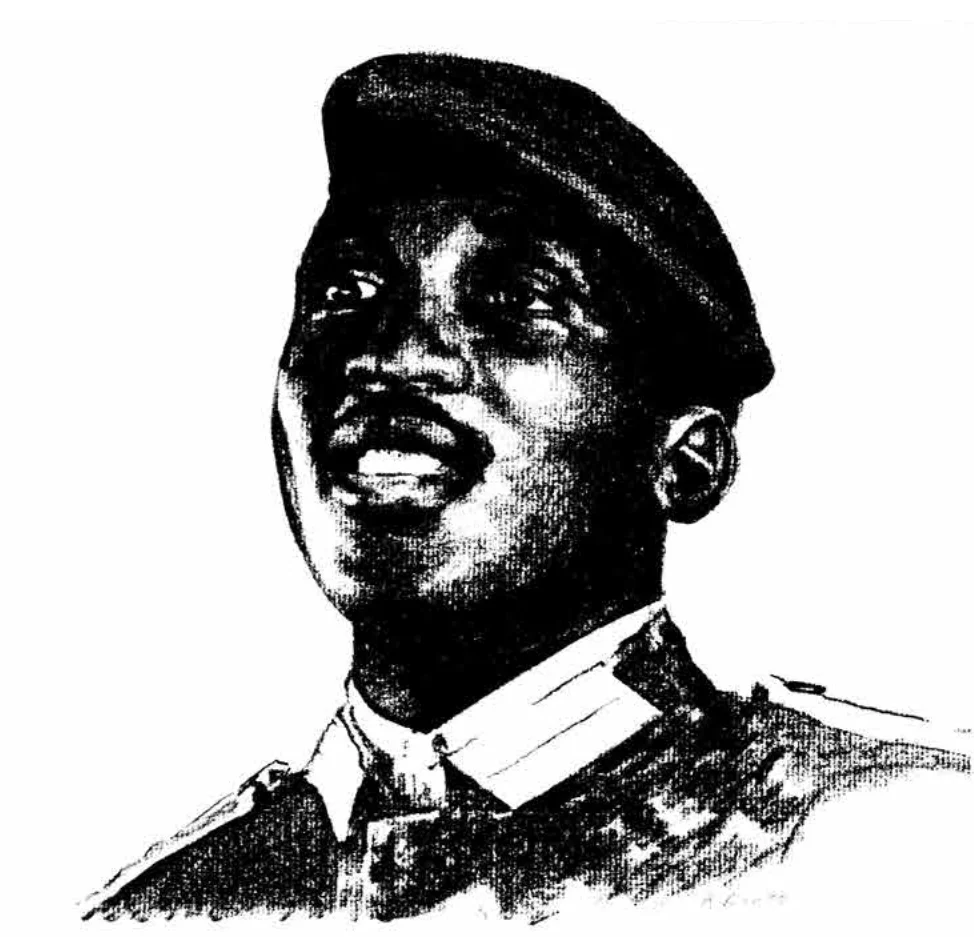
Thomas Sankara, the revolutionary president of Burkina Faso from 1983 to 1987, remains one of the most electrifying and consequential figures in modern African history. In just four years at the helm of one of the world’s poorest nations, he launched a sweeping program of social and economic transformation that touched everything from women’s rights and public health to land reform and debt politics. His assassination at 38 cut short a project that still shapes how Africans across the continent and in the diaspora think about sovereignty, dignity, and self-reliance.
Thomas Sankara was a Burkinabè military officer and Marxist revolutionary who led Burkina Faso from 1983 until his assassination in 1987. He renamed the country from Upper Volta to Burkina Faso (“Land of Upright People”), championed women’s rights, mass vaccination and literacy campaigns, and defiantly rejected foreign debt. His legacy endures as a symbol of pan-African self-determination.
- Who Was Thomas Sankara? The Making of a Revolutionary
- The 1983 Coup and the Birth of Burkina Faso
- What Did Thomas Sankara Actually Achieve in Power?
- Thomas Sankara and the Politics of Debt and Sovereignty
- Why Was Thomas Sankara Assassinated?
- The Thomas Sankara Legacy in Modern Africa
- Thomas Sankara in the African Imagination
- Frequently Asked Questions About Thomas Sankara
- Conclusion: The Enduring Fire of Thomas Sankara
Who Was Thomas Sankara? The Making of a Revolutionary
Thomas Isidore Noël Sankara was born on 21 December 1949 in Yako, a town in the north of what was then the French colony of Upper Volta. His father, Joseph Sankara, was a gendarme and a veteran of the French army; his mother, Marguerite, raised a family that valued discipline and education. Sankara excelled at school and entered the military academy in Ouagadougou, later completing officer training in Madagascar and further military instruction in France and Morocco.
Those formative years abroad mattered. In Madagascar in the early 1970s, Sankara witnessed the student and nationalist uprisings against the postcolonial order, and he read widely in Marxist and pan-Africanist literature. He returned to Upper Volta with a soldier’s bearing and a revolutionary’s convictions, and he was soon posted to the front lines of a border war with Mali — a conflict in which he distinguished himself and earned a reputation for courage and integrity.
From Soldier to Statesman
Upper Volta in the 1970s was a textbook case of postcolonial fragility: frequent coups, a rural economy dependent on cotton and remittances, and a political class closely tied to France. Sankara grew disillusioned with the military’s role as a vehicle for elite enrichment. He began organizing with fellow officers who shared his frustration, including Blaise Compaoré, Henri Zongo, and Jean-Baptiste Boukary Lingani. In 1981 he briefly served as Secretary of State for Information in a transitional government, but resigned rather than endorse censorship of the press — an early signal of the principles he would later carry into power.
The 1983 Coup and the Birth of Burkina Faso
On 4 August 1983, a group of soldiers led by Sankara and Compaoré seized power in Ouagadougou, ousting the regime of Major Jean-Baptiste Ouédraogo, who had himself come to power in a 1982 coup but had drifted toward conservative, pro-French policies. Sankara, who had been placed under house arrest weeks earlier, was freed by the putschists and installed as President of the National Council of the Revolution.
One of his first acts was symbolic and seismic: on 2 August 1984, the first anniversary of the revolution, Upper Volta was renamed Burkina Faso — “Land of Upright People,” drawn from the Mooré and Dioula languages — and a new flag and anthem were adopted. The name change was more than rebranding; it was a declaration that the country’s identity would no longer be a colonial residue but a statement of moral purpose.
| Date | Event | Significance |
|---|---|---|
| 21 December 1949 | Born in Yako, Upper Volta | Origins of a pan-African icon |
| 4 August 1983 | Seizes power in Ouagadougou | Start of the Burkinabè Revolution |
| 2 August 1984 | Upper Volta renamed Burkina Faso | Rejection of colonial naming |
| July 1985 | Address to the UN General Assembly | Demands cancellation of African debt |
| 15 October 1987 | Assassinated in Ouagadougou | End of the revolution; legacy begins |
What Did Thomas Sankara Actually Achieve in Power?
The scale of Sankara’s domestic program is often underestimated. Burkina Faso in 1983 was one of the poorest countries on earth, with adult literacy estimated at under 20 percent, infant mortality among the highest in the world, and a rural economy battered by drought and structural adjustment. Within four years, his government reported dramatic gains in several areas — figures that remain debated by economists but whose direction is widely accepted.
Health: The Vaccination Commando
In 1984–85, Sankara’s government launched a mass immunization campaign that became known as the “Vaccination Commando.” Mobile teams of health workers fanned out across the country, and the government claimed to have immunized some 2.5 million children against measles, meningitis, and yellow fever in a matter of weeks. The campaign was notable for its mobilization model: village committees, women’s groups, and traditional leaders were enlisted to spread word and overcome distrust. Sankara also pushed to build health clinics in rural areas and to make essential medicines more accessible, arguing that health care was a right, not a commodity.
Education and Literacy
Sankara’s government launched a national literacy campaign in eight major languages, including Mooré, Dioula, Fulfulde, and Gourmantché, rather than relying solely on French. The approach was practical: literacy classes tied to farming, health, and civic life. The government claimed literacy rates rose sharply during the period, though independent verification is difficult. What is clear is that the campaign signaled a break from the elitist, French-language schooling inherited from the colonial era.
Land, Agriculture, and the “One Village, One Grove” Campaign
Against the backdrop of the Sahel drought, Sankara’s government promoted agro-ecology and reforestation through campaigns such as “One Village, One Grove” and “Three Struggles” (against bush fires, deforestation, and overgrazing). Land reform aimed to redistribute holdings from absentee elites to peasant farmers, and the government invested in small-scale irrigation and grain storage. Sankara famously promoted local consumption — “consume what you produce, produce what you consume” — as both an economic and a cultural strategy.
Women’s Rights
Sankara’s commitment to gender equality was among the most radical of any African leader of his era. His government banned forced marriages, female genital mutilation, and polygamy; promoted contraception; and appointed women to senior government posts, including a significant share of ministerial and administrative roles. He framed women’s liberation as inseparable from national liberation, declaring that “the revolution cannot triumph without the emancipation of women.” These reforms met fierce resistance from traditional and religious authorities, and enforcement was uneven — but they set a precedent that later Burkinabè governments and activists would build upon.
Thomas Sankara and the Politics of Debt and Sovereignty
Sankara’s most famous international moment came at the United Nations General Assembly in July 1985, when he delivered a speech that remains a touchstone for debt-justice campaigners. He argued that Africa’s debt was a form of neocolonial control, incurred by unelected and corrupt regimes, and that refusing to repay it was a moral imperative rather than a default. “Debt is a cleverly managed reconquest of Africa,” he said, calling on African leaders to unite in rejecting the terms imposed by creditors.
His stance was not merely rhetorical. Sankara cut public salaries, including his own, and pushed austerity on the state while resisting the structural adjustment programs that the IMF and World Bank were imposing across the continent. He argued that African governments should prioritize food sovereignty, regional trade, and industrialization over debt service. His call for a united front of African nations against the debt regime anticipated later movements, including the Jubilee 2000 campaign and contemporary debates over odious debt.
Pan-Africanism in Practice
Sankara saw Burkina Faso’s revolution as part of a continental struggle. He hosted and supported liberation movements, including the African National Congress of South Africa and the South West Africa People’s Organisation of Namibia, and he cultivated ties with like-minded leaders such as Jerry Rawlings of Ghana and Muammar Gaddafi of Libya. He was a vocal critic of French neocolonial influence in West Africa, particularly the role of the CFA franc and French military bases. His vision of a united, self-reliant Africa — “a Burkina Faso that is a homeland for all Africans” — resonated far beyond his country’s borders.
Why Was Thomas Sankara Assassinated?
On 15 October 1987, Sankara was killed in a coup in Ouagadougou, along with twelve other officials. The putsch brought Blaise Compaoré, Sankara’s former comrade and co-conspirator of 1983, to power. Compaoré would rule Burkina Faso for 27 years, reversing many of Sankara’s policies, reintegrating the country into French and Western financial networks, and presiding over a period of political stagnation and corruption.
The circumstances of the assassination have been the subject of judicial inquiry for decades. In April 2021, a Burkina Faso military court began proceedings against Compaoré and others accused of involvement in the killing; Compaoré, who had fled to Côte d’Ivoire after his 2014 ouster, was tried in absentia. In April 2022, the court convicted Compaoré and several co-defendants of complicity in Sankara’s assassination and sentenced them to life imprisonment. The trial, though incomplete in its accountability, represented a significant moment for Burkinabè justice and for the historical record.
Many observers have pointed to the geopolitical context: Sankara’s defiance of France, his ties to Libya and Ghana, and his rejection of debt made him a target for both domestic rivals and external powers. The full truth of who ordered the killing remains contested, but the trial established that the assassination was a planned conspiracy rather than a spontaneous act.
The Thomas Sankara Legacy in Modern Africa
Nearly four decades after his death, Sankara’s image is everywhere in Ouagadougou and across the continent — on murals, T-shirts, and the walls of university campuses. He is invoked by activists fighting debt, by feminists citing his gender reforms, by pan-Africanists demanding continental unity, and by young Africans frustrated with corruption and foreign interference. His speeches circulate on YouTube and TikTok, often remixed and subtitled, finding new audiences among a generation born long after his death.
His legacy is also contested. Critics note that his government restricted press freedom, used revolutionary committees that sometimes acted with brutality, and that many of his economic claims were exaggerated. Defenders argue that he inherited a broken state and faced relentless external pressure, and that his moral clarity and personal austerity — he famously sold the government’s Mercedes fleet and rode a bicycle — set a standard few leaders have matched.
What Sankara’s Legacy Means Today
- Debt justice: His 1985 UN speech remains a foundational text for campaigns against predatory lending and for African economic sovereignty.
- Women’s rights: His reforms on forced marriage, FGM, and political representation paved the way for later Burkinabè activism and legal change.
- Pan-Africanism: His vision of continental unity and resistance to neocolonial influence continues to inspire movements from the Sahel to the diaspora.
- Public health and ecology: The Vaccination Commando and reforestation campaigns are cited as models of community-led development.
Thomas Sankara in the African Imagination
Sankara’s appeal lies partly in his refusal to accept the terms of the possible. He was a head of state who quoted Che Guevara, played guitar in a band called “Les Petits Chanteurs,” and told crowds that “he who feeds you controls you.” He was also a product of his time — a Cold War-era Marxist who believed in the state as an instrument of liberation — and his ideas have been adapted by later generations who operate in a very different world of mobile money, social media, and climate crisis.
His memory is particularly potent in Burkina Faso itself, where the 2014 uprising that ousted Compaoré was widely seen as a revival of Sankara’s spirit. The country’s subsequent struggles with jihadist insurgency and political instability have made his emphasis on sovereignty, rural development, and popular mobilization newly relevant. In 2023, the transitional government of Captain Ibrahim Traoré invoked Sankara’s legacy while pursuing a nationalist agenda, a reminder that his name remains a powerful political currency.
Frequently Asked Questions About Thomas Sankara
What was Thomas Sankara best known for?
He is best known for leading Burkina Faso’s 1983 revolution, renaming the country from Upper Volta, and launching ambitious programs in health, education, women’s rights, and anti-debt politics. His 1985 UN speech on African debt and his personal austerity made him a global symbol of principled leadership.
How did Thomas Sankara die?
He was assassinated on 15 October 1987 in a coup led by Blaise Compaoré and co-conspirators. A 2022 trial in Ouagadougou convicted Compaoré and others in absentia for complicity in the killing.
Why is Thomas Sankara called Africa’s Che Guevara?
The comparison reflects his revolutionary Marxism, his guerrilla-style rhetoric, his iconic image, and his martyrdom at a young age. Like Guevara, he became a symbol of anti-imperialist struggle whose influence outlasted his life.
Conclusion: The Enduring Fire of Thomas Sankara
Thomas Sankara’s revolution lasted only four years, but its imprint on Burkina Faso and on African political thought is indelible. He demonstrated that a poor, landlocked country could assert its dignity on the world stage, that women’s liberation was central to national liberation, and that debt and dependence were political choices rather than natural facts. His flaws were real, and his project was incomplete, but the questions he asked — about sovereignty, justice, and who benefits from the global order — remain as urgent as ever. In a continent of young, connected, and impatient populations, Sankara’s insistence that “the revolution cannot triumph without the emancipation of women” and that “he who feeds you controls you” still lands with force. His legacy is not a monument but a challenge: to build the upright society he named, and to refuse the terms of a world that would prefer Africa to remain a footnote.