📅 Last updated: 19.09.2026
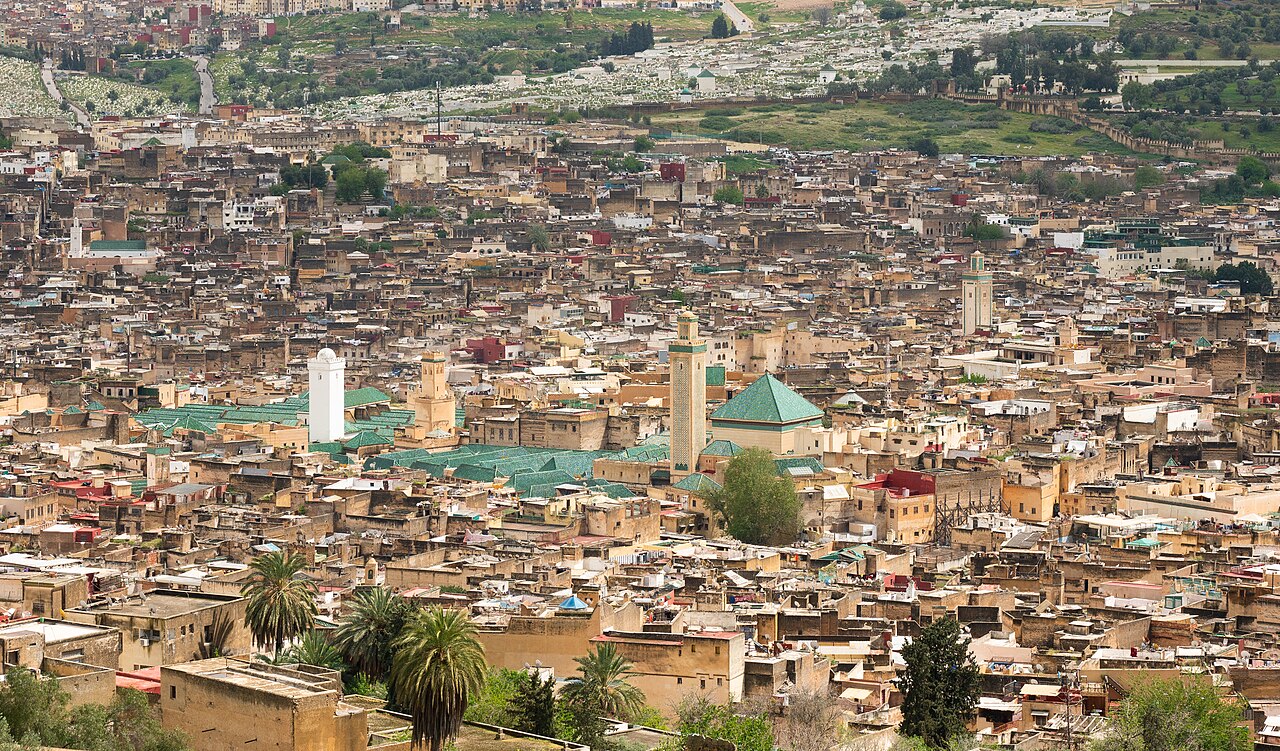
Step through the Bab Bou Jeloud gate at dusk, and Fes el Bali swallows you whole. Founded in the ninth century and home to roughly 150,000 residents, it is widely considered the largest car-free urban area on Earth — a dense, living labyrinth of some 9,000 narrow lanes where donkeys still haul gas canisters and flatbreads, and where the smell of cedar, saffron, and tanned leather drifts between walls that have stood for a thousand years. This is not a museum piece. Fes el Bali is a working city, a UNESCO World Heritage site since 1981, and one of the most extraordinary places on the African continent.
- Where Fes el Bali Begins: The Founding of a Dynasty's Capital
- Inside the Labyrinth: Navigating Fes el Bali on Foot
- Fes el Bali as a Living Economy: Crafts, Guilds, and the Modern Medina
- Food, Faith, and the Rhythm of Daily Life in Fes el Bali
- Preservation and the Future: Can the Medina Hold On?
- Why Fes el Bali Matters
Where Fes el Bali Begins: The Founding of a Dynasty’s Capital
The story starts in 789 CE, when Idris I, a descendant of the Prophet Muhammad who had fled the Abbasid caliphate, founded a settlement on the eastern bank of the Oued Fes. His son, Idris II, established a twin town on the western bank in 809. For nearly two centuries, the two halves — known as the Adwat al-Andalus and the Adwat al-Qarawiyyin — grew separately, each with its own walls, mosques, and markets, divided by the river that still runs through the medina’s heart.
The two banks were finally unified in the eleventh century under the Almoravids, and it was the Almohads who, in the twelfth century, tore down the dividing wall and forged a single, fortified city. But the medina’s true golden age arrived with the Marinid dynasty in the thirteenth and fourteenth centuries. Under rulers like Abu Yusuf Yaqub and Abu Inan Faris, Fes became the capital of a sprawling empire stretching from the Atlantic to the Sahara, and the city’s madrasas, mosques, and fondouks (merchant inns) multiplied.
That era left an architectural legacy that still defines the medina. The Bou Inania Madrasa, completed around 1357 by Abu Inan Faris, remains one of the finest examples of Marinid craftsmanship: carved cedar ceilings, zellij tilework in geometric constellations, and a courtyard so acoustically perfect that a whispered prayer carries across it. Nearby, the Al-Attarine Madrasa (1323–1325) and the Sahrij Madrasa (1321) offer the same dizzying interplay of stucco, wood, and tile.
After the Marinids, Fes lost its capital status to Marrakech and later to Meknes, but it never lost its spiritual and intellectual weight. When the French protectorate was established in 1912, the colonial administration built a new city — the Ville Nouvelle — outside the walls, leaving the medina to evolve on its own terms. That separation, painful in its time, inadvertently preserved Fes el Bali as one of the most intact medieval cities in the world.
Inside the Labyrinth: Navigating Fes el Bali on Foot
There are no cars in Fes el Bali. There are also no reliable maps — or rather, no map that captures the medina’s true logic. The lanes twist, dead-end, double back, and narrow until two people cannot pass. Google Maps will fail you. Local guides will not.
The medina is organized by trade, a system that dates back centuries. Each souk (market) clusters a single craft: the souk el-attarine for spices, the souk el-sebbaghine for dyes, the souk el-henna for cosmetics, the souk el-najjarine for carpentry. Walk through the Place Seffarine and you will hear the rhythmic clang of metalworkers hammering copper pots, a sound that has echoed there since the fourteenth century. The Kissaria, a covered market for luxury goods, once sold gold and silk to sultans; today it sells textiles and jewelry to tourists and locals alike.
Landmarks You Should Not Miss
- University of al-Qarawiyyin (Qarawiyyin Mosque): Founded in 859 CE by Fatima al-Fihri, a woman of considerable wealth and learning, it is recognized by UNESCO and Guinness World Records as the oldest continuously operating educational institution in the world. It became a full university in 1963 and remains a center of Islamic scholarship.
- Chouara Tannery: The oldest and largest of Fes’s three tanneries, operating since the eleventh century. From the terraces of surrounding leather shops, you can watch workers — using methods largely unchanged for centuries — treat hides in stone vats filled with limestone, pigeon droppings, and vegetable dyes.
- Bab Bou Jeloud (The Blue Gate): Built in 1913 by the French, its blue-and-green zellij facade is the most photographed entry point to the medina. The blue represents Fes; the green, Islam.
- Nejjarine Museum of Wooden Arts and Crafts: Housed in a beautifully restored eighteenth-century fondouk, it showcases the medina’s woodworking heritage and has a rooftop café with sweeping views.
- Dar Batha Museum: A former palace that now holds a collection of traditional Moroccan arts, including ceramics, carpets, and embroidery.
What strikes many visitors is not just the monuments but the texture of daily life: children reciting Quran in doorway schools, bakers pulling khobz (round bread) from communal ovens, a man delivering fresh mint by handcart. The medina is not a stage set. It is a neighborhood.
Fes el Bali as a Living Economy: Crafts, Guilds, and the Modern Medina
For centuries, Fes el Bali was the economic engine of Morocco. Its guilds — the amina system, in which each trade elected a master — regulated quality, pricing, and training. That system has weakened under modern regulation, but the crafts endure. According to Morocco’s Ministry of Tourism, the medina is home to thousands of artisans working in leather, brass, ceramics, textiles, and zellij.
The medina’s economy today is a hybrid. On one hand, tourism sustains a vast network of riads (traditional guesthouses), guides, and shops. On the other, local residents still rely on the medina for daily needs: the Marché Central just outside the walls, the produce souks, the pharmacies, the hammams. The Fes Festival of World Sacred Music, held annually since 1994, brings international artists to the city and has become a cultural anchor for the region.
Restoration has been a major force. Since the 1990s, the ADER-Fès (Agence pour la Dédensification et la Réhabilitation de la Médina de Fès), supported by UNESCO, the World Bank, and Moroccan authorities, has rehabilitated hundreds of buildings, repaired water channels, and improved sanitation. The work is ongoing — parts of the medina still suffer from overcrowding and crumbling infrastructure — but the trajectory is toward preservation, not decay.
Key Facts at a Glance
| Fact | Detail |
|---|---|
| Founded | 789 CE (Idris I), unified in the 11th–12th centuries |
| UNESCO World Heritage | Inscribed in 1981 |
| Population | Approximately 150,000 residents |
| Area | Around 220 hectares within the walls |
| Oldest University | University of al-Qarawiyyin, founded 859 CE |
| Car-free status | Largest urban car-free zone in the world |
Food, Faith, and the Rhythm of Daily Life in Fes el Bali
Fes is widely regarded as Morocco’s culinary capital, and the medina is its kitchen. The city’s signature dish, pastilla (or bastilla), is a paper-thin warqa pastry filled with pigeon, almonds, and cinnamon — a sweet-savory marvel that dates to the Andalusian influence. Harira, a tomato and lentil soup, breaks the fast during Ramadan. Tangia, a slow-cooked meat dish traditionally prepared by men in the communal ovens, is a Fassi specialty.
The medina’s food culture is inseparable from its faith. The call to prayer from the Qarawiyyin Mosque and dozens of smaller mosques structures the day. During Ramadan, the medina transforms: streets empty at sunset, then fill with families breaking fast together. The Moulay Idriss II shrine, at the heart of the medina, draws pilgrims year-round; non-Muslims may not enter, but the atmosphere around it — the candles, the incense, the quiet devotion — is palpable from the alley outside.
“Fes is the heart of Morocco,” wrote the historian and traveler Leo Africanus in the sixteenth century. “It is the city where the sciences and crafts flourish, and where the noblest families of the land reside.”
That description still holds. The medina is home to families who have lived in the same riad for generations, and to a new generation of entrepreneurs — designers, chefs, and tech workers — who are choosing to stay or return. The Fes Digital Park, opened in 2016 outside the medina, signals that the city is not trapped in its past.
Preservation and the Future: Can the Medina Hold On?
Fes el Bali faces real challenges. The medina’s infrastructure — water, sewage, waste collection — was built for a smaller population and a different era. Some buildings are structurally unsound. Tourism, while vital, can strain the fabric of daily life and drive up rents. Climate change brings hotter summers and more erratic rainfall, threatening the delicate plaster and woodwork.
Yet the response has been robust. UNESCO’s 1981 listing triggered international attention. The Fes Medina Rehabilitation Project, launched in 2006 with a budget of around $30 million, focused on restoring monuments and improving living conditions. More recently, Morocco’s Vision 2030 tourism strategy has prioritized sustainable heritage tourism, with Fes as a centerpiece.
Critically, preservation is not just about buildings. It is about people. Programs that train young artisans, support women’s cooperatives, and provide micro-loans to small businesses help keep the medina economically alive. The Fondation Culturelle Fès-Saïss and other NGOs work on cultural programming and education. The medina’s future depends on whether it can remain a place where people live, work, and raise families — not just a backdrop for photographs.
Why Fes el Bali Matters
Fes el Bali is more than a travel destination. It is a testament to what African cities have been and what they can be: dense, walkable, culturally rich, and resilient. It is a reminder that urban planning did not begin in Europe, and that the medieval world produced sophisticated systems of water management, waste disposal, and trade regulation. It is also a living example of coexistence — Arab, Amazigh, Andalusian, Jewish, and sub-Saharan African influences layered over twelve centuries.
For the diaspora, the medina is a place of return and recognition. For visitors, it is an invitation to slow down, get lost, and pay attention. For Morocco, it is a crown jewel — and a responsibility.
Walk through Bab Bou Jeloud one more time, and you will understand why. The medina does not reveal itself all at once. It asks for patience, curiosity, and respect. In return, it offers something increasingly rare in the modern world: a place where the past is not a performance, but a presence.