📅 Last updated: 06.09.2026
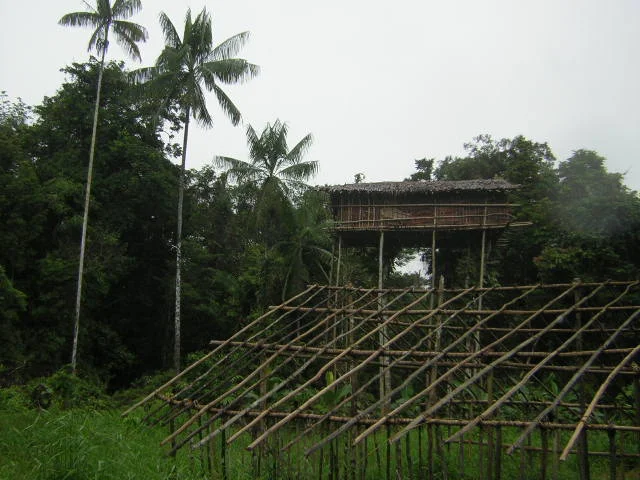
The most iconic images to emerge from the remote lowland jungles of Indonesian Papua are undoubtedly the magnificent Korowai tree houses, perched precariously—and yet with profound architectural genius—some 20 to 45 meters above the forest floor. These aren’t merely shelters; they are a people’s testament to survival, cosmology, and an intimate, defiant relationship with one of the most biologically complex environments on Earth. For the Korowai, a Papuan people numbering approximately 4,000 to 5,000 individuals, the sky is not a distant void but a realm of spirits, and the earth below is not a foundation but a domain of sorcery and ancestral power. To understand their elevated villages is to peel back layers of a life that, until the late 20th century, remained almost entirely untouched by the modern world—a world that now encroaches upon their canopy with chainsaws, missionaries, and the seductive pull of a cash economy.
- The Architectural Majesty of Korowai Tree Houses
- The Shifting Sands of Contact: From Isolation to the 21st Century
- Navigating the Ethics of Encounter: The Tourism Question
- Conservation, Climate, and the Future of the Forest
- Beyond the Exotic: The Korowai as Modern Papuans
- The Enduring Allure of the Canopy
The Architectural Majesty of Korowai Tree Houses
Constructing a dwelling 30 meters above the ground is not an act of whimsy; it is a feat of engineering that requires an encyclopedic knowledge of jungle botany, a sophisticated understanding of load-bearing physics, and immense communal labor. The Korowai do not use nails, bolts, or modern fasteners. Instead, the entire structure is lashed together using rotan (rattan) vines, which are incredibly strong and flexible, and strips of the bark from the sagu (sago palm) tree. The chosen host tree is typically a massive, buttress-rooted giant like a tali or wango tree, which provides a stable base. The builders do not simply build in the branches; they construct a complex wooden framework that encircles the trunk, distributing the weight of the dwelling across the tree’s main bole.
The process is a masterclass in organic architecture. First, a team of men ascends the trunk using a traditional ladder made of a single notched log, which is later removed to deter enemies and animals. From the canopy, they lower rotan ropes to haul up heavy hardwood beams. The floor is constructed from split sago palm trunks, laid side-by-side to create a resilient platform. The walls are woven from sago leaves and bamboo strips, forming a weatherproof barrier against the torrential rains that characterize the region’s climate, which can see over 3,000 millimeters of rainfall annually. The roof, steeply pitched and thatched with sago leaves, sheds water effectively and provides excellent insulation against the equatorial heat.
But why such extreme elevation? The reasons are as much spiritual as they are practical. Historically, the Korowai believed that powerful witches, known as khakhua, lived on the ground and could attack them in their sleep, consuming their internal organs. Building high above the earth was a defensive measure against these malevolent spirits, as well as a practical defense against flooding in the swampy lowlands and raids from enemy clans. The height also offers protection from mosquitoes and other biting insects, and provides a vantage point from which to spot approaching strangers or game.
The Daily Rhythm of the Canopy Dwellers
Life in a Korowai tree house is a constant negotiation between the immense height and the necessity of daily survival. The sago palm is the staff of life. Extracting the starchy pith from the massive trunks is a labor-intensive process that involves felling the tree, splitting it open with stone axes (though steel axes are now more common), and pulverizing the inner pith with wooden mallets. The resulting fiber is then washed with water to extract the starch, which is baked into dense, nutritious flatbreads that form the staple of their diet. This work is almost exclusively done by women, who often carry out the task on the ground, a dangerous endeavor that they undertake with a pragmatic acceptance of the risk.
Men, meanwhile, are responsible for hunting and providing protein. They use bows and arrows, often tipped with bone or wood, to hunt wild pigs, cassowaries, and monkeys. The rivers and streams that snake through their territory are rich with fish and prawns, which are caught using intricate traps and nets woven from plant fibers. The division of labor is clear, but the community is highly cooperative. A project as significant as building a tree house is a village affair, often involving multiple clans and days of intense work, followed by celebratory feasts.
The Shifting Sands of Contact: From Isolation to the 21st Century
The narrative of the Korowai is not static. For centuries, they lived in total isolation, their existence unknown to the outside world. The first confirmed contact with a Dutch expedition occurred in 1974, a moment that irrevocably changed their trajectory. This initial encounter, documented by anthropologists, revealed a people who had no concept of a world beyond their own river valleys, who believed they were the only humans on Earth. This is not a metaphor; the Korowai cosmology held that they were the sole inhabitants of the world, and that outsiders were either spirits or, more often, khakhua—witches to be feared and, in some cases, killed.
The decades following contact have brought profound changes. The Indonesian government, through the province of Papua, has pursued a policy of “development” that includes sedentarization—encouraging the Korowai to move into permanent, ground-level villages. Missionaries, representing both Christian denominations and other faiths, have established a presence, building airstrips and schools. While these changes have brought access to healthcare and education, they have also disrupted traditional social structures and belief systems. The old animistic worldview, where spirits inhabited every tree and river, is rapidly giving way to a syncretic form of Christianity.
The most visible consequence of this contact, however, is the transformation of the tree house itself. While many Korowai still build and live in traditional high houses, a growing number—particularly those in villages with airstrips like Mabul or Yaniruma—have begun constructing “show” tree houses for tourists. These structures are often lower (around 10-15 meters) and built specifically for the tourist gaze, while the inhabitants themselves may sleep in more modest ground-level homes nearby. This has created a complex economic dynamic where the Korowai are simultaneously preserving their architectural heritage and commodifying it for a global audience.
“We are not a museum piece,” a Korowai elder named Boas told a visiting researcher in 2019, his words translated from the Korowai language. “We want our children to know how to build, but we also want them to know how to read. The world has come to us, so we must learn to walk in two worlds.”
This quote encapsulates the central tension of the Korowai today. They are not a “lost tribe” frozen in time, but a vibrant, adaptive people navigating the treacherous currents of globalization. The challenge lies in ensuring that their cultural identity—including the knowledge of how to build these incredible structures—is not lost in the process of assimilation.
Navigating the Ethics of Encounter: The Tourism Question
Tourism has become a significant, albeit controversial, economic driver in Korowai territory. Tour operators, primarily based in the larger towns of Jayapura or Wamena, offer expensive, multi-day excursions into the interior. These trips typically involve chartering small planes to remote airstrips, followed by long treks or canoe journeys to reach the villages. For a traveler willing to spend thousands of dollars, the reward is an encounter with a way of life that seems to defy the modern world.
The ethical dimension of this tourism is fiercely debated. Proponents argue that it provides much-needed income for a people who have few other avenues for economic participation. The money paid to guides, porters, and village communities can be used to purchase steel tools, medicine, and school fees. It also creates a powerful economic incentive to maintain the tree house tradition, as it is the primary attraction. A community that has moved to ground-level housing may construct a traditional house solely for the purpose of hosting tourists, thereby keeping the skills and knowledge of construction alive.
Critics, however, point to the potential for exploitation and cultural degradation. There are concerns about the “human zoo” aspect of tourism, where visitors treat the Korowai as objects of curiosity rather than as fellow human beings. The influx of outsiders can also bring diseases to which the Korowai have little immunity, and the presence of wealthy foreigners can create social friction and jealousy within communities. Furthermore, the demand for “authentic” experiences can pressure the Korowai to perform a version of their culture that is no longer entirely genuine, reinforcing stereotypes of the “noble savage” that are both patronizing and inaccurate.
Responsible tourism, however, offers a middle path. Operators who work closely with local communities, ensuring fair wages and respecting local customs, can foster a form of cultural exchange that is mutually beneficial. The key lies in empowering the Korowai to control the narrative and to set the terms of the encounter. They are not passive victims of globalization; they are active agents who are learning to leverage their unique heritage for their own benefit.
Conservation, Climate, and the Future of the Forest
The Korowai are not just builders of extraordinary homes; they are custodians of one of the most biodiverse and carbon-dense forests on Earth. Their territory, located in the southern lowlands of Papua, is part of the third largest tropical rainforest in the world, after the Amazon and the Congo Basin. This forest is not a pristine wilderness, as it is often portrayed; it is a managed landscape, shaped by thousands of years of human habitation. The Korowai practice a form of shifting cultivation, where they clear small plots for gardens, plant them for a few years, and then allow them to regenerate. This sustainable practice maintains biodiversity and prevents the buildup of combustible biomass that leads to catastrophic wildfires.
However, the Korowai forest is now under threat from forces far larger than their traditional slash-and-burn techniques. The Indonesian government has designated large tracts of Papua for oil palm plantations and logging concessions. These industries involve the clear-cutting of primary forest, the displacement of indigenous communities, and the release of massive amounts of carbon dioxide into the atmosphere. The construction of the Trans-Papua Highway, a multi-billion-dollar infrastructure project, is opening up previously inaccessible areas, accelerating deforestation and facilitating the spread of illegal logging and wildlife trafficking.
Climate change adds another layer of complexity. The lowland forests of Papua are highly sensitive to changes in rainfall patterns. Prolonged droughts, which are becoming more frequent, can stress the giant trees that the Korowai rely on for their tree houses. A weakened tree is more susceptible to disease and wind damage, posing a direct threat to the safety of the elevated dwellings. Furthermore, rising sea levels and increased storm intensity could impact the coastal and riverine ecosystems that the Korowai depend on for fishing and transportation.
The Role of Indigenous Rights in Conservation
There is a growing global consensus that the most effective way to conserve tropical forests is to recognize and secure the land rights of indigenous peoples. Studies have shown that deforestation rates are significantly lower in areas where indigenous communities have legal title to their land. The Korowai, however, have historically been marginalized in Indonesian land law. Their traditional territories are often classified as “state forest,” which means they have no legal claim to the land they have inhabited for centuries.
Organizations like Forest Peoples Programme and the Amazon Conservation Team (which has expanded its work to Papua) are working with Korowai communities to help them map their ancestral lands and navigate the complex legal process of obtaining customary land rights. These efforts are not just about protecting trees; they are about protecting a culture and a way of life. If the Korowai lose their forest, they lose the source of their food, medicine, and spiritual identity. They lose the very trees that have been their homes for generations.
| Threat | Primary Driver | Impact on Korowai Tree Houses | Potential Mitigation |
|---|---|---|---|
| Deforestation | Oil palm & logging concessions | Loss of suitable host trees and construction materials | Recognition of indigenous land rights; sustainable forestry |
| Climate Change | Global carbon emissions | Increased drought stress on trees; higher risk of collapse | Global emissions reduction; local climate adaptation plans |
| Cultural Assimilation | Missionary activity & government policy | Shift to ground-level housing; loss of traditional building skills | Culturally-sensitive education; support for cultural revitalization |
| Unregulated Tourism | Global demand for “authentic” experiences | Construction of “fake” houses for tourists; potential for social disruption | Community-based ecotourism models; strict ethical guidelines |
Beyond the Exotic: The Korowai as Modern Papuans
It is a disservice to the Korowai to view them solely through the lens of their tree houses. To do so is to reduce a complex, contemporary people to a single, albeit spectacular, facet of their culture. The Korowai are modern Papuans, citizens of Indonesia, and participants in a globalized world. They wear t-shirts and shorts alongside their traditional koteka (penis gourds). They use mobile phones, when they can get a signal, and they listen to Indonesian pop music alongside their own traditional songs. They are acutely aware of the political and economic forces that shape their lives, and they are actively negotiating their place within them.
In recent years, there has been a significant movement among younger Korowai to receive formal education. They understand that to advocate for their rights, to secure legal title to their lands, and to engage with the Indonesian state on equal footing, they must master the tools of the modern world. This is not a rejection of their heritage; it is an adaptation. They are learning to be bilingual, to navigate both the spiritual world of their ancestors and the bureaucratic world of the Indonesian government.
This dual consciousness is perhaps best exemplified by the story of a young Korowai man named Yohanes, who left his village to attend university in Jayapura. He studied law and returned to his community to help them file a land claim with the National Land Agency. He is as comfortable discussing the nuances of Indonesian agrarian law as he is explaining the spiritual significance of a particular tree to his grandfather. He is a bridge between worlds, a testament to the resilience and adaptability of his people.
The Enduring Allure of the Canopy
Despite the relentless march of modernity, the Korowai tree house endures, both as a physical reality and as a powerful symbol. For the Korowai who continue to build and inhabit them, they are not a relic of the past but a vibrant expression of their identity. They are a link to their ancestors, a practical solution to their environmental challenges, and a source of profound cultural pride. The decision to live in a tree house in the 21st century is not a sign of “backwardness,” but a conscious choice to maintain a connection to a specific way of being in the world—a way that values community, spiritual harmony, and a deep, reciprocal relationship with the natural world.
For the rest of us, the Korowai tree houses offer a profound lesson. They challenge our assumptions about progress and development. They remind us that there is no single path to a “good life” and that human ingenuity can manifest in wildly diverse and creative ways. In a world facing an unprecedented environmental crisis, the Korowai’s low-impact, sustainable lifestyle offers an alternative model—one that suggests that we can live well without consuming the very planet that sustains us. Their architecture, born of necessity and belief, is a masterpiece of sustainable design, and their continued existence is a powerful argument for the preservation of cultural and biological diversity. They are not a people lost in time, but a people who have much to teach us about time, about place, and about the enduring human spirit. The tree houses, swaying gently in the equatorial breeze, are not just homes; they are living monuments to a way of life that stubbornly, beautifully, refuses to disappear.