📅 Last updated: 05.07.2026
When Mansa Musa, the wealthiest man in history, returned from his legendary 1324 pilgrimage to Mecca, he brought back more than gold—he brought scholars, architects, and books. This singular act ignited a golden age of scholarship that would transform a humble Saharan trading post into one of the world’s great intellectual centers. Today, the Timbuktu libraries ancient manuscripts represent one of Africa’s most extraordinary and little-known treasures: a vast collection of texts that challenge the long-held Western narrative of a continent without written history.
- The Birth of a Scholarly Empire: Why Timbuktu Became Africa's Oxford
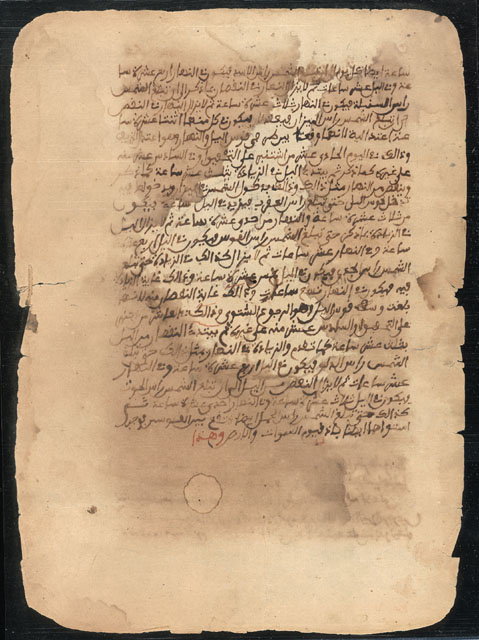
- The Manuscripts Themselves: What the Timbuktu Libraries Ancient Collections Reveal
- The Forgotten Libraries: Rediscovery and the Threat of Erasure
- The Great Escape: How Timbuktu's Librarians Saved a Heritage
- Digitization and the Future: Bringing the Timbuktu Libraries Ancient Knowledge to the World
- The Living Legacy: Contemporary Scholarship and the Return of the Manuscripts
- Beyond the Myths: What the Libraries Teach Us About Africa
- A Call to Action: Preserving Africa's Written Heritage
- The Manuscripts Speak: A Legacy for the Future
The Birth of a Scholarly Empire: Why Timbuktu Became Africa’s Oxford
Long before European universities dominated global thought, Timbuktu was a beacon of learning that attracted scholars from Cairo, Mecca, and Granada. The city’s transformation began in earnest during the 14th century under the Mali Empire, but it reached its intellectual zenith in the 16th century under the Songhai Empire. At its peak, the University of Sankore—one of three great madrasas in the city—hosted some 25,000 students from across Africa and the Middle East.
What made Timbuktu unique was not merely its scholarship but its culture of the book. In an era when a single manuscript could cost as much as a house, the city’s wealthy families competed to build the most impressive private libraries. These Timbuktu libraries ancient collections grew to contain everything from astronomy treatises to legal codes, from poetry to medicine, from mathematics to Sufi mysticism.
The city’s location at the crossroads of trans-Saharan trade routes proved crucial. Caravans arriving from North Africa brought not only salt and textiles but also books from Cairo, Baghdad, and Andalusia. Local scholars wrote their own works, and the city’s scribes produced countless copies. By the 1500s, Timbuktu had become the world’s most important center for book production south of the Sahara.
The Manuscripts Themselves: What the Timbuktu Libraries Ancient Collections Reveal
Walk into any of Timbuktu’s surviving manuscript collections today, and you enter a world of astonishing beauty and intellectual depth. The texts, written in Arabic and local languages like Songhai, Fulfulde, and Tamasheq, cover subjects that would surprise anyone raised on stereotypes of pre-colonial Africa.
Astronomy and Mathematics
The Ahmed Baba Institute alone holds manuscripts that calculate the movements of planets with remarkable precision. One 17th-century text, “The Commentary on the Poem of the Movements of the Stars”, demonstrates sophisticated understanding of lunar phases and their relationship to agricultural cycles. Another manuscript, “The Book of the Introduction to the Science of the Stars”, shows that Timbuktu scholars had access to and built upon the works of Aristotle, Ptolemy, and Al-Khwarizmi.
Medicine and Pharmacology
Timbuktu physicians wrote detailed manuals on herbal medicine, surgery, and disease. One manuscript catalogs over 200 medicinal plants native to the Sahel region, with instructions for preparing treatments for everything from malaria to snake bites. These texts reveal a sophisticated medical tradition that combined Islamic medical knowledge with deep local botanical expertise.
Law and Governance
The city’s legal manuscripts are among its most valuable. They document the Tarikh al-Sudan (History of the Sudan) and Tarikh al-Fattash (The Researcher’s Chronicle), two monumental works that record the political, social, and economic life of the Songhai Empire. These chronicles describe complex systems of taxation, inheritance, and commercial law that governed one of Africa’s largest empires.
Philosophy and Sufi Mysticism
Perhaps most moving are the personal letters and spiritual texts. One manuscript contains a 16th-century scholar’s correspondence with a colleague in Cairo, discussing the nature of divine love and the soul’s journey. Another is a beautifully illuminated copy of the Dala’il al-Khayrat, a collection of prayers for the Prophet Muhammad, with marginal notes in multiple hands showing how the book was used across generations.
| Subject Area | Number of Known Manuscripts | Key Example | Date Range |
|---|---|---|---|
| Astronomy & Mathematics | ~8,000 | “The Commentary on the Poem of the Movements of the Stars” | 14th-17th centuries |
| Medicine & Pharmacology | ~5,000 | Herbal remedy compendium (200+ plants) | 15th-18th centuries |
| Law & Governance | ~12,000 | Tarikh al-Sudan (History of the Sudan) | 16th-17th centuries |
| Philosophy & Sufism | ~6,000 | Correspondence on divine love (Cairo-Timbuktu) | 15th-18th centuries |
| Literature & Poetry | ~4,000 | Anthologies of Arabic and local-language verse | 14th-19th centuries |
The Forgotten Libraries: Rediscovery and the Threat of Erasure
For centuries, these Timbuktu libraries ancient collections remained largely unknown to the outside world. European explorers who reached Timbuktu in the 19th century—like René Caillié, who arrived disguised as a Muslim pilgrim in 1828—were astonished by the manuscripts but often dismissed them as mere copies of Arabic originals. This colonial bias meant that the true scope of Timbuktu’s intellectual heritage was ignored for generations.
The rediscovery began in earnest in the 1960s and 1970s, when Malian scholars like Ahmed Baba al-Massufi (after whom the institute is named) started systematically cataloging the collections. What they found was staggering: an estimated 700,000 manuscripts scattered across Timbuktu and the broader region, held in private family libraries, mosque collections, and institutional archives.
But with rediscovery came new threats. The manuscripts face three major enemies:
- Climate: The Sahara’s extreme temperature swings and low humidity cause parchment and paper to become brittle and fragile. Dust and sand abrade delicate pages.
- Insects and pests: Termites, silverfish, and bookworms have destroyed countless texts over the centuries. Traditional preservation methods using natural repellents like neem leaves and cloves have helped, but cannot stop all damage.
- Political instability: The most dramatic threat came in 2012, when jihadist groups linked to Al-Qaeda occupied Timbuktu and began systematically destroying manuscripts they deemed un-Islamic. This is where the story takes an extraordinary turn.
The Great Escape: How Timbuktu’s Librarians Saved a Heritage
In April 2012, when armed groups seized control of Timbuktu, the world feared the worst for the manuscripts. The jihadists had already destroyed Sufi shrines and tombs. They declared that any text not conforming to their interpretation of Islam would be burned. The Ahmed Baba Institute’s main building was ransacked, and manuscripts were torn and scattered.
What followed was one of the most remarkable acts of cultural preservation in modern history. A secret network of librarians, scholars, and ordinary citizens formed to smuggle the manuscripts to safety. They worked under the cover of night, hiding texts in false-bottomed trunks, under mattresses, and inside sacks of grain. Some manuscripts were moved on donkey carts, others hidden under women’s clothing to avoid detection at checkpoints.
The operation’s mastermind was Dr. Abdel Kader Haidara, director of the Mamma Haidara Commemorative Library. He organized a massive evacuation that ultimately moved over 350,000 manuscripts from Timbuktu to the relative safety of Bamako, Mali’s capital, 600 miles to the south. The operation cost an estimated one million dollars, funded partly by the Dutch government and the Prince Claus Fund, but driven primarily by the courage and dedication of local Malians.
“We were saving not just paper and ink, but the soul of our people,” Haidara later told reporters. “These manuscripts prove that Africa has a written history, a deep intellectual tradition. They are our identity.”
Digitization and the Future: Bringing the Timbuktu Libraries Ancient Knowledge to the World
Today, the rescued manuscripts are being preserved and digitized in Bamako, where they are slowly being restored by trained conservators. The Timbuktu libraries ancient collections are now accessible to a global audience through several ambitious digitization projects.
The most significant of these is the Mali Manuscripts Project, a collaboration between the Malian government, the University of Oslo, and the Norwegian National Library. Since 2015, this project has digitized over 40,000 pages of manuscripts, making high-resolution images available online for free. Another major effort, led by the Hill Museum & Manuscript Library at Saint John’s University in Minnesota, has trained local conservators and provided equipment to stabilize damaged texts.
The process of digitization is painstaking:
- Each manuscript is carefully cleaned using soft brushes and gentle suction.
- It is photographed page by page using specialized cameras that capture ultraviolet and infrared details invisible to the naked eye.
- Metadata is recorded: author, title, date, subject, scribe, provenance, condition.
- Images are uploaded to secure servers, with backups stored in multiple countries.
- Scholars around the world can then access and study the texts without risking damage to the originals.
This digital revolution has already yielded remarkable discoveries. In 2019, researchers identified a previously unknown 16th-century manuscript that contains the earliest known African commentary on the works of the Greek philosopher Aristotle. Another text, dated to 1583, includes detailed astronomical charts that predate European observations of certain celestial phenomena by decades.
The Living Legacy: Contemporary Scholarship and the Return of the Manuscripts
But the story does not end in climate-controlled storage rooms or digital archives. For the people of Timbuktu, these manuscripts are not just historical artifacts—they are living documents that continue to inform religious practice, legal reasoning, and cultural identity.
In 2023, the first batch of manuscripts began returning to Timbuktu after a decade of exile. A new, state-of-the-art conservation center funded by the European Union and the Malian government now houses the collections in a climate-controlled facility designed to withstand both the Sahara’s harsh environment and potential future conflicts. The center includes a reading room where researchers and local community members can consult the manuscripts in person.
Local scholars like Ismaël Diadié Haïdara, a descendant of one of Timbuktu’s most famous scholarly families, emphasize that the manuscripts are not museum pieces. “These texts are still used by judges in family law cases,” he explains. “They are still studied by students in our madrasas. They are a living tradition, not a dead past.”
The manuscripts have also inspired a new generation of African artists and writers. The Malian filmmaker Souleymane Cissé incorporated manuscript imagery into his 2015 film “O Ka”, while the novelist Yambo Ouologuem drew on Timbuktu’s chronicles for his groundbreaking 1968 novel “Bound to Violence”. Contemporary visual artists like Abdoulaye Konaté create installations that reference the geometric patterns and calligraphy found in the manuscripts, connecting ancient traditions with modern aesthetics.
Beyond the Myths: What the Libraries Teach Us About Africa
The story of Timbuktu’s manuscripts matters far beyond the borders of Mali. It directly challenges centuries of colonial propaganda that portrayed Africa as a continent without history, without writing, without intellectual achievement. The British explorer Hugh Clapperton, who visited West Africa in the 1820s, wrote that “the African has no literature.” The manuscripts of Timbuktu prove him spectacularly wrong.
Consider what these texts reveal:
- Intellectual cosmopolitanism: Timbuktu scholars were not isolated. They corresponded with colleagues in Cairo, Fez, Granada, and Istanbul. They read and debated the works of Plato, Aristotle, Avicenna, and Averroes alongside the Quran and Hadith.
- Gender and education: While most scholars were men, the manuscripts document the existence of women scholars and patrons. One 17th-century manuscript records a woman named Nana Asmau, who taught classes in her home and authored poetry. Another text mentions a female library owner who bequeathed her collection of 200 books to the Sankore mosque.
- Religious pluralism: Despite being deeply Islamic, Timbuktu’s scholarship included respectful discussions of other faiths. A surviving manuscript from the 16th century contains a dialogue between a Muslim scholar and a Christian visitor from Portugal, debating theological differences with civility and intellectual rigor.
- Scientific innovation: The manuscripts show that African scholars were not merely copying foreign knowledge. They were making original contributions, particularly in astronomy, medicine, and mathematics, often adapting and improving upon earlier works.
A Call to Action: Preserving Africa’s Written Heritage
The story of Timbuktu is not unique. Across the African continent, from the libraries of Chinguetti in Mauritania to the Ethiopian Orthodox monasteries in Lalibela, from the Swahili coast archives in Zanzibar to the University of al-Qarawiyyin in Fez, Africa holds vast collections of ancient manuscripts that remain understudied and underfunded.
The challenges are immense. Climate change is accelerating the degradation of parchment and paper. Political instability threatens collections in conflict zones. And the global community has yet to invest adequately in preservation. The total funding for African manuscript preservation over the past decade is a fraction of what has been spent on European or Middle Eastern collections.
But there is also reason for hope. New technologies—from portable X-ray fluorescence analyzers that can identify ink composition without damaging texts, to AI-powered handwriting recognition that can transcribe centuries-old scripts—offer unprecedented tools for preservation and study. And a new generation of African scholars, trained in both traditional manuscript studies and digital humanities, is taking ownership of this heritage.
The Timbuktu libraries ancient collections are more than just a window into the past. They are a blueprint for the future—a reminder that Africa’s intellectual traditions are deep, complex, and worthy of global recognition. Every manuscript that is saved, digitized, and studied is a victory against the forces of ignorance and erasure.
The Manuscripts Speak: A Legacy for the Future
Standing in the reading room of Timbuktu’s new conservation center, watching a young Malian woman carefully turn the pages of a 500-year-old astronomy manuscript, it is impossible not to feel the weight of history and the thrill of continuity. The ink is still dark, the diagrams still precise, the calculations still accurate. The scholar who wrote this text, working by candlelight in a mud-brick library centuries ago, was asking the same questions we ask today: How does the universe work? What is our place in it? How can we understand and improve the world around us?
The manuscripts of Timbuktu answer these questions not with simple answers but with a profound challenge. They demand that we rethink what we know about Africa, about intellectual history, about human achievement. They remind us that knowledge has no single birthplace, no privileged culture, no exclusive tradition. It belongs to all of us, and its preservation is a shared responsibility.
As the Malian historian and manuscript curator Dr. Mohamed Diagayeté once said: “When you hold a Timbuktu manuscript, you are holding the thoughts of someone who lived centuries ago. Their words cross time to speak to you. And if we lose these words, we lose part of ourselves—not just as Africans, but as human beings.”
The lost libraries of Timbuktu are no longer lost. They have survived war, neglect, and the elements. Now it is up to us to ensure they survive for centuries more—not as relics of a forgotten past, but as living testaments to Africa’s enduring contribution to the world’s intellectual heritage.