📅 Last updated: 18.11.2026
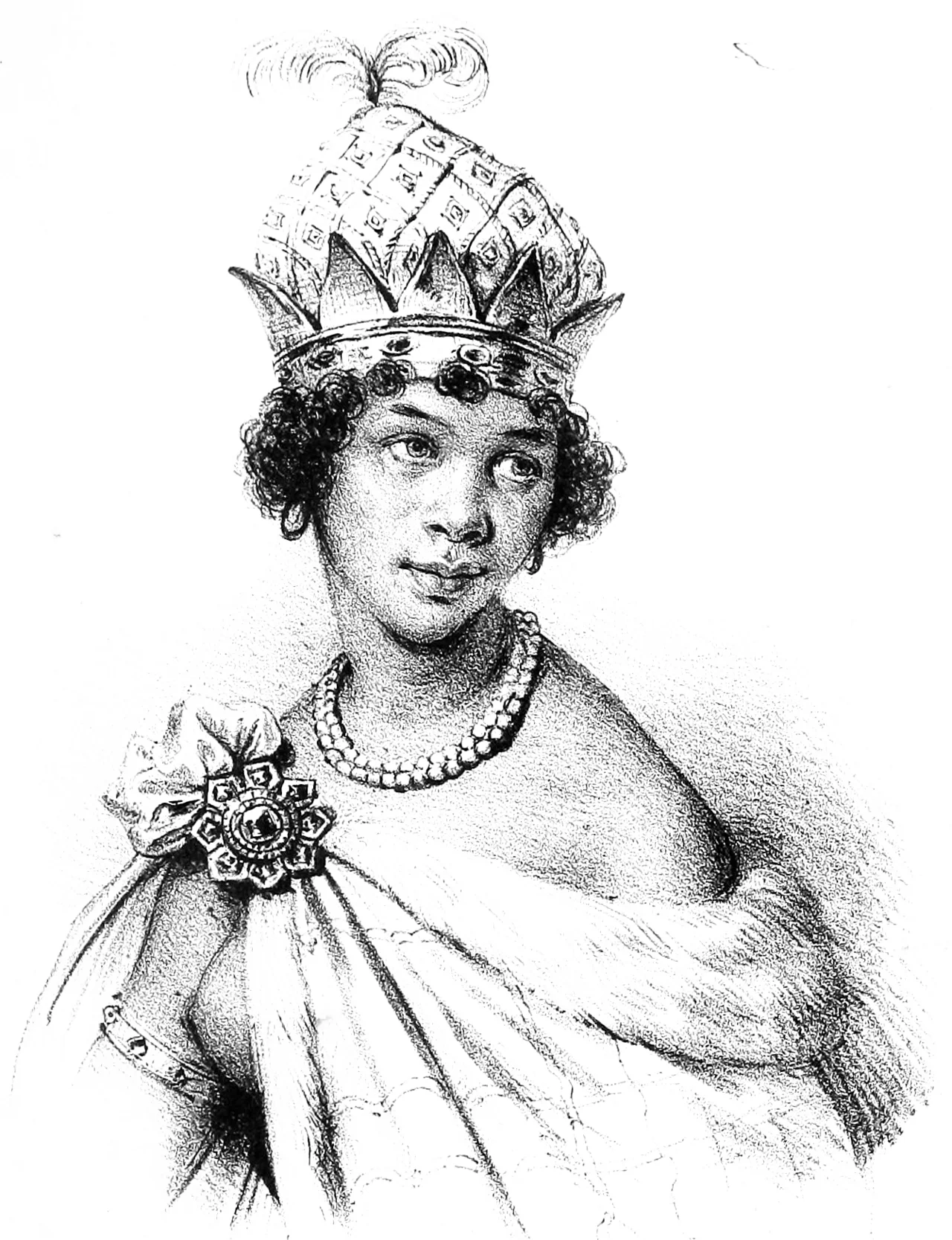
Queen Njinga (also spelled Nzinga, Jinga, or Ginga) ruled the kingdoms of Ndongo and Matamba in what is now Angola through nearly four decades of war, diplomacy, and reinvention, dying at 81 with her kingdom still unconquered by Portugal. Born around 1583 into the royal court of Ndongo, she negotiated with European powers as an equal, fought them as a general, and outmaneuvered them as a strategist — a rare combination of skills that kept her people independent when neighboring states fell.
Queen Njinga Mbandi (c. 1583–1663) was the ruler of Ndongo and later Matamba, in present-day Angola. She fought Portuguese colonial expansion for over 30 years, signed a peace treaty in 1622, and after being forced into exile, conquered Matamba and ruled it until her death. She is remembered as a diplomat, military commander, and symbol of Angolan independence.
- Who Was Queen Njinga? The Early Life of a Warrior Queen
- Queen Njinga at the Negotiating Table: The Legend of the Human Chair
- How Did Queen Njinga Become Ruler of Ndongo?
- Queen Njinga and the Dutch Alliance: The War for Luanda
- What Was Queen Njinga's Kingdom Like? Religion, Trade, and Power
- Queen Njinga's Legacy: Why She Still Matters
- Key Facts About Queen Njinga: A Timeline
- What Made Queen Njinga an Effective Leader?
- Why Queen Njinga Still Matters: A Lasting Perspective
Who Was Queen Njinga? The Early Life of a Warrior Queen
Njinga Mbandi was born around 1583, the daughter of King Kiluanji Kia Samba (also rendered Mbandi a Ngola) and one of his principal wives. Ndongo was a powerful kingdom of the Mbundu people, its capital at Kabasa, its economy built on agriculture, ironworking, and trade in salt and textiles. The title of the ruler was Ngola — the word that Portuguese ears would eventually twist into “Angola,” the name the colony and later the nation would carry.
From her youth, Njinga was different from her siblings. Portuguese missionary and chronicler accounts, filtered through hostile eyes but consistent on the facts, describe her as her father’s favorite: she accompanied him on military campaigns, learned to fight, and sat in on the councils where the kingdom’s affairs were decided. She was also fluent in Portuguese, a skill that would prove as decisive as any weapon.
A Kingdom Under Pressure
Ndongo’s troubles were structural. The Portuguese had established themselves at Luanda in 1576 and were pushing inland, hungry for slaves, silver, and territory. They found a pretext for war in the 1617–1621 campaigns of Governor Luís Mendes de Vasconcelos, who invaded Ndongo, sacked the capital, and forced the kingdom to flee to the islands of Kindonga in the Kwanza River. Njinga’s brother, Ngola Mbandi, became king under impossible conditions — and in 1622, he sent his sister to Luanda to negotiate with the Portuguese governor, João Correia de Sousa.
Queen Njinga at the Negotiating Table: The Legend of the Human Chair
The meeting in Luanda in 1622 is the most famous scene in Njinga’s life, and it deserves its fame. The Portuguese governor had arranged a room with a single chair — for himself. No seat was provided for the African delegation. Njinga did not stand and plead. She called one of her attendants, sat on the woman’s back, and conducted the negotiations at eye level with the governor.
Whether or not every detail of the story is literally true — the earliest written versions date from later chroniclers — the substance is well documented. Njinga secured a treaty: Portuguese recognition of Ndongo’s independence, the withdrawal of Portuguese forces from the kingdom’s heartland, the return of captured subjects, and the release of a Portuguese-held relative. She also agreed to allow Portuguese traders and missionaries access, and she was baptized, taking the name Dona Ana de Sousa after the governor’s wife. The baptism was a calculated political act, not a conversion of the heart; she would later renounce Christianity and return to it more than once, each time as circumstances demanded.
The treaty did not hold. Portuguese settlers and slave traders ignored its terms, and when Njinga’s brother died in 1624 (some accounts suggest she had him poisoned; others say he died of illness or suicide), she moved to secure the throne.
How Did Queen Njinga Become Ruler of Ndongo?
Succession in Ndongo was not strictly patrilineal, and Njinga’s claim was contested. She had a son, but the throne was claimed by a male relative, Hari a Kiluanji, and by the powerful kandala (chief minister) who controlled the royal court. Njinga outmaneuvered them both. She took power around 1624, initially as regent for her young nephew, then as ruler in her own right — though her authority was never uncontested, and she spent years fighting internal rivals as well as the Portuguese.
Her early reign was defined by war. The Portuguese, determined to break Ndongo, allied with the Imbangala — fierce mercenary bands from the interior — and drove Njinga from the capital. She retreated to the Kindonga Islands, then to the Baixa de Cassanje region, fighting a guerrilla campaign that would last for decades.
From Ndongo to Matamba: A Strategic Reinvention
In 1630, Njinga made the move that saved her cause. She crossed east into the kingdom of Matamba, defeated its queen, Mwongo Matamba, and established herself as ruler there. Matamba became her new base: a kingdom with its own army, its own trade networks, and a defensible position far from Portuguese coastal power. From Matamba, she rebuilt Ndongo’s resistance and turned her kingdom into a commercial and military power in the interior.
Queen Njinga and the Dutch Alliance: The War for Luanda
Njinga’s greatest opportunity came from European rivalries. In 1641, the Dutch West India Company captured Luanda from Portugal. Njinga, recognizing that the enemy of her enemy could be useful, opened negotiations with the Dutch. In 1643, she signed a treaty with them, and when the Dutch prepared to attack Portuguese positions inland, she supplied troops and intelligence.
The alliance paid off. In 1644, Njinga’s forces routed a Portuguese army at the Battle of Ngoleme, capturing the Portuguese commander, Paulo Dias de Novais’s successor as governor of the interior — the sources name him as the commander of the Portuguese force — and forcing a prisoner exchange. In 1647, she fought alongside Dutch forces at the Battle of Kombi, a decisive defeat for the Portuguese that briefly pushed them back toward the coast.
The Turning Point: Luanda Lost
The Dutch occupation of Luanda lasted only until 1648, when a Portuguese expedition from Brazil under Salvador Correia de Sá retook the city and expelled the Dutch. Njinga lost her most powerful ally overnight. The Portuguese then turned their full attention to her, launching a campaign that pushed her forces back into the interior. In 1656, after years of attrition, she agreed to a peace treaty with the Portuguese governor, Luís Mendes de Sá. The terms were humiliating on paper — she returned prisoners, accepted Portuguese missionaries, and formally acknowledged Portuguese sovereignty — but in practice she kept her kingdom, her army, and her independence.
What Was Queen Njinga’s Kingdom Like? Religion, Trade, and Power
Njinga ruled Matamba as a Mbundu monarch in the traditional mold, but she adapted the institution to her circumstances. She maintained the royal court, the council of elders, and the ritual authority that legitimized Ndongo and Matamba kingship. She also broke with tradition where it suited her: she is said to have taken male consorts in a reversal of the usual royal arrangement, and she kept a personal guard of women warriors.
The Religion Question
Njinga’s relationship with Christianity was pragmatic and shifting. Baptized in 1622, she renounced the faith during her war with Portugal, then returned to it in the 1650s as part of the peace settlement. She allowed Capuchin missionaries into Matamba, including the Italian friar Giovanni Antonio Cavazzi, whose account of her court — published in 1687 as Istoria de’ tre regni Congo, Matamba et Angola — remains one of the most detailed European sources on her reign. Cavazzi described a court of considerable sophistication: a queen who received him with ceremony, questioned him on theology, and kept her own religious options open.
Trade and the Slave Economy
Matamba sat astride trade routes between the interior and the coast, and Njinga exploited them. She traded in salt, iron, textiles, and — critically — people. Like every state in the region, Ndongo and Matamba were enmeshed in the Atlantic slave trade, and Njinga’s kingdom sold captives to Portuguese and Dutch buyers. She also used the threat of selling Portuguese prisoners to extract concessions, and she lobbied the Portuguese to redirect slave traffic away from her territories. This is one of the most complicated aspects of her legacy: she was both a victim of colonial aggression and a participant in the economic system that fueled it.
Queen Njinga’s Legacy: Why She Still Matters
Njinga died on December 17, 1663, at the age of about 81, in her capital at Matamba. She had ruled for nearly four decades. Her kingdom passed to her sister’s son, and Matamba survived as an independent state into the eighteenth century, long after most of coastal Angola had fallen under Portuguese control.
Her legacy is not a simple one. She was a ruthless political operator who fought her own relatives for power, a participant in the slave trade, and a ruler whose methods included executions and forced relocations. She was also a brilliant strategist who held off a European empire for decades, a diplomat who negotiated as an equal with governors and generals, and a woman who refused the roles her society assigned her.
How Queen Njinga Is Remembered Today
In Angola, Njinga is a national icon. Her image appears on currency and in public monuments, and a major avenue in Luanda bears her name. In 2002, the Angolan government inaugurated a statue of her in Luanda’s Kinaxixi square — a warrior queen with a bow, standing over the city. In the diaspora, she has become a symbol of Black resistance and female power: her name appears in the naming of schools, cultural organizations, and works of art across Brazil, the United States, and Europe.
She has also been the subject of serious historical scholarship. The Angolan historian and former president of the National Assembly, Fernando da Piedade Dias dos Santos, and the scholars Joseph C. Miller and Linda Heywood have each written extensively on her — Heywood’s Njinga of Angola: Africa’s Warrior Queen (2017) is the definitive modern English biography. The documentary record, assembled from Portuguese, Dutch, and Italian sources, is unusually rich for a seventeenth-century African ruler.
Key Facts About Queen Njinga: A Timeline
| Year | Event | Significance |
|---|---|---|
| c. 1583 | Birth in Ndongo | Daughter of Ngola Kiluanji Kia Samba; raised in the royal court |
| 1622 | Negotiates with Portugal in Luanda | Secures a treaty; baptized Dona Ana de Sousa; the “human chair” episode |
| 1624 | Becomes ruler of Ndongo | After the death of her brother Ngola Mbandi |
| 1630 | Conquers Matamba | Establishes a new base for resistance in the interior |
| 1641–1648 | Dutch alliance | Fights alongside the Dutch against Portugal; Battle of Kombi (1647) |
| 1656 | Peace treaty with Portugal | Ends decades of war; keeps her kingdom and army intact |
| 1663 | Death at Matamba | Dies at about 81; Matamba remains independent |
What Made Queen Njinga an Effective Leader?
Njinga’s success rested on a set of skills and choices that historians have documented in detail. Several stand out:
- Linguistic and cultural fluency: She spoke Portuguese and understood European diplomatic protocol, which let her negotiate directly rather than through intermediaries.
- Strategic patience: She retreated when necessary, rebuilt in exile, and waited decades for the right alliance — the Dutch — to appear.
- Institutional adaptation: She preserved the traditional structures of Mbundu kingship while reshaping them for a state at war, including her personal guard of women warriors.
- Control of information: She managed her image deliberately, from the chair episode to her public religious shifts, always with an eye on how her actions would be read by allies and enemies.
Women Warriors and the Queen’s Guard
One of the most striking features of Njinga’s court was her corps of women warriors, sometimes compared to the ahosi of Dahomey. Portuguese and Italian accounts describe women in her army and her personal guard, and her successors in Matamba maintained the tradition. The kandala — a female official of high rank — held real political power in her court, and Njinga’s own rise depended on the support of powerful women in the royal family, including her sister Barbara and her niece.
Why Queen Njinga Still Matters: A Lasting Perspective
Queen Njinga’s story resists easy moralizing. She was not a saint, and the historical record — much of it written by her enemies — does not pretend otherwise. What the record does show, with unusual clarity for a seventeenth-century African ruler, is a person of extraordinary political intelligence operating in a world where the odds were stacked against her people. She negotiated, fought, retreated, allied, and adapted, and when she died, the kingdom she had built was still standing.
That is why her name endures. In Angola, in Brazil, in the diaspora, Queen Njinga stands for the proposition that African sovereignty was defended, not simply lost — and that the history of the continent is full of figures whose skill and will shaped events far beyond their own borders. The queen who sat on her attendant’s back to meet a governor’s eyes understood something her opponents did not: that dignity, in the end, is a form of power.