📅 Last updated: 13.11.2026
Highlife music Ghana is one of West Africa’s most enduring popular music traditions, a genre that grew from the coastal towns of the Gold Coast in the late nineteenth century and went on to shape dance floors from Accra to London and beyond. Born from the meeting of African rhythms and European brass instruments, highlife became the soundtrack of independence, the sound of Ghana’s dance bands, and a living influence on afrobeats today. This is the story of how that sound was made, who made it, and why it still matters.
Highlife music Ghana is a guitar-and-brass-driven popular genre that emerged in the coastal towns of the Gold Coast (modern Ghana) in the late 1800s, blending indigenous Akan rhythms with European military band instrumentation. It became the dominant dance music of Ghana in the twentieth century, was central to the independence era under Kwame Nkrumah, and remains a foundational influence on contemporary African pop. Key figures include E.T. Mensah, the “King of Highlife,” and guitarist Koo Nimo.
- What Is Highlife Music Ghana, and Where Did It Come From?
- How Did Highlife Music Ghana Become the Sound of Independence?
- Who Were the Key Figures and Bands of Highlife Music Ghana?
- Highlife Music Ghana: A Timeline of the Genre's Evolution
- What Makes Highlife Music Ghana Sound Distinctive?
- How Did Highlife Travel Beyond Ghana?
- How Does Highlife Music Ghana Influence Contemporary African Pop?
- Where Can You Experience Highlife Music Ghana Today?
- Why Does Highlife Music Ghana Still Matter?
What Is Highlife Music Ghana, and Where Did It Come From?
The name itself carries history. In the early twentieth century, European colonists and wealthy African elites in coastal towns like Cape Coast, Elmina, and Accra held exclusive dances featuring imported foxtrots and waltzes. When African musicians began playing these same venues and blending in local rhythms, the music was said to be played at “high life” parties, reserved for those who could afford the high life. The label stuck, and the music became a marker of aspiration and sophistication.
The roots go deeper than the ballroom. Highlife grew from a confluence of traditions: the palm-wine guitar music of Akan and Fante musicians, the brass band traditions of colonial military and police bands, sea shanties and maritime work songs of coastal communities, and the calypso-influenced sounds that moved along Atlantic trade routes. Ghanaian musicians took European instruments — trumpets, trombones, clarinets, and later guitars — and bent them to African melodic and rhythmic logic.
Two broad streams developed. The first was dance band highlife, built around large brass and reed sections, which dominated the 1940s and 1950s. The second was guitar band highlife, a more intimate sound rooted in the palm-wine tradition, using acoustic guitars, percussion, and call-and-response vocals. Both streams shared the genre’s defining features: interlocking rhythms, a distinctive “highlife” guitar pattern, and lyrics that moved between Akan proverbs, social commentary, and love songs.
How Did Highlife Music Ghana Become the Sound of Independence?
By the 1950s, highlife was the soundtrack of a nation waking up to self-rule. The most important figure was E.T. Mensah (1919–1996), leader of the Tempos, a big band whose polished horn arrangements and charismatic performances made him the “King of Highlife.” Mensah and his band toured across West Africa and to Britain, and their recordings spread Ghanaian highlife across the diaspora.
Highlife’s relationship with politics was direct. Kwame Nkrumah, Ghana’s first prime minister and president, understood the music’s power to unify. Highlife bands performed at independence celebrations in 1957, and the music became a symbol of Ghanaian pride and Pan-African possibility. The genre’s lyrics increasingly carried messages of nationhood, dignity, and African identity. When Nkrumah declared that Ghana’s independence was meaningless unless linked to the total liberation of Africa, highlife carried that sentiment into living rooms and dance halls.
The 1950s and 1960s were highlife’s golden age. Dance bands such as the Uhuru Dance Band, the Black Beats, and the Star Gazers played packed venues in Accra and Kumasi. The music was cosmopolitan, drawing on Cuban son, jazz, and calypso while remaining unmistakably Ghanaian. This was the era when highlife music Ghana exported its sound across the continent and into Europe.
Who Were the Key Figures and Bands of Highlife Music Ghana?
E.T. Mensah and the Tempos
E.T. Mensah is the genre’s towering figure. Born in Accra, he played trumpet and led the Tempos through decades of recordings and tours. His compositions, including “All for You” and “Ghana Freedom,” captured the optimism of the era. Mensah’s band was a training ground for generations of Ghanaian musicians.
Koo Nimo and Guitar Band Highlife
Koo Nimo (born Daniel Amponsah in 1934) represents the acoustic, palm-wine side of the tradition. A master guitarist and storyteller, he adapted Akan proverbs and folktales into highlife songs, earning recognition as a living legend of Ghanaian music. His work shows how highlife music Ghana carries oral tradition into modern form.
The Guitar Band Innovators
Guitar band highlife produced its own stars. E.K. Nyame led a concert party tradition that blended music with theatre and comedy, touring Ghana with elaborate stage shows. Kwame Baah and others developed the fingerpicking guitar style that became the genre’s signature. The concert party format, part music, part drama, was a precursor to modern Ghanaian entertainment.
Later Generations
Highlife evolved through the 1970s and 1980s with figures like Nana Ampadu and his band the African Brothers, whose song “Ebi Te Yie” became a classic of social commentary. Kojo Antwi, the “Maestro,” blended highlife with soul and R&B, and Daddy Lumba became one of Ghana’s most beloved highlife singers. The genre’s adaptability kept it alive through changing musical fashions.
Highlife Music Ghana: A Timeline of the Genre’s Evolution
| Period | Era | Key Developments |
|---|---|---|
| Late 1800s–1920s | Origins | Coastal elites and colonial bands blend European instruments with Akan rhythms; the term “highlife” emerges |
| 1930s–1940s | Dance band era | Big bands form in Accra and Cape Coast; palm-wine guitar music develops in parallel |
| 1950s–1960s | Golden age and independence | E.T. Mensah and the Tempos dominate; highlife becomes the sound of Ghanaian independence in 1957 |
| 1970s–1980s | Evolution and diversification | Concert parties flourish; Nana Ampadu and guitar band highlife reach wide audiences |
| 1990s–present | Modern revival | Highlife blends with soul, R&B, and hip-hop; influences afrobeats and contemporary Ghanaian pop |
What Makes Highlife Music Ghana Sound Distinctive?
Highlife’s sound is built on a few recognizable elements. The highlife guitar pattern is central: a syncopated, fingerpicked figure that weaves between bass notes and melody, often described as a “palm-wine” style. In dance band highlife, the horn section carries the melody with interlocking trumpet and trombone lines, while the rhythm section lays down a steady, danceable groove.
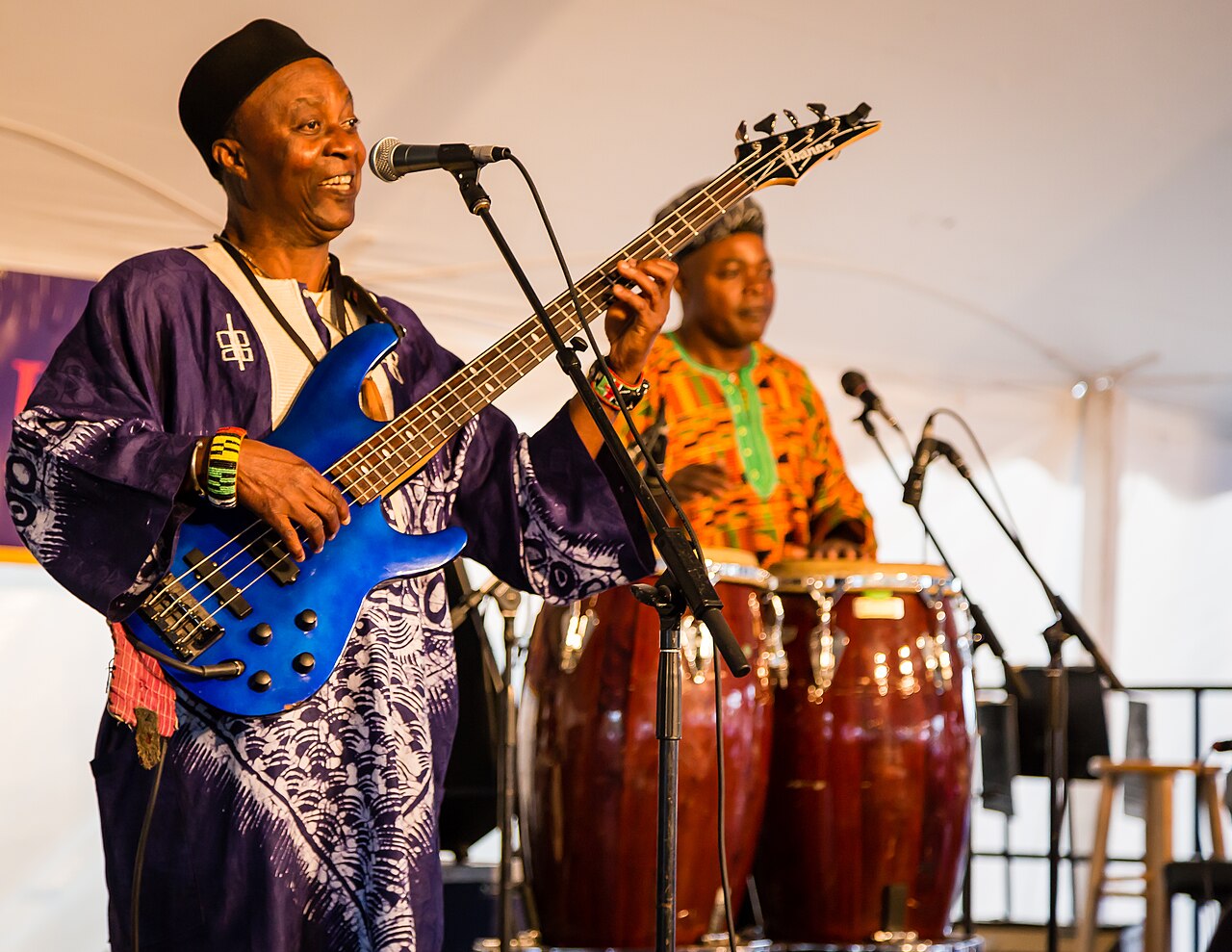
The rhythm is a conversation. Highlife typically uses a 4/4 or 12/8 feel with a distinctive accent pattern that gives it a rolling, buoyant quality. Percussion instruments like the congas, cowbells, and hand drums add texture, while the bass often plays a melodic counterpoint rather than a simple root-note pattern.
Lyrics matter as much as rhythm. Highlife songs often use Akan proverbs, moral lessons, and social commentary. A highlife song might celebrate love, critique corruption, or reflect on mortality, all wrapped in an irresistible groove. This combination of danceability and depth is why the genre has endured.
- Guitar band highlife: acoustic guitars, percussion, and vocals; intimate and rooted in palm-wine tradition
- Dance band highlife: large brass and reed sections, big band arrangements, and polished vocals
- Concert party highlife: music combined with theatre, comedy, and storytelling
How Did Highlife Travel Beyond Ghana?
Highlife’s reach extended far beyond West Africa. In the 1950s and 1960s, Ghanaian musicians toured Britain, and highlife records circulated through West African ports and diaspora communities. The music influenced Nigerian highlife, which developed its own stars like Bobby Benson and Victor Olaiya, and it fed into the broader West African popular music scene.
In the 1970s and 1980s, Ghanaian highlife musicians settled in Europe and North America, where they performed for diaspora audiences and recorded new material. The music also traveled to the Caribbean, where it intersected with calypso and other island sounds. Highlife’s DNA can be heard in the horn arrangements of Afrobeat, the guitar patterns of Congolese rumba’s cousins, and the melodic sensibility of contemporary African pop.
Today, streaming platforms have given highlife a new global audience. Classic recordings by E.T. Mensah, Nana Ampadu, and Koo Nimo are available worldwide, and a new generation of listeners is discovering the genre through playlists and archival releases.
How Does Highlife Music Ghana Influence Contemporary African Pop?
Highlife is not a museum piece. Its influence runs through modern Ghanaian music and across the continent. Afrobeats, the dominant West African pop genre of the 2010s and 2020s, owes a debt to highlife’s guitar patterns and horn arrangements, even as it incorporates hip-hop, dancehall, and electronic production.
Ghanaian artists like Kuami Eugene, Kofi Kinaata, and Sarkodie have drawn on highlife melodies and rhythms, sometimes explicitly reviving the sound for new audiences. Gyakie and other contemporary singers blend highlife’s melodic sensibility with modern production. The genre’s influence is also audible in the work of Nigerian artists who cite Ghanaian highlife as a foundational influence.
Highlife’s legacy is institutional as well. Ghana’s music schools and cultural institutions teach highlife as part of the national heritage, and festivals across the country celebrate the genre. The Ghana Music Awards include highlife categories, recognizing both veteran artists and new interpreters of the tradition.
Where Can You Experience Highlife Music Ghana Today?
Highlife lives in specific places and moments. In Accra, venues and cultural centers host live highlife performances, and the city’s music scene keeps the tradition alive alongside contemporary genres. The +233 Jazz Bar & Grill and similar venues have hosted highlife and jazz nights, while community events and festivals feature concert party-style performances.
For listeners exploring the genre, archival recordings are essential. The Retro Ghana and similar archival projects have digitized classic highlife recordings, making them accessible to global audiences. Streaming services now carry extensive highlife catalogs, from E.T. Mensah’s 1950s recordings to modern highlife-influenced pop.
Travelers interested in Ghanaian music can visit Cape Coast and Elmina, where the genre’s coastal roots are visible in the historic townscapes and local music scenes. Kumasi, Ghana’s second city, has its own highlife history and continues to produce musicians who draw on the tradition.
- Listen: Start with E.T. Mensah and the Tempos, then explore Koo Nimo, Nana Ampadu, and Daddy Lumba
- Visit: Accra’s live music venues, Cape Coast’s historic coastal towns, and Kumasi’s cultural institutions
- Learn: Ghanaian music archives and university programs document highlife’s history and technique
Why Does Highlife Music Ghana Still Matter?
Highlife is a record of Ghana’s modern history. It carries the ambitions of the independence era, the creativity of coastal communities, the wit of Akan storytellers, and the resilience of musicians who adapted to changing tastes and technologies. The genre’s ability to absorb new influences — jazz, calypso, soul, hip-hop — without losing its identity is a lesson in cultural confidence.
For the African diaspora, highlife is a connection to home. For global listeners, it is a window into a musical tradition that shaped West African pop. For Ghanaians, it is a living heritage, performed and reinterpreted by each generation. The sound that swept West Africa from the dance halls of Accra continues to move people, and its influence shows no sign of fading.
Highlife music Ghana remains a vital, evolving tradition. It is not nostalgia but a continuing conversation between past and present, between the guitar and the horn section, between the dance floor and the proverb. That conversation is what makes highlife one of Africa’s great musical gifts to the world.